National Federation of the Blind and Penn State Resolve Accessibility Complaint

Press Release: Baltimore, Maryland (October 11, 2011): The National Federation of the Blind (NFB) and The Pennsylvania State University (Penn State) announced today that they have reached an agreement that will resolve a complaint filed against Penn State by the NFB with the United States Department of Education, Office for Civil Rights.  There was no admission of any wrongdoing.


Penn State has agreed to continue implementing a strategy to make all electronic and information technology systems used on its campuses fully accessible to blind students, faculty, and staff.  The information technology systems covered include course management systems, Web sites, classroom technology, library resources, banking services, and more.  University Spokesman Lisa Powers said that Penn State strives to maintain strong academic leadership and has a long record of providing equal access to educational information and services for all students, faculty, and staff.


Dr. Marc Maurer, President of the National Federation of the Blind, said: “Universities must commit to making sure all of the technology that they use is accessible to blind students, or else the blind will be left behind in education and denied opportunity.  We are pleased that Penn State, one of the largest and most recognized public universities in the country, has agreed to take additional steps to create an environment of equality in which blind students can pursue their educational and career aspirations without unnecessary barriers.  The National Federation of the Blind hopes and believes that the steps that Penn State is taking will set an example for colleges and universities throughout the nation.”


"For more than twenty years Penn State has provided assistive technologies to students, faculty, and staff," Powers said.  "We will work with the National Federation of the Blind and the Department of Education, Office of Civil Rights, to put in place the additional technologies, procedures, and ongoing policies that will help us continue meeting our strong commitment to access.”


The university has had a number of policies and programs in place to help individuals with disabilities, such as a classroom note-taking service, textbooks and course materials in electronic format, technology assistance, and adjustments in testing procedures, to name just a few.  The university has a longstanding policy of providing reasonable accommodations to anyone requesting assistance.


"We can always do more," Powers said.  "In addition to any continued adjustments to our policies, we also are working with our outside vendors to see if their products and procedures can be adjusted to meet the needs of our students."


Russlynn Ali, assistant secretary for civil rights, with the U.S. Department of Education, said: “Colleges and universities have specific legal obligations to provide students, faculty, and staff with disabilities the same benefits, programs, and services.  This office is committed to working with complainants and institutions to ensure that the important nondiscrimination provisions of this nation’s laws are enforced and implemented.”



The panic of the plutocrats

What’s going on here? The answer, surely, is that Wall Street’s Masters of the Universe realize, deep down, how morally indefensible their position is. They’re not John Galt; they’re not even Steve Jobs. They’re people who got rich by peddling complex financial schemes that, far from delivering clear benefits to the American people, helped push us into a crisis whose aftereffects continue to blight the lives of tens of millions of their fellow citizens.

via lancemannion.typepad.com

We admire this "take" by Senor Krugman…

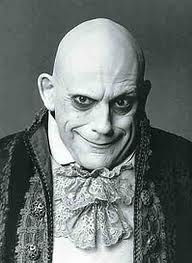
Bedtime with the Addams Family

Uncle Fester


“Tell the story again, Uncle Fester, about the Tea Party!”

“Well Okay kids, but this is the last time. Then you have to go to bed!”

“We will, Uncle Fester!”

“The Tea Party hated people with pre-existing medical conditions and people with disabilities. They thought that God had made a mistake when he made those types and  figured if God had made a mistake, well, then it should be perfectly Okay for those people to eat out of dumpsters and live in cardboard boxes.”

“That’s a Great Story, Uncle Fester! We’ll go to bed now!” 


Swan of Tuonela


Swan of Tuonela


1.


Lake of the dead, Finnish underworld. What to say? Ex cathedra, walking Runerberginkatu, late April, me & Tim.


We were walking, me & Tim. 

He, translating Faulkner into Finnish.

I, translating Saarikoski into Norte Americano–making Marxism into sock puppets. 


We were, in short, both crazy. & I had Tuonela

On the brain–flat lake, silent swan gliding among souls.


Helsinki, almost spring, Reagan on the shortwave…

Little gingerbread houses with their lights on at dusk…


+/- East/West propaganda divided by 19th century communalism

For we were still naive in those days, there was still a Berlin wall in those days,

Derrida’s Grammatology; Egyptian grammar in those days…


We were walking, me & Tim, taking Pablo to a toy shop–little boy six years old 

Fresh from school, Nordic afternoon, he just wanting a kite.


Sometimes I don’t know how to tell it. 

The boy wanted a kite. His father & I, some kind of victory

Complete with Trotsky at the parade

“in summer with the furniture outdoors”…


2.


The two of us on the street 

Smoking cigarettes, laughing, Pablo by now among the spinning tops.

“I see,” I said just there, for Tim was speaking about the arts of desire,

Too many for enumeration, one has to nod–

“What we call reality is an agreement 

 people have arrived at 


to make life more livable.” (Louise Nevelson)

“I see,” (reflex, nodding, punctuated with a Marlboro.) 


Appeared there between us a man

Face white as bone–skin–

His veins standing out.

(Later I would say

The oldest man I ever saw.)


“Why do you say you see?” 

Then said it again, eyes troubled

Shaking his finger,

“You don’t see, you understand!” 

“You understand!”


& we looked to each other

But he was gone,

mid-block, big city

Vanished–

We looking up & down…


Chronic Failure

RX

“On her medical record, she officially became a treatment failure—not someone whom the treatment failed, but someone who had failed the treatment.” So writes Alan Shapiro in Vigil, his memoir of his sister’s death from cancer. A treatment failure. A failure.

Terminal illnesses do that to us, make us feel like failures. So do chronic conditions. We fail the doctors who work so hard to cure us. We come back with symptoms they didn’t expect us to have. Our bodies defy their logic. “This pill works for everyone,” a doctor said to me when I returned to her office telling her it didn’t work for me. “You shouldn’t be losing your hair,” another doctor said when I arrived in his office with a bag full of my hair.

In my teens, I had ovarian cysts. By age 20, I had already had three mammograms. At 30, I was told I was entering perimenopause. These facts don’t make sense. Not to me. Not to my doctors. I have failed treatment after treatment. I continue to fail. And I think of Steve Jobs, who lived with cancer seven years longer than initially expected. But who, in the end, still became “someone who failed the treatment.”

Of course, it’s really the case that medicine is failing us, not the other way around. The entire structure of our medical system is failing us. The entire structure of our society that pretends we’re not all temporarily able-bodied, that pretends we won’t all, at some point or another, experience disability, temporary or otherwise. I know that.

But still, today, I feel failure. My body hurts. I lay awake last night in bed and felt pain. My feet are bloated, my hands. My hormonal system is failing me—situation hormone-all-fucked-up. I know this isn’t my fault. I want to be free from pain—that doesn’t seem like too much to ask—and in the absence of relief from medicine, what am I to make of things? 


Andrea Scarpino  is a poet and essayist and a frequent contributor to POTB.

The Vortex of Disability

One day you are feeling fine, even festive. You're going to put on your "spring and all" tattered chemise and dance in the kitchen. Then in the time it takes for a cirrus cloud to cross the sun, you feel like an inert thing, some mossy rock for instance. The disability tornado has got you. One minute you were minding your own business, then you're in the funnel of nameless nowhere particles. This is disability. The average able bodied person couldn't make it in this world. Or they'd learn. The worst thing in your day is not the red light that stopped your car. Disabilities represent the anarchy of indiscrete substances. Here comes your grandmother, disguised as a wolf, telling you nature is unfair.  

Blind Photographers Share Their World

The art and Heart of Blind Photorgraphers

(Associated Press)
October 4, 2011

MEXICO CITY, MEXICO– [Excerpt provided by Inclusion Daily] Rodrigo Telon Yucute focuses on the sound of the voices, raises a camera and snaps off a shot, capturing an image of a couple laughing as they sit on a yellow park bench.

He shows it to the subjects, but cannot see it himself. The photographer-in-training has been blind for nearly 30 years.

Telon was a 22-year-old guerrilla fighter in his home country of Guatemala when a land mine exploded beneath him, ripping apart his left forearm and destroying his eyesight.

After years of rehabilitation, he learned Braille and how to use a white cane to get around. Now 51, Telon is fulfilling his longtime wish of taking photographs.

He is one of 30 visually impaired or blind people learning photography with the help of the Mexico City foundation Ojos Que Sienten, or Eyes That Feel.

Photography doesn't come easy. Beginners often leave out the heads or legs of their subject, but with practice they learn to improve their images. In a sense, they're photographing the sounds they hear or the smells they sense.

Entire article:
Mexico City blind photographer share their world

http://tinyurl.com/3zlukut

For more about blind photography visit: http://blog.blindphotographers.org/

Swedish poet Tomas Transtromer wins Nobel Prize for Literature – USATODAY.com

Check out this article that I saw in USA TODAY’s iPhone application.

Swedish poet Tomas Transtromer wins Nobel Prize for Literature

To view the story, click the link or paste it into your browser.

To learn more about USA TODAY for iPhone and download, visit: http://usatoday.com/iphone/

Sent from my iPhone

Essay on the Politics of English Clarity and Them Folk with Disabilities


One can read theories about stigma, or about the cultural formations of difference. These are necessary and instructive but as I grow older I can’t help but feel our efforts to understand disability as a marginalized human category cannot fully bear fruit without accessing the politics of clarity–an Orwellian thought to be sure but more evident to me now. Do not misread me: I believe in talking back to “the man” and believe in the ardor of revisioning dominant or pejorative narratives, how could a so called “disability” writer be otherwise? Yet I think that the rhetorics of opposition concentrate and then recaste difference until the one who cries out is nearly exhausted with effort. Here I think of James Baldwin’s assertion: “A child cannot be taught by anyone who despises him, and a child cannot afford to be fooled.” That there are those who despise people with disabilities seems evident even some twenty years after the passage of the Americans with Disabilities Act. That people with disabilities cannot afford to be fooled is a matter for the politics of clarity. 

The post-human age may yet give us some new places to roll or stand. The evolutions of cyborgian prostheses will likely help to break down the “normative-abnormal” dichotomy that has dominated both the theory and reality of disablement. Aimee Mullins and Oscar Pistorias have redirected the fashion industry which will inevitably embrace the postnormative. This is all too the good. Yet I think it’s a safe bet that while prosthesis may become no different than the brand of automobile one drives, invisible disabilities or those that produce a public misapprehension about intellectual capacity (blindness, apparent deafness) will remain problematic in the town square. While physical difference can become fashionable, disablement as a capacity of mind is more difficult for the public nerve. In Western tradition we tend to believe in the mind as a substance rather than an essence, we cherish thought that is fast and muscular but denigrate neuroatypical thinking. We believe in “mind over matter” and imagine that those with learning disabilities or who are on the autism spectrum are simply not doing enough pushups. 


As I’ve already said, a person with a disability cannot afford to be fooled. The nominative and representational characteristics of invisible disability (or any condition that challenges dominant models of identity and attention) will require fresh language in a new century. Enter Orwell. The politics of language demand precision. In one of the best essays in English on the subject of language and physical difference, Nancy Mairs describes how she arrived at the decision to call herself a cripple: 

 “"Cripple" seems to me a clean word, straightforward and precise. It has an honorable history, having made its first appearance in the Lindisfarne Gospel in the tenth century. As a lover of words, I like the accuracy with which it describes my condition: I have lost the full use of my limbs. "Disabled," by contrast, suggests any incapacity, physical or mental. And I certainly don't like "handicapped," which implies that I have deliberately been put at a disadvantage, by whom I can't imagine (my God is not a Handicapper General), in order to equalize chances in the great race of life. These words seem to me to be moving away from my condition, to be widening the gap between word and reality. Most remote is the recently coined euphemism "differently abled," which partakes of the same semantic hopefulness that transformed countries from "undeveloped" to "underdeveloped," then to "less developed," and finally to "developing" nations. People have continued to starve in those countries during the shift. Some realities do not obey the dictates of language.” 

Mairs writes famously, “as a cripple, I swagger” a position that’s unassailable given the economic abjection in “disability”–that Victorian term still tied to the factories of the Industrial Revolution–it was Karl Marx’s noun for those who lacked the economic utility to be useful workers. Surely “disability” does not swagger. Moreover the word carries no degree or standard of completeness. This is its signature problem for if a cripple is entire, singular, and freed from oppositional enactments with ability, a person with a disability is trapped in a triangle of etceteras–unable, etc; incapable, etc; accordingly, vaguely sub-Cartesian–sans thought, etc. Disability disorganizes conduct and places physicality outside of possibility. So the term has less to do with opposition to normal activity and a good deal to do with a prejudicial conspiracy against the mind. Just as nothing in nature is truly broken, just as evolution defies the normal, there is no proper categorical or taxonomic position that can hypostatize variance or give it a name.    

As I’ve said more than once I prefer “world citizen” to disability. I prefer omnimodal essences and motive power.


S.K.