NYTimes: Scientists See Promise in Vaccine for Malaria

In case you are looking for an optimistic story on an ordinary Wednesday, here’s a fine article from the health section of the NY Times:

From The New York Times:

Scientists See Promise in Vaccine for Malaria

A GlaxoSmithKline vaccine now in clinical trials protected nearly half of the children who received it from bouts of serious malaria, researchers reported.

Sent from my iPad

Wind Tossed Dragons

Kenneth Rexroth Wearing Al Capone's suit

When I was 17 and suffering from anorexia–a factor of disability and depression, I was given the gift of Kenneth Rexroth’s poems. To this day his “One Hundred Poems from the Chinese” occupies an important place, both in my imagination and on my bookshelf. Rexroth’s “Complete Poems” (available from Copper Canyon Press) is a must read for anyone who cares about American poetry and intellectual independence. 

Today I must travel on business and I will carry this poem with me. This is Rexroth’s translation of an ancient Chinese poem by Hsieh Ngao: 


"Wind Tossed Dragons"


The shadows of the cypresses

On the moonlit avenue

To the abandoned palace

Weave in tangles on the road

Like great kelp in the depths of the sea.

When the palace was full of people

I used to see this all the time

And never noticed how beautiful it was.

Mid-Autumn full moon, the luminous night

Is like a boundless ocean. A wild

Wind blows down the empty birds’ nests

And makes a sound like the waves of the sea

In the branches of the lonely trees.


Every noun is an image, and every image is a possibility. That’s a revery. Let us all take reveries on the road.


S.K.  


Disability and the Toothache


The proper phrase is “toothace in the soul”–Emily Dickinson’s description of our human spirits in this high gravity world. We all face delimitations of our bodies, plus aging, disappointments, setbacks, social lonesomeness (different from “loneliness” for it is more imagined). If I knew a way without this consciousness I would tell you. 


Disability is that toothache raised to a power. Unfashionable to call it suffering but enough to say It’s without easy assimilation. One may think of disability, any disability as a kind of phosphorescent blindfold: at once brilliant and impenetrable. What it feels like on the inside is not the pathos of intellectual life but a steaming fuse of a million cultural negligences. We cannot celebrate the body that ages. We can’t imagine it’s languages in the West–instead cover it over or turn away. The toothache pours from the radios and steams on the internet. It hangs in the disorderly world, inflated by the winds of reactionary advertisements for normalcy. 


I long for the allure of disablement with all its ellipses. Spirit relieved of pejorative and alienating metaphor. The world was heavy with gravitas but we all could dance. 

SK

Disability and the Hanging Vines

  Cheeta-tarzan_685761c

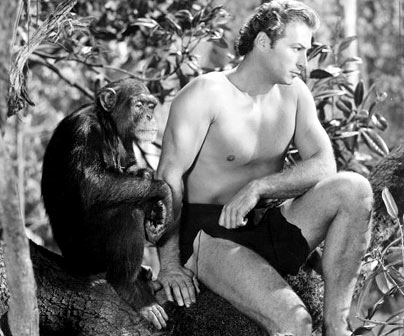
Remember those old Tarzan movies? Tarzan would swing through the trees and when his vine reached its arc, lo and behold another vine would appear. That’s a thing you won’t see in nature. In order to pull off the effect Hollywood had a “Vine Man” off camera, a man of precision, like the page turners who sit beside pianists. You see, Tarzan had a reasonable accommodation. If you’re job is to yell and swing, half naked through branches, you’ve got to have a paid assistant.  

My point, such as it is, is that the American workforce can stand to learn a great deal about the history of accommodations–not merely as they relate to people with disabilities, but as a sign of progressive and utilitarian teamwork. The prevailing notion that a person with a disability is a singular defective “unit” who requires something extra runs counter to the history of human work. Just ask old Tarzan. 


S.K.   


Disability and the Haiku Master

Basho

On the day my mother died I found myself so overwhelmed with grief and all the miserable details of planning her funeral that I stopped everything and made up a haiku.

Here’s the gist of it:


My deodorant and my

Prozac are working overtime

Just now…


Though this haiku did not solve my problems it did evoke my mother’s salty, colorful sensibility and more than anything that’s what I needed on that terrible day. 


Disability carries its own dans macabre–stigma, alienation, insufficient benefits or accommodations, the heavy burdens of self-advocacy. Some days one feels like the snail climbing Mt. Fuji–there’s a beautiful, steady, earnest hopelessness about the enterprise of enduring. I think like the haiku form of verse, disability is at once both clear and vague–by this I mean the outlines of human worth are evident in every action undertaken by a person with a disability, and, just so, the way forward is all too often hard to see. The season now must be spring or summer, the wheelchair girl is singing. 

That’s a blindness haiku and true as a poem can be. It’s the bare outlines of human value we celebrate in the short poem and which we celebrate in our dailiness. The latter depends on evident consciousness: who are you, who are you just now? 


Just three days old,

The moon, and it’s all warped and bent!

Friend, take my cane.


SK


Stutterer Speaks Up In Class; His Professor Says Keep Quiet

Reader's note: We have not been watching Keith Olbermann lately, but perhaps Ms. Snyder could be nominated for "worst person in the world"?

SK
(New York Times)
October 10, 2011

RANDOLPH, NEW JERSEY– [Excerpt provided by Inclusion Daily Express] As his history class at the County College of Morris here discussed exploration of the New World, Philip Garber Jr. raised his hand, hoping to ask why China's 15th-century explorers, who traveled as far as Africa, had not also reached North America. 

He kept his hand aloft for much of the 75-minute session, but the professor did not call on him. She had already told him not to speak in class.

Philip, a precocious and confident 16-year-old who is taking two college classes this semester, has a lot to say but also a profound stutter that makes talking difficult, and talking quickly impossible. After the first couple of class sessions, in which he participated actively, the professor, an adjunct named Elizabeth Snyder, sent him an e-mail asking that he pose questions before or after class, "so we do not infringe on other students' time."

As for questions she asks in class, Ms. Snyder suggested, "I believe it would be better for everyone if you kept a sheet of paper on your desk and wrote down the answers."

Later, he said, she told him, "Your speaking is disruptive."

Entire article:
Stutterer Speaks Up in Class; His Professor Says Keep Quiet

http://www.nytimes.com/2011/10/11/education/11stutter.html
 

Killing the Jobs Bill the Old Fashioned Way

Now that the GOP has (in the words of the New York Times) committed “economic vandalism” by killing President Obama’s jobs bill I want to disclose that I’m reminded of Mark Twain’s observations about the German language. All you have to do is substitute the Republican party: 

“Surely there is not another language that is so slipshod and systemless, and so slippery and elusive to the grasp. One is washed about in it, hither and thither, in the most helpless way; and when at last he thinks he has captured a rule which offers firm ground to take a rest on amid the general rage and turmoil of the ten parts of speech, he turns over the page and reads, "Let the pupil make careful note of the following exceptions." He runs his eye down and finds that there are more exceptions to the rule than instances of it. So overboard he goes again, to hunt for another Ararat and find another quicksand. Such has been, and continues to be, my experience.” 

It was Twain of course who said: "There is no distinctly native American criminal class, save Congress."

BBC E-mail: Tablets become Braille keyboard

I saw this story on the BBC News iPad App and thought you should see it.

** Tablets become Braille keyboard **
A team of US researchers has invented a keyboard for touchscreen devices such as smartphones and tablets.
< http://www.bbc.co.uk/news/technology-15272091 >

** BBC Daily E-mail **
Choose the news and sport headlines you want – when you want them, all in one daily e-mail
< http://www.bbc.co.uk/email >

** Disclaimer **
The BBC is not responsible for the content of this e-mail, and anything written in this e-mail does not necessarily reflect the BBC’s views or opinions. Please note that neither the e-mail address nor name of the sender have been verified.

Sent from my iPad

High Ed, Disability and Fresca

Fresca-vs-squirt---second-rate-snacks-lrg

Have you ever been called “second rate” because you have a disability? I have. This has happened over and over again. I recall a professor in graduate school who said that if I needed extra time to complete an assignment because of my blindness, I shouldn’t be in his class. That was in 1984, six years before the adoption of the Americans with Disabilities Act. Even so, the behavior was illegal under Section 504 of the Rehabilitation Act and I pushed back.  First I went to the department chair. He was a crony of the professor in question and accordingly told me that I was a “whiner and a complainer”–that old “ableist” canard, so easy to toss off. Then I went to the Dean who promised action and then did nothing. Finally I hired a local attorney who extracted an apology from the University. 

Throughout my adult life I’ve gone to employer after employer only to experience the nominal designation of the “second rate”–my deep need for functioning assistive technology has been repeatedly such an enormous problem at the 4 universities where I’ve taught that I can’t begin to narrate all the indignities, incompetencies, rationalized inattentions, and all around ugly deportments of the bureacracy. “What? You want a computer that talks and works at the same time? By God man! You’re asking for alchemy!” Most recently my request for a laptop running Kurzweil and JAWS took a month and repeated emails to accomplish. And here's the deal: when higher education can't manage a simple accommodation it delivers that old name tag: “second rate”. By not solving the problem the hierarchical dynamics of ableism are a defacto position. 

Doing better means achieving something more than assuring the professional and dignified delivery of accommodations for people with disabilities. It requires a vigorous affirmation of the term “nothing about us, without us” and it means demanding full equality and respect for people with disabilities from all the offices of higher education. Unfortunately, as Lennard J. Davis has remarked, there’s a lingering ableism within neo-liberal circles, one that progressive faculty and administrators don’t generally recognize. I agree with Lenny Davis that the failure of higher education to incorporate disability into a broader framework of campus diversity is a good part of the problem. When an institutilon can imagine that people with disabilities are to be accommodated by special segregated offices and that's the whole of the matter, you are simply reaffirming a victorian (small v) assumption that the cripples belong in a special place–certainly they don't belong in the agora.

When academic leadership tackles the implicit systemic inattention to disability equality very good things can happen. Meanwhile, some days, I feel like Fresca as opposed to Sprite.   

S.K.