Dear Marcel Proust

marcel proust

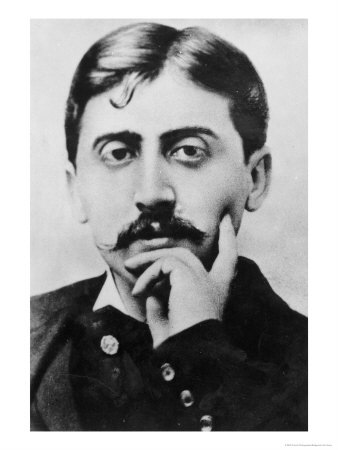
Dear Marcel Proust,

Here we are, at the end of 4,200 pages of your writing. Over the past year and a half, I’ve read your words book by book, month by month, and met with my reading group to discuss you, to bemoan your obsessions with sex, to marvel at your descriptions of grieving, to remind each other of how each character fits within the larger work, how your own life overlapped with the lives in your novels. For 18 months, I have read very little fiction except your own, have allowed myself to become enveloped by your life and your writing and your ideas about the world.

And so I want to write to say that you’ve changed my life. I know that sounds silly. I know that my friends would say my life actually looks pretty much the same as it did 18 months ago. But you, of all people, understand the inner changes that can happen to a person without anyone on the outside noticing, how the life of the mind can shift dramatically, how suddenly, a person can understand light in new ways, understand politics and social movements in new ways, understand family dynamics and love affairs and creativity, all in new ways, without anyone on the outside noticing a difference at all.

So I want to be clear about the ways you’ve shifted my thinking. You’ve helped me to understand what it means to create art, whether that art is fiction or music or painting or poetry. How a lived life nourishes art, but how the artist must also hermit herself away from all that life in order to get her work accomplished. How we shouldn’t feel bad about that, even as social invitations call and family obligations tug. That art can be bigger and more important than life, but cannot exist without it.

You’ve taught me about neuroscience and memory, how the brain can log memory without us noticing so that one smell, one taste from a moment years in the past can rocket back to us without our calling. How that memory can then change our life. You’ve taught me about technology, how strange it really is to talk about taking a train at 1:18pm. What it means to have concepts like “1:18pm.” How cars change everything. How war changes everything. How a pair of perfectly constructed red shoes changes everything.

You’ve taught me about love. How loving another person is really projecting our own ideas about love onto that person. How love can rise and fall just like life, and that, in life, what can seem intolerable one day can be forgotten entirely the next. To hold on, basically, and see where life takes you. To rise when life is rising, and fall when it’s falling, and be comfortable in each. Be comfortable in Time, in Time’s passing.

And you’ve taught me most of all to pay attention. To look around, eavesdrop, smell hawthorns, admire paintings, really listen to music, really listen when artists speak, ask questions. Be present in the world. Be present in this short life.

You write in this last book, In reality every reader is, while he is reading, the reader of his own self. The writer’s work is merely a kind of optical instrument which he offers to the reader to enable him to discern what, without this book, he would perhaps never have perceived in himself. So most of all, I want to thank you for holding up that optical instrument, for helping me, through your writing, to better see myself, better understand my own inner workings. I can’t wait to begin your work, our work, again.

Andrea


Andrea Scarpino is soon-to-be the Michigan correspondent and Bureau Chief of POTB. You can visit her at:

www.andreascarpino.com

Next Time Let's Send Joe Christmas

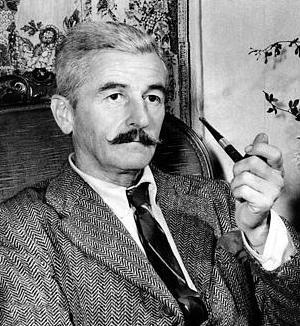
william-faulkner


California man, Gary Brooks Faulkner, was on mission to ‘kill Osama bin Laden’: police
Read more: http://www.nydailynews.com/news/world/2010/06/15/2010-06-15_california_man_gary_brooks_faulkner_was_on_mission_to_kill_osama_bin_laden_polic.html#ixzz0qvB5jSkO


Or a few other Faulkner characters? Flem Snopes? I’m just sayin’…


Flem Snopes:

“a thick squat soft man of no establishable age between twenty and thirty, with a broad still face containing a tight seam of mouth stained slightly at the corners with tobacco and eyes the color of stagnant water, and projecting from among the other features in startling and sudden paradox, a tiny predatory nose like the beak of a small hawk. It was as though the original nose had been left off by the original designer or craftsman and the unfinished job taken over by someone of a radically different school or perhaps by some viciously maniacal humorist or perhaps by one who had only time to clap into the center of the face a frantic and desperate warning.”


S.K.


Ode to Johnny Weissmuller


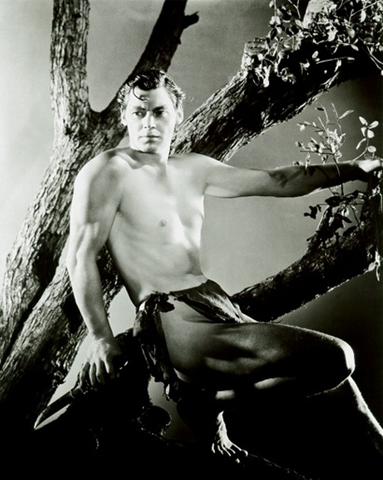
Johnny Weissmuller Johny Weismuller as Tarzan Johnny Weissmuller with Jane, Boy, and Cheetah


If you are of a certain age, say over fifty (and certainly not much under it) you recall (for better or worse) Johnny Weissmuller as Hollywood’s Tarzan. Perhaps (like me) you were credulous and a bit romantic and saw nothing silly at all in those paleo-Darwinian leitmotifs to nature-meets-nurture. (When I was 8 I broke a broom stick and whittled it sharp with a kitchen knife to make a spear.) Perhaps (if you were a certain kind of boy) you rose from your latency in love with Maureen O’Sullivan as “Jane” and by God was there ever anything as sexy as Jane teaching Tarzan how to use a fork?


Ah me. And today, browsing my dusty book-shelf I found an old poem by John Bowie, a poet who died young (at 27) and whose only book of poems “Screen Gems” is long out of print. Bowie, who was a big fella, who probably felt as hopeless in the public square as any customary person with a disability–Bowie wrote a fine little “Ode to Johnny Weissmuller” which carries its schadenfreude rather gently and is well worth reprinting here.


Ode to Johnny Weismuller


Why are there never thorns

On your jungle floor, Johnny?

Why no mango stains on your loincloth?

The rain-forests you slip through

Are too free of ants, of flies,

Of all the eager microbes

That must grind a visitor down.


Crocodiles and thick-headed lions 

Are too easy to slice up,

Too easy to trample

With the help of a few restless

Elephant chums.


Try to think of Cheetah

Nursing a green banana

Through his intestines,

Johnny, or Jane picking

Tree-lice from her arm,

Daydreaming of a freshly-painted

Tract home in San Berdo.


Try to think of yourself

Laid up in the tree-house

With ringworm, while your eyes

Follow the pattern of a

Sluggish mosquito on the dry

Palm-leaf wall.


S.K.

Puttin' the Wood to 'Em: Truth in Advertising


I was walking along a country road with my friend Ralph Savarese somewhere on the outskirts of Wilmington, Vermont, when Ralph spotted a lumber truck in a furrow among the pines. “Look!” he said. “Now there’s a disgusting advertising slogan!”

On the front of the immense, red truck, right above the grill, was a sign that read: “Puttin’ the Wood to “Em!”

Putting the Wood to 'em

Across the road was a brand new forest clearing which presumably represented the handiwork of this outfit.


Felled trees in Vermont


Puttin’ the wood to ’em…


We wondered who this slogan was intended to attract? Isn’t the nature of advertising to draw customers? Was this an outfit that imagines its clients to be citizens who hate “tree huggers”? Clearly there’s something passive aggressive about the motto. And also something vulgar, patently sexual. Or violent. A semiotic trifecta!


It certainly looked like truth in advertising to me.


Puttin’ the wood to ’em…


S.K. 

Memory Road: Reading Nonfiction with Deborah Tall


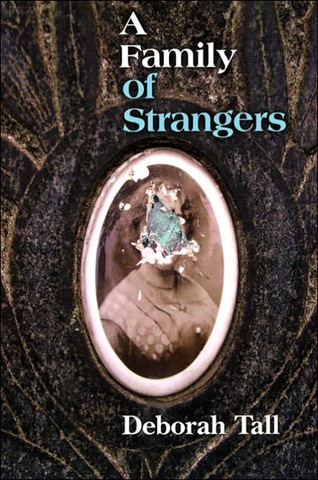
Deborah Tall A Family of Strangers Eavesdropping


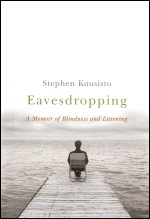
Back in September of 2006 Deborah Tall and I read nonfiction together at Hobart & William Smith Colleges. Deborah’s new book, a memoir entitled A Family of Strangers was just “out” from Sarabande Press and my book Eavesdropping had just been released by W.W. Norton. At the time Deborah was experiencing the final stages of her long fight with breast cancer and she had only a few weeks to live. Nary a day goes by that I don’t think of her. She kept me in the writing game during a dark period of my life when I was unemployed and largely unpublished. She saw the evident possibilities in what I was trying to accomplish with my first book Planet of the Blind. And she taught me by example: write every day.

When Wallace Stevens wrote: “The world is ugly and the people are sad” he was speaking in a specialized tense, “The Stevensian pluperfect” on behalf of an ordinary evening in New Haven. One must write against the heavy current.

This morning rain is crossing the farm fields of Iowa. It sweeps along the river valley and behind it the thunder can be heard like a tricky tempo in a work by Sibelius.

Something is coming. Better roll up the windows of the car.

Deborah would say it’s a perfect time to write.


S.K.

The Jersey Willow

pussy-willow-bud2 Pussy Galore


A friend of mine who I’ll call “X” because he’s a responsible, decent, upright fellow and what happened to him can’t be helped, this friend, this reliable observer went into a Sam’s Club mega-store in Cedar Rapids, Iowa where he saw a sign advertising “Jersey Willows” and when he observed the product (as it were) he saw that they were “Pussy Willows” plain as day. X wondered if “Jersey Willow” was a synonym for Pussy Willow and he looked it up. There is no such thing as the “Jersey Willow” though there are some retirement homes in the Garden State called “Willow View” and the like.

X speculated that some customer wheeling a cart overburdened with toilet paper and frozen meatballs complained about the dear Pussy Willow. One wonders how that conversation might have unfolded.

X looked on the national Sam’s Club website and saw that Pussy Willows are listed as an item you can purchase if you are so inclined. There was no mention of the Jersey Willow.

What would James Bond say?


S.K.

Screw the Weak! Call the UFOs!

victorian poverty, mother and child ufo FoulStenchHeritageFoundation


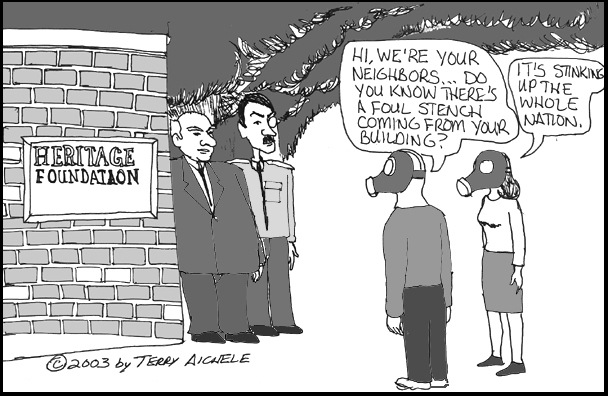
There’s an important new post by Amanda Marcotte about the increase in child poverty in the U.S. and the concomitant justificatory rhetoric of rightward types. Digby reports on the perfervid Heritage Foundation response, namely that an increase in some 500,000 homeless children is just propaganda from lefties for more government spending. Quick! Get William Blake on the phone! Is this a holy thing to see? Wasn’t this a Christian nation at least five minutes ago? Please, can’t we have the dunking stool for such pronouncers? Oy! A half a million new homeless kids. Maybe they’ll dance a fairy jig by the light of the moon and the wee people will take care of them? Get the leprechauns on the line!

Meanwhile they’re moving apace in New Jersey to get rid of the library for the blind. Governor Chirtie imagines that the elimination of books for the blind (meaning the elderly, children, veterans, people with physical disabilities, etc.) will save the state the cost of two and a half librarians and a lightbulb. Now that’s a bargain!

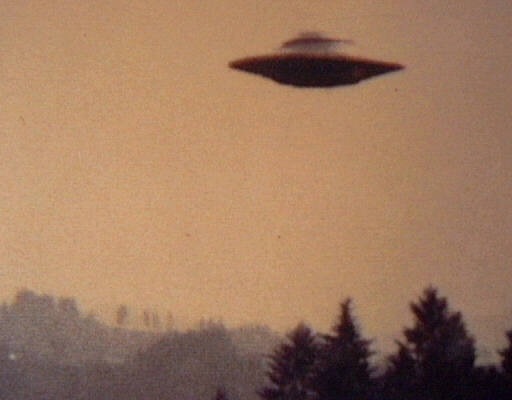
There was a moment when the film maker Woody Allen understood that he was not going to be sufficiently funny anymore. There’s a scene in his film “Stardust Memories” in which a UFO appears and extra-terrestrials tell Allen that he ought to give up on serious film making and return to his earlier funny movies. The joke is of course all about the Id, that base of consciousness and drive that animates western people. The humor is that we can know precisely what’s wrong with us and still somehow be helpless in the face of it. Knowing this won’t set you free no matter what Oprah Winfrey might say. Irony won’t save you either. If you know you’re failing and you proceed to fail anyway and somehow you know the reason why this was inevitable you are a tragic figure according to Aristotle. If you choose to find this funny you are dabbling in high comedy and the difference between this and tragedy is simply a matter of degree.

I choose a third way. I believe in the social compact. Really I do. 


S.K.

It's raining in Iowa City, so how about a little Irish song?

"Wisdom and Dreams"

I pray that I ever be weaving
An intellectual tune,
But weaving it out of threads
From the distaff of the moon.

Wisdom and dreams are one,
For dreams are the flowers ablow,
And Wisdom the fruit of the garden:
God planted him long ago.

W.B. Yeats

Brain Addictions for Everyone


brain


I was never one of those admirers of William Safire’s columns largely because I couldn’t forgive his paleo-Victorian defense of English against the unmannered and unlettered hordes. If you were to grill me, put sodium pentathol in my Ovaltine, pepper in my tea, I’d reveal a fondness for neologisms and street slang. There, I’ve done it without coercion. I’m impatient to get on with the point.

That being my favorite new term: the dopamine squirt. Matt Richtel’s article in today’s NY Times detailing how overloaded techno-charged citizens are becoming addicted to their fight or flee neurological “squirts” is well worth reading. But subject aside, its the juicy precision, the faux eros of the term that I love. The dopamine squirt! God yes! Apparently, according to Richter’s article, Americans can’t concentrate anymore because they’ve got the dopamine squirts! One wonders if the passersby see? Do they surmise that the itinerant i-Phone toting monster talking like a lottery seller has the squirts? “Oh the poor bastard! Dripping, unconscious eternal weather vane.”

Me? I have the squirts but good. O what abstractions these mortals are, til they leak…


S.K.


S.K.