
In heaven Piglet and Pooh were still blind.
“I guess that afterlife recovery story was just nonsense,” said Pooh.
“Grope!” said Piglet.
Pooh stumbled into an angel. It was different than he’d supposed: stingray flat and without wings. He knew it was an angel without wings because it said so.
“Do not be afraid!” it said. “I am a two dimensional angel without wings.”
“Wow!” said Piglet.
“What happened to you?” asked Pooh.
“This ain’t Anglican afterlife,” said the Angel. “This is cartoon character Valhalla.”
“Wow!” said Piglet.
“Why are we still blind?” asked Pooh.
“The only one here who can see is Odin,” said the Angel, “and he’s got one eye so he has no depth perception.”
“Wow!” said Piglet.
“What happens now?” asked Pooh.
“We’re going to the ribbon factory,” the angel said, then added, “the blind do well there.”
Author: stevekuusisto
Poet, Essayist, Blogger, Journalist, Memoirist, Disability Rights Advocate, Public Speaker, Professor, Syracuse University
When the statues come to life…

Every clotted child knows it’s bad—
Frosty the Snowman
Just another perv uncle,
Worse, the dancing ones,
Colonel Snap-tooth
Down from his plinth.
Even the good ones,
Helen Keller
Following you home
On granite legs
Will scare the shit
Out of you, stunt
Your growth
Which is why
I’m short, Madame Blavatsky
So fucking short.
Pooh and Piglet Inspire the Able-bodied…
“Its dark in the woods,” said Pooh.
“Yes,” said Piglet.
“Are you blind too?” Pooh asked.
“No, I lost my flashlight,” said Piglet.
“But it’s 11 AM,” said Pooh.
“How do you know?” asked Piglet.
“My stomach clock,” said Pooh.
“Oh, then I must be blind too,” said Piglet.
“It happens,” said Pooh, adding: “but we can lead completely successful lives as story book characters and prove that not being able to see is just like being left handed or getting your head stuck in a jar, no big deal.”
“You think?” said Piglet.
“Yes,” said Pooh for he’d used up all his words being a bear of little brain.
Piglet sat down in the road.
“If what you say is true then I’m going to take a nap right here,” said Piglet.
“OK,” said Pooh and he lay down too, secure in the knowledge he was wearing his “blind bear” tee shirt.
They fell asleep.
They didn’t hear Mr. Rat-rip on his first generation McCormick reaper.
At the inquest Rat-rip said, “If only they’d known their proper places, you know the asylums or poor houses or whatever.”
Thinking of Disability, Who Has the Eraser?
When precisely did the personal became political is a question, like the chicken and egg, though I know the answer to that one. As for the former it’s customary to say it happened as a concomitant dynamic of feminism and black liberation—the Combahee River Collective certainly made the idea famous. Trust me, I think it’s the only way to think about politics if you care about human rights. The personal means many things but most assuredly above all else it means “what’s happening to the roof over my head?” Or “why don’t I have a roof?” Both are variants on Gore Vidal’s comment: “Politics is knowing who’s paying for your lunch.”
If you’ve a disability the personal is most decidedly political but let’s delve deeper. Here “the political” means not “of the polis” but being outside it and everyone whose disabled understands this.
Disability is an outsider’s game and therefore the personal and its associated politics are in sharp distinction to America’s myth of the self-directed man who pulls himself up by his bootstraps for solitude and grit are fictions in industrial societies and the personal understanding that politics made the disabled even lonelier after they built factories is essential to seeing how disability became a sub-class of the human.
The personal: 80 per cent of the disabled are unemployed in the United States and since COVID-19 we’ve been dropping off the employment rolls in staggering numbers. 20 per cent of white disabled workers have lost their jobs; 40 per cent of disabled folks of color have lost their jobs. Since many of these positions were in the service sector it’s nearly one hundred per cent certain these lost jobs won’t be coming back.
The political: no efforts are underway to make sure the disabled have access to health care; job training at the national level; adequate housing is nowhere being discussed in Washington.
The personal: disability “is” people of color; indigenous people, queer people, Latinx folks, veterans, children, the elderly….we’re over 60 million in the US. Why is this personal? Because:
The political seeks to wipe us off the map.
Politics is knowing who has the eraser.
You can’t use the word “longing” in poetry anymore…

But leaves fall
They whirl under street-lamps
“Death’s butterflies”
As my friend Jarkko
Called them—and
He’s gone now.
Try talking about life
Without clear desire
Also known
As tenderness—also
Called yearning
Aching, pining,
And for what?
The day held meaning,
We felt accomplished,
We swept up the children’s hair.
More About Being Disabled in the Faculty Ranks….
There are many ways to fail at your chosen profession and lord knows if you’re a reader of fiction you’ve seen how this is inevitably a feature of narrative. Ahab chases whales but he’s not a leader; Vronsky; Charles Bovary; the novels of Dreiser; Fitzgerald; Faulkner; Edith Wharton; George Eliot–the list is necessarily long.
“Failure is the condiment that gives success its flavor,” Truman Capote once said and why not? For every tragic tale there’s a comedy where things work out for the losers but let’s be honest: tragedy is the thing that sells. Comedy is simply desert. Boiled Billy Budd is always the main course.
Writers know better than Human Resources types that in America working is about the damp squib as the British like to put it. It’s the prospect of fizzle that keeps laborers in a nearly endless state of productive terror. The drama rests in ascertaining how long the victim can endure. The characters in Richard Russo’s excellent novels come to mind. Faced with a hundred collapsing structures–dying towns, rural drug abuse, prison pipelines, insufficient employment, broken marriages, shell shocked existentially ruined children, how long will the main character last?
As a disabled man who’s had his share of employment pain it’s this last question I find most interesting not because I think I know the answer but simply because the disabled who are lucky enough to have jobs in the United States must endure hostility from the structural dynamic that employs them. We call it ableism nowadays, signaling the overt and structural disdain for disability itself, a matter that functions like racism and all other bigotries–offering an “off stage” narrative that the cripple really shouldn’t have her job at all. And then: “let’s watch her fail.” And then: “let’s help her fail.”
In July of 2000 I took a job as a teacher of creative non-fiction writing in the graduate school at The Ohio State University in Columbus, Ohio. What I didn’t know was that my job offer came as a result of larger influences–the faculty of the overlord English department wanted me, for I was famous, and yes, I’d add to diversity awareness. The creative writing faculty with whom I’d be working didn’t want me at all. They were outvoted. Generally job applicants don’t know these things. I certainly didn’t.
Ah but what came next was the incitement premium as Freud calls it–the thing–the pendulum that sets the story going. A woman on the creative writing faculty spread the rumor that since I’d been “out of the academy” for five years (raising money for a major non-profit after a decade of distinguished teaching) that it would clearly prove to be the case I didn’t know how to teach. She still works there and she’s still a gossip. She’ll gossip about the love lives of her grad students; tell stories about other faculty, many of them as hopeless as any of Trump’s “alternative facts” but I digress.
She asked her “besty” grad student, her most obedient hench-woman to take my very first grad class in nonfiction. She essentially took the class as a spy.
Back to disability: if you’re blind you need technology to do your job. I didn’t get my talking laptop and scanner for about two weeks. I taught for two weeks by having students read aloud their work.
The grad student spy quit the class after one week for her mission was done. She reported to her doyen of discrimination that I didn’t know how to teach for I was asking the students to read aloud.
The narrative that I was insufficiently sophisticated, nuanced, skilled, and discerning was now official. Gossip Queen spread it like lice in a locker room.
The grad student in question has gone on to have a career as a writer and professor with a special focus on queerness. But she’s a rank and file ableist and therefore nothing more than a single issue politician. When tragedy is the dominant vehicle you need single issue politicians as part of the plot. Billy Budd is not possible without such characters.
Meantime it’s been twenty years and I’ve had a fairly good run of it. I left Ohio State for a senior post at the U of Iowa and now hold a professorship of some merit at Syracuse University. Compared to the 80 per cent of the disabled who remain unemployed I’ve been damned lucky.
But I still feel the unjust, sinful, predatory, moist fish of academic ableism. And as I look around me I see very very few disabled faculty in the ranks.
Several of my former students both at Ohio State and Iowa have gone on to have careers in the academy. I wonder how much they know about being disabled in the fog factory as Kenneth Rexroth called the University?
If you’re disabled make sure that the MFA program you attend isn’t crammed with fatuous, self-promoting, third rate stuffed shirts and blouses who think the only place for disability in writing lies in the veneration of cheap tragedy in some novel somewhere.
Soliloquy
Now he’s getting old he wants Bach. A balloon flies over the farm and he knows this is Bach anticipating the enlightenment. He pulls a blue corn flower. (Alright, alright, it’s me getting old.) I kick a clod of earth and talk to myself. Poor Bach. He had to dine with Frederick the Great who made fun of him. “How it is,” I think, bending to pick yet another blazing flower which one supposes is a thing that cannot be done in heaven.
“Come in Bach, over. Tell me of the galant flourishes as we leave this life? Over.”
Thinking of Gore Vidal
In his book “Inventing a Nation” Gore Vidal noted: “from the beginning, Jefferson wanted a new constitutional convention every twenty years or so, while Franklin himself went boldly on record with the prediction that our people would drift into so deep a corruption that only despots could rule them.”
Well, we’re here, later than Franklin might have imagined, but one thinks of Jefferson in this instance as we need a new set of human rights and environmental rights enshrined in our government.
Alas a democratic constitutional convention would be ill advised perhaps, one pictures red state-blue state animus, the MAGA crowd vs. calls for racial justice, equal pay for women and environmental protections…just to name a few.
Who’d host such a convention? Who’d actually represent the interests of honest women and men?
Asking for a friend…
As it is, we’re being ruled by a despot and there’s no way around it.
Irony and Negation
Writing in 2003 of the US occupation of Baghdad Christopher Hitchens noted that “irony and negation are the everyday currencies” which puts me in mind of “blow back” for now we’re reaping what we’ve sowed or the chickens have come home to roost or shock and awe has come to your own backyard–yes language can be cheap. Yet there’s no doubt that neoliberal hubris with its adventurism, its uncivil disdain for facts, (weapons of mass destruction anyone?) disdain for human rights, environmental destruction of Mesopotamia–is there enough time for the whole litany? There can be no doubt that Trump’s dismantling of government, with its ironies and negations of facts had its birth shortly after 9-11.
It is too shallow I think to say Trump ascended owing to a personal grudge with Barack Obama–certainly it was an ingredient, but organized disdain (birtherism) the idea that sinister foreigners are out to get you, that’s the work of Paul Wolfowitz post 9-11. Add a fomented disavowal of facts and you’ve got the blueprint from Trumpism straight from the W. Bush administration. Irony and negation are the everyday currencies now, right here in the homeland.
Charon, being illiterate…
Charon took dead souls across the river of death but only for profit. As far as I know Karl Marx never wrote about that. He did however write about the body as machine but where the soul’s concerned Marx had little to say except to point out that religion is the soul of soulless conditions which is unhelpful if Charon is hanging around outside your house and waiting for his obolus.
I visited Marx’s tomb once. It’s adjacent to George Eliot’s eternal resting place. She wrote:
“O may I join the choir invisible
Of those immortal dead who live again
In minds made better by their presence; live
In pulses stirred to generosity,
In deeds of daring rectitude…”
I love “daring rectitude” which somehow reminds me of darling reticule but never mind, Charon doesn’t have it, demanding his payment in order that your eternal soul won’t be lonely.
Which means Charon was illiterate.
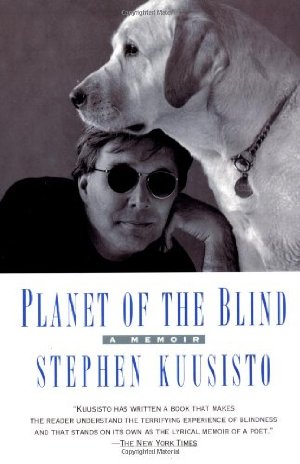
 Planet of the Blind