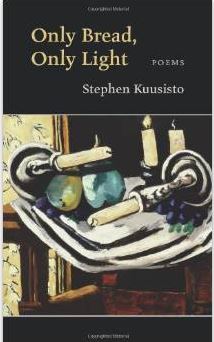
Alone, like…

I’m alone like a cabdriver who sleeps in his taxi dreaming of childhood. Red geraniums. Black currants. Sleep, invariably, is a still life for the lonely.

Last night I dreamt of my father, now long gone, who appeared beside a tall window at dusk, snow falling, and he was abosrbed, reading a book. I said, in the murmurous way of all sleepers, “that’s just as it was in life…”

Today the sun is as strong as before. We’re allotted approximately 3 billion heartbeats in this life.

Me Before You, or, It’s Life Itself Stupid

The current showing—nay, “display” (as in “public” display, as in “flogging” for the betterment of mankind) of the film “Me Before You” is more than an outpouring of murderous art, it’s a testament of sorts to neoliberalism’s incapacity to value what we used to call “the individual.” (Remember wave one Enlightenment? Remember throwing off your chains?)

The link above connects to The Guardian where a fine article by Ryan Gilbey explains the ways in which the film, based on a moist novel by JoJo Mayes spells out a message of hopelessness and euthanasia for the disabled. Many in the blogosphere have written powerful pieces about the deleterious and decadent nature of the film and the book and I recommend you read Bill Peace “Bad Cripple” here, but I’ll also quote him:

Me before you is not poignant. It is a romance novel that used disability as a plot device. It relied on one of the oldest and most destructive stereotypes associated with living with a significant disability–the assumption that death is preferable to disability. I know this because at least once or twice a year a stranger says tells me they would prefer death to using a wheelchair. Strangers have been saying this to me since I was 18 years old. As for the book addressing themes associated with life post spinal cord injury. Technically this is correct. But Will, unlike 99% of people with a spinal cord injury live on the edge of poverty. Unemployment is rampant, access to housing and mass transportation remains extremely difficult. Ableism has impacted every part of American society.   

Neoliberal, late-capitalist economies can’t imagine disability as a meaningful way of life not because paralysis or blindness or depression aren’t commonplace, but because the nature of neolib desire is made up of desire itself. In other words, neoliberalism isn’t interested in communities or the rising expectations of neighborhoods or nation states. Neoliberal desire is about abstraction—it’s pure fetishism which calls for an antiseptic world. It calls for repression wherever human beings suffer. Remember when Mitt Romney said the wire fences enclosing  Chinese factories were there to keep the envious away?

The practical aspects of disability are, if not easy to master, achievable certainly. Yet films like Me Before You invite the public to imagine that a disabled life is a burdensome thing, and too difficult to enact. Enacted life is, to put it another way, artful life. Me Before You says there’s no art to disability. In turn it says there’s no art to difficulty. The only artful life is a perfect life, an unblemished one, one that’s ultimately fictional. Lust for fictional lives ladies and gentlemen. They’re the only lives you can have.

In my new memoir (forthcoming from Simon & Schuster) I talk about disabled life as an art form. The book is about my life with a guide dog named Corky. She didn’t teach me how to be blind or how to like myself—those are tasks for human beings. But she did show me how to savor a hundred moments:

Neuroscience explains the theory of embodied mind or cognition: when we look at someone we experience an internal process that mimics another’s emotional state. Empathy works this way. And along with this comes a perception that time is slowing. This feeling of slowed time helps to create social interaction between people. Owing to Corky, I believe dogs gave us this gift. Dogs slowed us by relieving us from the fight or flee pins and needles edge of merely surviving. It’s undeniable dogs have always drawn us into the here and now.

This invitation very likely induced humans to fashion what the Greeks called “oikos”—the root of ecology, but originally a term for house-holding, and family.   

Dogs taught us to see and know our surroundings and they proved one part of providence is living right. 

Oikos, here-life. 

**

“If I knew then what I know now,” I often said to her. I wasn’t without irony. The phrase is sentimental and sentimentality is a wide and very sticky subject especially where dogs are concerned. “If I knew then what I know now,” I said to her as we flew in a jet liner that, according to our captain was straight above the Grand Canyon. 

Sentimentality means my dog asked me what I meant. 

“Well,” I said as she settled her head on my knee in seat 1A aboard a Boeing 737, “well I’m reminded of Carl Jung’s remark about one of his patients—Thank Heaven he could make up his mind to be neurotic. I see now after much distress, there’s nothing faulty about blindness and I should have gotten here much sooner.” 

And Corky asked me what I meant. “Should have.” 

Dogs don’t believe in should have. They don’t take stock in it, as Huck Finn would say. 

And I quoted Allen Ginsberg to my dog: O victory forget your underwear we’re free.

**

We talk about the art of getting naked or of flower arranging, but we never speak of the art of becoming disabled. In America disability is discussed simply as rehabilitation, as if living is no more complicated than lighting a stove. 

The art of getting disabled is a necessary subject. When we look to history we find examples of this art everywhere. Disabled makers stand against loss.  They make something of difference. When traveling in France Thomas Jefferson broke his wrist. A surgeon set the break badly. A major facet of his life was changed forever.  He was forced to put aside his treasured violin. In turn he took up long, slow, leisurely horseback rides as a meditative practice. 

Blind people don’t necessarily need dogs. White cane travel is a very fine way to get around. But I say guide dog travel is an art. It’s a means toward living much as Jefferson learned to live. Moving in consort with an animal is one way to make a life. Art is mysterious. Some find a path to a certain form. Some find an unlike form. 

Thomas Jefferson sang to his horses. He was very fond of singing. Moving in consort requires it I think.

It’s hard to imagine singing to a white cane. 

I sang all kinds of things to Corky. For her the singing meant contentment. Often I went into my bad operatic mode and sang Neapolitan love songs to her. Cardilo’s “Core N’grato” was one of my repeated offenses:

Catarí, Catarí, pecché me dici

sti parole amare;

pecché me parle e ‘o core me turmiente,

Catari?


The Great Caruso I was not. I reckon the sight of a man with sunglasses singing in bad Italian to a harnessed dog may well have been amusing to many. 

**

Do you need to sing to live well? No. I’ve a great good friend who is nonspeaking. But in turn his whole body is music. 

My deaf friends sing. 

Many of my wheelchair pals are dancers. 

Several of my disabled friends are comedians. 

We crackle, zip, exhale, inhale, sport with our fingers, flap, jump, pop wheelies, and jingle with harnesses.

Resourceful life is practiced. Sometimes it is silly. Art can and often should be frivolous. With permission from curators at the Museum of Modern Art I was once allowed to spin Marcel DuChamp’s famous wheel, a bicycle fork with front wheel mounted upside-down on a wooden stool. DuChamp was a DaDaist. He made art by placing things side by side that did not formally belong together. A MOMA staff member handed me a pair of latex gloves and I pulled them on and with Corky watching beside me, I reached out and gave DuChamp’s aluminum wheel a spin. “This is the steering wheel of my life,” I thought. Frivolous motion.

I certainly know some blind folks who’d say I’m over the top talking about art in the context of service dog life and to each his own. All I know for sure is what a guide dog can do. Though the stationary wheel of your life seems forever stopped, your dog says give it a turn.


**

Disability life is life. It’s not a secondary or sub-sectioned existence. It is life. It’s life the way life is, on a day when you see the wild geese heading south and north at the same time. It’s life knowing music is cultivated time and knowing time heals nothing.
De Facto Eugenics

De-facto Eugenics are much on my mind today given Jojo Maye’s book and the film version now out.

stevekuusisto's avatarPlanet of the Blind

I begin my blog post today with a lengthy quote from Andrew Solomon’s book Far From the Tree: 


“When I was in college in the mid-1980s, it was common practice to speak of the “differently abled” rather than the “disabled.” We joked about the “differently gruntled” and the “differently agreeable.” These days, if you talk about an autistic child, he differs from “typical” children, while a dwarf differs from “average” people. You are never to use the word normal, and you are certainly never to use the word abnormal. In the vast literature about disability rights, scholars stress the separation between impairment, the organic consequence of a condition, and disability, the result of social context. Being unable to move your legs, for example, is an impairment, but being unable to enter the public library is a disability.

An extreme version of the social model of disability is summarized by…

View original post 999 more words

Many Blind Rivers: Stories of Consciousness

Many Blind Rivers: Stories of Consciousness
An Evening with Stephen Kuusisto
5:30 pm – 6:00 pm:  Common Touch Exhibition Viewing & Reception
6:00 pm – 7:00 pm:  Lecture & Discussion Led by Stephen Kuusisto
Blindness trails a long history in imagination. Award-winning writer Stephen Kuusisto, author of the New York Times “Notable Book” Planet of the Blind (1998) discusses blind history and its place in art.  Stephen Kuusisto teaches in the Center on Human Policy, Law, and Disability Studies at Syracuse University. He is the author of numerous works, including Only Bread, Only Light: Poems (2000) and Eavesdropping: A Memoir of Blindness and Listening (2006).

Naked Enterprise

1460154273_featured.jpeg

One hot summer afternoon when I was maybe six years old, I lay in a ditch filled with dry leaves because it offered a world for me. The ditch was in the woods. It was quiet. I fell asleep in my Rip Van Winkle nest. When I woke I heard a crinkling in the leaves and I felt a toad timidly placing his feet on my outstretched arm. He walked along my wrist and disappeared into the further recesses of the ditch. I was sorry he was gone. Funny how I can remember that. At six I felt the departure of a toad as a personal loss. Ridiculous!

When I think about poems I like I generally find there’s a commonality to them–not a sameness, not a theme or subject–but a discordance or disconnect between primary emotion and whatever is wiser. By this I mean sensibility. And also a hint of the illogical that must accompany strong emotion. Here are lines by Yeats I’ve always admired:

I made my song a coat
Covered with embroideries
Out of old mythologies
From heel to throat;
But the fools caught it,
Wore it in the world’s eyes
As though they’d wrought it.
Song, let them take it,
For there’s more enterprise
In walking naked.

Flawless Memory

I’m reposting this because the memories are very strong with me today.

stevekuusisto's avatarPlanet of the Blind

1.

I arrived at the intensive care unit in the early afternoon.

I was shocked to find my mother rising and falling atop a motorized bed with no nurse in sight.

2.

My mother, who resembled Elizabeth Taylor, even as they both aged and who was now unconscious, or partially conscious; terrified, or without a claim to dignity—with her tracheotomy, her heart monitor, I.V. drips, with a macerated open chest cavity, my mother was being tortured to death in the Portsmouth, New Hampshire hospital on an ordinary day in September. Outside you could see the beginning of autumn foliage.

3.

What to do? Stay calm of course. Despite the bungled surgery and the failures of post-operative care you need the nurses on your side. Everybody who has ever been in a hospital knows you need the nurses on your side. Don’t yell at the nurses. Don’t spit in the soup.

View original post 783 more words

Farewell Scott Rains

We have lost a great disability rights advocate here in the United States. But I’m not sure that’s a proper way to say it. Scott Rains was more than a guy who rolled for equal access, he was a force for delight. The clouds moved with wind across his smile and he smiled across the world. He encouraged the disabled to travel and he was always joyous. I don’t know enough about joy. I’ll bet you don’t either. But I know Scott Rains knew something about it and shared.

I never got to meet him in person. We corresponded and talked a few times via the old fashioned telephone. He was always looking for ways to get people who roll or crutch or dog it, who puff with a tube or talk with their hands to put their toes in the ocean. I told him how once I was lifted by three men while vacationing in Jamaica. They grabbed me and hoisted me into the air. All of them were well meaning: their goal was to place me securely in a boat. The blind man needs help. We’ll give it to him. I smiled. “Its a cultural thing,” I told myself. Their intentions were good.

The trouble is that lots of well meaning actions by non-disabled people are simultaneously demeaning. Those helpful beach guys saw my blindness as something akin to what I’ve come to call “trouble luggage” which is the ultimate pejorative objectification of disability. My friends who travel with wheelchairs know all about this, especially when they’re flying. The airlines view disability (all disability) as trouble luggage. Its rare for a disabled person to have a good day when traveling. You can joke if you like by saying its rare for anyone to have a good day when traveling but trust me, the demeaning and objectifying experiences of disabled passengers are so consistent and so humiliating they far outstrip the lukewarm unhappiness of non-disabled travelers.

Enter Scott Rains who said there’s a beach out there and your toes need to touch the fizzy place where the water meets it.

I will miss him very much and I know I’m speaking for thousands.

The Taxonomy of Human Dignity

An old post at the Center for Bio-Ethics and Human Dignity puts me in mind of how perilous the past decade has proven for the disabled when it comes to birth–for eugenics has dominated the provision of medical services in ways that are both startling and alarming. Consider the following:

From Editorial: Human Dignity and Bio-medicine:

Arguably, one of the best extended contemporary discussions of human dignity and its implications for biomedicine was commissioned under President George W. Bush and convened by his President’s Council on Bioethics. The council’s two reports, Being Human (2003) and Human Dignity and Bioethics (2008), are the results of more than a few public meetings, thousands of pages of expert testimony, and the work of two physician-scholar-chairmen, Leon Kass, MD, and Edmund Pellegrino, MD. The work of the council provoked bioethicist Ruth Macklin to brand human dignity a ‘useless concept.’ Cognitive scientist Steven Pinker even assailed the notion of dignity as ‘stupidity.’ 

Nevertheless, both the term and the idea for which it stands continue to possess significant currency not only in the popular imagination but especially in medicine and law. In fact, Roberto Andorno, Senior Research Fellow and Lecturer at the Institute of Biomedical Ethics of the University of Zurich, maintains that the notion of human dignity is so ubiquitous in intergovernmental documents in biomedicine that ‘It is therefore not exaggerated to characterize it as the “overarching principle” of international biolaw’ (‘Human dignity and human rights as a common ground for a global bioethics’, Journal of Medicine and Philosophy 34 (2009): 223-240).

How does one account for this discrepancy? Can human dignity be at once both profound and indecipherable? Can it be both ubiquitous and useless? What happens if we expunge human dignity to the dustbin of incoherence, as Macklin and Pinker would have it? The implications of these questions for biomedicine, human rights, and public policy are difficult to overestimate.

Will our posthuman progeny one day see human dignity as a quaint historical artifact of our speciesist predilections? Perhaps. But removing human dignity from the table only seems to move the question of human rights to the foreground. Whence come human rights if not from human dignity? The United Nations’ Universal Declaration of Human Rights of 1948 affirms that ‘recognition of the inherent dignity and of the equal and inalienable rights of all members of the human family is the foundation of freedom, justice and peace in the world . . . .’ If human rights are merely a result of a social contract, humanity as we know it will survive only so long as the contract remains unaltered. In light of the history that gave new birth to this tradition—namely, the Nazi eugenics movement and the violations of human dignity that resulted from it—forfeiting the idea of inherent human dignity would seem potentially disastrous. 

When bioethicists like Ruth Macklin brand human dignity as useless they do not of course mean their dignity but rather the dignity of others. That much of contemporary bioethical reasoning descends directly from Victorian utilitarian philosophy is, perhaps, not as broadly understood as it should be–but the taxonomy of utility aside, the founding principle holds that what is good for the majority of the population should be the only yard stick by which ethical decisions are measured. This isn’t news for scholars of disability studies or for historians but it remains news–relevant news–in a time of extraordinary genetic advancements and managed health care. Most Americans do not realize that their right to give birth is not guaranteed in hospitals across the US and this is a co-determination of bio-ethics and the agents of medical insurance. If you’re told your prospective baby will have Down Syndrome you’re just as likely to be prescribed drugs for abortion, or, worse, denied pre-natal care should you insist on having that child. This is chilling news but do not worry: Peter Singer can explain it to you.

As the Institute on Human Dignity and Bioethics puts it:

Human dignity, once a cornerstone for bioethics, is increasingly obscured by a contemporary culture of commodification. Myopic fixation on sexuality, fertility, and reproduction reduces the female body to a resource for medical exploitation and reproductive tourism. Procreation is being engulfed by the reproductive imperative and the child of choice. Without neglecting the ongoing emphases on beginning- and end-of-life issues, our task must include attention to prenatal discrimination, the neglect of the girl child, worldwide disparities in women’s healthcare and maternal mortality, and the objectification and exploitation of the female body. 

For commodification we may read utility–there’s money to be protected by eliminating children whose disabilities may conceivably tax the state or, yes, the insurance industry; money to be made promulgating designer babies; and yes, money to be made in medical exploitation. Against this contemporary horror show it is not reassuring to know that bio-ethicists are all too often the children of Bentham and Frances Galton. As my friend Douglas Biklen, now retired from Syracuse University likes to say when discussing our fellow citizens who can’t speak: “presume competence”–what could possible get in the way of this? Can it be that ethical presumption costs too much?


Consider the Trojan Horse

Whose eyes were burls of cypress taken from the bows of ships;

Who was blind and leaning, upright, stiff;

Who was assembled between midnight and dawn;

Whose portions came from boats;

Whose manufacture was hidden in the tents;

Who smelled of branch and grass and wonders;

Who rose from equations;

Who at last, had partly just arrived, and was partly immortal.