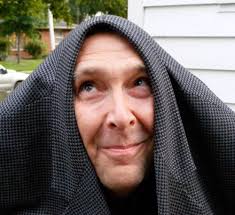
Self-Interview, April 30, 2014

Last night in my dream, the Gods touched my hair. I dreamt of an odd family, people important in my youth. They became tragic with many deaths in the family, alcoholism, relentless sadnesses. My hair parted as I slept and I saw the House of Atreus. And I woke to the long, reverbatory, mystic sadness that comes from the stars. And so I must go into the day with the tempus of the collective unconscious. As Carl Jung would say: “Better wear your good deodorant.”

Note to self: Carl Jung probably didn’t use deodorant. He was Swiss. The Swiss believe they do not stink.

**

Off to the baths. Marat are you coming?

**

“Show me a sane man and I will cure him for you.” (Carl Jung)

Self-Interview, April 30, 2014

Last night in my dream, the Gods touched my hair. I dreamt of an odd family, people important in my youth. They became tragic with many deaths in the family, alcoholism, relentless sadnesses. My hair parted as I slept and I saw the House of Atreus. And I woke to the long, reverbatory, mystic sadness that comes from the stars. And so I must go into the day with the tempus of the collective unconscious. As Carl Jung would say: “Better wear your good deodorant.” 


Note to self: Carl Jung probably didn’t use deodorant. He was Swiss. The Swiss believe they do not stink. 


**


Off to the baths. Marat are you coming? 


**


“Show me a sane man and I will cure him for you.” (Carl Jung)


Selfie: Late April

Abby Normal

Photo: author Stephen Kuusisto mimics Marty Feldman's "Igor" in Mel Brooks' "Young Frankenstein


Compulsory hetero-normativity; compulsory able-bodiedness; patriarchy; dominant whiteness. So many oppressions. So many astonishing human arrangements. Note: I’ve left out religious intolerance. My mistake. There. Ipse dixit. 


Someone always says “it (prejudice) is produced by an insufficiency of language”—you can count on post-structuralists


I remain wary of those who “abstract” power. 


In general sectarian cosmopolitanism isn’t your friend if you hail from a historically marginalized background. 


Still, as Czeslaw Milosz wrote: “mythologies of the unlucky conquer nations”. 


Beware your mythologies. 


The only compulsory principle is late industrial capitalism. “its property, stupid.” 


I will not pretend I reason clearly. 


Post-normativity is an aesthetic idea but meantime, the bio-industrial-genetics industry is picking your pocket. 


“One ought to hold on to one's heart; for if one lets it go, one soon loses control of the head too.” (Nietzsche)


“The pendulum of the mind oscillates between sense and nonsense, not between right and wrong.” (Jung)


At Dawn

The birds in my neighborhood, who are beauty in-molded, rise and circle. Their brains are blanked, their brains are dark as minerals. I give thanks and praises there are no Bibles for vireos and phoebes. I’m blind but see light at the tips of wings—gold finches, orioles, bay-breasted warblers. 


Some say beauty will outlast ideas of good and evil.

If I am here entire I must push my face into the feathers of the mind. Let others read Revelation. 

If I come back I’ll be nothing more than spindrift to the tips of wings. 


What all Dogs Know

Steve and Vidal
 

Image: Steve Kuusisto with "Vidal" (a handsome yellow Labrador)–his second dog from Guiding Eyes for the Blind:


I don’t want to be a celebrity. I just want to be my dog. Ipse dixit. 


When we hug dogs and smell their fur we’re fully realized. Then we drift back into reason and dogs see we’ve gone to a far room. Empathy matters then. Dogs know we’ve entered a fearful place in a crystal palace of abstractions. They touch our knees. They live only in amazement.


I don’t know as much about amazement as I should. D.H. Lawrence wrote:


They call all experience of the senses mystic, when the experience

is considered. 

So an apple becomes mystic when I taste in it 

the summer and the snows, the wild welter of earth

and the insistence of the sun. 


I understand a dog’s amazement in our company is indeed mystic but only insofar as we consider it. 


I walked up the pale green avenue—7th avenue in New York—end of day, my great guide dog working to keep us safe, working us toward the postulate of arrival, the grandest of things, a task accomplished, going where we had to go. 


I was grieving for my father who had died only a month before. Grief is impossible to maintain so we engage it in small gasps. I saw my father was on an aerial bridge, high in the fading light, the span without end. My father had nowhere to go. And outside a monolithic computer store I began weeping. And my guide dog stopped, turned, saw me stricken, rose up on her hind legs and gently washed my face. I, who could not reason clearly, was being guided in more than one way. My father’s bridge vanished. I heard his laughter. “Beauty,” says the dog, “is very strong.”


We have to let the dogs in. Consider what they know. 


Why I'm a Crippled Poet

I am a poet who’s blind—I’m also short, dyspeptic, and addicted to savory treats. I feel better for having said so. This is, after all, national poetry month. 


Not long ago I attended a writing conference. A poet who has MS said she didn’t want to be a “wheelchair poet” by which (one presumes) she meant she didn't want her writing to be viewed through the lens of disability. Expanding this, I imagine she wouldn't want to be a black poet, a lesbian poet, or a really tall poet. In her view, poetry should be the product of an ex cathedra pronouncement—with a stroke of the pen we can erase all the nagging identity markers of humanity. 


Its possible to have a disability and live your life pretending you don’t have one. Plenty of people have done so. But getting away with this charade in literary terms means the imagination has been suborned—bribed—you’ve tricked yourself into thinking there’s a pot of gold that will be yours but only if there isn’t a hint of physical difference in your work. To paraphrase Garrison Keillor: “All the poets are strong, good looking, and above average.” 


Forget that our nation’s greatest poet Emily Dickinson had rod-cone dystrophy and couldn’t see in sunlight; forget Walt Whitman’s stroke; ignore bi-polar depression in the case of Theodore Roethke and Robert Lowell;  dismiss Alexander Pope’s spinal disease—I’m sorry this is a long list—Sylvia Plath; Hart Crane; Ann Sexton; Allen Ginsberg; William Carlos Williams; forget them all. Disability doesn’t belong in poetry. God help you if you let it in—the critics will dismiss you from the poetry pantheon IN A FLASH since “great” poetry comes from the grandest of all human resources—the dis-embodied mind. (Picture it as a Star Trek arrangement, a brain in a plexiglass case with wires emanating from it.) 


When I went to college in the 1970’s English majors were introduced to “New Criticism”—and though this approach to literature was already fading by the time I graduated—poetry world still has a “New Criticism Hangover”. New Criticism argued the study of literature required no knowledge about the writer behind the work. The shaping of words, the wit, the poet’s irony, his literary allusions—these were all you had to know to discern meaning—or as I came to call it—the “soft, chewy center” of a poem. 


Back then everyone was still under the sway of T.S. Eliot’s poem “The Wasteland”. We were instructed to read it as a compendium of allusions and to critique it as an allegory of modern exhaustion. No one (and I mean no one) raised his or her hand and said: “Wasn’t Eliot’s wife in a madhouse when he wrote this; and wasn’t he clinically depressed at the time?” We simply talked about the quest for the Holy Grail and the “objective correlative” and, if we were out to impress the prof, we looked up everything in the original Greek.


The New Criticism Hangover stipulates you mustn’t admit your complaining, belching, limping, loudly breathing, dis-articulated, lumbering body into poems. You may only lampoon or parody “other bodies” but this should be reserved for pathos or other symbolic distancing effects. 

Many of America’s leading poets do this—blindness represents profound isolation; deafness is simply a metaphor for lack of knowledge; deformity is nothing more than a Grand Guignol effect. If you write like a poet who has NCH you must never hint you have a body of your own. 


Of course there are messy feminist poets with their leaking womanly poems; and black poets with their jazzy outrages; but the New Critics Hangover School is uncomfortable with all that stuff. 


The “wheelchair poet” remark is part of this heritage—its a highly conscious position—to sequester the outlier body; to keep it in its sarcophagus; to tighten down all the screws. 


Me? I’m a messy “wheelchair poet” in the broadest sense. I’m demanding too. I cause trouble in public spaces. I’ll make you move your stone lions if they block the damned sidewalk. I’ll demand you provide me with a trash can at the Hilton so I can pick up my dog’s shit. If you don’t bring me the can, I’ll leave the shit right here. I’m loud. I’m really loud. I like hip-hop. I like Mahler symphonies and I turn them way up. I’m a poet who not only admits the defective body into literature—I think the imagination is starving for what that damned body knows. I happen to be blind. What do I know? I know things like this: 


“Only Bread, Only Light”


At times the blind see light,

And that moment is the Sistine ceiling,


Grace among buildings—no one asks

For it, no one asks.


After all, this is solitude,

Daylight’s finger,


Blake’s angel

Parting willow leaves.


I should know better.

Get with the business


Of walking the lovely, satisfied,

Indifferent weather —


Bread baking

On Arthur Avenue


This first warm day of June.

I stand on the corner


For priceless seconds.

Now everything to me falls shadow.”


Excerpt From: Stephen Kuusisto. “Only Bread, Only Light.” iBooks. https://itun.es/us/1017I.l             


Did I mention William Blake? He had a disability too. 


20 Lessons from Book Tour

By Andrea Scarpino


  1. Sometimes you just need to pee by the side of the road. 


  1. Flirting with the Santa Monica Subaru salesman to get a Harman/Kardon speaker installed in your newly purchased blue Subaru—while absolutely dirty—was absolutely worth it. 


  1. After you read poetry about a friend being killed in a car crash, you learn that a friend of those in the audience was killed in a car crash the week before. And her best friend asks you to sign both of their names in her copy of your book. And what can you say to offer comfort? Nothing. 


  1. “Walt Whitman,” a woman says, nodding her head. “I’m pretty sure I’ve heard of him.”


  1. You’re talking with another professor, and you learn he was also a student of one of your mentors. And it makes sense: this man’s kindness, the kindness of your mentor. Let kindness always spread from teacher to student. And back again. 


  1. Cruise control is better than sliced bread. 


  1. A nun comes to your reading and brings a bouquet of palm fronds woven into flowers. And you hold the bouquet and think of your father, who wove palm fronds every Easter: crosses, boxes, long chains. His bulky fingers, stiff hands—your hands— 


  1. Exit 92 is the first exit with a Starbucks when leaving the Upper Peninsula. And the last exit with a Starbucks when you return. 


  1. Christian rock is addictive. Bored in the car, you move through radio stations, find yourself dancing like crazy to a song about resurrection. 


  1. A young woman who has gone hungry in order to feed her kids buys your poetry book. Always write remembering this. 


  1. Some listeners dismiss your poetry as “death-obsessed” and “dark.” And some understand the need to sit with loss, to feel it. They share their own stories: searching for the decapitated heads of two teenagers killed in an accident, surviving any number of wars, losing friends to suicide, losing husbands. They cry as you read your poems of loss. They understand their crying as necessary and good and full of light. 


  1. Even though you haven’t listened to the Indigo Girls in a decade, when you find their Rites of Passage CD abandoned in your car’s glove box, you still remember every single word. 


  1. Your father’s favorite—and final—student has a photograph of the two of them on his office wall. 


  1. When someone asks if you’d like to do yoga, say yes. When someone asks if you’d like coffee, say yes. 


  1. You’re eating lunch when your friend leans in to you, whispers, “That woman looks just like Meg Ryan.” You turn to look, turn back. “That’s because she is Meg Ryan,” you say. You used to live in Los Angeles so you know you’re not supposed to react to celebrities. But Meg’s hair is gorgeous. 


  1. It may be snowing ten inches at home, but it’s spring somewhere. Dogwood in bloom. Magnolia. Crocuses pushing through wet earth. And in Duke’s Gardens, row after row of tulips, opening. 


  1. You seem to need more vegetables than anyone else. So when you return from six weeks on the road, don’t be surprised you can’t stop eating: rhubarb and cauliflower steaks and bags of baby carrots and romaine hearts and pea pods and handfuls of radishes and spinach and kale and beets. 


  1. Do laundry every chance you get. 


  1. You have made some amazing friends in this world. Friends who share their homes and pets and partners and kids. Friends who find money in recession-budgets to pay you to read your poems, visit their classes. Friends who buy stacks of your books to give as gifts. Friends who bring you to delicious restaurants. Friends who drive hours to see you in another city. Friends you haven’t seen for years but with whom you immediately re-connect. Friends who make you laugh so hard your stomach hurts. Who host you graciously even through their own exhaustion, busy lives. Who make you feel like the most important person on Earth. 
  2. And you know it is your job as a writer to find words for all of this. That’s what you believe: words save us. Words catch hold of the ephemeral. You say “thank you” again and again. You write “thank you” again and again in cards. And it’s not enough. But until you find better words, you keep saying it. “The only wisdom we can hope to acquire,” Eliot writes, “Is the wisdom of humility: humility is endless.” And you hope he is right. And you refill your gas tank. Get back on the road. 

A Virgin Walk with my First Guide Dog In New York City

Many people think New York must be a tough place for the blind but in truth once you’ve had training with a white cane or a dog its a great place. The lay out of its avenues and streets forms a grid which makes knowing your location rather simple. Though the sidewalks are crowded and the traffic is intense, New Yorkers are helpful—perhaps because so many come from someplace else—but when you ask questions on a street corner strangers are helpful. Walking from the train with Corky and entering the main concourse of Grand Central was like a dream—we moved among throngs of commuters, zipping around clusters of people reading signs.  In the majesty of the railway palace we stopped too. I wanted to take it all in. Trainer L was behind us, watching. A stray passenger asked if I needed directions. “No,” I said, “I’m just absorbing the glory of this place!” As I stood there two other people approached wanting to help. “This is a New York I didn’t know existed,” I thought. Its a New York the guide dog attracts. “Nice dog,” said the second man wanted to point me in the right direction. We headed toward the 42nd Street exit. Corky was delighted. Her tail thumped against my leg. She was in her element. Dogs have instinctive joy; follow their senses; but they have working joy too—they love having a task. Task-love emanated from her. I felt it in our speed. This was no unpleasant test. We were nimble and commanding. We exited the station and entered a sunny, spring day. We were in. Were in New York. I wanted to cry again but we were walking too fast. 


We passed some men playing a curb side card game; we skirted left and passed a girl with a rolling suitcase. We stepped around a subway grate, pushed to the curb at 42nd and Vanderbilt. Corky looked left and right. Two people jaywalked but she didn’t budge. A taxi accelerated in front of us. I smelled a cigar. I wondered if it was from the taxi or the far side of the street. L said we were looking good. 


**

Corky was calm but even so, the bustle of Fifth Avenue overloaded my circuits. It felt as though I’d had a dozen cups of coffee.  Then I had a bizarre experience, a neurological hijacking—a fight or flee reflex—and ordered Corky to cross 49th street though we didn’t “have the light”. She looked left and right, saw a gap in the traffic, and took off. We were jay walking like ten million other New Yorkers and though we reached the far side safely L caught up with us and said, “You almost gave me a heart attack!” “I had a brain fart!” I said. “Well don’t fart too much,” L said. “Listen for the traffic flow,” she said. 

Walking the next few blocks I felt better. My mistake crossing against the light came from energy rather than fear. This was an achievement, failing to be afraid. 


“Who would I be if I was no longer afraid?” I thought.  


We walked up Park Avenue and entered the Waldorf Astoria Hotel. The doorman bade us welcome. He displayed gladness. My “no longer being afraid” meant I could hear notes of optimism.


“Welcome to the Waldorf, Sir,” said the doorman, adding, “what a sharp dog!” 

“Thank you,” I said. 

I remembered to say good dog. 

We swayed together side by side on the red carpet. 

“Corky,” I said. “Oh Corky!” 

We stood in the foyer. 

There was a general fragrance of lilies.

“We can come to places like this; we can find our way; we’re New Yorkers!” i said, though not loudly. 

The rug was soft as a cloud. 

There was something august and funereal about the odors of furniture wax and flowers and the odd hush of the place. And as I would do so many times over the coming years I got down on one knee and hugged my dog. 


Men and women passed us, headed for the Park Avenue exit. 

“Wow,” said a woman, seeing us. 

I heard the smile in her voice. 


I heard an elevator open. 


I remembered that during World War II a train platform was constructed under the Waldorf for President Franklin D. Roosevelt. He could exit the train in privacy—the Secret Service would raise him from his wheel chair and help him into an open sedan. The car would be lifted via the elevator to street level. 


I thought of FDR and all the stage work necessary to conceal his disability from voters.  I’d already come far with Corky. I was fully visible with my disability and more pleased about the matter than I’d have thought possible.


**


Each of my guide dog friends recalls feeling pleased for the first time with a dog. My friend J.K. walked five blocks to a motorcycle shop and talked bikes. Then he walked some more and had lunch in a diner.  Nothing had ever been that good, no conversation or food had ever matched it. In the condensed version of guide dog life, suddenly everything becomes reachable. Reachable is a word sighted people never have to think about–but it’s the main ingredient of being and there’s nothing like feeling it for the first time or feeling it all over again.

J.K. said when he first took to the street with his dog, “It was as if people were seeing me for the first time–like before I got the dog they’d see my white cane and look away, but with the dog they had a point of contact and they could say something affirming, even if it was as simple as great dog, the ice was broken. I’d been blind all my life but it felt like with the dog I was having my first ever conversations with strangers. It was like breaking through to the other side of something.”

Standing in the Waldorf Astoria I too felt I’d crossed to the other side. I was in a place I didn’t know and damned if I didn’t feel composure. I’d never felt blind composure before. And then parts of my mind were free—and maybe it was nothing sublime—it was mostly casual trivia. Was this what sighted people experienced? The Waldorf: where Herbert Hoover and Douglas MacArthur occupied suites on separate floors; where Marilyn Monroe lived the year of my birth; where gangsters “Bugsy” Siegal and “Lucky” Luciano conducted business; where Nikola Tesla dreamed of electricity; where Cole Porter wrote songs.

This was my “diner experience”—the freedom to come and go as I pleased and dream a bit while standing still on a very rich carpet.