The One In Which I Punch Some Shit

By Andrea Scarpino


I fancy myself a non-violent/yogic/Buddhist personality—or at least someone trying to increase her non-violent/yogic/Buddhist tendencies. I meditate daily. I’ve marched for peace, written anti-war protests. I grew up deeply respectful of the Quaker faith. I grew up hearing the words ‘conflict resolution’ on a regular basis. I remain horrified that Zac’s parents encouraged him as a child to hit a tree with a baseball bat when he was angry—how could anyone hit a tree? 


And suddenly, I find myself boxing—a sport I would have decried as violent just months ago. I find myself paying membership to a boxing gym. I find myself saying, ‘my boxing coaches’ in conversation with friends. I find myself reading Mike Tyson’s Wikipedia page, googling articles about Mikaela Mayer, watching YouTube fights, imagining myself being hit in the face. 


I find myself loving the feel of my black hand wraps, how gloves fit over my fists. Loving the feel of the punching bag when I hit it just right. Loving the hook. Loving the upper cut. How I turn my body. How I try to throw my weight into it. Loving the sound the jump rope makes. Loving the weight of medicine balls. 


Loving the boxing gym’s teamwork, how we count stretches out loud together, how we help one another into our gloves, how we shout encouragement. 


How good it feels—empowering—to learn how to hit. To punch some shit. To concentrate on my body’s movement through space. To feel my body as strong, capable, able to act and react. 


How when class ends, I feel released. The stress of the day slipped away, anxiety, sadness. I leave the gym with a quietness. How unexpected that is: to punch some shit and find some peace. 


Disability and the Middle Ages, or, How to Count Your Blessings Stupid

NewImage


Medieval image: the blinding of Samson’


No. This is not a scholarly paper. Concerning the middle ages and disability I’ll say only this—prior to the Enlightenment disability was conceived as a punishment from god or a mark of  dishonesty for disfigurement or blinding was a social punishment as Oedipus well knew. Therefore laughing at the disabled was either a religious matter or a village sport. Parading cripples through the streets was a vulgar form of comedy. This comes to mind often if you have any kind of disability for the contemporary public carries vestiges of the medieval unconscious. 


There’s been a lot of cheap comedy following the South African sign language interpreter incident. Disabled people don’t think the sport is amusing. Bill Peace over at Bad Cripple writes about the unrefined quality of the media responses to the affair:


I saw Stephen Colbert mock what took place. I was not impressed. Sorry but I find absolutely nothing funny about what took place in South Africa. All I can think of is the few deaf people I know and how they struggle to communicate in the hearing world. I wonder why is ASL not taught in every elementary school in America? Most importantly, why has the fraud become a joke?


There are two interesting rhetorical questions here. We know why the fraud has become a joke: disability has never stopped being a joke. It was always a joke because god willed it so—the infirm, the unseeing, the deaf were put on this earth to make “fit people” count their blessings. This is why American churches are not required to conform to the Americans with Disabilities Act. Don’t delude yourself: the cripples are not among the elect. They never were. 


So an ersatz sign language interpreter standing behind the President of the United States and gesticulating wildly, giving the finger to the crowd and making meaningless geometries in the air—well, that’s an incitement for ancient village laughter. Normal people never make a distinction between fake disability (which is funny) and real disability (which is funny) and Praise Be to God when the two subjects are combined. 


That’s an answer to Peace’s second rhetorical question. His first, why ASL isn’t taught in every elementary school, has just as much to do with the middle ages as the first. The aim of public education in the US isn’t to advance communication but to diminish it. If you’re child’s fate is to be a serf, why fill her up with abstruse nonsense like language skills or art? 


Its been my experience that the vast majority of “normal” people have no idea what their respective degrees of physical privilege really mean—or, in turn, how much that privilege colors their understanding of society. This is why Stephen Colbert or Jon Stewart or Rachel Maddow or the Today Show are largely no better (either individually or collectively) than a village farce when it comes to understanding the social construction of normalcy and its deleterious effects.    

Free speech is a tautology. Its primary clause is comedy. In its medieval guise it reassures normal people they’re still elect. 


Explanation


When the river asked me to join

wind was still. So I put half my arm 

in there—cold bone brother

and sure 

river wasn’t satisfied—

it begged for more arm. 

I plunged up to my shoulder

like a man 

who’s dropped his car keys,

reaching among reeds 

feeling my ancestors.

Grandfather was giddy

with parturition and slick. 

“God help me,” I thought, 

“letting fast river talk me 

into metempsychosis.”

Water flowed one way

and the dead the other.


Self Interview, December 14

My psyche is built of mordancy and keenness. I laugh oddly because I’m one of those souls who thinks playing chess by our own rules is truly funny. One of the highlights of my life was being allowed to spin Marcel Duchamp’s bicycle wheel in the Museum of Modern Art. That was a Rabbinic moment for me—I was aging Adam and being granted one more look into Paradise. 


**


Carl Jung said modern science tells mankind there’s no one looking after us, and so, accordingly, we’re filled with fear. I can’t explain my contrarian feeling—but I’m not afraid. I had one mother and one father and they were helpless people. I don’t need a heavenly father or mother. I’ll be happy to return to star dust. 


**


So what makes me laugh my ass off? Greek poetry! Become what you are! 


Some mornings I make up my own Greek poets. Here is the ancient poet “Hygiene”:


The drip of the bathroom tap

Morse code of a sort—

Wash your fingers separately 

the gods say

But they don’t tell us why…


**


Mistakes are funny. I once stepped on a water lily. I was four years old. Stepped right out of the boat. 


**


BTW—not very funny, but  illuminating. The Brothers Karamazov and Carl Jung’s Psychological Types make excellent paratactic reading. I love it when books go perfectly together. 


**


When the old queen dies, who will burn her secret, impious books?


**


Great moments from Auden:


“After Krakatoa exploded, the first living thing to return 

Was the ant, Tridomyrex, seeking in vain its symbiot fern.”


**


Even in winter I dream of insects. 


**


The able bodied people laugh at the infirm. This is because we’re still living in the Middle Ages. Science was working to pull us out, but the Cold War buffaloed the effort. Its all darkness and lesser darkness in the public mind. Science got slaughtered in its cradle. 


There is nothing funny about this. 


**


Here’s wishing you a neutralizing peace and an average disgrace, as Auden would say…


Self Interview December 12, 2013

IMG 0018


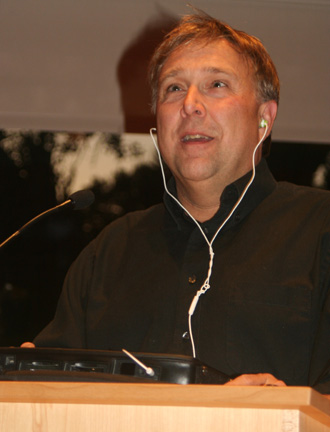
Photo of Stephen Kuusisto taken at Grinnell College, courtesy, Ralph Savarese


The appearance of an ersatz sign language interpreter at the memorial service for Nelson Mandela reminds me that able bodied people are fakers.


Who are you? Not the first question of philosophy. But the most important. 


Old woman yesterday in bagel shop, admiring my dog. Her face a Britannica Encyclopedia of acquired pain. 


A knock on the door. Oldest dramatic device. Second oldest—poisoned swords.


Its early and I’m drinking coffee. Typing fast. Still walking the basement of dreams.


Dreamt last night of a fine sailing ship. It was beautiful turning into the wind. 


Many years ago I went into a repair shop in Helsinki—the old man who repaired typewriters was deaf. A friend said: “He’s good with machines.” But I saw he was good with what Jung called the psyche. 


Good bye, Medieval God, you who rewarded goodness, punished evil. Sometimes I think I miss you. But then I read Tom Paine and I cheer right up. 


Here come my dogs. Its time to go out into snow. 


Here’s to the new Institute of Hope. I dreamt it last night. 


Because My Dog Loves Me

Because my dog loves me I’m fractionally taller than I used to be. Of course this sounds silly. But then again, it isn’t. Walking with a guide dog makes you stand up straighter. “Damn,” says my dog, “damn you look good!” 


We follow the twisting tracks of the day. I’m straight. She’s fast. How perfect this team is! 


We walk through a green plush garden. Its an amazing garden. The dog says: “You ought to smell the chickadee. Now that’s a smell!” I know this is what she’s saying. Me? I hear it. A bird like a stenographer. Happy talking bird. My dog says she loves her life. I can hear her also. I think all blind people who have guide dogs know what I’m talking about. Dog-a-sthesia. You’re just walking around and darned if you’re not connected to everything. 


My dog’s inner life magnifies my own. Some people would think this is nonsense. I don’t really care. More and more, by tacit consent, I ignore the able-bodied world. I know its there. But I don’t care much about what they think. 


I’m tall. My dog is fast. We talk to birds. Over and out. 


Self Interview, December 10

All the cautionary tales of civilization are spread out in my dreams. Up first: Charles Babbage tried to convince me, just last night, that statistics will help the poor. I really dreamt this. Later I dreamt of acorns. I woke up with the little dog kissing my face and the big dog staring at me.


**


The rocks are big and bad. America. Everyone staggers under monetized fear. All those hopeless baseball hats. Everyone needs a service animal. 


**


Ptolemaic America—what they mean by exceptionalism. We’re at the center. This is of course ridiculous. It makes my lips numb from mumbling.


**


I also mumble in my sleep. Good morning Emily Dickinson. Happy birthday.

Feeling Good

By Andrea Scarpino


We’ve all seen them, the feel-good stories showcasing people with disabilities and their non-disabled benefactors. The high school football team who ‘lets’ a player with autism score a touchdown. The cheerleaders who welcome to their squad a girl with Down syndrome. The family who makes a point of adopting kids with physical disabilities. O the kindnesses of strangers. O how generous the people who open their hearts to those different from themselves. 


This is the time of year for these stories, of course: we all want to believe we’re a pretty good species, despite the contrary evidence. See how we help one another. See how resilient we are. 


But should we really be patting one another on the back for acting with basic human decency? Is it really worthy of the news when we treat one another with kindness? 


Or are these stories serving an important societal purpose: maintaining the hierarchy between ‘able’ and ‘disabled’? Solidifying socially-constructed difference. Supporting the supposed normalcy of the disability-free body. Encouraging the gratitude of people with disabilities for any non-malicious treatment. Because what these stories teach me is that people with disabilities are so foreign, so other, so much work that we should feel grateful that anyone without a disability pays us any attention. 


Clearly, the media thinks the currently non-disabled do us great favors in offering their friendship; the non-disabled deserve great praise for treating us with basic human decency. Otherwise, why would the family that adopts children with disabilities deserve columns of writing when adoption is a common and usually non-newsworthy occurrence? And why isn’t anyone writing congratulatory stories about the men who don’t abuse their female partners? 


I believe that disability is a social construct, that health and illness are social constructs, that everyone will experience disability if she lives long enough. And I believe that my body—physically disabled by birth and chronically disabled by a hormone-related constellation of pain issues—is just as worthy of kindness as any other body. I believe that I deserve friendship and non-malicious treatment just by virtue of being a person in the world—not because my body is so different from yours that you are doing me a favor in showing me kindness.


Because we all deserve kindness, don’t we? Whether or not we are currently disabled. Whether or not our bodies demonstrate difference. Whether or not a journalist is nearby, pen in hand. 


Self Interview, 9 AM


I went to a meeting at 8 which was actually scheduled for tomorrow. Now I’m sitting in the Bruegger’s Bagel shop adjacent to Syracuse University. I have retreated to this place (with its ersatz bagels and third rate coffee) because there’s no “here” here—by which I mean, Syracuse University has no decent local coffee places; no “Indie” bookstore; no worthwhile hangout. Its “life without Mozart” just now.


Which gets me to thinking that even Mozart’s life was life without Mozart—every moment he was composing he was “out of himself” living in the vaporous clouds of illumined mathematics that comprised his private entry way to the universal unconscious. Strictly speaking there was no Mozart. And the music we call “Mozart” isn’t Mozart either—its the numerological impersonation of Mozart. 


Meanwhile, here in the phony bagel joint, no muzak and no Mozart and for that we are grateful. 


Self Interview Before Dawn


NewImage


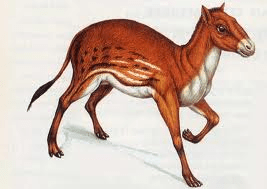
I jump out of bed declaring I will be at peace with myself. Marvelous error! I am so happy! I have been awake two minutes and have already given away the flag of sensible success. I decide over coffee to give away the stars of mythology throughout the day. “Here friend, here is a star called Eohippus—tiny, horse shaped, filled with light… Of course the secret is—you never say so…never tell people the magic you’re giving them. 


**


Over the course of a 22 year career in baseball, Ted Williams struck out only 70 times. He was an example of the maxim: “none of us knows what we know”. All that concentration in the batter’s box while the rest of his life was a mess. Each life must decide itself to what it will be applied. Ted never found a tiny horse filled with light. 


**


Dreamt recently I was in a flood. The architecture was some kind of shopping mall. There was a professor there, a man I haven’t seen in years. He was youthful. He was calm. Outside, with the flood behind us, he asked after my father, calling him by the wrong name, unaware he’s been dead for years, said: “I imagine he’s napping?” 


**


A light of recognition fills the whole great day. The horse says so.