Delta is Ready When You Are?

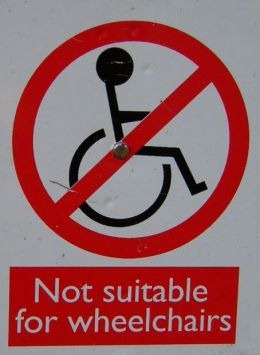
no_access_symbol

I too have been abused by Delta airlines. You can read my observations below this article about Carrie Salberg’s recent humiliation at the hands of Delta airlines employees.

Airline Tells Ventilator User To Get Off Plane
(Star Tribune)
February 4, 2011
MINNEAPOLIS, MINNESOTA– [Excerpt provided by Inclusion Daily Express] While her nurses were stowing the 100 pounds of medical equipment she needs to travel with, Carrie Salberg was given a startling order: Get off the plane.

Salberg, who has muscular dystrophy, was never told why she couldn’t use the ventilator she requires to breathe on the Jan. 13 flight that was supposed to carry her back home to the Twin Cities from New Orleans. In fact, just a month before the flight, Delta Air Lines said her equipment met the company’s requirements.

Salberg’s story illustrates the confusing landscape of federal regulations and airline policies that confront people with disabilities when they travel. The Air Carrier Access Act, established in 1986, prohibits discrimination against someone with disabilities during air travel, provided any necessary medical equipment is approved according to in-flight rules.

But disabled travelers are increasingly complaining about their rights being violated.

Entire article:
Airline bumps disabled traveler

http://www.startribune.com/investigators/115245289.html


**

I was boarding a Delta flight in Denver last month when the flight attendant stopped me at the door and told me my guide dog didn’t have a special scarf. Now you have to picture this: I was pre-boarding the plane with a dog wearing a harness that has the words “Guiding Eyes for the Blind” on it, and yes, Virginia, I even had a formal ID card for the dog. But the flight attendant was stuck in her own tape loop. “Every service dog has a scarf,” she explained. “Your dog doesn’t have a scarf!”  “Well, actually,” I said, “actually guide dogs don’t wear blue scarves. They have leather harnesses and—“ “Now don’t tell me!” she interrupted. “My uncle was blind and his dog had a blue scarf!”

Since passengers were coming down the jet way behind me I didn’t have time to explain the use of prejudicial rhetorical devices. I simply said: “I’ve flown hundreds of thousands of miles with my guide dog and no one has ever told me I needed a blue scarf to board a flight.”

“You got any paper work?” she said.

“What paper work?” I asked.

“Well we need paper work for that dog to come on this plane!”

“No one has ever asked me for paper work when boarding a flight. What are you talking about?”

“There could be somebody on this plane with dry ice. It could kill your dog!”

“So dry ice guy trumps my right to get on this plane?”

At this point a second flight attendant came from the rear of the plane and showed me my seat.

But flight attendant number one wasn’t quite done. She began complaining loudly to the gate agent. Where was the paper work? That dog can’t come on the plane without paper work. An embarrassing argument was occurring just a few feet away from me while passengers fumbled and pushed their fat luggage into the overhead bins.

At this point I piped up and said loudly that as a passenger with a guide dog I felt completely unwelcome on this flight. You could have heard a pin drop. Then flight attendant number one shouted to the gate agent: “Did you hear what he said?” I suspected that I was going to be thrown off the flight. It was touch and go. Then there was some mumbling between the agent and the attendant. And then the crisis passed. The door was closed. The flight was going to go with me aboard.

This was a Delta flight in name only insofar as the operating airline was a subcontractor. The more subcontracting there is in the commercial airline industry the more cost cutting there is in terms of staff training. Every airline passenger knows that this in turn leads to diminished service in all kinds of areas. But the situation is especially revealing for passengers who have disabilities. Insufficient training of airline employees can lead to humiliation of passengers with disabilities and yes, to outright violations of their rights.

Would it help if Delta airlines apologized to me? Maybe. But the proper thing for the industry to do is to hire seasoned travelers who have disabilities to train their employees in disability etiquette and the rules of the road.


S.K.
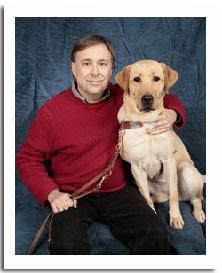
 

How to Donate to my Alma Mater: Guiding Eyes for the Blind

222_Steve_Nira

We have received the following call for support from our friend William Badger, President and CEO of Guiding Eyes for the Blind. I earnestly invite the readers of this blog to read Mr. Badger’s press release with care. The lives of visually impaired people around the nation and the world have been profoundly improved by the tremendous work of GEB. Each day I am reminded by my guide dog (as if for the first time) of the rich and sustaining strength that “is” a guide dog team. By this I do not mean merely the stamina of a blind person and his or her dog—but the love of a whole organization that has made this team possible and that cares equally for its people and its dogs. There is nothing more ardent and yes, miraculous, than this kind of communitarian work. Read on:   


At Guiding Eyes for the Blind, maintaining the good health and well-being of our students while they are in training is a top priority. The nurses in our Student Health Department enjoy their work and they make a difference in many ways. For example, they help diabetics with the management of their condition, assist students with their dietary requirements, and monitor the vital signs of students with hypertension or cardiac disease.

Our compassionate medical staff provides first aid and attends to any minor “bumps and lumps” that may occur while students are learning to work with their new canine guides during the intensive three-week training process. A nurse is on duty on our campus from 6:30-8:30 a.m.

and 3:30-6:00 p.m. In addition, a nurse is on call 24 hours a day to address students’ medical needs and concerns.

Another top priority is maintaining the good health and well-being of our magnificent Guiding Eyes dogs. They reside in clean, climate-controlled kennels and get plenty of exercise, stimulation and attention. We are committed to ensuring that our dogs – sometimes suffering from the same conditions and diseases as humans – receive the highest quality medical care and treatment. Our on-site veterinary hospital is top notch and we are continually seeking to enhance the facility and acquire the most advanced technology.

As far as we know, Guiding Eyes is the only service dog school in the world equipped with a veterinary MRI machine. This is a tremendous benefit to our puppies, broods and studs, as well as working and retired guides. The procedure is non-invasive and painless, with no radiation exposure. Having the unit enables our veterinary staff to provide rapid, accurate diagnosis, which leads to more thorough and effective treatment that can save lives. Before acquiring this machine there was a delay of up to two weeks in trying to schedule a veterinary MRI for one of our dogs at an outside facility, and the cost per scan was about $2,000, not including staff time and transportation.

Guiding Eyes for the Blind has been blessed for more than 50 years with generous and caring friends like you who understand our mission and support our wonderful work. Our services are provided FREE OF CHARGE to our blind students and graduates, so we rely on kind friends like you for support.

If you want to help in a special way, please consider becoming a Partner in Independence by signing up for our Sustaining Gift Program if you have not already done so. This convenient method of giving provides ongoing funding for our extraordinary programs and services.

Simply click on www.guidingeyes.org/donate <http://www.guidingeyes.org/phplist/lists/lt.php?id=YUVWC1ALVQ8MGgRaRFUAUVo%3D>

, choose “sustaining gift” for gift type, and indicate your

preference: monthly, quarterly or annually. If you prefer to sign up for our Sustaining Gift Program via your checking account instead of using a credit card, please email connections@guidingeyes.org <mailto:connections@guidingeyes.org?subject=Email from Connections Newsletter Feb 2011> and we will send you a form to complete.

As always, to make a one-time gift, please click on www.guidingeyes.org/donate <http://www.guidingeyes.org/phplist/lists/lt.php?id=YUVWC1ALVQ8MGgRaRFUAUVo%3D>

All of us at Guiding Eyes for the Blind are very grateful for your kindness and generosity.

<http://www.guidingeyes.org/phplist/lists/lt.php?id=YUVWC1ALVQ8NGgRaRFUAUVo%3D>

Sincerely,

William D. Badger, President

www.guidingeyes.org

<http://www.guidingeyes.org/phplist/lists/lt.php?id=YUVWC1ALVQ4EGgRaRFUAUVo%3D>

connections@guidingeyes.org

<mailto:connections@guidingeyes.org?subject=Email from Connections Newsletter Feb 2011>

Click here

<http://www.guidingeyes.org/phplist/lists/lt.php?id=YUVWC1ALVQ4FGgRaRFUAUVo%3D>

to customize your email preferences.

Senator Harkin To Mayor Bloomberg: How About Accessible Cabs For Your Taxi Competition?

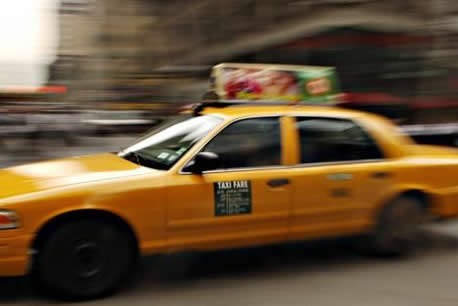
New York City cab in motion


(Iowa Politics)
February 3, 2011
NEW YORK, NEW YORK– Senator Tom Harkin (D-IA), a longtime champion of disability rights, this week urged New York City Mayor Michael Bloomberg to select a wheelchair accessible taxi in the city’s "Taxi of Tomorrow" competition with the goal of making taxis and the city itself friendlier to people with disabilities. New York City is currently in the process of selecting a new design for their fleet of 13,000 taxis.

"I have also learned that the City is putting great emphasis on making its future taxi fleet wheelchair accessible by dramatically increasing the number of accessible vehicles from the limited 230 taxis that are accessible today," Harkin said a letter sent to Mayor Bloomberg.

"Through this process, New York can set the standard for accessibility for taxis across the nation. Indeed, New York could be the first city in the world to have a fully accessible taxi fleet. I hope you will take advantage of this opportunity to choose a Taxi of Tomorrow with a built-in wheelchair ramp system in every vehicle. Assuming that other features and elements of the competing models are roughly comparable, I urge you to select the taxi which would set the standard of accessibility and ADA compliance for the nation and the world."

Harkin has long been a champion of persons with disabilities and a leader on disability policy. In 1990, he authored the Americans with Disabilities Act, landmark legislation that protects the civil rights of more than 50 million Americans with physical and mental disabilities. He has since been one of the strongest supporters in Congress for full funding the Individuals with Disabilities Education Act (IDEA), community-based health care services and supports, and other initiatives that enable people with disabilities to live independently.

Entire press release:
U.S. Sen. Harkin: Promoting wheelchair accessible taxis for New York City

http://www.iowapolitics.com/index.iml?Article=225768

Ode to a Good Friend

Gnezdaemail05


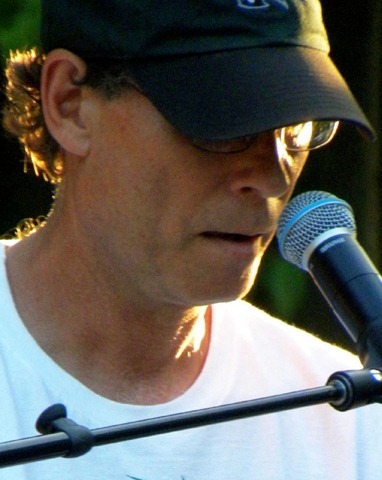
The photo above is of my friend Eric Gnezda. Eric is the kind of person who, meeting someone for the first time, sees hope there before him instead of a face. Don’t get me wrong–he’s not a rag picking Christian. He’s no dime store evangelical. The guy is an American. This means that he’s crazy. He loves the Bill of Rights. Loves Thomas Jefferson’s political nobility. And sure, the poor sonofabitch is a Cleveland Browns fan. So he loves irony too. Why not? Being American doesn’t mean you have the right to success. It’s the land of underdogs as Jefferson had hoped. God bless the Three Stooges and Lieutenant Columbo. God bless Flippo the 1960’s TV clown of Columbus Ohio…

I hope you’ll visit Eric’s website. Everyone I know needs to be reacquainted with progressive sentiment in this mad nation. “Niinko?” as the Finns would say. “Isn’t it so?”


S.K.


The Orgone Tabernacle Choir

IMG00001-20091208-1542


“Close to the road we sit down one day.

Now our life amounts to time, and our sole concern

The attitudes of despair we adopt

While we wait.”

–Antonio Machado


Someone has written an essay on riddles, itself a series of riddles; the sentences growing smaller like Russian dolls within dolls. I was winding the stem of my watch. I was reading the essay when the mechanism broke: the stem came away in my hand. A magpie walked over the lawn, stopping here and there to pick at its feathers. A hint of rain was coming on the southern wind. There was the sound of far of laughter among strangers. Then there was silence. I remembered a poem, something to do with the suspended air in Robert Browning’s study; minute after minute of stillness, a faint perfume about the curtains.

**

I found a diary once, the handwritten notes of a Finnish soldier who had hidden himself in a stranger’s house during the Winter War. The house’s owner had fled because the Soviets were advancing. But somehow the Russians never came. In turn, the soldier remained in the abandoned farmhouse, listening to the sounds of deep winter. Roof beams creaked. Branches scratched at the windows; he heard imaginary animals in the snow. Then the writing stopped. The majority of the pages in the notebook were empty. I’d found it on a table at a Helsinki flea market . I bought it. Later I lost it when I moved across the United States one summer.

**

I receive a letter from a stranger who writes that he’s going blind. He sees things as if he’s staring through a drinking straw. “I went to the Dunkin’ Donuts to buy a pound of coffee. I was on my way home from church—it was one of my first solo trips with the white cane. I thought I’d get some coffee for my wife. I stood in line and waited my turn. I held the blind man’s cane in my hand. Then I saw a kid standing behind the counter—he was right in front of me and gesturing for the amusement of the cashiers. He was forcing an illusory head down on his crotch—my head—I didn’t know what to say. So I said nothing. Just ordered my coffee. I stared straight into his face with my drinking straw. He was mouthing it: “blow me!” And I managed to withhold any trace of expression. Someone brought the bag of coffee and I turned away.”

**

The Platonic riddles and the Freudian riddles; Thanatos opens his hairy wings.

The Platonic riddle: Who can we imagine standing outside the cave?

The Freudian riddle: Who can we imagine stands inside the cave?

And either way life is cruel and short.

**

Outside the window where I am currently staying there is an orange tree. Tiny wasps fly through the Spanish Moss and circle very delicately in the shadows like falling seeds. I can see this because with one eye I am able to get up close and by staying still I am allowed to glory in the motions of these half transparent, almost molecular dragons there among the oranges.

I am lonely, I am lonely, I am best so…

Life is simple. Keep writing.


S.K.  

Justice For Sale

disabled_vet03


“Justice Scalia, who is sometimes called “the Justice from the Tea Party,” met behind closed doors on Capitol Hill to talk about the Constitution with a group of representatives led by Representative Michele Bachmann of the House Tea Party Caucus.”

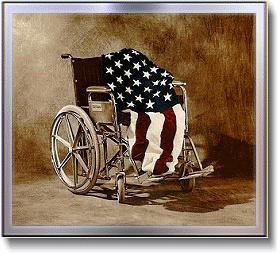
Today’s excellent NYTimes editorial on the refusal of Supreme Court Justices to recuse themselves from cases where they have vested interests is well worth reading. From a disability rights perspective the matter is of particular importance given the Supreme Court’s dismal history when it comes to enforcing disability rights, particularly in areas of employment discrimination. When the court argues in favor of state’s rights they are arguing in favor of employers and businesses against the rights of individuals. From a disability advocate’s perspective I will always remember Justice Scalia opining that making a court house accessible for a person in a wheelchair was essentially a matter of cost rather than one of rights: "It’s enough that the cost would be excessive. So saying that so many handicapped students can’t get into schools means nothing at all." (Here Scalia argues that analogies between court house inaccessibility and the lingering inaccessibility of our nation’s public schools means nothing because this is an economic argument and not a civil rights issue.)

People in the disability rights community can’t properly defend themselves without recognizing that justice is for sale. We at POTB believe that the NYTimes call for a recusal mechanism and a financial disclosure process for Supreme Court Justices is long overdue.


S.K. 


In the Kingdom of Insecurity

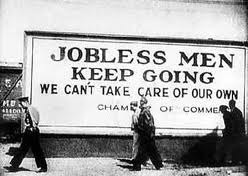
Jobless Men Keep Going


We applaud the NY Times for its editorial response to NY Governor Andrew Cuomo’s budget proposal. As the Times points out:


…Mr. Cuomo’s refusal to consider any new taxes, or even extend a surcharge on the state’s highest earners, means that his budget — his first — is harsher than it needs to be with the heaviest burden borne by some of the most vulnerable citizens.


When American leaders strip money from education and social programs they are refusing to insure the nation’s future.

Perhaps Mr. Cuomo can sell New York State? He could start piecemeal by selling Long Island to the Dutch who have plenty of cash and have long been interested in getting back to Oyster Bay.


S.K.

Why the Tea Party Doesn’t Like Disabled People

Disability Discrimination

(Reader's note: I am republishing this blog post. The issues it mentions remain critical)

It began with histrionics about putative “death panels” in President Obama’s health care reform measures. (Which did not exist…)

Then it took on steam with Sarah Palin’s declaration that her youngest child (who has Down’s Syndrome) would be put at risk by the President’s plan.

The metaphorization of disability is easy to do. Exemplifying disability as raw victimhood is very easy to do.

Of course the difficult thing is to fight for benefits and social programs for our nation’s neediest.

The Tea Party (which has many different threads) has one essential signature: it reprises classic American Social Darwinism.

Michele Bachmann’s war on veteran’s benefits is a case in point. You see, helping those who have fallen and can’t get up just encourages them to be dependent.

This is the core belief of American Social Darwinism (which differs from its British origins with a fiercer dog-eat-dog rendition of Capitalism)—here is a brief description of the movement:


Social Darwinism applied to a social context too, of course. It provided a justification for the more exploitative forms of capitalism in which workers were paid sometimes pennies a day for long hours of backbreaking labor. Social Darwinism also justified big business' refusal to acknowledge labor unions and similar organizations, and implied that the rich need not donate money to the poor or less fortunate, since such people were less fit anyway.

In its most extreme forms, Social Darwinism has been used to justify eugenics programs aimed at weeding "undesirable" genes from the population; such programs were sometimes accompanied by sterilization laws directed against "unfit" individuals. The American eugenics movement was relatively popular between about 1910-1930, during which 24 states passed sterilization laws and Congress passed a law restricting immigration from certain areas deemed to be unfit. Social Darwinist ideas, though in different forms, were also applied by the Nazi party in Germany to justify their eugenics programs.

See: http://library.thinkquest.org/C004367/eh4.shtml

**

Of course one of the things that makes the United States the great nation that it is is that you can’t metaphorize people for long. Demagogues can get away with it for brief periods but then Americans say, “But wait, that’s my neighbor and friend they’re talking about!” This is precisely what is happening now. Rep. Bachmann’s steely proposition that wounded warriors can get along just fine without their current levels of support underscores the Spenserian dynamics of what they imagine budget cutting to mean. Bachmann did not propose cutting the corporate welfare that powers the engines of arms manufacturers or ship builders. This is because the issue is not about trimming government spending. It’s about imagining certain human beings as less fit to be served at the table of culture.


**

I recognize that from an academic standpoint these matters are relatively pedestrian. But the big media in the United States has given the TP a free ride on their neo-social Darwinism and that’s got to come to an end. There are real lives in the balance. Genuine people. Heroes.

A college student said to me not so long ago that he had no problem with veterans and the like (I think he meant people with disabilities) getting benefits but that guy in the wheelchair on the corner who is begging, well, ahem, he shouldn’t be getting any government handouts.

And there it is. Social Darwinism in the age of the Twitter. But it’s still about weeding. About imagine society as an English garden. No real lives need apply.


S.K.