All the Little Pequods, All in a Row…

Lawrence Kennedy  


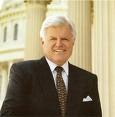
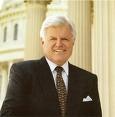
Last night watching the wake for Edward M. Kennedy at the Kennedy Library in Boston and hearing many talented speakers eulogize “Teddy” with affection and grace, with tears and more than a few lovely anecdotes and reminiscences I found I was scowling and leaning at the kitchen table in ways unintended by body mechanics so that I got an ache in my “whatsis” which is somewhere between the shoulder blades and the back of the trachea.

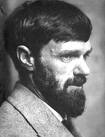
I was recalling D.H. Lawrence’s famous essay on Walt Whitman in which he wrote:

“When the Pequod went down, she left many a rank and dirty steamboat still fussing in the seas. The Pequod sinks with all her souls, but their bodies rise again to man innumerable tramp steamers, and ocean-crossing liners. Corpses.”

“What we mean is that people may go on, keep on, and rush on, without souls. They have their ego and their will, that is enough to keep them going.”

Rubbing my “whatsis” I was tempted to think that the U.S. Senate may now be an assembly rushing on without souls, driven merely by ego and will. Certainly watching the two notable Republican senators in attendance one might imagine the floating victims of Melville’s disaster. Orin Hatch was eloquent and at times sweetly amusing–he even concluded with a schoolboyish poem of farewell to Teddy. John McCain was all ego, talking of his happy disputes with Kennedy with some testosterone brio that I’m sure Teddy would have admired but which, of course isn’t the point.

Neither Hatch or McCain could bring himself to utter the words health care reform–no surprise there, but neither could they pledge to return to D.C. and take up the matter in a spirit of bi-partisan small “d” democratic obligation to a nation in trouble. They will go on, keep on, rush on, all “ego and will” and if you think I’m gilding the lily I’ll simply point out that John McCain was in such a rush to get out of there that he ran right past Senator Kennedy’s widow Vicky who was trying to shake his hand. He was doubtless in a rush to get back aboard his rank little steamer.

Of course the Republicans are just the Republicans. Its the big and small “d” Democrats we should be concerned about. Will they fail in this fight for true health care reform because they were smaller men and women than the senators and representatives who passed the civil rights bills in ’64 and ’65? Or will they perform the routine business of the slave state and say, like Kenneth Rexroth’s version of Pontius Pilate, “And what is love?” and wash their hands?

I suspect there’s a vast supply of hand sanitizing lotion on Capitol Hill.


S.K.

How to Save the United States

Auchincloss


Everyone knows that the U.S. is in a big hole. In fact this appellation isn’t fair to the rest of the big holes but so be it. Sometimes one has to lean on an old figurative crutch.

Let’s sell our history. The United States has a great history. Let’s sell the whole humongous glockenspiel. Why the hell not? If we don’t want to pay taxes for roads and schools, for clean water and air, for energy self-sufficiency; if we don’t want medical care for our less fortunate, or medical care for our vets; if we don’t care anymore about civil rights for the elderly or people with intellectual disabilities; if all we want is to sit and listen to the creosote lips of right wing radio jockey-jackals–if, as I say these are the operative conditions then let’s finally have a big, fat ass bake sale and be done with the whole thing.

First we can sell off our nation’s sacred constitution and our Declaration of Independence. Then we can get down to real business, sell our national libraries and museums and educational institutions. Why not?

Oh sure, once you’ve sold your artifacts you can never get them back. But really, America is now like one of those sad characters in a Louis Auchinclos novel who must sell the family paintings and nick-nacks. 

Then we can get back to a mild, prosperous catatonia?


S.K.

Hurry, the Witch is Coming Department

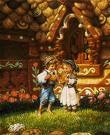
Hansel & Gretel  birch tree  Snyder


This is the political version of Hansel & Gretel—we must hurry. And we must hurry for the night is coming. Hurry because, well, if you’re over fifty you’re on the “back 9” and there’s no help for it. Hurry. Even the birches shaking their long autumn circlets of yellow leaves tell us to go faster. Perhaps you should take more vitamins, eat more roughage, subscribe to a new magazine, become an anthroposophist.

We have almost no time. The clocks are almost obsolete for when nature is dead what’s left to count—are there “days” when the water is gone? Oh hurry, the private companies own most of the water, they’re buying what’s left even as we loiter here. Didn’t we care? We said so. Long ago, maybe some thirty years now, we went to a reading by the poet Gary Snyder. We wept for the earth’s condition. Back in those days we thought we still had time. We were silly. We spent too much time in the libraries. We thought too much about our own poems. We did not love the earth with our whole hearts.

Hurry. The leisure classes dance to songs of sugar and brandy. The television shows fractured skulls and blood on the pavements of Mumbai.

The clocks are almost obsolete. Remember when time was just time? Now we are on water time, roots time, oxygen time.

Hurry. In these post-modern moments we are not supposed to give off a political cry.

Hurry your weeping. Its not sufficiently ironic for “The Daily Beast” or the network.

Hurry up but be Zen about it.

Hurry. Stop talking. Hurry. Talk as much as you want.

Earth, as we call out to you now, you have the right to expect our full attention.


S.K.

Where We Are Today, This Morning in America

Rexroth  Spartacus


The poet Kenneth Rexroth once wrote: “History continuously bleeds to death through a million secret wounds of trivial hunger and fear.”  This morning with the rain falling outside my window in Iowa City and while the television repeats ad nauseum the social lie of the Republicans that health care reform might have been possible in the U.S. had only Senator Ted Kennedy “been there”–a post-facto assertion replacing logic with cynicism, its antecedents akin to saying, “If only the top dog in a slave state was like Spartacus, well things would have been different…”

This morning the bleeding industry with its hunger and fear is thriving in the United States and one ought not imagine that because the C.I.A. is getting some comeuppance for its experiments with power drills that the captains of bleeding are any worse for wear.

As Rexroth would say: “War is the health of the state.”

The Republicans (and many Democrats) in the Senate want to be the top dogs in a slave state. A principal requisite for the job is to pledge privately to overwhelm and reduce the citizens of the nation. Erode their civil rights and liberties; create wars of choice and send the children off to fight–even if the war is a bust the captains of the bleeding industry can amortize their catastrophe (Haliburton, Blackwater, etc. etc.)

Health care reform in the U.S. isn’t dead yet. But the debate has been recast by the bleeding industry into a metaphor of socialist trickery. The bleeding industry has always used the fear of lefties to scorch out of each generation of Americans anything like a humanitarian domestic politics.

It is worth pointing out, however feebly that there are no socialists in the United States senate. But the bleeding industry’s captains are fully aware that America’s lower middle class wants, more than anything to experience the satisfactions of appetite–the poor Americans who make $40,000 to $60,000 a year and have a family to boot, well they want to accumulate “stuff” by God, and its easy to make them afraid–very afraid.

And so the GOP and the quisling Dems light a fire with the identification papers of the writhing middle classes and Lo, the sum of the conflagration is tepidity.

These are my thoughts in the rain today and in advance of the funeral of Senator Edward M. Kennedy.

I’m certain that whoever takes Ted Kennedy’s place will arrive on Capitol Hill with the appropriate delusive credentials.


S.K.

The Physick Offices


Poem after poem elegiac, the bodies of friends swept up like the streets of old Russia…

& goodbye, goodbye, strings played with a thumb…

If I think how fragile you are I will lose my words.

Silly to admit,

I’d thought the books of youth prepared us

But Deborah’s cancer, Toni’s,

& losing Gary at sea—

The pages cocalcimined by time

Books gone yellow

& the fervid dark coming in…

& night spurring its black flanks pierced with stars.


S.K.

Farewell Senator Kennedy, O Farewell

Kennedy


I am in no way inclined to sentimentality about our losses. I will not succumb to the American sugar of extravagant farewells–I’ll leave that to Larry King and his ilk. Nor shall I engage in the Washingtonian hand washing in the manner of Pontius Pilate–with those rhetorical sophistries that proclaim that its sad that the last good man in the world is dead. When I hear John McCain or Joe Lieberman on the irreplaceable nature of Senator Kennedy I want to throw up. What Edward M. Kennedy accomplished was a good, progressive Irish Catholic conscience. What Edward M. Kennedy achieved was to live daily in accord with the Golden Rule in act and deed. Its safe to say that the G.R. doesn’t get practiced much in Washington anymore, nor, for that matter do we find it often enough in churches.

There will be others who persist in public service; who overcome personal flaws and work tirelessly on behalf of those who are less fortunate; who endure a lifetime of slurs and derision and yet hold firm to communitarian values; who risk assassination for defending the civil rights and liberties of others; who possess enough emotional intelligence to negotiate with vandals and jackals; who inspire others by their tireless affirmation of liberty and of human dignity. There will be others. I shall say that its not likely that Senator Kennedy’s descendants in public service will find places in the Senate or the House. Those institutions are now largely dead and future progressives will have to lead from the pulpits of business and law and education and the arts and non-profit philanthropies. Perhaps one day the Senate will return to doing the people’s work. But not in our time. Not in this age of the radio controlled lobbying vultures who have taken the place of our elected officials. It is worth noting that Edward M. Kennedy was electable and able to do the people’s work because of his family name and his loyal electorate in the Commonwealth of Massachusetts. I suspect that Ted Kennedy was more than the last lion. He was the last man who couldn’t be bought.

S.K.

The Artist in the World

By Andrea Scarpino

Los Angeles


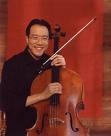
Domingo Yo-Yo Ma

Last night, I heard Placido Domingo sing. He wore a black bow tie and his white hair shone in the lights. He sang the most beautiful words I’ve ever heard, even though he sang in a language I don’t speak. Even better: he sang while Yo-Yo Ma accompanied him on cello. An entire orchestra sat behind them, and thousands of people sat in front of them and August sky opened above the Hollywood Bowl, the Big Dipper above my head, but you wouldn’t have known anything else existed in the world, in the universe even, but that cello and that voice.

Even better: it was a total surprise. The show was Placido Domingo’s first time conducting at the Bowl. Yo-Yo Ma was on the ticket to play the first half. But having Domingo sing, and then having him sing when you didn’t think he would, and then having him sing to Ma’s accompaniment . . . and with the Big Dipper overhead? And a crowd of thousands silent in their seats?

And while they played and sang, Ma’s cello answering every question in Domingo’s voice, I thought about art and the way that art can make you feel immortal, even if you know you’re not. How you can drink red wine and watch the Big Dipper and hear the most beautiful sound you’ve ever heard, and think, maybe, art will save you from death’s fate.

And after they played, I thought about the role of the artist in the world, how one clear note across the summer sky can make an entire audience gasp, sit silently, wish for nothing more in life than to keep hearing that note. How when it was clear that Domingo was going to sing, there was a rumbling in the crowd. He’s going to sing! I said to Zac. He’s going to sing, I heard whispered around me. I thought about how an artist can have that kind of power over an audience and still maintain his humbleness. I have known many lesser artists than the two I saw last night who think nothing of bragging about each of their books, how famous they are and who they know in the scene, who silence other artists every chance they get, who refuse to share their art, who want to be on top, no matter who they step on/sleep with/humiliate to get there.

In front of me last night, I saw two amazingly accomplished artists demonstrate, instead, a generosity of spirit, a way for the artist to be humble in the world. After Ma finished his performance with the orchestra, he made sure every key player stood to take a bow. He hugged the first violist and cellist. He hugged Domingo. He looked ecstatic to be appreciated, and wanted to share that ecstasy with the ones who helped him shine. After he played an encore solo, he brought out his friend Domingo to sing with him. And they hugged, again. And they both looked full of joy.

I don’t know what type of people they are off-stage, of course. But last night at the Hollywood Bowl, they taught me how to move a crowd with nothing more than the sound of a voice, nothing more than one bow, one instrument. And they taught me how to be an artist in the world.


Andrea Scarpino is the west coast Bureau Chief of POTB. You can visit her at: www.andreascarpino.com

Wake Up Call for the Adult Welfare System

Anne Baber Wallis has written an op-ed piece in the local Iowa City newspaper that highlights a case of physical abuse that occurred here not so very long ago. In this case a young man with a developmental disability was physically assaulted in his group home.

These stories are legion. We have blogged about their dreadful ubiquity on this site and we shall continue to do so as long as it takes to bring about reform.

In effect, the abuse of people with disabilities and the abuses of elders or of children are “of a package” insofar as all three circumstances often involve the parings of untrained and underpaid strangers alongside people who are in need of assistance, assistance which is a complicated matter more often than not.

There have been many wake up calls in this nation over the past several years. I’d say the ringing of these bells signals a three alarm fire.


S.K.   

Satire of Natural Facts

Let us propose that the rain possesses the character of humankind, in this case my uncle (long deceased) who was afraid of fast moving clouds and who would hightail it by means of any available conveyance should clouds trouble his vision.

Accordingly let us imagine that the rain is afraid of its origins–a purely existential condition to be sure. The rain is afraid of its parents. The rain fears its ancestry. The rain believes it might go mad like its mother who was darkly flamboyant and who kept strange pets.

For this is the way of things. Even the rain can be perplexed. In good years and bad it has feelings and pish-posh if you think science can prove or disprove the matter. 

Science knows nothing. And the rain knows more than it claims in customary circles.

As I say, this is the way of things. Dull matter and its cohorts have plenty of ideas, bad though they may be. The rain for instance isn’t much of a thinker. In this way the rain is very like my uncle who we’ve already mentioned had a phobia about darkling clouds. (By the way, my uncle was a large man and to see him run from the clouds was certainly amusing. Many in our clan would gather on the dark lawn and watch him gallop terribly over the far hill. That of course is the cruelty of families. I am not much interested in that subject. Tolstoi and Faulkner and John Updike have largely exhausted cruel families as a matter of literary contemplation though the writers of memoir persist in mining cruelties in fealty to their own union.

Like I was saying the rain isn’t much of a thinker. You’re not supposed to say such things in these ecologically fragile times. One should I imagine venerate deus faber and treat natural facts with religious awe. I don’t know. I just know that the rain is stupid. Just ask your children if you have any. The rain is dull as a school superintendent as Mark Twain might say. The rain is dull as death.

There are of course poets who can speak on the rain’s behalf. But poets will speak on behalf of anything that doesn’t talk back. Pablo Neruda wrote an Ode to Salt. He said that he could hear the salt singing in its shaker–but poets will say anything for effect. I don’t believe salt is any smarter than the rain. The rain is as dull and predictable as a politician’s facts.

My uncle ran from the clouds but was fine about the rain. His problems resided in anticipation. Rain knows nothing about such matters. Rain is rain. Its an atomized, broadly flailing gravitational spindrift with cold hands.

You say: “He’d think differently if he was a farmer.”

Farmers don’t care about the rain save for its presence. For the farmer rain is nothing more than a necessary functionary. Like an accountant. Unless there’s something odd about you I don’t think you’d call an accountant for stimulation. (Doubtless accountants will write me. I shall not rest my case.)

To the farmer rain is just utility. They don’t want too much or too little. And they like it to stay dull.

You say: “He’d think differently if he was in a hurricane.”

Rain driven by a hurricane is still dull. Its the wind that’s feisty.

Oh the rain is dull alright. For competition it has only the fresh sawdust.

I feel it coming. Shortly now it will rain in Iowa City.

S.K.

False Windmills and Demented Roosters at the Shopping Mall

The title here is from Lawrence Ferlinghetti’s poem entitled “In Goya’s Greatest Scenes”–a poem that asserts (correctly) that in the Spanish painter’s greatest works we see people presented in the act of achieving their suffering. We see them on the ordinary roads, spines hunched, faces contorted, walking among the blasted trees and carnage of humanity. Ferlinghetti points out that Goya’s people are “so bloody real” –doubly so for they are arranged along the roads.

Me? I thought of the line tonight. I’d gone to the local shopping mall with my wife for the half innocent purpose known as buying some trousers. (I prefer “trousers” to “pants”. I prefer “illud tempus” to “how old are you?”–there’s no help for it.)  

I was trying on chinos in J.C. Penney. Quickly I found myself hopping on one leg in a stuffy closet. There were common pins strewn about the floor. I could feel them through my socks. I thought of the quaint, Victorian idea that Beauty stands and waits for whatever passes for immanence. There is no possibility of beauty when one is trying on pantaloons.

We got out of there with trousers in a sack.

And because we are not shopping mall people we thought we’d walk through the inner arcades. This was a mistake. It is always a mistake.

Could you have seen our faces you might have remarked on our respective achievement of suffering. It is a mild suffering as compared to the gibbet and cement skies and bayonets of Goya’s paintings. It’s silly to dare the placement of mild suffering alongside tumbrils and I admit it.

But walking past the iridescent, outsized atomic colors of teenage clothing and the relentless store fronts hawking goo-gaws that promote imbecile illusions of commidified happiness I felt paranoid and hysterical. I kept it to myself. I’m a poet after all. I always imagine that I’ll pick my time and write a small magazine piece. I’ll do something.

And then my wife Connie said: “I feel old.”

And that was the thing. The mall with all its torturous outcryings of provincial teenage unhappiness and its anodyne trinkets and calculating fashions is enough to give one a case of rickets.

As we walked past the food court I remembered the poet Kenneth Rexroth’s hilarious observation about Scottish cuisine–faced with Scottish food he observed that it would be better to be fed intravenously.

Ah, sunflower. We shall grow old but not in the mall.


S.K.