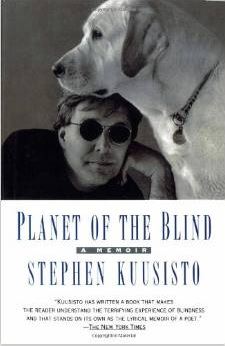
Anderson Cooper and Sanctioned Scorn

The tide of Fascist contempt (evinced by Donald Trump’s sordid campaign for the Presidency)  has turned quickly to sanctioned scorn, something far worse than “blowing off steam” or simple exultation. Two days ago a hijab wearing woman was pushed down subway stairs in Manhattan; swastikas now appear everywhere from the University of Iowa’s library to a Jewish cemetery in upstate, New York. These are hate crimes. Moreover under the emerging administration they’re going to be business as usual.

I’ve been shivering. I recently experienced my own first bit of hate when a cab driver, (also the owner of the company) refused to give me a ride because of my guide dog. That refusal quickly became a matter of putting me in my place in the new “order” for he invoked Trump when I said this would become a news story, when I said I’m a writer and have written for many publications including the New York Times. “Trump is taking care of you people,” he said. He also said, “now I suppose you’re going to whine about your rights.”

In his canonical book The Rise and Fall of the Third Reich William Shirer described Hitler’s first meeting with Germany’s industrialists.

“Hitler began a long speech with a sop to the industrialists. “Private enterprise,” he said, “cannot be maintained in the age of democracy; it is conceivable only if the people have a sound idea of authority and personality… All the worldly goods we possess we owe to the struggle of the chosen… We must not forget that all the benefits of culture must be introduced more or less with an iron fist.” He promised the businessmen that he would “eliminate” the Marxists and restore the Wehrmacht (the latter was of special interest to such industries as Krupp, United Steel and I. G. Farben, which stood to gain the most from rearmament). “Now we stand before the last election,” Hitler concluded, and he promised his listeners that “regardless of the outcome, there will be no retreat.””

A sound idea of authority and personality. The struggle of the chosen—by which Hitler meant the people sitting in that room. The population at large? They’ll get what they get when we say so. Others—those who resist—will be eliminated.

Now in America it will be hard to directly eliminate opponents. Of course it will. But the broadcasting houses, the churches, the state governments, all can be turned toward the immediate work of reinforcing a narrow view of private enterprise, a slim view of acceptable citizenry, and certainly the cult of personality. My cab driver said so. He said it plainly. My people are now being taken care of by Trump.

On Sunday evening CBS ran a vicious piece about the Americans with Disabilities Act, essentially portraying it as a profound impediment to business. Lainey Feingold, a noted disability rights attorney writes at her website how 60 Minutes filmed a piece about the 25th anniversary of the ADA many months ago, a story which highlighted breakthroughs in technology and employment for the disabled. They never ran that story. Instead, Feingold writes, they ran an entirely oppositional piece:

Why would 60 Minutes decide to run a negative story about the Americans with Disabilities Act now, eighteen months after filming? Why craft a story that left out hours of film and interviews about effective ADA advocacy. There can be only one explanation. Someone at 60 Minutes wanted an anti-ADA piece to support Donald Trump’s anti-regulatory, anti-ADA, and anti-disability agenda.

When television networks air such programing they’re of course doing the work of a rightward galloping administration which already, even before it takes office is overtly engineering a collective rollback of civil rights.

Yes my people are now being “taken care of” by Mr. Trump. Except they aren’t, they’re being shoved to the side, slopped and hogwashed by complicit journalism. Anderson Cooper should be ashamed of himself, though one supposes he lives in such a perfect bubble he’s beyond social irony. Or perhaps he’s a single issue politician. Maybe.

Now you can bank on what’s to come: elimination of more voting rights, destruction of women’s rights, piece by piece, deportations and unlawful arrests, a significant boost to the school to prison pipeline, toxic water and air—the list is too long for a customary sentence in the English language.


from “Letters to a Young Cripple” #4

Dear _______,

“Who the Hell am I?” you ask, as in “who appointed you to speak on behalf of anyone?” This is the best of all possible questions. I seized the talking stick long ago and you should feel free to grab it back any time you like. But don’t design to take it—plans are insulted destinies and one elemental aspect of cripple-talk comes from the marriage of impulse and necessity. Before you use your tongue, know whether it’s time to voice a requisite inclination.

It’s time for us to get close. For now let’s imagine we’re on opposite sides of a tiny island. It’s a Robinson Crusoe situation. I’ll be Friday and you can be Crusoe. Most would choose to be Crusoe I imagine—he has all the goods and boy does he ever have designs.

Older cripples, those who’ve lived some years before the Americans with Disabilities Act know something about emptiness. We grew up without Crusoe’s nails, drift wood, string, pulleys, guns, and whatever else he hauled away from his foundering ship. Cripple Island is, perhaps, not much of a place but Crusoe has accommodations, and moreover, like any son of industry he knows what to do with them. He builds little England.

Old Crips live in old haunts. In his new and exceptional memoir Hurricane Street Ron Kovic writes of life in the paralysis wards of the early 1970’s. Think “no civil rights” and without rights, think life without dignity—or better—the organization and assembly of life without dignity. Think horror:

Dr. M., the chief surgeon at the hospital’s Spinal Cord Injury (SCI) Center, walks past me. He is very tired but still he recognizes me and says hello. He has been in the operating room all day. His first patient, a paraplegic from D ward, had to have a flap put on his rear end for a bedsore that wouldn’t heal. There are a lot of them in here with that problem and sometimes the flap doesn’t take and they have to do it all over again. It can be very frustrating. Dr. M.’s second patient was not as lucky and had to have his gangrenous left foot removed. The nurses did all they could to save the foot but in the end they just weren’t able to. There are a lot of paralyzed guys around here with amputated legs. You can get a really bad burn and not even know it. I remember hearing a story once about a guy who came home drunk one night with his girlfriend and she filled the bathtub and placed him in it, not realizing the water was scalding hot. He got burned really badly and died the following week. There are a lot of stories like that and you try to never forget them. These are important lessons, and as horrible as it may seem, remembering them is crucial to our survival.

For nearly three months last year I was a patient here at the Long Beach VA hospital, healing a terrible bedsore on my rear end after a fall in the bathtub at my apartment. The accident happened not long after I had broken up with a woman named Carol who I first met at an antiwar demonstration in Los Angeles in the spring of 1972. Carol was the first woman I loved and the very first woman to break my heart. After we broke up I felt as if my whole world had fallen apart.

I was depressed and hardly getting any sleep at night. I remember putting a bandage over the bruise but it just kept getting worse. After a while the bruise became a sore and the sore an open wound, until finally I had to turn myself in to the hospital.

The last place I wanted to be was back in the Long Beach VA hospital. I hated the place. The conditions were atrocious, as bad if not worse than the Bronx VA in New York where I had been after I first came home from the war. The wards were overcrowded and terribly understaffed. The aides would sit in their little room at the end of the hall drinking coffee and cackling away as men on the wards cried out for help that never came. All the windows were tightly shut. The air was rancid, and I would push my call button again and again but no one would come to help.

The anger and frustration would build up inside me and I remember several times screaming into my pillow as I lay on my gurney until I was exhausted. I felt so helpless, so lost. During the entire time, in that depressing place, Carol never called or came down to visit me once. I felt abandoned, betrayed, and soon stopped shaving and began to let my hair grow long. I remember looking in the mirror one morning thinking how much I resembled Jesus Christ hanging from the cross. I thought back again to the Bronx VA when I had been stuck in that chest cast for nearly six months after breaking my femur, and how as I had lain on a gurney on my stomach I would paint pictures of the crucifixion with myself as Christ, and how they’d sent the psychiatrist down from the psych ward because they were concerned and I immediately stopped painting, afraid they would have me committed just like my Uncle Paul who had been beaten to death in a mental hospital years before.

For old crips there was always that need, a desperation to figure out how to live “for yourself.” Life was a terrifying mathematics—an algebra—part hope, part reaction, part belief. We’ll get somewhere with this chalk. Then they came and took the chalk away. “Chalk just makes you more hopeful,” they’d say. Accordingly old crips had to say, a la Beckett: “I can’t go on, I’ll go on.”

Maybe the better Beckett quote is: “Try again. Fail again. Fail better.”

Either way none of the Old Crips had prerogatives. If you expressed yourself in the wrong way the next stop was the mental hospital, make no mistake. One of the great backstories in American poetry is the fact that Allen Ginsberg’s iconic poem “Howl” represents his bold refusal to be quiet about the effects of forced institutionalization. (Ginsberg had been sent to a psychiatric hospital because of his queerness and his passionate intensity.) Yes, none of the Old Crips had “privilege”—unless screaming into your pillow can be understood as a private Theater of Cruelty.

Old Crips had to incorporate and gestate psychological, corporeal, and existential densities, literally hour after hour. In one of my college notebooks (written just three years after my own stint in a psychiatric ward) I copied these lines from Simone de Beauvoir:

Regardless of the staggering dimensions of the world about us, the density of our ignorance, the risks of catastrophes to come, and our individual weakness within the immense collectivity, the fact remains that we are absolutely free today if we choose to will our existence in its finiteness, a finiteness which is open on the infinite. And in fact, any man who has known real loves, real revolts, real desires, and real will knows quite well that he has no need of any outside guarantee to be sure of his goals; their certitude comes from his own drive.


This is the essential problem, often expressed to me by Old Crips: young cripples believe in an outside guarantee—for what after all is a civil rights law but a warranty, a certitude, a “writ” that should alleviate us from want? That is exactly what the ADA should be. That is precisely what it ain’t.

As disability rights activist Bob Kafka notes: “If we believed that ADA is the power and we are the recipients of its strength, rather than we are the power and ADA is a tool for us to use, I fear we may still have a long way to go.”

The ADA isn’t a warranty and worse, Old Crips will tell you, the power doesn’t reside there, just as it doesn’t reside in a hammer. The strength is in your mind. Easy enough to say, but harder to enact, especially if you believe there’s an ADA Geek Squad that will ameliorate the obstacles.

We like the ADA. But it hasn’t changed things as much as we’d predicted. If in fact we’ve a long way to go, read more tough people. Kovic’s new book is a good place to start.


Disability, Airplanes, and My Life as an Object…

In her review of Jessica Valenti’s memoir Sex Object (see it in The Nation here) Lauren Duca suggests the book asks, “Who would I be if I didn’t live in a world that hated women?” Inevitably the most disarming questions are drawn from years of public struggle and I for one plan to read Valenti straight off. (I’ve long admired her work in The Nation and The Guardian.)

Just this past week, as I flew across the US on Delta Airlines I chanced upon not one, but two passengers who absolutely refused to sit next to me because I had a guide dog. Their requests to be reseated were directed to the flight attendants with outrage and sneering, so much so that other passengers were appalled. And I thought: “Who would I be if I didn’t live in a world that hated the disabled?”

As I say, I’m looking forward to Valenti’s take on the sufferance and diminishment that accompany her embodiment—suffuse it, cincture it, inculcate it. Instill, implant, impress, hammer.

I like Judith Butler’s sentiment concerning emotional intelligence. She wrote: “You will need all of those skills to move forward, affirming this earth, our ethical obligations to live among those who are invariably different from ourselves, to demand recognition for our histories and our struggles at the same time that we lend that to others, to live our passions without causing harm to others, and to know the difference between raw prejudice and distortion, and sound critical judgment.”

I tried to hold the difference between those passengers who threw their hissy fits and my own obligation to be a person of sound judgment. I kept silent as the angry French business woman and the angry Asian business man demanded redress. Let’s be clear: the dog was not in their way.

Perhaps they were allergic to dogs. But this they did not say. Such a response would have been understandable.

They were evincing raw prejudice.

I kept silent.

I kept silent as the flight attendant promised they would receive a thousand miles of free air travel if they’d just agree to move to other seats.

They didn’t want other seats. They wanted their outrage.

Presumably Valenti’s memoir covers such moments: one is expelled from the sphere of desire.

You were the wrong kind of date.

And then there’s the rub: “How can one who doesn’t love him/herself expect to be loved?”

One simply has to practice reality from the fringe.

The fringe after all, is just as real as the center.

Is it my job to make the fringe the center?

Can I live peaceably on the fringe?

How do the original words, original thoughts imagine the margins? Weren’t we always nomadic?

Didn’t we take the fringe with us wherever we went?

It’s cosmopolitanism hates your variant gender, disability, pigment.

Oh but I’ve met cruel people in the countryside.

Thoughts in my head while listening to the antithetical faux umbrage of snobs.

I think they were angry because I was sitting in an expensive seat.

“What would I be like if I didn’t have to endure this prejudice daily?” I wondered.

Trouble is inevitable in all political situations, and just try to find an unpolitical cry.


Disability and Faculty Self-governance in the Age of Neoliberalism

When talking to faculty, students, and staff with disabilities who work or study at America’s colleges and universities, one quickly learns that higher education is broadly disinclined to treat disability in a concerted and efficient manner, but instead engages in widespread administrative deflection. From architectural barriers to simple pedagogical modifications colleges routinely drop the ball where equal access is concerned. So ubiquitous have these stories become one can browse the web for hours reading of school after school that has violated basic civil rights protections guaranteed by the Americans With Disabilities Act. From the University of Michigan, to Penn State to Harvard, one finds dramatic instances of disability discrimination. As a disability rights activist and professor who teaches that incorporating physical difference in the village square creates powerful opportunities and advantages I’m often asked why higher education performs so poorly. For many years I imagined these failures had simply to do with a basic financial resentment of the ADA, as one hears the widespread complaint from college administrators that it’s simply an “unfunded mandate.” The idea that barriers should be removed as a matter of civil rights is represented as a violation of libertarian principle. This seemed reasonable enough until over time I realized there’s a broader delegitimization of disability in the Ivory Tower and it’s only loosely connected to money.

In a recent interview at TruthOut Henry Giroux observes of Neoliberalism:

As a form of public pedagogy and cultural politics, neoliberalism casts all dimensions of life in terms of market rationality. One consequence is that neoliberalism legitimates a culture of cruelty and harsh competitiveness and wages a war against public values and those public spheres that contest the rule and ideology of capital. It saps the democratic foundation of solidarity, degrades collaboration, and tears up all forms of social obligation.


The past quarter century has seen the American academy shift from collaborative and democratic agreements about social obligations toward an embrace of monetized aggression. During this period the ADA has been overtly ignored by colleges of every kind. The two developments are syncretic, reflecting what Giroux rightly calls the failure to contest the rule and ideology of capital. It’s relevant to note in this context that “disability” first appeared in the mid-19th century as a term for laborers who’d been rendered unfit to work. The 20th century saw sustained advances in rehabilitation and employment services for people with disabilities, improvements which culminated in the passage of the ADA in 1990.

Neoliberal pedagogy and campus politics depend on limited faculty governance, the erosion of public debate, and the establishment of a culture of severe economic competition. Disability is re-inscribed as a 19th century problem. Accommodation services are sequestered—students are “sent” to ancillary offices for accommodations which they may or may not receive; faculty are taught nothing about pedagogy and disability; basic services like sign language interpreting or accessible technology are hard to find, and sometimes non-existent. At one liberal arts college where I recently spoke, a disabled student told me, “the disability office is hidden like an asylum.” Indeed. Disability is a drain on capital. Not because it’s an unfunded mandate but because after all is said and done, neoliberal visions of success are built as Giroux rightly says on cruelty and competitiveness.

Harvard and MIT are contesting the demands of deaf students and staff that instructional videos be captioned. Harvard’s opposition is symptomatic of the neoliberal university’s war on basic public values. In terms of governance Harvard’s resistance represents perfectly the academy’s abandonment of the principles of social obligation. But institutions only arrive at such a place when faculty are deterred from self-governance by the obligation to write endless grants and compete for provenance in the marketplace of capital ideas, when teaching and idealism are considered quaint and immaterial. In turn the civil rights of academic communities are “handled” by offices that are both physically and culturally distant from the “agora” or academic life of the campus.

The neoliberal campus relies on distention of self-governance and enforces centralized administration. Moreover it thrives on factionalism. A faction, as James Madison famously wrote in essay 10 of The Federalist Papers is a group “who are united and actuated by some common impulse of passion, or of interest, adversed to the rights of other citizens, or to the permanent and aggregate interests of the community.”

Because college faculty are often divided by competing interests and since some of these divisions reflect the complications and struggles of identity, it’s difficult to forge consensus about disability and disability rights—they seem tailor made for deflection, a problem for a specialized office. In other words, disability is often viewed by academics who are already narrowly factionalized as too difficult to embrace. As Lennard Davis notes in his book Bending Over Backwards: Disability, Dismodernism, and Other Difficult Positions:

Because disability is an amorphous identity with porous boundaries, other identity groups in the United States have had difficulty incorporating it into their goals. Previously legitimized groups such as Latinos or African Americans have been reluctant to admit disability into the multicultural arena. For example, in 1996 a disabled, white assistant professor at a historically black university found that the chair of the department and the dean of the school had recommended against tenure, saying that any analogy between disability and race was both methodologically unsound and insulting to the unique history of African Americans. For them, the categories of oppression were mutually exclusive and should not be mixed. After much public outcry from the disability community, the president of the university decided to award tenure to the assistant professor. Nevertheless, the issue of an identity defined by impairment as opposed to one defined by race or ethnicity is a sticking point for some. When some faculty members at Hunter College in New York City tried to include disability studies as part of the requirement for a multicultural curriculum, they were opposed by many of the ethnic and national groups that usually make up the progressive wing of the university. Hunter ended up deciding to omit disability from the curriculum.


From a disability studies perspective one sees how sectarian infighting among faculty concerned with categories of oppression can further the work of neoliberal administration, not by embracing the neoliberal brand of governance, but by replicating its effort to de-legitimize disability as a mainstream concern. De-legitimized disability remains in the province of non-academic offices. In turn university faculty fail to understand and embrace the nation’s largest minority. Such neglect reinforces a central fact of neoliberal administration which supports deflection where accountability is concerned and it represents rather broadly a further symptom of weakening faculty self-governance.


Me Before You, Benedict Arnold…

If disability is pictured as a thermometer one sees at the very top of the mercury scale “Courage” and at the bottom “Cowardice”—a register of willfulness or mind over matter which represents disablement as being entirely a state of mind rather than physical or neurological reality. How often does one have to endure the slogan: “the only disability is a bad attitude?”

Quite often it turns out. Courage is an easy word to bandy about. Whenever the first “c” word is used in media representations of the disabled, it’s invidious twin is suggested, as if living a crippled life is a stark affair when you roll down the street or follow your dog. You’re either heroic or you’re some kind of attitudinal traitor, a Benedict Arnold of the spirit.

Of course temporarily abled people don’t live this way. They’re not heroic in the supermarket, not cowardly when they shake their fists at drivers in front of them. The emo-thermometer is reserved solely for the cripple. I’ve lived with this fictitiousness all my life and if you’re one of my crippled readers I’m certain you have too.

Lately there’s been much consternation and outrage among disabled activists and their extended supporters about the film “Me Before You” as it depicts a paralyzed man’s decision to end his life, not merely because his disability is insupportable, but because he doesn’t want to burden the abled woman who loves him. The film is creepy, inauthentic, and ugly. What interests me however is it’s emo-thermometer reading: “Courage” becomes “Cowardice” or subsumes it in a way that suggests “the only bad attitude is a disability”—a twist that’s chilling and should alarm even the most seasoned viewers of films and television programs. Living with disability is presented in “Me Before You” as a traitorous act, a betrayal of love.

Love is presented as light while disability is dark and overshadows life. Now, ahem, life itself doesn’t work this way. In life trains arrive and depart, sunlight strikes the telephone wires, groceries are purchased, lawns are clipped—which is to say, life, living it, is, as any bird will tell you, simply a matter of the daily worm. Moreover living is essentially the hard thing, dying is easy.

This is what’s so objectionable about the film. Dying is easy. Disabled life is presented as a bad choice, a bad attitude if you will. “Me Before You” turns the standard (and already crappy) disability emo-thermometer upside down.

Ugh.


Who are the Blind?

No one really represents the “blind” just as no one speaks for all cab drivers in the United States. There might be good reasons for a national taxi union but even if you could launch it in the face of the Teamsters’ and the 14th amendment, you’d have trouble getting word out to real cabbies, even in the age of Twitter.


The “blind” are just as complex and busy as any other group. Like cab drivers they’re everywhere–indeed the “blind” hail from every ethnic, racial, and social group. You can’t get the “blind” to agree about anything. I happen to like this fact. 


There are blind people who believe the only dignified way to walk is with a tall white cane in hand. I believe that’s their right. There are blind people who feel that working with a guide dog is the best way to travel. I belong to that group. A guide dog is trained in a procedure called “intelligent disobedience” which means if you make a bad street crossing decision, the dog will prevent you from walking into a car. 


Some of the “cane people” are really quite militant in their disdain for the dog people, and vice versa. This dispute has always reminded me of Jonathan Swift’s description of the nation in “Gulliver’s Travels” that was still fighting a 100 year civil war over the issue “which end of the egg do you crack–the big or the small?” 


In New York City cabbies are divided according to their origins and shared languages. They have their own networks and publications. I suspect they fight among themselves. That’s how it is when the commercial stakes are high and the resources are small. 


The problem with fights between rival blindness factions is that their disputes can do great harm to individuals who already have a hard time managing their lives. Roughly 70% of the blind remain unemployed in the US, a number that reflects larger unemployment figures for all people with disabilities. One would thing blindness organizations would work together to affirm every avenue of success for blind people trying to get ahead. But such was not the case in Iowa when a young woman with a guide dog tried to take a computer class and was told by the “cane people” that her dog wasn’t welcome in class. Here is my original blog post about this from 2009:


Blind Woman and Guide Dog Suffer Setback in Iowa That is Incomprehensible

If you’re looking for a story that’s so far fetched it makes Edgar Poe’s Cask of Amontillado seem like a plot from Leave It to Beaver then you can read the following story at The Des Moines Register. Some days I need a crazy story for the sheer giggling asphyxia of the thing and there’s no help for it: I just have to read about the raw, dark, nay, even pre-historic antics of people who I had quietly supposed were our civilized neighbors. I make this mistake about civilization rather often so there’s no dearth of outlandish stories in circulation but this one is surprising for its evident extremism about blindness by an agency funded by the state of Iowa that’s supposed to help blind people–and that’s just the opening fork’s worth of apalling meat. The larger mouthful is that state money was spent to fight The Americans with Disabilities Act in a time when every nickel of public aid is desperately needed to help people but I digress. I’m having a problem with my oxygen. This story is just too disgraceful for my customary sensibilities.

Here is a brief excerpt from the Des Moines Register’s article that’s linked above:

Woman’s Bid To Take Dog To Classes Rejected
(Des Moines Register)
February 20, 2008


DES MOINES, IOWA– [Excerpt] “Stephanie Dohmen’s six-year fight to take a guide dog to training classes at the Iowa Department for the Blind suffered a setback Thursday in Polk County District Court.

Jurors rejected the Des Moines woman’s discrimination lawsuit and sided with a department policy that bans the use of visual aids, including seeing-eye dogs, in the program.

Dohmen and her dog, Lilly, were caught in a decades-old argument that has divided blind Americans into distinct camps: those who prefer guide dogs and those who consider the animals a poor substitute for learning to function with only a directional cane.

Supporters of the state program who testified at Dohmen’s trial praised the verdict and defended the ban on guide dogs.”


Reader’s note: the excerpt above was provided by Dave Reynolds who produces the disability rights information site called Inclusion Daily Express.


Now back to my own bosky musings, eh?

If you are from a foreign country and you’re not aware of the matter there is indeed a group of blind advocates who believe that using a white cane as a means of navigating sidewalks and streets is a superior method of mobility than traveling with a professionally trained guide dog. Several of these cane only people work at the Iowa Department for the Blind.  

One wonders if there’s a department within the Iowa Department for the Blind that’s in charge of humiliation and impoverishment, but I digress. Sometimes I can’t help it. Preternatural and projective intolerance does this to me every time.

The real issue is that the Iowa Department of the Blind is influenced in its delivery of services by a group of blind people who are members of the National Federation of the Blind which is headquartered in Baltimore, Maryland. The Iowa folks believe there’s only one way to be blind or visually impaired even though specialists in orientation and mobility training for blind people do not generally agree with their positions. I won’t go into this matter at great length but for the sake of analogy this is like imagining a program for wheelchair users that insists no one can have a power chair–you can only use a manual chair and it has to be of a certain specific type of manual chair sanctioned by a committee of manual chair exceptionalists. Any other form of wheelchair is forbidden and not only that, but if you deign to use one of those other mobility devices you are not a “real” mobility impaired person.

Of course the analogy above doesn’t pass the sniff test. And what if we expanded the argument? Let’s say the Iowa Department of Transportation issued a decision that you can only have a driver’s license in Iowa if you drive a Yugo. Remember the Yugo? Surely there’s a Yugo collector’s group. I’ll even wager there are enough of these cars from the former Yugoslavia to match the population of Iowa. That’s a pretty good guess I think.  

The whole miserable story of the Iowa Department of the Blind has to do with the prevailing and controlling idea that people who are blind or who are “legally blind” must adhere to the NFB influenced model of blindness which means that you need to wear a blindfold if you have any residual vision in order to take one of their talking software classes. The idea that a guide dog is some kind of visual aid that needs to be checked at the door is so crazy you can hardly give it credence save that in these United States you will never run out of easily confused people who can serve on local juries. Apparently the Polk county jury was confused by the testimony of a guide dog user at the Iowa Department of the Blind who cheerfully announced that he always leaves his dog at the door.

The fact is that demanding such a position of a guide dog user is illegal. Period. And the additional galling fact in this case is that state dollars were spent on this offensive discrimination in a time when people need all the help they can get.


Jeez. If they let Stephanie’s dog into the computer lab it might cheat.

Why am I bringing this back up today? Because the story remains offensive, incomprehensible, and damaging. Because the National Federation of the Blind puts out press releases about their legal work on behalf of the blind (many of which I’ve reprinted on this blog) but they still have a dark and shameful incident in their social archive for which, as far as I know, they’ve never apologized. 

I tend to remember these things. 


The FFALF Needs YOU!

CALL FOR NOMINATIONS

The Fred Fay Advanced Leadership Forum (FFALF) seeks to identify proven leaders from the disability community and bring them together with pioneers from the disability rights movement and key current figures for an informal, comprehensive weekend aimed at giving participants the background, training, information and expertise to return to their communities and organizations and lead successful advocacy efforts for disability rights.

The goal of the FFALF is for the next generation of leaders in the disability rights movement from across the United States to get to know and learn from the current generation of leaders, and for them to strategize together about the future direction of the movement.

Nominees will have demonstrated strong vision and leadership ability by having either:

· improved the civil rights and delivery of services for people with disabilities.
· led disability rights actions that have achieved significant results.
· enhanced opportunities for people with disabilities to participate fully in all aspects of society.

Selected candidates will participate in an intensive, two day, all-expense-paid retreat in Boston on October 24 – 26, 2008, covering a wide range of subjects critical to the disability community. The Fred Fay Advanced Leadership Forum is presented by the Boston Center for Independent Living and members of the Advisory Council. National leaders of the disability rights movement and noted public figures will also take part in the FFALF.

Applications due by July 1st.

For more information:

Brochure

Application

Cross-posted on Blog [with]tv