Me Before You, Benedict Arnold…

If disability is pictured as a thermometer one sees at the very top of the mercury scale “Courage” and at the bottom “Cowardice”—a register of willfulness or mind over matter which represents disablement as being entirely a state of mind rather than physical or neurological reality. How often does one have to endure the slogan: “the only disability is a bad attitude?”

Quite often it turns out. Courage is an easy word to bandy about. Whenever the first “c” word is used in media representations of the disabled, it’s invidious twin is suggested, as if living a crippled life is a stark affair when you roll down the street or follow your dog. You’re either heroic or you’re some kind of attitudinal traitor, a Benedict Arnold of the spirit.

Of course temporarily abled people don’t live this way. They’re not heroic in the supermarket, not cowardly when they shake their fists at drivers in front of them. The emo-thermometer is reserved solely for the cripple. I’ve lived with this fictitiousness all my life and if you’re one of my crippled readers I’m certain you have too.

Lately there’s been much consternation and outrage among disabled activists and their extended supporters about the film “Me Before You” as it depicts a paralyzed man’s decision to end his life, not merely because his disability is insupportable, but because he doesn’t want to burden the abled woman who loves him. The film is creepy, inauthentic, and ugly. What interests me however is it’s emo-thermometer reading: “Courage” becomes “Cowardice” or subsumes it in a way that suggests “the only bad attitude is a disability”—a twist that’s chilling and should alarm even the most seasoned viewers of films and television programs. Living with disability is presented in “Me Before You” as a traitorous act, a betrayal of love.

Love is presented as light while disability is dark and overshadows life. Now, ahem, life itself doesn’t work this way. In life trains arrive and depart, sunlight strikes the telephone wires, groceries are purchased, lawns are clipped—which is to say, life, living it, is, as any bird will tell you, simply a matter of the daily worm. Moreover living is essentially the hard thing, dying is easy.

This is what’s so objectionable about the film. Dying is easy. Disabled life is presented as a bad choice, a bad attitude if you will. “Me Before You” turns the standard (and already crappy) disability emo-thermometer upside down.

Ugh.


Disability and the Radial Republic

NewImage

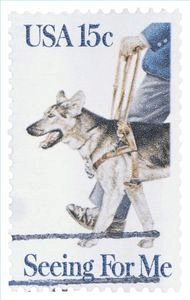
US Postage stamp honoring guide dogs, picturing Morris Frank and his pioneering American guide dog Buddy, a German Shepherd. Beneath them it says: “Seeing For Me”


I haven’t been posting on my blog lately. Sometimes the limbed life of physical difference is overwhelming and one feels a temptation to lie down in the long ditch of sadness. The largest psychiatric hospital in the United States is the Los Angeles County Jail. Veterans with disabilities  since 9/11 face extraordinary obstacles to employment. Rehabilitation services for all persons with disabilities are underfunded. 70% of the disabled remain unemployed in the US. Only one quarter of matriculating college students with disabilities actually graduates. Long standing charities like guide dog schools are experiencing a general decline in philanthropic donations—Baby Boomers and their children aren’t as generous as “The Greatest Generation” it seems. 


Meanwhile the toxic and shrill bloviating of politicians like Paul Ryan (who argue social programs are the root of America’s financial problems) helps to convince Americans that generosity and fairness are nearly unpatriotic—and would this were not so—for giving hard working and ambitious people with disabilities a shot at the American Dream ought to be deeply carved on the entablatures of our public buildings. 


What do I mean by a “radial republic”? Many things of course but principally a renewal of the social contract—our American contract which has grown stronger after every war and which has assured veterans with disabilities will be properly assisted, treated, educated, and welcomed. What do I mean by a radial republic? As we nurture disabled vets we assist all Americans with disabilities. Many people know I’m a guide dog user but I’m willing to bet that most of my readers don’t know that guide dogs (or “Seeing-Eye Dogs” as they’re sometimes called in the US in homage to North America’s first guide dog school which is named “The Seeing-Eye”) are the product of rehabilitation work in Germany at the end of WW I. 


Halfway through the First World War a German physician, Dr. Gerhard Stalling introduced a blind veteran to his pet dog. The two men were in a hospital garden when Stalling was suddenly called away. When he came back the soldier whose name is now lost, was laughing as the dog licked his hands. Stalling saw dogs might be trained to guide the blind. The war had produced an astonishing number of blind veterans. The total number of wounded from the first world war remains unknown but during the four and a half years of the conflict 230 soldiers died every hour. 11% of France’s entire population was killed. The ten month Battle of Verdun in 1916 caused over a million casualties. Chlorine and mustard gas killed nearly 90,000 troops and left one and a quarter million men permanently disabled. Blindness was a common result of gas warfare and one of John Singer Sargent’s most famous paintings (“Gassed” 1919) depicts a ragged line of soldiers, their eyes bandaged, all the men walking in a line, each man’s hand on the shoulder of the man before him—with two sighted men in the lead. The sky is yellow above a field of corpses. 


Trench warfare included working dogs. Germany employed 30,000 dogs in the field and their work was divided according to need. Sentry dogs were used on patrols. They were taught to give warning when a stranger entered a secure area. Scout dogs were also used. Their job was more refined—they accompanied soldiers on reconnaissance and had to keep quiet. They could detect the enemy at a distance of a 1000 yards, “scenting” and pointing. 


Casualty or ‘Mercy’ dogs, also known as ‘Sanitatshunde’ were trained to find wounded or dying soldiers in the heat of battle. They carried medical supplies on their backs. The wounded could use the supplies if they were able, or they could count on the Mercy Dog to wait with them as they died.


Dogs also ran long distances across battle fields carrying messages, often during artillery attacks. The heroism of working dogs was well known on all sides. The Germans employed 30,000 dogs during the war. British and French forces had approximately 20,000 dogs in the field.    


The guide dog was a consequence of war. Because dogs had proved themselves capable of miraculous work under the worst battle conditions ever seen, it was clear to Stalling war dogs could be trained to help the blind navigate post-war streets which were suddenly filled with automobiles. With a small group of military dog handlers Stalling began training dogs for blind soldiers. Old photos show trainers and veterans working with German Shepherds, all the men wearing peaked hats and long wool coats. In addition to harnesses the dogs wore tunics bearing the Red Cross logo—the insignia of the battle field “mercy” dog.   


Stallings idea captivated the public’s imagination. An official guide dog school opened in in Oldenberg in 1916. The sight of veterans and dogs working in traffic was powerful and seemed natural. In popular imagination blind people had always been accompanied by dogs: a first century mural in Roman Herculaneum depicts a blind man with his dog.  A 19th century woodcut from the United States shows a blind man from Boston being lead by a dog and crossing the Commons. Such pairings were likely the products of serendipity—the blind and their dogs forged relationships by necessity. The history of blindness is filled with sorrow. Before reforms like Social Security and organized rehabilitation services were created in the 20th century, the blind often begged for food and shelter—some played musical instruments—many wandered searching for compassion. Dogs helped ease their loneliness and offered untrained navigational assistance.    


Sometimes I like to joke by saying the guide dog is the only good thing every invented by the German Army. This may be true. But what is true is that rehabilitation programs for disabled veterans impact the broader republic. Nowadays when an autist, or a deaf person is accompanied by a trained service dog we can and should give thanks to Dr. Stalling. And in turn we should be seeking with all our Republic’s strength to carry on the difficult work of lifelong optimism that disability rehabilitation and education calls for. 


I’m not fond of the term “wounded warrior” precisely because disability isn’t a wound—it may heal in some dimensions, but in others it will always be present. A commitment to people with disabilities in general and to veterans in particular means understanding the full arc of life. The radial republic means giving people with disabilities and equal shot at education, travel, vacation, family, housing, medicine, you name it. 


Making this happen benefits all.


Yes, There's a Dog in My Heart…

If there’s a dog in your heart it will do you no damage. While still at Guiding Eyes I’d kept a journal—titled “Dog Man Writes to Parts of Himself”…

If there's a dog in your heart it will do no damage.

Read: Dog in Heart, an excerpt from my upcoming book, as seen on my website: StephenKuusisto.com. Then tell me, is there a dog in YOUR heart?

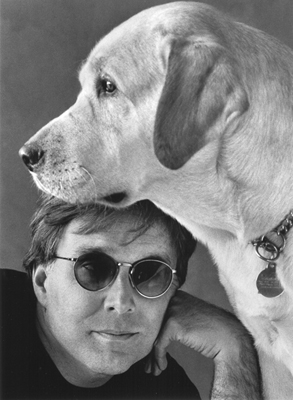
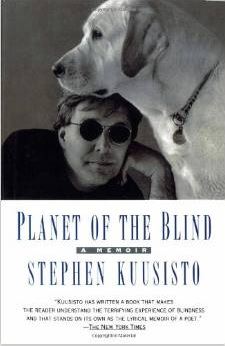
Professor Stephen Kuusisto is the author of Eavesdropping: A Memoir of Blindness and Listening” and the acclaimed memoir Planet of the Blind, a New York Times “Notable Book of the Year”. His second collection of poems from Copper Canyon Press, “Letters to Borges has just been released. Listen to Steve read "Letter to Borges in His Parlor" in this fireside reading via YouTube. He is currently working on a book tentatively titled What a Dog Can Do. Steve speaks widely on diversity, disability, education, and public policy. www.stephenkuusisto.com, www.planet-of-the-blind.com

Dog in Heart

If there's a dog in your heart it will do no damage.

Dog Man Writes to Parts of Himself

If there’s a dog in your heart it will do you no damage. If there’s a thistle inside you, you’re in trouble. Only weeks after getting my first guide dog, and walking freely on the ordinary streets I met the thistle hearted all around me. They were people who lived in the famine of effect—unhappy inside and projecting unwarranted hostility outside. Meeting them with a dog at my side, and a dog inside me, a protective dog of the heart, well, that was different—to say the least. Standing in line at the bank a thistle-woman caught sight of Corky and screamed quite literally: “You damned disabled with your damned dogs!” She waved her arms like she was on the flight deck of an aircraft carrier. There were three or four other customers. They all backed away. She kept shouting her wild gibberish. And Corky wagged her tail. I felt it against my left leg. She was telling me that two worlds described our rewards, we were in tandem, we were in accord.  We were a musical chord. Her tail was saying: “each lives in one, all in the other.”

So I smiled. Just smiled. I probably looked like a simpleton. But our dog heart was smiling. The woman turned and bolted out the door. Of course that’s when the other customers began speaking up. “Wow, she was really out of line!” “There must be something wrong with her!” But I had Morse Code dog heart—which was all I needed.

While still at Guiding Eyes I’d kept a journal—titled “Dog Man Writes to Parts of Himself”.

One entry read:

You were always a dog in your heart—you were forced to conclude the matter when, one morning, early, you felt a giddiness, a happenstance wakeful half-assed joy. It wasn’t the electrolysis of sex or the sticky dendritic jazz of chocolate or bourbon that marked your inner life. It was dog, dog-ness, dog all the while. You were standing at the window, still wearing your pajamas. You felt like running into the yard and rolling in snow. You didn’t care what the neighbors might think. A good snow roll in your PJs was in order. You saw that now, saw it was always “the thing”—to be a dog and sharply alive with all your senses in order. No tax forms. No darkness blotting out hope. Dogs are the darkness. Dogs are hope. You saw there was nothing more to be said about the matter.

**

I was insensibly happy. The person bearing my name had been transformed. He was lighter, like a character in fiction—the fairy tale dog man was walking, running. He didn’t have to explain himself. That was the great thing. He didn’t have to explain the convoluted gears and motors of his brain.

Professor Stephen Kuusisto is the author of Eavesdropping: A Memoir of Blindness and Listening” and the acclaimed memoir Planet of the Blind, a New York Times “Notable Book of the Year”. His second collection of poems from Copper Canyon Press, “Letters to Borges has just been released. Listen to Steve read “Letter to Borges in His Parlor” in this fireside reading via YouTube. He is currently working on a book tentatively titled What a Dog Can Do. Steve speaks widely on diversity, disability, education, and public policy. www.stephenkuusisto.com, www.planet-of-the-blind.com

Jim Ferris, Laurie Clements Lambeth and Stephen Kuusisto Reading at Syracuse University

Disabilities as Ways of Knowing: A Series of Creative Writing Conversations: Part II

The Disability Experience and Poetic Verse

Reading by Poets Jim Ferris, Laurie Clements Lambeth, and Stephen Kuusisto

March 28, 2013
Reading 7:00 to 8:00 pm at Watson Theater
Reception and book signing from 8:00 to 9:00 pm at Light Work
SU Campus

Jim Ferris, Laurie Clements Lambeth and Stephen Kuusisto will be reading from a selection of their poetry, followed by a reception and book signing, for all members of the S.U. community. While this event is geared specifically to raise and support awareness among undergraduates, everyone is welcomed to participate in this exciting set of opportunities. This event will feature works from Beauty is a Verb: The New Poetry of Disability (Cinco Puntos Press) and launch Letters to Borges (Copper Canyon Press), where “best-selling memoirist Stephen Kuusisto uses the themes of travel, place, religion, music, art, and loneliness to explore the relationship between seeing, blindness, and being. In poems addressed to Jorge Luis Borges—another poet who lived with blindness—Kuusisto leverages seeing as negative capability, creating intimacy with deep imagination and uncommon perceptions” (from http://www.stephenkuusisto.com).

American Sign Language (ASL) interpretation will be provided during both the reading and the reception/book signing. Communication Access Realtime Translation (CART) will be provided during the reading.

If you require accommodations or need information on parking for this event, please contact Radell Roberts at 443-4424 or rrober02@syr.edu.

This event is made possible through the Co-Curricular Departmental Initiatives program within the Division of Student Affairs, and cosponsorship by the Disability Cultural Center, the Renée Crown University Honors Program, the Center on Human Policy, Disability Studies, the Burton Blatt Institute, the Dept. of Women’s and Gender Studies, the Lesbian, Gay, Bisexual, Transgender Resource Center, the Office of Multicultural Affairs, the Slutzker Center for International Services, the Creative Writing Program, the Disability Law and Policy Program, the Disability Student Union, the Beyond Compliance Coordinating Committee, and the Disability Law Society.

As aspects of variance and diversity, disability cultures and identities enrich the tapestry of life on and off the SU campus.

~~~~~~~~~~~~~~~~~~~~~~~~~~~

Professor Stephen Kuusisto is the author of Eavesdropping: A Memoir of Blindness and Listening” and the acclaimed memoir Planet of the Blind, a New York Times “Notable Book of the Year”. His second collection of poems from Copper Canyon Press, “Letters to Borges has just been released. Listen to Steve read “Letter to Borges in His Parlor” in this fireside reading via YouTube. He is currently working on a book tentatively titled What a Dog Can Do. Steve speaks widely on diversity, disability, education, and public policy. www.stephenkuusisto.com, www.planet-of-the-blind.com

A Disability History of the United States

“What emerges in this volume is a history of several ideas. The first is the definition of disability, which has been the subject of an ongoing and spirited debate.” ~ Stephen Kuusisto

    http://rcm.amazon.com/e/cm?t=wwwstephenkuu-20&o=1&p=8&l=as1&asins=0807022020&ref=qf_sp_asin_til&fc1=000000&IS2=1&lt1=_blank&m=amazon&lc1=0000FF&bc1=FFFFFF&bg1=FFFFFF&f=ifr

Are you a rascal?

Provided by the Department of VSA and Accessibility at the John F. Kennedy Center for the Performing Arts, Writing Spotlights is an educational tool teachers can use in their classroom.

According to the web site, this tool “features short literary works by prominent writers with disabilities. Designed to engage middle and high school students and encourage dialogue about disability and diversity, each Writing Spotlight is accompanied by discussion questions and writing activities to promote language arts skills, including reading comprehension and creative writing.”

Stone Strong was written by Stephen Kuusisto specifically for Writing Spotlights.  Here is an excerpt:

I’m an old man nowadays but don’t let that fool you—I’m a bit of a rascal. I always was a rascal.

…I always loved to tell stories and from my earliest days I could talk to anyone. Let’s be honest: if you’re blind it really helps if you can talk to people—especially by being bold, not waiting for others to talk to you first. You can’t be a wallflower and go places in this world and that’s particularly true if you can’t see. When I catch a train I don’t stand around the station waiting for someone to tell me where to go. I just ask the invisible people around me where the train to Poughkeepsie is. You can’t be shy if you have a disability—any kind of disability. Anyway, a rascal is someone who likes to talk and occasionally he’ll even stretch the truth if he has to. That’s just how it is.


Free poetry book: "Only Bread, Only Light"

Congratulations – and thank you – to Cindy Leland!

Cindy purchased a copy of Stephen Kuusisto’s new book, , “Letters to Borges, and saved $ by taking
advantage of the pre-order price. In so doing, she also entered a random drawing and is the winner this week of an autographed copy of “Only Bread, OnlyLight”, Steve’s first book of poetry (Copper Canyon Press).

Will you be next week’s winner?

***************************************

Professor Stephen Kuusisto is the author of Eavesdropping: A Memoir of Blindness and Listening” and the acclaimed memoir Planet of the Blind, a New York Times “Notable Book of the Year”. His second collection of poems from Copper Canyon Press, “Letters to Borges,
is scheduled for release in October 2012.  In addition to giving
literary readings, Steve speaks widely on diversity, disability,
education, and public policy. www.stephenkuusisto.com

Congrats – and thank you – to Erin Coughlin Hollowell

Congrats – and thank you – to Erin Coughlin Hollowell.

Erin purchased Stephen Kuusisto’s new book of poems and saved $ by taking advantage of the pre-order price. In so doing, she also entered a random drawing and is the winner this week of an autographed copy of “Only Bread, Only Light”, Steve’s first book of poetry (Copper Canyon Press).

Will you be next week’s winner?


On Retiring a Guide Dog…

My friend Peter Altschul will be retiring his guide dog Jules in just a few days; he will return to our mutual alma mater, Guiding Eyes for the Blindto train with his fifth guide dog on Aug. 1. Read his fine tribute to Jules and learn about his recent book! And follow him while he’s at GEB as he posts about his training with a new, as yet, unknown guide dog.

A note from Peter:Thanks for all the support concerning the retirement of my current guide dog. Please check out http://peteraltschul.authorsxpress.com/2012/07/27/for-the-fifth-time/ for more of my take.***************************Professor Stephen Kuusisto is the author of Eavesdropping: A Memoir of Blindness and Listening” and the acclaimed memoir Planet of the Blind, a New York Times “Notable Book of the Year”. His second collection of poems from Copper Canyon Press, “Letters to Borges, is scheduled for release in October 2012.  As director of the Renee Crown University Honors Program and a University Professor at Syracuse University, Steve speaks widely on diversity, disability, education, and public policy. www.stephenkuusisto.com, www.planet-of-the-blind.com