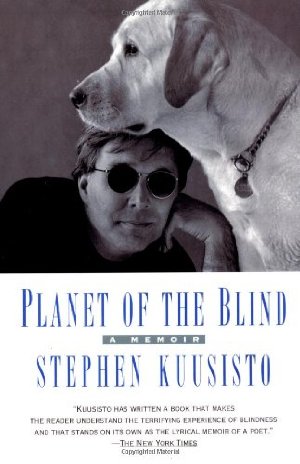
How many burdens do you carry daily?

How many burdens do you carry daily? If I ask myself this question I admit I don’t know the answer. It’s like asking “what should I be doing?” It’s a fool’s game.

Here’s the problem: I carry some baggage because I’m disabled. “No big deal,” says the heart (which I’m told sits reliably in the center of the chest and not to the right hand side as depicted in cartoons.)

The heart is optimistic. It knows it must be. Every pulse beat is optimism.

Now the brain is different. It’s read Duns Scotus and Neruda and Kafka and Hannah Arendt and Frederic Jameson and “Maggie: A Girl of the Streets” and at least a thousand books on disability and who knows how much gloomy nonfiction—so the brain is disposed to contrarian thinking whenever joy comes up.

Alas my brain is more than a little bit like my Finnish grandmother.

Her name was Siiri and unlike her Apple namesake she was gloomy. She couldn’t help it. She was very Lutheran and her husband was a minister during the Great Depression and they’d come to the U.S. to escape hunger and why wouldn’t you become cautionary and somber in the face of a world of gravity and scarcity?

I don’t know about you but I’ll take gloom over despair. I know about this. I have depression as well as vision loss. I ride two horses, one black and the other white. Or something like that. Maybe I’m a shark with two brains: one of appetite and the other of more appetite.

I don’t know as much about the mysteries of consciousness as I pretend.

But I know this: the burdens I carry are the burdens of others.

If the subject is disability, well, I speak up for disabled faculty, students and staff who struggle to acquire basic accommodations both in my own workplace and around the world.

Burden number one: this can make me unpopular. As with racism or misogyny or homophobia the advocate can be characterized as a malcontent almost instantly.

I’ve never completely gotten used to this. The “this” being disapprobation for speaking out against ableism.

I read as much as I can by scholars and poets of color; gay and trans writers; black writers; women writers. And yes, men. I’ve yet to find anyone who’s more deep tissue wise than Walt Whitman.

Last week I participated in a live online town hall discussion about service animals. In the Q &A period several apparently non-disabled questioners asked things phrased thusly:

“Do we have to?”

As in “OK, service animals are legally allowed to enter my space, but can’t we tell those darned blind people where they are to make their dogs relieve themselves?” Or: “OK, a child with a service dog comes to public school—do we have to help that child?” (As if being disabled requires extraordinary extra help; as if a disabled child is a burden.)

I became upset.
I said the following:

“I went to public school before the ADA. I have been told by teachers and school administrators that I’m inconvenient; or worse—that I don’t belong.”

“Frankly, I hope there’s a room in Hell for school administrators where they’ll get to sit throughout eternity with Joseph Stalin, Richard Nixon, and the man who invented the roach motel.”

Then I signed off.

I’ll never not be offended by ableism.

I’ll never sanction the winks.

Just try those questions out if you substitute race or gender or sexual orientation for disability.

How many burdens do any of us carry?

They’re much lighter when we hold them up to scrutiny.
Big Men Be Victims…

I’ve never been good at organizing. I could screw up a “one car funeral” as my maternal grandmother liked to say. She never said this of me. I was too young. One supposes childhood gives one an inoculation against incompetence. Which gets me to my question: at what age does the incapacity vaccine wear off? The poet Robert Bly argued American adults have the emotional maturity of eleven year olds. He further argued that television and all pop culture is designed to enforce this. If men, and yes, women are eleven forever than the culture has done its job. I find I can’t be persuaded to abandon this view.

Barack Obama was in fact an adult. He was a neighborhood organizer before turning to politics. I think he was the last fully fledged grownup to occupy the White House. Biden was old but his lack of personal irony made him more of a boy than we generally admit. We have had very few adults in the presidency. You can count them on one hand. Eisenhower, Truman, FDR, Lincoln and Washington—the rest have been boy-men despite their accomplishments. Andrew Jackson? Child. Teddy Roosevelt? Child. No one knows what Calvin Coolidge was. Jefferson, for all his intelligence, was peevish.

This is why as democracies get tired the people want a Big Child to lead them. All tyrants are eleven year olds. You know who I’m talking about. Here are some characteristics of fifth graders: Very sensitive to praise and recognition; feelings are easily hurt; Because friends are very important, can be conflicts between adults’ rules and friends’ rules; Caught between being a child and being an adult; Loud behavior may hide their lack of self confidence; Are moody, restless; often feel self-conscious and alienated; lack self esteem; Challenge authority figures; test limits of acceptance…(see: https://www.seedlingmentors.org/developmental-characteristics-of-eleven-to-thirteen-years-old-grades-6-8/)

Bly puts it this way: “The inner boy in a messed-up family may keep on being shamed, invaded, disappointed, and paralyzed for years and years. "I am a victim," he says, over and over; and he is. But that very identification with victimhood keeps the soul house open and available for still more invasions. Most American men today do not have enough awakened or living warriors inside to defend their soul houses. And most people, men or women, do not know what genuine outward or inward warriors would look like, or feel like.”

― Robert Bly, Iron John: A Book About Men

When I see Putin or Trump I see baby men with toy soldiers. And yes, they feel like victims…

I think of Ludwig Wittgenstein some mornings…

I think of Ludwig Wittgenstein some mornings. He occurs to me very early. Usually it’s this quote that pops into my waking noggin:

“Death is not an event in life: we do not live to experience death. If we take eternity to mean not infinite temporal duration but timelessness, then eternal life belongs to those who live in the present. Our life has no end in the way in which our visual field has no limits.”

I like this for lots of reasons. As a blind man I like the temerity of the utterance, insofar as all humans have some kind of visual limitation. Wittgenstein posits the power of imagination to declare anything, and then, with a smear of logic, cements an idea into consciousness. I think this is how he survived the trenches in WW I. And I know for certain its how the disabled survive. Look at the nouns:

Death. Event. Life. Experience. Eternity. Duration.

In my sophomore year of college I was fascinated by Boolean algebra. In mathematical logic, Boolean algebra is the “branch of algebra in which the values of the variables are the truth values true and false, usually denoted 1 and 0 respectively.” (See Wikipedia.)

One may easily draw a Boolean equation for the proposition eternal life belongs to those who live in the present. Then there’s a leap—Wittgenstein says our visual field has no limits.

If eternity = timelessness then the present (time) also equals timelessness. Good.
If timelessness is related to mindfulness then the operations of mind become vision. Hence our visual field (anyone’s) has no limit.

You can see where the poet in me would like this. You can see where the blind person in me also admires it.

As logic it is unimpeachable. The trick is to live it.

Early. Wittgenstein for breakfast.

Living Beyond Disability: A Poet’s Reflection

I grew up on a steep divide but it wasn’t geographical. Instead it was a ridge or a chain of mountains both inside and outside me. I didn’t wish to be blind. I wanted to play baseball. And perhaps, more significantly, I wanted to be a scientist. Neither baseball or physics would happen for me. I became a poet. Compared to physics I think poetry is easy. All you have to do is step barefoot on a worm like Theodore Roethke, and you’ve got a poem. Poems fall out of cupboards like a box of starch loaded with spiders.

A popular phrase in advocacy circles is “embrace your disability”—but I’ve always thought the “d” word too mountainous for a hug. No one who’s disabled experiences a singular thing—a kewpie doll of physical difference that can be clutched to the chest. No. You can’t embrace your disability because, in fact, it’s a chain of mountains—highly articulated peaks with physical and metaphorical obstacles. I can’t stand it when I hear someone say “embrace disability”—one might as well embrace the Grand Tetons.

But I have another reason for hating the phrase “embrace disability”—one thinks of how difficult “embraces” really are for the disabled whose hopes for love and sexual life are often next to impossible.

Do you embrace your human loneliness and the near impossibility of intimacy with others?
Do you embrace your unemployment? The erosion of rehabilitation and health services?
Or the fact that doctor’s offices in the US are largely inaccessible?
Or that colleges and universities are woefully trapped in a 1970’s model of disability services?
Or that public transportation, especially airlines, treat you like a cockroach?

So I don’t like the word “embrace” which is just plain tomfoolery. And I don’t like “accept” because it’s too passive and vaguely defeatist.

Exult. Rejoice. Be rapturous. These are all too American. Don’t worry. Be Happy.

It just isn’t easy. The emotional rain isn’t gentle.

Once upon a time in Ithaca, New York, I encountered a man, a rather disheveled and clattering old man, someone the locals seemed to know, for we were in a diner, and he was going from table to table chattering with breakfasters, not asking for money, but essentially playing the role of the Id, sassing people, perhaps in ways they required, who could say, but there he was, pressing into each person’s space, piercing the psyches of strangers with his needle. He called a cop “Porky” and an elderly woman “Grandma” as he lurched steadily toward me. “Oh Doggy!” he said. “Doggy doggy doggy!”

Then he said, “What kind of fucking person are you?”
I tried my best Robert deNiro impression: “Are you talking to ME?”
He was not amused.
“A prisoner!” he shouted, for the whole diner was his stage. “This dog’s a prisoner!”

For a moment I felt the rising heat of embarrassment and rejection. Then, as he repeated my dog was a slave, I softened. In a moment of probable combat I stepped far back inside myself, not because I had to, but how to say it? Corky was unruffled. She actually nuzzled my leg. The nuzzle went up my torso, passed through my neck, went straight for the amygdala.

I smiled then. I said, “You’re right. And I’m a prisoner too.”

I don’t know if it was my smile, or my agreement that did the trick, but he backed up, turned, and walked out the door. Strangers applauded.

I’d beaten a lifetime of bad habits. I hadn’t fallen into panic, or rage, or felt a demand to flee.

I sat at the counter, tucked guide dog Corky safely out of the way of walking customers, and ordered some eggs. I daydreamed over coffee.

When I was eleven years old I fell onto a pricker bush. It’s hard to say how I did it, but I was impaled on hundreds of thorns. My sister who was six at the time, and my cousin Jim who was maybe nine, fell to the ground laughing as if they might die. I begged them for help which of course only made them laugh all the harder. I remember tears welling in my eyes and their insensible joy. I also knew in that moment they were right to laugh—that I was the older kid, was a bit bossy, disability be damned. I was the one who told my sister and cousin what to do. Now I was getting mine. My just deserts. In the end I tore myself from the monster shrub and stormed into the house. I sulked while they continued laughing outside.

Perhaps I thought, there in the diner, I could live henceforth in a new and more flexible way.

“Is it as simple as this?” I thought. “One simply decides to breathe differently.”

I saw, in a way, it was that simple.

Saw also how a dog can be your teacher. And while eating wheat toast I thought of the Buddha’s words from the Dhammapada:

Live in Joy, In love,
Even among those who hate.
Live in joy, In health,
Even among the afflicted.
Live in joy, In peace,
Even among the troubled.
Look within. Be still.
Free from fear and attachment,
Know the sweet joy of living in the way.

But you see, that’s the poet in me. It’s easy to imagine disabled life is a matter of grace.
And though I have these moments, I know I’m high in the Grand Tetons, still looking for a path.

And so I’m getting to my point. We are in the fight of our lives, all of us who hail from historically marginalized. This is a fearful time. I want to fight for us all. Embrace or don’t embrace your disability Stephen. Its all the same our there where so many are prisoners. Be better. Think a little bit about John Lewis. Think of good trouble. Right now the emotional rain is toxic. Get your umbrellas.