20 Lessons from Book Tour

By Andrea Scarpino


  1. Sometimes you just need to pee by the side of the road. 


  1. Flirting with the Santa Monica Subaru salesman to get a Harman/Kardon speaker installed in your newly purchased blue Subaru—while absolutely dirty—was absolutely worth it. 


  1. After you read poetry about a friend being killed in a car crash, you learn that a friend of those in the audience was killed in a car crash the week before. And her best friend asks you to sign both of their names in her copy of your book. And what can you say to offer comfort? Nothing. 


  1. “Walt Whitman,” a woman says, nodding her head. “I’m pretty sure I’ve heard of him.”


  1. You’re talking with another professor, and you learn he was also a student of one of your mentors. And it makes sense: this man’s kindness, the kindness of your mentor. Let kindness always spread from teacher to student. And back again. 


  1. Cruise control is better than sliced bread. 


  1. A nun comes to your reading and brings a bouquet of palm fronds woven into flowers. And you hold the bouquet and think of your father, who wove palm fronds every Easter: crosses, boxes, long chains. His bulky fingers, stiff hands—your hands— 


  1. Exit 92 is the first exit with a Starbucks when leaving the Upper Peninsula. And the last exit with a Starbucks when you return. 


  1. Christian rock is addictive. Bored in the car, you move through radio stations, find yourself dancing like crazy to a song about resurrection. 


  1. A young woman who has gone hungry in order to feed her kids buys your poetry book. Always write remembering this. 


  1. Some listeners dismiss your poetry as “death-obsessed” and “dark.” And some understand the need to sit with loss, to feel it. They share their own stories: searching for the decapitated heads of two teenagers killed in an accident, surviving any number of wars, losing friends to suicide, losing husbands. They cry as you read your poems of loss. They understand their crying as necessary and good and full of light. 


  1. Even though you haven’t listened to the Indigo Girls in a decade, when you find their Rites of Passage CD abandoned in your car’s glove box, you still remember every single word. 


  1. Your father’s favorite—and final—student has a photograph of the two of them on his office wall. 


  1. When someone asks if you’d like to do yoga, say yes. When someone asks if you’d like coffee, say yes. 


  1. You’re eating lunch when your friend leans in to you, whispers, “That woman looks just like Meg Ryan.” You turn to look, turn back. “That’s because she is Meg Ryan,” you say. You used to live in Los Angeles so you know you’re not supposed to react to celebrities. But Meg’s hair is gorgeous. 


  1. It may be snowing ten inches at home, but it’s spring somewhere. Dogwood in bloom. Magnolia. Crocuses pushing through wet earth. And in Duke’s Gardens, row after row of tulips, opening. 


  1. You seem to need more vegetables than anyone else. So when you return from six weeks on the road, don’t be surprised you can’t stop eating: rhubarb and cauliflower steaks and bags of baby carrots and romaine hearts and pea pods and handfuls of radishes and spinach and kale and beets. 


  1. Do laundry every chance you get. 


  1. You have made some amazing friends in this world. Friends who share their homes and pets and partners and kids. Friends who find money in recession-budgets to pay you to read your poems, visit their classes. Friends who buy stacks of your books to give as gifts. Friends who bring you to delicious restaurants. Friends who drive hours to see you in another city. Friends you haven’t seen for years but with whom you immediately re-connect. Friends who make you laugh so hard your stomach hurts. Who host you graciously even through their own exhaustion, busy lives. Who make you feel like the most important person on Earth. 
  2. And you know it is your job as a writer to find words for all of this. That’s what you believe: words save us. Words catch hold of the ephemeral. You say “thank you” again and again. You write “thank you” again and again in cards. And it’s not enough. But until you find better words, you keep saying it. “The only wisdom we can hope to acquire,” Eliot writes, “Is the wisdom of humility: humility is endless.” And you hope he is right. And you refill your gas tank. Get back on the road. 

A Virgin Walk with my First Guide Dog In New York City

Many people think New York must be a tough place for the blind but in truth once you’ve had training with a white cane or a dog its a great place. The lay out of its avenues and streets forms a grid which makes knowing your location rather simple. Though the sidewalks are crowded and the traffic is intense, New Yorkers are helpful—perhaps because so many come from someplace else—but when you ask questions on a street corner strangers are helpful. Walking from the train with Corky and entering the main concourse of Grand Central was like a dream—we moved among throngs of commuters, zipping around clusters of people reading signs.  In the majesty of the railway palace we stopped too. I wanted to take it all in. Trainer L was behind us, watching. A stray passenger asked if I needed directions. “No,” I said, “I’m just absorbing the glory of this place!” As I stood there two other people approached wanting to help. “This is a New York I didn’t know existed,” I thought. Its a New York the guide dog attracts. “Nice dog,” said the second man wanted to point me in the right direction. We headed toward the 42nd Street exit. Corky was delighted. Her tail thumped against my leg. She was in her element. Dogs have instinctive joy; follow their senses; but they have working joy too—they love having a task. Task-love emanated from her. I felt it in our speed. This was no unpleasant test. We were nimble and commanding. We exited the station and entered a sunny, spring day. We were in. Were in New York. I wanted to cry again but we were walking too fast. 


We passed some men playing a curb side card game; we skirted left and passed a girl with a rolling suitcase. We stepped around a subway grate, pushed to the curb at 42nd and Vanderbilt. Corky looked left and right. Two people jaywalked but she didn’t budge. A taxi accelerated in front of us. I smelled a cigar. I wondered if it was from the taxi or the far side of the street. L said we were looking good. 


**

Corky was calm but even so, the bustle of Fifth Avenue overloaded my circuits. It felt as though I’d had a dozen cups of coffee.  Then I had a bizarre experience, a neurological hijacking—a fight or flee reflex—and ordered Corky to cross 49th street though we didn’t “have the light”. She looked left and right, saw a gap in the traffic, and took off. We were jay walking like ten million other New Yorkers and though we reached the far side safely L caught up with us and said, “You almost gave me a heart attack!” “I had a brain fart!” I said. “Well don’t fart too much,” L said. “Listen for the traffic flow,” she said. 

Walking the next few blocks I felt better. My mistake crossing against the light came from energy rather than fear. This was an achievement, failing to be afraid. 


“Who would I be if I was no longer afraid?” I thought.  


We walked up Park Avenue and entered the Waldorf Astoria Hotel. The doorman bade us welcome. He displayed gladness. My “no longer being afraid” meant I could hear notes of optimism.


“Welcome to the Waldorf, Sir,” said the doorman, adding, “what a sharp dog!” 

“Thank you,” I said. 

I remembered to say good dog. 

We swayed together side by side on the red carpet. 

“Corky,” I said. “Oh Corky!” 

We stood in the foyer. 

There was a general fragrance of lilies.

“We can come to places like this; we can find our way; we’re New Yorkers!” i said, though not loudly. 

The rug was soft as a cloud. 

There was something august and funereal about the odors of furniture wax and flowers and the odd hush of the place. And as I would do so many times over the coming years I got down on one knee and hugged my dog. 


Men and women passed us, headed for the Park Avenue exit. 

“Wow,” said a woman, seeing us. 

I heard the smile in her voice. 


I heard an elevator open. 


I remembered that during World War II a train platform was constructed under the Waldorf for President Franklin D. Roosevelt. He could exit the train in privacy—the Secret Service would raise him from his wheel chair and help him into an open sedan. The car would be lifted via the elevator to street level. 


I thought of FDR and all the stage work necessary to conceal his disability from voters.  I’d already come far with Corky. I was fully visible with my disability and more pleased about the matter than I’d have thought possible.


**


Each of my guide dog friends recalls feeling pleased for the first time with a dog. My friend J.K. walked five blocks to a motorcycle shop and talked bikes. Then he walked some more and had lunch in a diner.  Nothing had ever been that good, no conversation or food had ever matched it. In the condensed version of guide dog life, suddenly everything becomes reachable. Reachable is a word sighted people never have to think about–but it’s the main ingredient of being and there’s nothing like feeling it for the first time or feeling it all over again.

J.K. said when he first took to the street with his dog, “It was as if people were seeing me for the first time–like before I got the dog they’d see my white cane and look away, but with the dog they had a point of contact and they could say something affirming, even if it was as simple as great dog, the ice was broken. I’d been blind all my life but it felt like with the dog I was having my first ever conversations with strangers. It was like breaking through to the other side of something.”

Standing in the Waldorf Astoria I too felt I’d crossed to the other side. I was in a place I didn’t know and damned if I didn’t feel composure. I’d never felt blind composure before. And then parts of my mind were free—and maybe it was nothing sublime—it was mostly casual trivia. Was this what sighted people experienced? The Waldorf: where Herbert Hoover and Douglas MacArthur occupied suites on separate floors; where Marilyn Monroe lived the year of my birth; where gangsters “Bugsy” Siegal and “Lucky” Luciano conducted business; where Nikola Tesla dreamed of electricity; where Cole Porter wrote songs.

This was my “diner experience”—the freedom to come and go as I pleased and dream a bit while standing still on a very rich carpet.   


Easter and Emotional Taxonomy

My father died on Easter Sunday. Its one of those facts for which there’s no proper emotional taxonomy. Does the anniversary change what Easter is? Would I be this sad on any other day? Surely the day’s meaning is heightened and aggravated—I struggle, whisper more than usual, wring my rags of faith, grieve, wish for life everlasting. Meantime I miss my father. Meantime I wish the meanings of his life may have significance in the sky. How silly this is—how I know it. What is faith? Is it a weakness of the mind as many shrewd people suppose? Its possible. At the very least, faith struggles with facts, or as W.H. Auden noted: “Christmas and Easter can be subjects for poetry, but Good Friday, like Auschwitz, cannot. The reality is so horrible it is not surprising that people should have found it a stumbling block to faith.” 


And so Easter may have its poetry but its margins are shadowy. I can’t say what faith is. Maybe I’m not brave enough. Perhaps I’m too wise. Faith and poetry are easy enough to challenge. 


Of faith Christopher Hitchens wrote: “What can be asserted without proof can be dismissed without proof.” I think he’s correct. In his book The Portable Atheist he also said: 


“The only position that leaves me with no cognitive dissonance is atheism. It is not a creed. Death is certain, replacing both the siren-song of Paradise and the dread of Hell. Life on this earth, with all its mystery and beauty and pain, is then to be lived far more intensely: we stumble and get up, we are sad, confident, insecure, feel loneliness and joy and love. There is nothing more; but I want nothing more.” 


But Easter is all about cognitive dissonance. If we want nothing more than the here and now we may be giving away something more than faith. Hitchens insists he feels complete living in the intensities of now. Alongside this, and in contrast, consider Dietrich Bonhoeffer:  


“I discovered later, and I’m still discovering right up to this moment, that is it only by living completely in this world that one learns to have faith. By this-worldliness I mean living unreservedly in life’s duties, problems, successes and failures. In so doing we throw ourselves completely into the arms of God, taking seriously, not our own sufferings, but those of God in the world. That, I think, is faith.”


Hitchens would say God in the world is hearsay or superstition and for all I know he’s right. But suffering is not sub-Cartesian: that is, not thinking about it doesn’t make it go away. Being among the like-minded doesn’t transform it. Like-mindedness is easy, much easier than faith. Bonhoeffer again: 


“Jesus Christ lived in the midst of his enemies. At the end all his disciples deserted him. On the Cross he was utterly alone, surrounded by evildoers and mockers. For this cause he had come, to bring peace to the enemies of God. So the Christian, too, belongs not in the seclusion of a cloistered life but in the thick of foes. There is his commission, his work. ‘The kingdom is to be in the midst of your enemies. And he who will not suffer this does not want to be of the Kingdom of Christ; he wants to be among friends, to sit among roses and lilies, not with the bad people but the devout people. O you blasphemers and betrayers of Christ! If Christ had done what you are doing who would ever have been spared’ (Luther).” 


Hitchens would say there’s nothing Christians can do that atheists can’t do better. He’d also likely say Christianity, like all religions, is a hodgepodge of superstitions and proves itself hieratic, dishonest, even tyrannical. 


And he’d be right. The history of church persecutions is long and dreadful. 


“Evil-doers and mockers surround us.” 


Who can say there was a risen Christ? There’s no more complicated debate than the one between believers, skeptics, and scholars about the historical events surrounding the gospels’ depictions of Jesus’ resurrection. 


Did it happen? Paul said Christ appeared to 500 witnesses. He noted many of them were still alive, in effect, saying: “Would I dare to make this up?” 


In the end I like the word “commission” for work is at the core of faith, not folk tales or magical thinking. Skeptics get this part of faith all wrong. On Easter I am strong. I will be strong next week. Strong because I come back day after day to the troubled world and strive in it. 


My father was a striver. That’s why I miss him most of all. 


The acquisition of knowledge

There are those who believe knowledge is something that is acquired—a precious ore hacked, as it were, from the gray strata of ignorance.

There are those who believe that knowledge can only be recalled, that there was some Golden Age in the distant past when everything was known and the stones� fitted together so you could hardly put a knife between them…

From the incomparable Lance Mannion…

The acquisition of knowledge

There are those who believe knowledge is something that is acquired—a precious ore hacked, as it were, from the gray strata of ignorance.

There are those who believe that knowledge can only be recalled, that there was some Golden Age in the distant past when everything was known and the stones� fitted together so you could hardly put a knife between them…

Thoughts on Easter Eve

I’ve been trying to center my designs. By this I mean (or believe I mean) access my proper work. I don’t mean literary work or teaching; I don’t have in mind something from the gospels. But I’m old enough to creep past memories of old embarrassments—smart enough to know I can’t get away with it. 


One night I insulted a friend over the telephone, angry at my own life, foolishly berating him for his own frailties. I harmed him. Sometimes I’ve given away secrets that weren’t mine to broadcast thereby harming reputations. I’m a man-child of considerable envy. As a disabled child I was often shut out from games by other children and I’ve never gotten over it. My biggest sin is jealousy.


I promise not to go on in this vein. But I’ve always felt Alcoholics Anonymous is spot on with their insistence on sincere and ritual apologies. In general the muscular world forbids apology and sincerity is largely judged a weakness. And yet I’m sorry for many things I’ve said or done. Saying so is a start—a first step toward whatever passes for emotional intelligence or what share of it I might achieve.


Hence the word “designs”—for emotional work carries geometry within it, the Jungian mandala. Its unhindered, round, dark and light, intricate. I am part of it. It is bigger than I am. Some nights I cry out in my sleep. I’ve also laughed in dreams. In sum, the psyche knows how to face the sky. Would that I’ll learn.


Disability and the Radial Republic

NewImage

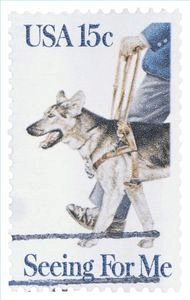
US Postage stamp honoring guide dogs, picturing Morris Frank and his pioneering American guide dog Buddy, a German Shepherd. Beneath them it says: “Seeing For Me”


I haven’t been posting on my blog lately. Sometimes the limbed life of physical difference is overwhelming and one feels a temptation to lie down in the long ditch of sadness. The largest psychiatric hospital in the United States is the Los Angeles County Jail. Veterans with disabilities  since 9/11 face extraordinary obstacles to employment. Rehabilitation services for all persons with disabilities are underfunded. 70% of the disabled remain unemployed in the US. Only one quarter of matriculating college students with disabilities actually graduates. Long standing charities like guide dog schools are experiencing a general decline in philanthropic donations—Baby Boomers and their children aren’t as generous as “The Greatest Generation” it seems. 


Meanwhile the toxic and shrill bloviating of politicians like Paul Ryan (who argue social programs are the root of America’s financial problems) helps to convince Americans that generosity and fairness are nearly unpatriotic—and would this were not so—for giving hard working and ambitious people with disabilities a shot at the American Dream ought to be deeply carved on the entablatures of our public buildings. 


What do I mean by a “radial republic”? Many things of course but principally a renewal of the social contract—our American contract which has grown stronger after every war and which has assured veterans with disabilities will be properly assisted, treated, educated, and welcomed. What do I mean by a radial republic? As we nurture disabled vets we assist all Americans with disabilities. Many people know I’m a guide dog user but I’m willing to bet that most of my readers don’t know that guide dogs (or “Seeing-Eye Dogs” as they’re sometimes called in the US in homage to North America’s first guide dog school which is named “The Seeing-Eye”) are the product of rehabilitation work in Germany at the end of WW I. 


Halfway through the First World War a German physician, Dr. Gerhard Stalling introduced a blind veteran to his pet dog. The two men were in a hospital garden when Stalling was suddenly called away. When he came back the soldier whose name is now lost, was laughing as the dog licked his hands. Stalling saw dogs might be trained to guide the blind. The war had produced an astonishing number of blind veterans. The total number of wounded from the first world war remains unknown but during the four and a half years of the conflict 230 soldiers died every hour. 11% of France’s entire population was killed. The ten month Battle of Verdun in 1916 caused over a million casualties. Chlorine and mustard gas killed nearly 90,000 troops and left one and a quarter million men permanently disabled. Blindness was a common result of gas warfare and one of John Singer Sargent’s most famous paintings (“Gassed” 1919) depicts a ragged line of soldiers, their eyes bandaged, all the men walking in a line, each man’s hand on the shoulder of the man before him—with two sighted men in the lead. The sky is yellow above a field of corpses. 


Trench warfare included working dogs. Germany employed 30,000 dogs in the field and their work was divided according to need. Sentry dogs were used on patrols. They were taught to give warning when a stranger entered a secure area. Scout dogs were also used. Their job was more refined—they accompanied soldiers on reconnaissance and had to keep quiet. They could detect the enemy at a distance of a 1000 yards, “scenting” and pointing. 


Casualty or ‘Mercy’ dogs, also known as ‘Sanitatshunde’ were trained to find wounded or dying soldiers in the heat of battle. They carried medical supplies on their backs. The wounded could use the supplies if they were able, or they could count on the Mercy Dog to wait with them as they died.


Dogs also ran long distances across battle fields carrying messages, often during artillery attacks. The heroism of working dogs was well known on all sides. The Germans employed 30,000 dogs during the war. British and French forces had approximately 20,000 dogs in the field.    


The guide dog was a consequence of war. Because dogs had proved themselves capable of miraculous work under the worst battle conditions ever seen, it was clear to Stalling war dogs could be trained to help the blind navigate post-war streets which were suddenly filled with automobiles. With a small group of military dog handlers Stalling began training dogs for blind soldiers. Old photos show trainers and veterans working with German Shepherds, all the men wearing peaked hats and long wool coats. In addition to harnesses the dogs wore tunics bearing the Red Cross logo—the insignia of the battle field “mercy” dog.   


Stallings idea captivated the public’s imagination. An official guide dog school opened in in Oldenberg in 1916. The sight of veterans and dogs working in traffic was powerful and seemed natural. In popular imagination blind people had always been accompanied by dogs: a first century mural in Roman Herculaneum depicts a blind man with his dog.  A 19th century woodcut from the United States shows a blind man from Boston being lead by a dog and crossing the Commons. Such pairings were likely the products of serendipity—the blind and their dogs forged relationships by necessity. The history of blindness is filled with sorrow. Before reforms like Social Security and organized rehabilitation services were created in the 20th century, the blind often begged for food and shelter—some played musical instruments—many wandered searching for compassion. Dogs helped ease their loneliness and offered untrained navigational assistance.    


Sometimes I like to joke by saying the guide dog is the only good thing every invented by the German Army. This may be true. But what is true is that rehabilitation programs for disabled veterans impact the broader republic. Nowadays when an autist, or a deaf person is accompanied by a trained service dog we can and should give thanks to Dr. Stalling. And in turn we should be seeking with all our Republic’s strength to carry on the difficult work of lifelong optimism that disability rehabilitation and education calls for. 


I’m not fond of the term “wounded warrior” precisely because disability isn’t a wound—it may heal in some dimensions, but in others it will always be present. A commitment to people with disabilities in general and to veterans in particular means understanding the full arc of life. The radial republic means giving people with disabilities and equal shot at education, travel, vacation, family, housing, medicine, you name it. 


Making this happen benefits all.


Unemployment unassurance

If you lose your job, it doesn’t matter how you lost it. It’s your own fault. The company went under. A Bain-like hedge fund bought it and looted it and pumped up stock prices by kicking you and half the other employees out the door. You got sick. You got injured. You used up too much time in your bosses’ opinion taking care of a sick spouse, sick kids, a new baby, elderly parents. Whine all you want. It’s your fault. Now go away, loser, and leave the rest of us winners alone to enjoy our winnings without guilt or the slightest sense of obligation.

via lancemannion.typepad.com

The incomparable Lance Mannion…