Living Beyond Disability: A Poet’s Reflection

I grew up on a steep divide but it wasn’t geographical. Instead it was a ridge or a chain of mountains both inside and outside me. I didn’t wish to be blind. I wanted to play baseball. And perhaps, more significantly, I wanted to be a scientist. Neither baseball or physics would happen for me. I became a poet. Compared to physics I think poetry is easy. All you have to do is step barefoot on a worm like Theodore Roethke, and you’ve got a poem. Poems fall out of cupboards like a box of starch loaded with spiders.

A popular phrase in advocacy circles is “embrace your disability”—but I’ve always thought the “d” word too mountainous for a hug. No one who’s disabled experiences a singular thing—a kewpie doll of physical difference that can be clutched to the chest. No. You can’t embrace your disability because, in fact, it’s a chain of mountains—highly articulated peaks with physical and metaphorical obstacles. I can’t stand it when I hear someone say “embrace disability”—one might as well embrace the Grand Tetons.

But I have another reason for hating the phrase “embrace disability”—one thinks of how difficult “embraces” really are for the disabled whose hopes for love and sexual life are often next to impossible.

Do you embrace your human loneliness and the near impossibility of intimacy with others?
Do you embrace your unemployment? The erosion of rehabilitation and health services?
Or the fact that doctor’s offices in the US are largely inaccessible?
Or that colleges and universities are woefully trapped in a 1970’s model of disability services?
Or that public transportation, especially airlines, treat you like a cockroach?

So I don’t like the word “embrace” which is just plain tomfoolery. And I don’t like “accept” because it’s too passive and vaguely defeatist.

Exult. Rejoice. Be rapturous. These are all too American. Don’t worry. Be Happy.

It just isn’t easy. The emotional rain isn’t gentle.

Once upon a time in Ithaca, New York, I encountered a man, a rather disheveled and clattering old man, someone the locals seemed to know, for we were in a diner, and he was going from table to table chattering with breakfasters, not asking for money, but essentially playing the role of the Id, sassing people, perhaps in ways they required, who could say, but there he was, pressing into each person’s space, piercing the psyches of strangers with his needle. He called a cop “Porky” and an elderly woman “Grandma” as he lurched steadily toward me. “Oh Doggy!” he said. “Doggy doggy doggy!”

Then he said, “What kind of fucking person are you?”
I tried my best Robert deNiro impression: “Are you talking to ME?”
He was not amused.
“A prisoner!” he shouted, for the whole diner was his stage. “This dog’s a prisoner!”

For a moment I felt the rising heat of embarrassment and rejection. Then, as he repeated my dog was a slave, I softened. In a moment of probable combat I stepped far back inside myself, not because I had to, but how to say it? Corky was unruffled. She actually nuzzled my leg. The nuzzle went up my torso, passed through my neck, went straight for the amygdala.

I smiled then. I said, “You’re right. And I’m a prisoner too.”

I don’t know if it was my smile, or my agreement that did the trick, but he backed up, turned, and walked out the door. Strangers applauded.

I’d beaten a lifetime of bad habits. I hadn’t fallen into panic, or rage, or felt a demand to flee.

I sat at the counter, tucked guide dog Corky safely out of the way of walking customers, and ordered some eggs. I daydreamed over coffee.

When I was eleven years old I fell onto a pricker bush. It’s hard to say how I did it, but I was impaled on hundreds of thorns. My sister who was six at the time, and my cousin Jim who was maybe nine, fell to the ground laughing as if they might die. I begged them for help which of course only made them laugh all the harder. I remember tears welling in my eyes and their insensible joy. I also knew in that moment they were right to laugh—that I was the older kid, was a bit bossy, disability be damned. I was the one who told my sister and cousin what to do. Now I was getting mine. My just deserts. In the end I tore myself from the monster shrub and stormed into the house. I sulked while they continued laughing outside.

Perhaps I thought, there in the diner, I could live henceforth in a new and more flexible way.

“Is it as simple as this?” I thought. “One simply decides to breathe differently.”

I saw, in a way, it was that simple.

Saw also how a dog can be your teacher. And while eating wheat toast I thought of the Buddha’s words from the Dhammapada:

Live in Joy, In love,
Even among those who hate.
Live in joy, In health,
Even among the afflicted.
Live in joy, In peace,
Even among the troubled.
Look within. Be still.
Free from fear and attachment,
Know the sweet joy of living in the way.

But you see, that’s the poet in me. It’s easy to imagine disabled life is a matter of grace.
And though I have these moments, I know I’m high in the Grand Tetons, still looking for a path.

And so I’m getting to my point. We are in the fight of our lives, all of us who hail from historically marginalized. This is a fearful time. I want to fight for us all. Embrace or don’t embrace your disability Stephen. Its all the same our there where so many are prisoners. Be better. Think a little bit about John Lewis. Think of good trouble. Right now the emotional rain is toxic. Get your umbrellas.
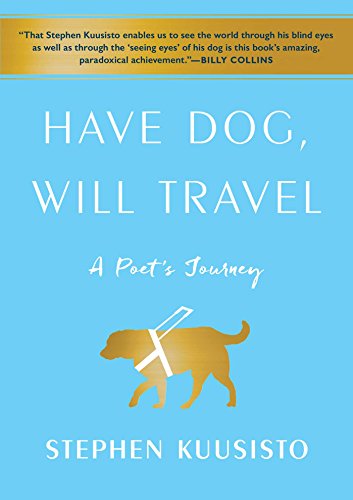
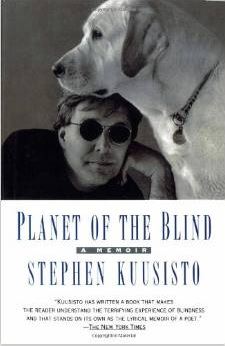
Hail to the Crippled Writers

Yes optimism for the wretch is a dyer’s art but it must be farcical in its hope. (Think Shakespeare’s Bottom.) One must be ridiculous in the boot black factory.

Let’s celebrate what for lack of a better term one might call the optimistic imagination as practiced by wretches. I’m in mind of G.K. Chesterton’s assessment of Dickens, that he was: “delighted at the same moment that he was desperate. The two opposite things existed in him simultaneously, and each in its full strength. His soul was not a mixed colour like grey and purple, caused by no component colour being quite itself. His soul was like a shot silk of black and crimson, a shot silk of misery and joy.”

Yes optimism for the wretch is a dyer’s art but it must be farcical in its hope. (Think Shakespeare’s Bottom.) One must be ridiculous in the boot black factory. (Dickens-Chaplin.) This is the thing, likely a tee shirt slogan: we hope in misery. As for the literary imagination printed ideas are invariably sad even when they propose optimism and no honest writer can ignore it. What did J.P. Morgan’s library smell like in 1902? Short answer? The vapors of sorrow.

A game I play, more often than I should admit, is a dramatic transference for which there may be a name but I’ve never found one. Perhaps there’s something in German. In short, I employ the characters of Shakespeare and Moliere as standard bearers for people I meet and especially for  public figures. The literary term for this is “comparison” but what I’m describing is better than that—“kayfab” is what they call it in professional wrestling, where everyone, both wrestlers and fans collectively pretend a false drama is real. Essentially I live and have always lived since my late teens in Tartuffe and The Taming of the Shrew and at this stage of life there’s no help for it. This is comedy as it’s lived but not necessarily admired. Moliere:

“The comic is the outward and visible form that nature’s bounty has attached to everything unreasonable, so that we should see, and avoid, it. To know the comic we must know the rational, of which it denotes the absence and we must see wherein the rational consists . . . incongruity is the heart of the comic . . . it follows that all lying, disguise, cheating, dissimulation, all outward show different from the reality, all contradiction in fact between actions that proceed from a single source, all this is in essence comic.”

Both Moliere and Shakespeare grew up watching morality plays, fables whose stock characters were invariably named God, Death, Everyman, Good-Deeds, Angel, Knowledge, Beauty, Discretion, and Strength. Because they lived during the first flowering of public literacy they understood the indispensable healthiness of word flipping. Talk about nature’s bounty! Words were no longer merely to be received and absorbed. Can you imagine the joy of a 17th century adolescent forced to watch Everyman or The Second Shepherd’s Play, as he substituted Satan, Life, Neighbor, Sin, Second Rate Demons, Ignorance, Ugliness, Gossip, and Basic Human Weakness for the stock characters of religious drama? Of course you can. Almost no one who’s lived through a high school production of The Man of La Mancha has not done this.

Comic irony is when you recognize the impostors beyond their appearances on stage. The characters in Tartuffe are at every holiday party. They creep through the workplace. Confidence men, hypocrites, exceptionally vain head cases, the credulous, and all who make their living feigning virtue. Ah, nature’s bounty indeed!

By living Moliere I reside in kayfab—I know the world may be better or worse than this adoption, but I can bear my illusions for not to live in Tartuffe would be, at least for me, unsupportable. Comedic representation is healthier than plodding credulity and more philosophical since incongruity is the mainspring for understanding the irrational. If you’re following me, you’ll say my proscenium of custom if it’s all Moliere, all Shakespeare, all the time, is a matter that must by necessity make me unreasonable. I prefer this to any conversation with the human resources crowd or political canvasers or god help me, professors at a conference. I’d gladly sip the milk of custom and spit it in a potted plant than talk to Orgon or Tartuffe. Contradiction isn’t a customary beverage. It’s milk and iodine and it’s healthier for you than any drink Madame Pernelle will offer.

Shakespeare was the first comic writer to dramatize reverse psychology as Petruchio, a wandering nobleman, undertakes the wooing of Kate who’s notoriously short tempered and cruel:

“Say she rail; why, I’ll tell her plain
She sings as sweetly as a nightingale.
Say that she frown; I’ll say she looks as clear
As morning roses newly wash’d with dew.
Say she be mute and will not speak a word;
Then I’ll commend her volubility,
and say she uttereth piercing eloquence.”

We are the ones invited to say she rail; we’re instructed to become as devious as Petruchio. Taken into his confidence we’re delighted by his promissory book of lies.

That’s optimism as comedy. Not as a vehicle for pratfalls or put downs, but discernment and the vanity of hope.

Hope is comedy. The sadness of the world is irrational. This is how I live. I think of Auden’s line: “All we are not stares back at what we are.” If an empowered disability identity is “out” and on the street it’s ironies are inherently complicated by the acculturated language of normalcy. This is both a signature subject for performance theory and disability studies. It is also the seed bed of literary consciousness. Watch out! The crip writers are comics.

America, 2025

America, 2025

We were wrong to believe in our hands
Whether of strength or delicacy—
Laboring
Or the piano in the mind.
We’re fiction now
Or half unreal like babies
And no one will tell us
How it will be.
There’s no fortune teller.
Young and old
Can’t grasp
Immediate things.
A sustained smallness
Hangs from our sleeves
Though we keep waving…

On the Ableism River

A woman sneered at me not long ago. We were on an airplane. Her seat was next to mine. Spotting the guide dog at my feet she pitched a fit. She told everyone within earshot that she was allergic to dogs. She needed immediate attention. She demanded a seat in First Class. She was, as they say, a “hot mess” and I tried to empathize—who am I to say she didn’t have allergies or that this wasn’t a deep inconvenience for her? Yet her nastiness was the thing. She was affronted by the very idea that I was “there” in that space. She sizzled with contempt.

If you’re disabled you know all about the contempt sizzlers. As Mark Twain would say, “you’ve met them on the river.”

**

More about the river…

The river is god itself. Not your ideas about it. Not your yearnings. It goes about its business, moving the glory of creation wherever it needs to go. Children sit on the banks dreaming. This is proper prayer.

The ableists’ river is also god itself. Its where self-contempt goes to bathe. And here come the cripples, floating down stream like loaves of bread…

**

You see, some days a cripple just doesn’t know what to say.
River. Bread, Children. Dreams. God in the mix. And sad strangers who can’t speak our language.

**

I wish that woman with her dog allergy well. I don’t think she had an allergy at all. It was in her voice. Studies show you can spot liars by their intonations. Hers said: “I’m a nasty, self absorbed wart. And I want you to pay attention to me.”

The dog just slept.

This morning I feel strongly that her tribe has taken the reins of our government.

A few years back I attended a speech by two senators who were instrumental in passing the Americans with Disabilities Act: Tom Harkin and Bob Dole. A Democrat and a Republican. They spoke about the bipartisanship that made the ADA possible. But then Bob Dole said something that made my ears prick up: “Today’s GOP would never support this.” The Tea Party was in vogue. Hatred of cooperation was the new rule. This was before Trump.

This morning we’re seeing the GOP controlled House fresh off of voting to eliminate Medicaid and other crucial programs for veterans, the disabled, the poor, and the elderly, flat out crowing about their wonderful new bill.


They have a collective allergy.

Let’s say adulthood starts when you’re 18
If so, I’ve been writing poems all my adult life
That’s fifty one years of scribbling incomprehensible notes
And in all that time
The trees were trying to tell me something
Last night walking in rain in downtown Helsinki
I wanted to tell them how sorry I am for never hearing
I whispered beside the old Swedish theater
Is it too late
To have a proto-prayer for the trees?
And the terrible dime store Santa Clauses everywhere…

The Sadder Parts of Mozart

Mozart’s String Quartet in G —the allegro playing softly in memory. For me it carries the sense of standing on a dark riverbank with far off light starting to appear over the forest. Gloomy river and the promise of improved weather. Anyway I like the sadder parts of Mozart. He seems more honest in the sad registers.

Let’s be candid though. Mozart could get people to dance. This is a time of dolor and we will need joy to get through unless you’re a thick head. You may read into that what you will.

I like the sadder parts of Mozart. I love Book 11 of The Odyssey. I favor the underworld in the Kalevala. I like the image of death’s swans gliding silently over the frozen lake of the afterlife. I like bitter candies.

This morning, walking in downtown Washington, DC without my guide dog, waving my white cane, merely looking for coffee, I was accosted by two homeless men. They descended upon me and fought over which one of them was going to escort me across the street. It’s a sad world. I wrenched free and plunged into traffic. Survived. Got coffee. I’m on the waiting list for a new guide dog as mine has retired. Thought of how people will generally leave you alone if you’re navigating with a big ass dog. Thought of how I might have been killed this morning looking for Starbucks. Thought of the swans mentioned above.

Yes this is a strange and uphill life for most of us. Those who don’t see it that way think Trump is a great dancer.

As I grow older my hands open more slowly…

My hands are today helpless. I used them to vote against fascism just last week. It was foolish of my hands to think they had power. Today my hands are grieving and their grief differs from that of the head or heart: my hands are those of a sailor who desperately wants to put the ship on the right course—hands that are educated, seasoned, and moral.

As I grow older my hands open more slowly. Maybe they know more? What’s empty turns its face to us, said a good poet, long ago. My hands read Braille poorly. My hands which have touched Marcel Duchamp’s bicycle wheel. Hands that pull the voting lever for freedom.

There are several good books about hands. One of my favorites is “Victorian Hands: The Manual Turn in Nineteenth Century Body Studies” edited by Peter J. Capuano and Sue Zemka. Hands are transformed by the industrial revolution—they become vulnerable instruments seemingly designed through evolution to operating machines. They are all too often dismembered. Hands become “throw aways” as much as anything else.

My hands are today helpless. I used them to vote against fascism just last week. It was foolish of my hands to think they had power. Today my hands are grieving and their grief differs from that of the head or heart: my hands are those of a sailor who desperately wants to put the ship on the right course—hands that are educated, seasoned, and moral.

What about the hands of those who voted for fascism you say. These are the descendent hands of industrial labor, desperately caught up in the machines of their own doom. They voted, essentially, for “throw away” hands.

My favorite poem about hands is by Jane Hirshfield

A hand is not four fingers and a thumb.
Nor is it palm and knuckles,
not ligaments or the fat’s yellow pillow,
not tendons, star of the wristbone, meander of veins.

A hand is not the thick thatch of its lines
with their infinite dramas,
nor what it has written,
not on the page,
not on the ecstatic body.

Nor is the hand its meadows of holding, of shaping—
not sponge of rising yeast-bread,
not rotor pin’s smoothness,
not ink.

The maple’s green hands do not cup
the proliferant rain.
What empties itself falls into the place that is open.
A hand turned upward holds only a single, transparent question.
Unanswerable, humming like bees, it rises, swarms, departs.

Why I’m Not on Substack and Won’t Be Joining Up

Every writer is now a “brand” and by golly you should have to pay for every word from him/her/they/etc. I vote against this. So my superannuated blog will continue. It won’t cost you a cent.

I started my blog “Planet of the Blind” back in 2007. I’ve been blogging more or less regularly ever since. Lots of people have taken blogging into monetized realms and more power to them. As for me, I think there are already too many pay walls and subscription platforms. Back in the early 1990’s I heard a young hipster poet talking about “po-biz” by which he meant the actual business of being a noted poet. He talked about poetry like an advertising executive. This has only gotten worse with the advent of social media. Every writer is now a “brand” and by golly you should have to pay for every word from him/her/they/etc. I vote against this. So my superannuated blog will continue. It won’t cost you a cent.

**

This morning my wife asked me what I was thinking. We were walking the dogs. I was reflecting on the bro-cast influencer Joe Rogan who opined that journalists have been unfair to Trump. He singled out MSNBC’s Joy Reid and said she’s been gaslighting King MAGA by calling him a fascist. Well you know, he is a fascist. That’s not gaslighting Joey-boy. Why don’t you go light a fart.

**

Alright. Essay on Green Leaves

Midday, late summer clouds. This is the hour when I was happiest as a child–alone in the woods, everything quiet. Somewhere far off the town had a parade. I was alone in my cave-green, darker than morning village, trees donning sorrow hats. And the birds quiet. Hint of coming rain.

**

I live in the communion of words with my firm shoulder blades and half groomed head and read as much as I can about liberty and I say what I must.

**

Write some lines in your notebook, live for a time, after all…

**
Closing Arguments

Over lunch recently with my friend P (whose identity I shall protect, for he is a goodly man) I uttered the word “squalorship” when detailing “accide”—the term for academic indolence. We laughed at the refinements of mispronunciation. Then, since I’m a blind person, I forked up a slice of lemon from my mediterranean salad. I chewed and swallowed. As for “squalorship” I prided myself on having coined a new term.

Resisting accide I decided to look it up. “Squalorship” is, according the Seadict online dictionary:

The living conditions available to a student who has been issued a
student loan from the Federal or Provincial governments;
also the living conditions available once the collection agencies
start looking for the loans to be paid back.

**

I ate the lemon. I wondered “what is my name now” having swallowed. I thought “there are divisions of waters between the living and the dead; on the far shore, outside of time, where money is useless, has my father, long gone, also eaten a lemon?”

Here in the half destroyed world where we paint the walls blue, where children leave finger prints on the windows, what reconnaissance do we have? Which protean shape of identity becomes me, or you?

Lemon eater. Glad fool. Resisting accide. Still demanding cut glass ideas against Lilliputian strings.

**

Post lemon, its taste still on my tongue, I walked up a hill and thought of John Locke and his Letter Concerning Toleration. Locke, because he was Jefferson’s muse—more than Montesquieu or Hume. Why Jefferson with lemon? I’m preparing a course on Jefferson’s lives of ideas, both the good ones and the bad.

“That any man should think fit to cause another man — whose salvation he heartily desires — to expire in torments, and that even in an unconverted state, would, I confess, seem very strange to me, and I think, to any other also. But nobody, surely, will ever believe that such a carriage can proceed from charity, love, or goodwill. ”

Excerpt From: John Locke. “A Letter Concerning Toleration.” iBooks. https://itun.es/us/2Z92L.l

Of converted states I know very little, I confess. I can admit this much. And like Jefferson, I’m more of a deist (small “d”) than a contrarian Christian.

I love Locke’s figure (transitive) of a carriage. If salvation has value it must reside in motion. If motion has value it must be progressive.

What do I believe? Resisting accide. Value in the proper carriage.

**

“What of squalorship?”

College should be free.

Thomas Jefferson.

Jefferson and George Washington both enjoyed lemons.

Oedipus

Oedipus

When you blinded yourself you became a walking advert for thievery. It was customary in Thebes to blind criminals. You stole truth from dust clouds. You stole love from everything including the grass. Those who pretend to love must grope their ways through orchards and stumble in dry riverbeds. Sometimes you lay down in a woody place and without skill braided your own hair.