GOP? Medical Dictionary Explains it All

When I published a polite Op Ed about disabilities and public rhetoric in the Des Moines Register I did not expect to receive hate mail. My opinion piece simply argued that if Sarah Palin, Rahm Emanuel, or Rush Limbaugh want to talk seriously about people with disabilities they may well want to read up on the subject. Of course this was a silly thing to have said. I might as well have said: “People should stand on their heads in lightning storms” for all the perfervid and toxic reaction.

One of the readers of this blog wanted to know what the hate mail looked like. I cant’ bring myself to reprint it but suffice it to say that I was accused of all that is indecent and called names that even my buddy Hieronymous Bosch wouldn’t use. It doesn’t matter of course. But the anger deriving from the modest suggestion that people should read more is alarming and I think symptomatic of a nascent Fascism that’s overtaking the right.

Here’s an entry from an online medical dictionary that I think tells us a good deal about our friends in the GOP: 


screaming/cursing syndrome = syndrome resembling the sham rage of animals, seen in
patients with bilateral lesions of the inferomedial and anterior parts of the temporal
lobes. The pathology is usually trauma or herpes simplex encephalitis. The patient
reacts to every stimulus with extreme belligerence, screaming, cursing, biting, and
spitting.

I always suspected the old elephant of having herpes simplex encephalitis. The poor creature got it from Nixon and not Goldwater.


S.K.

Today’s Des Moines Register


I have a guest column in today’s Des Moines Register entitled “Disability in the Crosshairs” –an editorial in which I gently suggest that Sarah Palin, Rahm Emanuel, and even Rush Limbaugh (all of whom have deigned to speak publicly about disabilities—though in differing ways) should collectively learn more about the subject. I recommend some useful books on the history of disability in these United States.

Perhaps it will come as no surprise that within minutes (literally) of this post’s appearance I began receiving electronic hate mail. This “did” surprise me for my piece in the Register is entirely moderate of tone and I even go so far as to suggest that the Palins may indeed wish to be useful advocates for people with disabilities—a matter that I take quite seriously.

What’s clear (& again “no surprise” eh Mr. Cogito?) is that the hydro-cephalic (or is that hydra-cephalic?) right wing has spun completely out of kilter like an old washing machine, thumpa-bumpa-thumpa-thumpa, ripping out its own hoses, hurtling itself with no more sentience than a sandstorm—all to say that we’ve now descended into a period when one can’t even “kindly” mention the merest possibility that the Praetorian Guard might, just might want to read about a subject.

Silly me. 

Here are a few more books I’d recommend to Mr. Limbaugh, Ms. Palin,  and yes, Mr. Emanuel:

Making the Social World: The Structure of Human Civilization by John Searle—brand new from Oxford University Press.

New Seeds of Contemplation by Thomas Merton

and see also “The Beating of Isaac Woodward” at the Disability Studies blog at Temple University:


http://disstud.blogspot.com/


Enough. Must take walk.


S.K.

Elegy for the Middle Brow


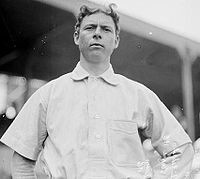
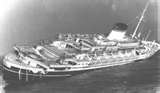
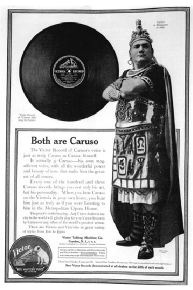
Durer's engraving of Philip Melanchthon 1526Three Finger Brown Andrea Doria  Liberty Dime carusovictorad


I’m not certain this is true (the way I know that the Andrea Doria sank or that Three Finger Brown triumphed over missing two fingers to be a successful baseball pitcher in the early years of the 20th century or that the poet Wallace Stevens’ wife Elsie Kachel posed for the figure of Lady Liberty on the “Mercury Dime” or that that Enrico Caruso single handedly brought the arias of Verdi to rural people or the way I know the lyrics to “Mairzy Dotes”) and with all due floridity, I’m unclear about the matter, but I believe the United States has now officially lost “middle brow” culture and has dropped into the phrenological cellar. I take no pleasure saying so.

I don’t like saying that things were once better. In general I’d rather have my teeth out than adopt this perfervid and quasi-reactionary position. Would rather have someone bind my feet…

By the mid ‘60’s America was precisely middle brow. Those of us who were old enough to sneer back then sneered. We watched television and heard Eric Sevareid intone that democracy in the U.S. was still intact; (“Thank God,” my father said. “The hymen isn’t broken.”) We saw William F. Buckley Jr. interviewing Allen Ginsberg (“He is the Hippie’s Hippie; the contrarian’s contrarian—in appearance he will  wear his hair long until others do and then he shall cut it…”) We listened as Leonard Bernstein explained by the Kinks and the Beatles had classical talents.

I never thought I’d be nostalgic for those days.

But I am.

Back in the old times Middle brow was a term of contempt—designating a vaguely wasteful largesse, the ill advised notion that one could raise up the proles.  

Ah for those days.

Nowatimes we’re in the post-prole era when even the vanguard organs of cultural reception can print sentences like this one:


“The title of Jonathan Lethem’s new novel suggests a cityscape that is both unwell and bedeviled by repetition.”

The sentence is is by Charles Baxter, an otherwise stolid novelist and short story writer. The mixed metaphors are both a tooth ache and a soil erosion of sensibility.


The problem is that sensibility, once a high brow ideal, then briefly a brass ring of the hopeful middle brow, is now like one of those quaint artifacts retrieved from a time capsule. “Look! Here’s a lock of Nellie Melba’s hair!”


Alors!


S.K.    

I Still Think Every Word of This is Aright

Here’s a post I wrote almost four years ago. I liked it then, and well…


Alright, I admit that I haven’t had enough coffee. Accordingly there are cobwebs in my belfry. But here’s the thing: I go to bed with a disability and when I wake up I still have it. And in turn this means that even in the half awake-half asleep intersection, the state that Edgar Alan Poe admired, I am still blind. I am blind when counting backwards by sevens. I’m blind when I watch the TV.

The experience of disability is invariably the “half-awake-half asleep” World view of Edgar Alan Poe: at once terrifying, revealing, darkly beautiful, unforeseen, foreseeable, sacred and profane, you name it. Disability defies our notion of stable space both in physical and metaphysical terms. Disability is the sore thumb of a saint: it reveals where culture must go if society will be just. And yes, people aren’t ready for it.

I remember being in a meeting some years ago with administrators whose job it was to provide services for the blind. The meeting had something to do with hum drum budgetary matters. I was the only blind person in the group. Everyone was talking about the legal battle between Casey Martin, a professional golfer who had sued the Professional Golfer’s Association over the right to use a golf cart during PGA sanctioned golf matches. Casey Martin won the right to use a motorized cart as a means of getting from one tee to another—a right that was eventually upheld by the U.S. Supreme Court. The justices agreed with Martin’s assertion that his disability didn’t prevent him from hitting a golf ball and they disagreed with the PGA’s assertion that allowing Casey Martin to ride from one spot to another would fundamentally alter the nature of the game. I agreed with the Supreme Court on that occasion and I was surprised by the evident distress of the other men in the meeting. They felt that allowing Casey Martin to ride in a golf cart from one fairway to another would radically destroy professional golf.

“But Hector,” I said (name altered), “Hector, don’t you use a golf cart when you go golfing?”

“Yeah,” said Hector, “But I’m not a professional.”

“What does that mean?” I asked, much like one of the Supreme Court justices.

“When I go golfing I’m just goofing off,” said Hector. “I’m relaxing. But when a pro golfer is in a tournament he’s supposed to walk from one end of the course to another.”

“He or she,” I said, reminding him that there are women in professional golf. “And why does walking in order to hit a ball really matter?” I persisted.

“Because walking tires a person and hitting a golf shot successfully at the close of a tournament is different from hitting one successfully at the start when you’re tired from walking 18 holes.”

“Well,” I said, “that’s true, but did you know that having a disability makes a person even more exhausted than your average Temporarily Able Bodied person?”

By now Hector’s colleague Achilles (not his real name) was getting hot.

“One of the greatest PGA championships of all time, “he shouted, “came when Ben Hogan, who had survived a near fatal auto accident, had to walk painfully down the fairway on the last hole and overcome his pain to hit the ball. If you allow Casey Martin to use a golf cart you take away the element of stamina from the game. You fundamentally alter the game of professional golf.”

I didn’t have enough common sense to stop talking because I was still a young man, barely forty—an “enfant terrible” compared to Hector and Achilles. “Look,” I said, “You could say that Ben hogan’s deep physical pain and the fact that he had to practically crawl down the last fairway simply means that the other golfers had an unfair advantage. How come they got to hit the ball without pain? Maybe everybody needs the same level of pain in order for us to have sporting events? Isn’t that what you’re arguing? If so, then we should also rule that professional baseball players can’t wear batting gloves to prevent blisters on their hands; pro American football players shouldn’t have knee pads—heck, if comparative pain is central to fairness in sports we should really really parcel out the pain. In other words,” I persisted, “The guys golfing against Casey Martin could wear iron slabs on their legs while he walks from one hole to another. Wouldn’t that make the game more interesting?”

It was not a good start for our meeting. Hector and Achilles felt that somehow, some way, Casey Martin had gotten an unfair advantage by not being able to walk and then ride a golf cart. When I suggested that we could make the game equally awful for everyone they didn’t like the idea. I couldn’t blame them. They were exhibiting the basic human need for stability. We humans love structure and organization. As an English professor I occasionally remind my students that the most popular book in 19th century London wasn’t “David Copperfield”—it was the railway timetable.

Disability troubles cultural presentiments for unexamined rules of order. It’s the sore thumb of the saint. God help us if we’re forced to examine both why and how we do things.

Luckily for Casey Martin the Supreme Court didn’t buy the PGA’s claim that walking long distances was central to the activity of hitting a golf ball.

“Look!” shouted Achilles, “What if they allowed baseball players to use wheelchairs? That would destroy the nature of the game!”

“Well, Achilles, you’re right, but here’s the thing: hitting a baseball from a wheelchair would be harder than hitting one standing up. So if competition is the issue, then you see, “difference” is actually rather wonderful.”

The guys hated me after that.

Now a story has broken about a 7th grader who uses a wheelchair who wants to play “touch” football with his classmates. See:

http://www.record-bee.com/local/ci_7132106

Predictably, even though a doctor has signed the form saying this boy is safe to play, the school district and the coaching staff are putting the opportunity on hold citing “safety issues”. A wheelchair is, after all, a hard, physical object.

Touch football is not a game that’s designed for the kind of physical contact we associate with the big time college or professional sport. When you “touch” a player with the ball with two hands, the “play” is over and the ball is positioned where the runner was touched.

The school district and the coaches are now presented with a substantive disability problem. Should they simply adapt the student’s wheelchair with lots of foam so that other students won’t get hurt by a hard, metal object? Should they declare that by allowing a person with a wheelchair to play a leisure sport that they would be unfairly altering the game? Or should they just let the kids play?

Perplexity leads to fear all too often when the problem at hand is a disability related matter.

There will undoubtedly be “football purists” who, fearing the introduction of a wheelchair athlete into a game of “touch” football will imagine that this will lead to armies of wheelchair users trying out for the Green Bay Packers.

Disability shock invariably leads to what I like to call “panic-cluster thinking”—a mode of cognition best exemplified by the adage: “If we let you do this, then “everybody” will want to do it, and we can’t have that, can we?”

Once the panic cluster starts then bid farewell to imaginative prospects. We alter sporting events all the time in order to make them safer—we put padding on the outfield walls, hockey players actually wear helmets.

Here’s the deal: if you run around with other people, with the aim of catching a ball, you run
the risk of hurting yourself
. If the game is “touch” football you run a reduced risk of serious injury than the risk incurred by playing “contact” football, but there’s still an injury risk. I run a risk when I get out of bed and step out into the blind day. I run a risk whenever I cross a street. So do you, even if you’re not blind. “Life,” is risk. Just about everybody gets to be Ernest Hemingway at least once a day. You almost fall on the stairs; just miss getting creamed by the errant bicyclist.

If the school district and its coaches and the likely armada of lawyers can resist a collective panic cluster they will conclude, reasonably enough, that a soft wheelchair poses no significant threat to kids who’re running at one another in the measured endorphin tilt of play. I know of no great world records in “touch” football that will be destroyed by this potential accommodation.

And now I have to “harness up” my guide dog, who as you probably know, gives me an unfair advantage when it comes to just about everything from flirting to finding the family car in a parking lot.

S.K.

In the Era of Twitter


In the era of twitter people “twit” and that’s as it should be. You can’t stop it; can’t legislate that everyone read Thucydides, refresh themselves on Pericles. People twit.

Victor Mature sends a twit to Lana Turner:


“I’m soaking my toupee in Woolite, give me a call.”


Let’s tend to the flowers of philosophy in our own quiet and urgent ways.


Here is my twit for the day:


“Evensong”


I am always in the “old city” regardless of where I go.


My father gave me an abacus when I was a little boy: he thought it would be a good toy for a blind child.


Now I walk through unfamiliar cities and move tiny beads with the fingers of imagination.


I was on Kaiser Wilhelm Strasse in Berlin and pushing ten to twenty and taking my time when an organ grinder’s monkey tugged at my pants.


When I was a kid I had a toy monkey named “Nickels”.


Berlin is a city of numbers recalled from countless childhoods.


S.K.

Two Victories, One Week


The following story comes to us from The Inclusion Daily Express by way of ADAPT.

Sometimes, with true courage and determination PWDs get their message heard.

How interesting that the “abled” whose lives are so conditional would resist for so long the adoption of a platform that benefits everyone.

P.S. When the Democrats had the ADAPT porta-potty hauled away last summer I quipped to a friend that they were going to use it as their “situation room”. 


S.K.


ADAPT’s Defending Our Freedom Campaign: Two Weeks, Two Victories
(ADAPT)
February 23, 2010
PHILADELPHIA, PENNSYLVANIA– [Excerpt] Two weeks into ADAPT’s Defending Our Freedom Campaign, there are already two victories. One, a resolution passed by the Democratic National Committee (DNC), has its roots in ADAPT’s four-day and four-night protest vigil last July, held outside the DNC headquarters in Washington, D.C. despite torrential rains and no shelter for activists. The second victory is a meeting with staff from the U.S. Health and Human Services Office of Civil Rights (HHS OCR) scheduled for mid-April just prior to the spring ADAPT action in Washington.

On Thursday, February 4, ten members of ADAPT from across the nation attended the DNC Resolution Committee meeting in Washington, D.C. The committee unanimously passed a resolution that states, in part, "Whereas, efforts must be made on the state and federal level to eliminate institutional biases that unfairly discriminate against Americans with disabilities in obtaining long term service and support in programs such as Medicaid … the DNC will encourage and support efforts to vigorously enforce the Supreme Court’s Olmstead decision." The Olmstead decision affirmed provisions in the Americans with Disabilities Act (ADA) that mandate people with disabilities should receive needed services and supports in "the most integrated setting," typically the community.

"Some people thought our protest outside the DNC last summer was an exercise in futility," said Jennifer McPhail, ADAPT organizer from Austin, Texas, "especially because so many of us who use wheelchairs slept outside each night, in pouring rain and wind, with only garbage bags or the occasional tarp for shelter. We had provided our own accessible porta-potty, but the DNC had it hauled away. Despite all that, we persisted in following the process laid out by the DNC, and now we have this historic resolution to show for all hell we went through last July."

Entire article:
DNC Resolution Pledges Olmstead Support; HHS OCR Agrees to Meet

http://adaptold.adapt.org/commchoice/index.php?mode=A&id=317
Related:
Another Step Forward in eliminating the Institutional Bias

http://adaptold.adapt.org/commchoice/index.php?mode=A&id=319
National Coalition Announces Support for CCA
http://adaptold.adapt.org/commchoice/index.php?mode=A&id=320
Tell Representative Steny Hoyer it’s time to end the institutional bias (Center for Disability Rights)
http://www.capwiz.com/rochestercdr/issues/alert/?alertid=14717441

Top of page

# 3 FAMILIES / LAWS

French Girl’s Family Pleads With Immigration Officials To Stay In Canada

Running Lessons


Silhouette of runner


Andrea Scarpino

Los Angeles


In less than a month, I’ll be running my second LA Marathon. Which means I’m running a lot right now, and thinking a lot about running, the lessons running has taught me. For example:

1. Quitting just teaches you to be good at quitting. Not every run is a good one and I don’t feel like running every day. But quitting in the middle of a run, stopping short before I’ve reached whatever goal I’ve set that day, well that just reinforces quitting. And I want to be good at carrying through, finishing. Sometimes, I get rejection after rejection in the mail—my poems are only lists, the journal is full, no reason. Sometimes the political/personal/social fight feels too hard. But quitting only teaches you how to quit. You can always run another mile, send out another poem.

2. Everything is better after a long run. Everything. The first mile may feel terrible, my body may ache, may cramp. But push through that first mile, start working on regulating my breath, and by mile three or four, the world starts to look up. The kinks are worked out and I start to feel my body do what I want it to do. Keep going, my body seems to be saying. Right now may feel like hell, but give it a minute, an hour.

3. Be generous. Fundraise. Running is a solitary sport for the most part. And it can feel self-centered, self-absorbed. Sometimes I think that if I spent every hour that I usually run being a good activist instead, maybe some change would come to this world. So I’ve decided, if I’m going to dedicate the time it takes to run a marathon, I’m only going to do it for a good cause. My first marathon, I helped raise $3,400 for Global Water, an organization that helps people around the world have access to clean water. That still feels good.

4. Listen to everyone’s opinion. Research heavily. Then do what you think is best. My mother hates that I run, thinks it’s ruining my body. But my body started ruined: clubbed feet, thalassemia, RSD. And the research shows overwhelmingly that running is good for keeping us healthy long term. It’s good for depression, good for the common cold. So even though my mother hates it, even though friends tell me my knees are going to give out any day, I still run. And I love it.

5. My dad was right: run like hell. Then keep going. No matter what, no matter how bad. Start running and don’t look back.


Andrea Scarpino is the west coast Bureau Chief of POTB. You can visit her at:

www.andreascarpino.com

Dear Rep. Marshall

BobMarshallVA


Yesterday I wrote a blog post about you. You are apparently of the view that children with disabilities are disproportionately born to mothers who have had prior abortions and that disabled children are some kind of sign from God of his disapproval. You are beneath contempt and fit for my prayers, for indeed I’m sufficiently Christian to still pray for you. But you are a disgraceful man and there’s no getting away from it. Do you imagine that my disabled childhood was a sign from God? In point of fact this kind of “happy horseshit” is what’s called blasphemy. Do you imagine you can speak for Jesus? What a gibbering twit you are. Meanwhile, here’s a fabulous video about a real high school kid. He’s a boy scout; a member of the marching band; you might learn a thing or two by watching it. That’s what I’ll pray for: that you will learn something from your quasi-fascist mistake. Really, I’m praying for you now. Of course I’m a liberal Democrat. It’s quite possible my prayers will give you the hives.  


https://sites.google.com/a/pinedafoundation.org/ios/i-m-tyler


S.K.

I Sure Hope Keith Olbermann Hears About This


Surely Virginia Rep. Bob Marshall is “the worst person in the world” for having said that disabled children are God’s punishment to women who have had prior abortions.

Speaking at an rally opposing the funding for Planned Parenthood Marshall remarked:  "The number of children who are born subsequent to a first abortion with handicaps has increased dramatically. Why? Because when you abort the first born of any, nature takes its vengeance on the subsequent children," said Marshall, a Republican who then added: "In the Old Testament, the first born of every being, animal and man, was dedicated to the Lord. There’s a special punishment Christians would suggest."

Here’s the link: http://www.newsleader.com/article/20100222/NEWS01/2220318

Beyond the obvious anti-Christian sensibility of the remark, (all God’s children are indeed blessed or hasn’t this idea trickled down to Marshall and his ilk?) the idea that God is counting fetuses like a kid plucking the petals of daisies ought to be offensive to even the most perfervid adherents of the intelligent design crowd.

Marshall gets my vote for worst person in the world.


S.K.