New Disability Studies Quarterly Advances Our Understanding of Neurodiversity

homeHeaderTitleImage_en_US


A special issue of Disability Studies Quarterly entitled: "Autism and the Concept of Neurodiversity" just went live. It can be accessed at:

http://www.dsq-sds.org/

One useful way to think of Neurodiversity is to imagine that people with profound communication disabilities are as rich in talent as any other arbitrary slice of the population—you may take any pie wedge of socio-economic, ethnic, gendered, or vocational aspirants and find unassailable and often previously undiscovered brilliance; the story is familiar, Chekovian, Dickensian…

Narratives of discovered intelligence have been cherished by writers and readers since Mesopotamia. Yet even scholars and writers who think engagingly about disability have been in some instances slow to recognize that many people with autism (for example) are indeed exceptional and that by turns their ways forward are often blocked by acculturated misconceptions about their respective intellectual gifts. 

In recent years several important books have helped change these misconceptions, books like A Mind Apart by Susanne Antonetta; Making Autism a Gift by Robert Evert Cimera; and Reasonable People by Ralph James Savarese. And there are many more.

The latest issue of Disability Studies Quarterly, the official journal of the Society for Disability Studies or SDS brings together literary and scholarly advocates from the neurodiversity movement in what is surely a groundbreaking collection of papers, and personal essays—many of the pieces are in richly hybrid forms that reflect the varied complexities and yes, potentialities of neuro-atypical mentation.  

As a poet and memoirist with a disability I am particularly admiring of Ari Ne’eman’s essay:  “The Future (and the Past) of Autism Advocacy, Or Why the ASA’s Magazine, The Advocate, Wouldn’t Publish This Piece”.  But there are many riches here including: “Up in the Clouds and Down in the Valley: My Richness and Yours” by Amanda Baggs; “More Than a Thing to Ignore: An Interview with Tito Rajarshi Mukhopadhyay” by Ralph James Savarese (who co-edited the issue with Emily Thornton Savarese); “Science Fictions: Figuring Autism as Threat and Mystery in Medico-Therapeutic Literature” by Bill Rocque; “Rethinking Autism: Implications of Sensory and Movement Differences” by Anne M. Donnellan, David A. Hill, and Martha R. Leary.

But there is more, so much more. Take a look at: “Neurodiversity, Quality of Life, and Autistic Adults: Shifting Research and Professional Focuses onto Real-Life Challenges” by Scott Michael Robinson and the remarkable poetry of Tito Rajarshi Mukhopadhyay.

It will still remain a challenge for certain academic circles to admit that our neo-Victorian views of language and language processing are worn out.

This issue of DSQ takes a long stride for our collective intellectual enterprise.


S.K.


Gidget Goes Hawaiian


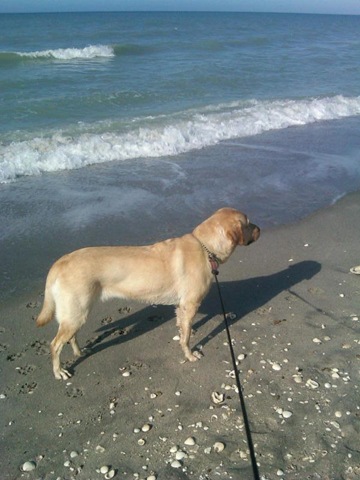
Nira at the beach


Well not really. We should admit we believe Gidget Goes Hawaiian is the worst movie ever made. We should be serious. The photo above shows guide dog Nira on the beach outside my writing studio at The Hermitage. She’s watching a blue heron. She’s on a leash because I don’t want her to vanish in a rip tide. I don’t want anyone to vanish in a rip tide. But I digress.


Walking early this morning along the shore I thought about the horrid beach movies from my childhood. Beach Blanket Bingo; the Elvis movies; Lordy, Lordy! Were we really that stupid? Oh do not answer my friends. We were very stupid. At least the music was better than the movies in those days. Thank God for Connie Francis.

The blue heron took me out of this. I went from Gidget to the pre-cambrian in a nano. The blue heron loiters by the fishermen, eats their sausage bits. Nothing is as it seems.

NIra did not chase the heron. She sized it up. She envied the sausage.


S.K. 

What Makes Me Tick


Someone asked me “what I’m on” because I was freewheeling, slingo lingo, luxuriating in tone, diction, the twist of a mood, and of course I was enjoying me-self.

If you’re dishonest you answer the question with post-modernism; one is merely the product of a thousand layerings of propaganda, advertising, half formed ideas, fractal philosophies, on and on. Or maybe you don’t blame acculturated language for your strangeness. You blame mother. Still Freudian you blame mother and father. Ah, the compensatory joys of acting out with sparkly shoes and a moth eaten cape from Goodwill. You can recite poetry aloud and do some silly dance.

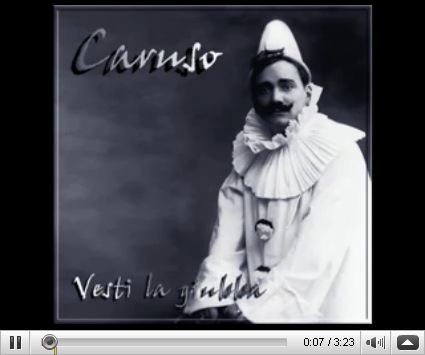
In my case it all comes down to hearing Enrico Caruso in my grandmother’s attic, the old Victrola was still functional, the record was on the platter, untouched, just waiting for me to appear after thirty years and set the music free. And accordingly I did. I turned the handle, set the record spinning, played “Vesti la giubba” all alone in that Victorian attic in rural New Hampshire. And so Caruso is my tutelary angel, as he has been for millions. Sing, play your drum, your heart is breaking, you have such a lovely song and a rich face, you really do. No one can know more than this.


After a Hard Day at the Arts Colony

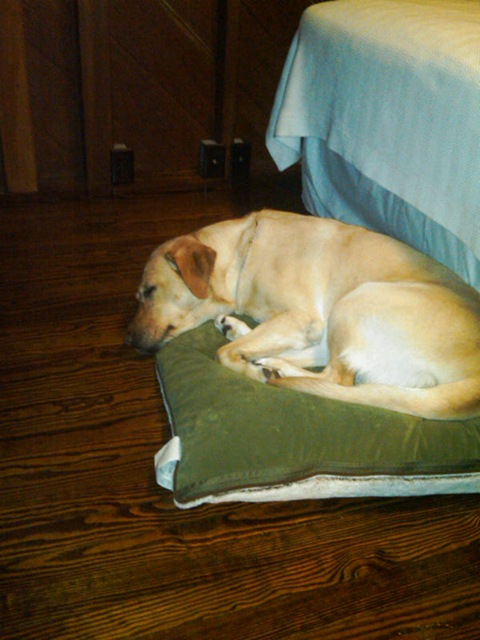
Nira on her bed


The photo above shows guide dog Nira enjoying her dog bed at The Hermitage. She’s almost asleep.

This morning she barked at a turtle.

Its hard work being conscious and also unconscious. Carl Jung said so.

Nira knows.

Ah the perfervid dreams of dogs!

Ah the perfervid waking lives of dogs!

Hercules ain’t got nothin’ on Nira!

Here’s to the dog opera! True verismo!


S.K.

In Memory of Lucille Clifton


By Andrea Scarpino

Los Angeles


I’m always a little surprised when famous poets die. I understand that death is the condition of our life, but I somehow always expect famous poets to work around it. Last week, I was reminded again how silly this thinking is with the death of Lucille Clifton, a remarkable poet and woman by all accounts. When I first met Clifton’s poems in a college poetry class, the only thing I could think to do with her language was memorize it, repeat her words over and over in my head until they were my own, until I had consumed them. To this day, I know only three poems by heart, one of them Clifton’s “admonitions,” a startling yet funny poem that deals with race, gender, and what it means to be a poet. The last stanza reads:

children

when they ask you

why is your mama so funny

say

she is a poet

she don’t have no sense

Every time I make a mistake, every time someone stares at my loud laugh or my inability to understand, I think of those lines, and remind myself, if a woman as lovely as Lucille Clifton can laugh about having no sense, why can’t I?

Clifton wrote often about her body, celebrating its power, its strength, its frailties, in striking honesty and striking humor. She wrote about surviving the deaths of children and family members, about race and racism, about what it means to live in an African American body, in a woman’s body, in a mother’s body, in a body ravaged by disease, in a country that doesn’t respect any of those things. In the poem “1994,” Clifton writes:

you know how dangerous it is

to be born with breasts

you know how dangerous it is

to wear dark skin

And in “my dream about being white,” she writes:

and i’m wearing

white history

but there’s no future

in those clothes

so i take them off and

wake up

dancing.

Throughout her writing life, she fought injustice; for more than a decade, she fought cancer. As my father would say, Lucille Clifton fought like hell. She wrote children’s books as well as poetry, was the Poet Laureate of Maryland, taught workshops and was a Pulitzer Prize finalist twice. And she was only 73 years old.

Here’s my favorite of her poems, “won’t you celebrate with me”

won’t you celebrate with me

what i have shaped into

a kind of life? i had no model.

born in babylon

both nonwhite and woman

what did i see to be except myself?

i made it up

here on this bridge between

starshine and clay,

my one hand holding tight

my other hand; come celebrate

with me that everyday

something has tried to kill me

and has failed.

So here’s to celebrating Lucille Clifton’s fighting spirit, her drive, her keen eye and ear turned to our life’s rhythms, to our life’s misfortunes and happiness. And here’s to keeping her memory alive. Yes, last week, something that tried to kill her succeeded—but for 73 years, she won and won and won.


Andrea Scarpino  is the west coast Bureau Chief of POTB. You can visit her at:

www.andreascarpino.com

(re)Vision Department

The following comes to us from The Inclusion Daily Express:


Ethan Ellis: The "R" Word
(Star-Ledger)
February 12, 2010
EDISON, NEW JERSEY– [Excerpt] Recently, Rahm Emanuel and Rush Limbaugh have focused attention on a campaign by people with developmental disabilities and their supporters to remove the words ‘mental retardation’ and its derivatives from the American lexicon and replace them with ‘cognitive’ or ‘intellectual’ disabilities.

Both Rahm and Rush, unlikely collaborators from opposite ends of America’s political spectrum, unwittingly boosted the campaign to national prominence by using its most pejorative form, ‘retards’ in the same week. Typical of their individual political styles, Rahm invited some of Washington’s disability elite to the White House to witness his signing of the Special Olympians’ pledge to eradicate the word, while Rush tried to bluster his way though his faux pas by repeating it over and over again on his next show.

I support the campaign wholeheartedly. It brings back memories of being stared at by strangers because of my spastic walk and hearing mothers shush their kids when they asked; “What’s wrong with that man.” I can only imagines what it’s like to b called ‘retard’ everywhere you go.

There’s another reason, though. I strongly believe that every oppressed group has the right to define themselves, not be labeled by those who oppress or study them, often the same people.

Entire article:
The "R" Word

http://blog.nj.com/njv_publicblog/2010/02/the_r_word.html

Prelude to a Kiss


Guide Dog Nira and Writer Craig Lucas


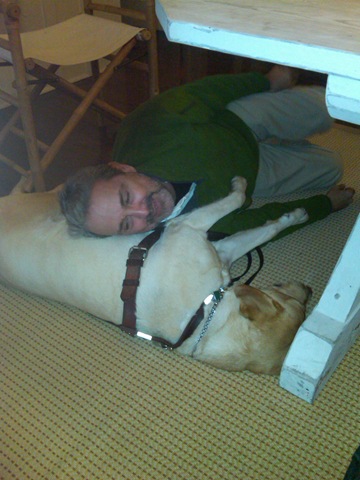
Well it doesn’t take guide dog Nira long to make friends. Here she is with playwrite Craig Lucas. Nira knows a kiss when its in the offing but like most Labradors she loves languor and heart—most days I think this is why dogs and people first got together. It’s a high gravity world. We help each other in a thousand ways. Here, Nira, supine says: “Take my purse, darling.”


S.K. 

Nira Catches the View


IMG00024-20100216-0931

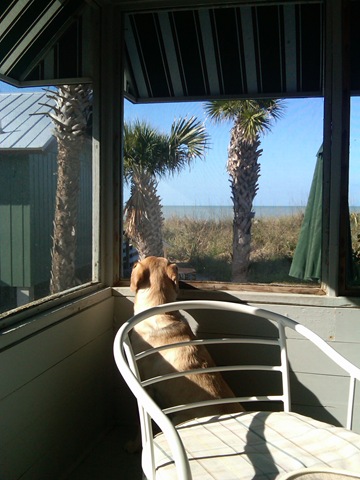
Here is guide dog Nira enjoying the view at The Hermitage in Sarasota, Florida. Her partner is really writing. But let’s be serious, until his recent eye operation he couldn’t have taken a photo of anything, let alone a lovely Labrador scenting the winds off the ocean. Nira will be sending her own posts of course. Right now she’s smelling a heron’s wings.


Now I’m off to buy dog food for the girl pictured above.


S.K.    

Venereal Soil

The poet Wallace Stevens who spent lots of time in Key West, Florida, and who once got in a fist fight with Ernest Hemingway (he lost) described the sunshine state as “venereal soil” which is as obscure a thing to say about a place as saying that New Jersey is the land of spiritual twilight. It sounds good but it doesn’t mean anything. Of fecundity Florida has plenty; perhaps she even hosts venery (ya think?); she has her obscure museums and post-modern tribes; and yet and yet–well–I’m heading to Sarasota to do some writing and walk my dog on the beach and with the help of Pegassus I hope we see an Osprey, visually impaired be damned! And I desire affirmingly to be inspirited by an osprey which of course sounds venereal enough. Finally, let it be said that I will be posting from the beach for the next five weeks and I’m even going to try and take some pictures, vision impairment be damned, and post them.

Of the famous fist fight Ernest Hemingway remarked that Stevens was big, but like most poets he couldn’t fight.

I don’t know why Hemingway wanted to punch Stevens. Too much venereal soil I imagine. But that was in Key West. I promise not to punch the osprey because, after all, I’m a nature poet of sorts.


S.K. 

Coming Soon to a Bookstore Near You


A Playful Take on the Art of Conversation

Stephen Kuusisto [9781402766961]

Publisher: Sterling
Published: June 2010
112 pages
ISBN: 1-4027-6696-3
ISBN13: 9781402766961
$14.95 US
$19.50 Canadian
Hardcover with Jacket
Territory: North America Only

In this erudite and playful primer on the art of conversation Stephen Kuusisto vigorously tackles the slippery subject of how to converse meaningfully with others. Kuusisto employs a wide range of personal anecdotes, classical texts, and an engaging style to illustrate his points. In seven short, provocative and imaginatively wrought chapters, he spins a compelling argument for the joys of “being connected,” and skillfully shows how to achieve this bond in everyday exchanges.

Stephen Kuusisto is a graduate of the Writer’s Workshop at the University of Iowa and a Fulbright Scholar. He holds a dual faculty appointment at the University of Iowa, where he teaches creative nonfiction in the English Department and serves as a public humanities scholar in the University of Iowa’s Carver Institute for Macular Degeneration. He has made appearances on Oprah!, Dateline NBC, National Public Radio, the BBC, and A&E, among others. His essays and poems have appeared in Harper’s; The New York Times Magazine; Poetry; Partisan Review, and The Washington Post Magazine.


I like the snails on the cover!


S.K.