Sorrows and consolations….

When I was in the psych hospital at 15—anorexic, depressed about blindness, in reality just an ordinary adolescent—I had a room mate. He was likely no older than I am now but I thought he was an old man. He spoke very little English. He was an immigrant from Eastern Europe. Anyway, while I was busy starving myself to death he lay in bed and moaned and muttered to himself. Every now and then he’d totter my way, lift his gown, and say: “Look at my scar!”

The depth of his sadness was impossible to absorb. That was my first lesson in sublime unending sorrow.

As I watch the horrors unfolding on our nation’s border with Mexico I again feel the palpable call of unendurable sorrow.

Refugees are crying: “look at our scars.”

Trump, our junk mail president smirks.

Scars are for losers.

**

Ode to My Right Eye

In pain
More than half
The day
Cold
As a starling
But wise
For that
Knowing
Fostered
Words
Of light
My drowner
Blind sister
Who can’t
Be consoled.

**

Consolation is tailor made for aphorisms. I have none. Every single human is scarred.

**

To my 15 year old self:

Scars are a matter of winning.

Blood traps are real but the one next door stays hidden…

It was the year of Reagan’s Star Wars
People in Helsinki talked about defending the mind
Though few agreed what it meant

Ruinous spoken jigsaws
Skyscrapers in haste on every continent
More places for the poor to envy

A friend told me
He wished to have a good
Unpolitical cry

In the words of Omar Khayamm:
As far as you can avoid it,
Do not give grief to anyone

Evening Hymn

The windows of boyhood, blue as a midsummer’s night,
The wishing, fantasy, organ tones from our Philco.

Blind at the screen, softness of air—
These I give back Lord. I sing them here.

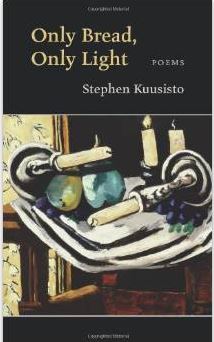
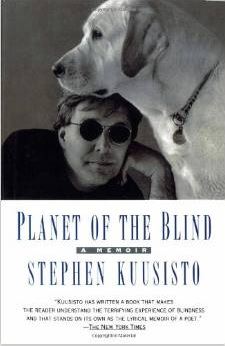
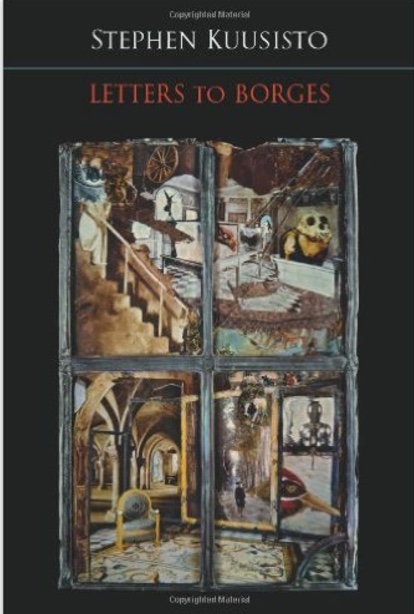
Stephen Kuusisto and HarleyABOUT: Stephen Kuusisto is the author of the memoirs Have Dog, Will Travel; Planet of the Blind (a New York Times “Notable Book of the Year”); and Eavesdropping: A Memoir of Blindness and Listening and of the poetry collections Only Bread, Only Light and Letters to Borges. A graduate of the Iowa Writer’s Workshop and a Fulbright Scholar, he has taught at the University of Iowa, Hobart and William Smith Colleges, and Ohio State University. He currently teaches at Syracuse University where he holds a University Professorship in Disability Studies. He is a frequent speaker in the US and abroad. His website is StephenKuusisto.com.

Have Dog, Will Travel: A Poet’s Journey is now available for pre-order:
Amazon
Barnes and Noble
IndieBound.org

Have Dog, Will Travel by Stephen Kuusisto

(Photo picturing the cover of Stephen Kuusisto’s new memoir “Have Dog, Will Travel” along with his former guide dogs Nira (top) and Corky, bottom.) Bottom photo by Marion Ettlinger 

So You Elected a Pornographer, Now What?

First things first: wash your hands. It doesn’t matter whether you’ve actually shaken hands with Donald Trump or not. All the major studies agree that frequent hand washing is good for you. My Finnish grandmother once shook Richard Nixon’s hand and then didn’t wash that hand for a month. As far as I know Nixon wasn’t into porn but he certainly had dirty hands.

I’m not an expert in pornography but like a famous Supreme Court justice I know what it is when I see it. We’re now living in the age of decline porn. Every story coming out of Washington or Biloxi is like something out of a soap opera. The National Basketball Association? Soap opera. Congress? You get the gist.

People have to love their porn. They have to wallow. Trump brags about grabbing women by their privates. Abuse ‘em and ditch ’em. That’s how he runs the government, conducts foreign relations, handles his business dealings. The man is a grifter. He’s also the decline pornographer in chief. He tells people the country is in trouble though he inherited a prosperous and largely well run nation. He tells people the dark hordes are coming although immigrants fleeing persecution are part of our national history and social identity. The man is sticky with self loathing, which, as I take it, as a necessary pre-condition for spreading porn.

Yes he’s the decline porn star in chief. He’s the Harry Reams of politicians. (Remember when he boasted during the debates about the size of his thing?)

The decline porn star needs endless dysfunction to succeed in spreading false misery narratives. Remember, he’s only happy when he can abuse and mislead people.

A thoughtful, earnest, truth telling chief executive doesn’t need decline porn–he or she can see the real problems facing the nation and bring decent people together to tackle them.

In order for Trump to spread his stickiness all over the place he needs smaller decline pornographers like Mitch McConnell and Lindsey Graham and countless others with dirty hands to admire his fecklessness and abuse of dignity.

Susan Sontag said famously: “What pornography is really about, ultimately, isn’t sex but death.”

Look at the children and adults dying on our border with Mexico.

Stephen Kuusisto and HarleyABOUT: Stephen Kuusisto is the author of the memoirs Have Dog, Will Travel; Planet of the Blind (a New York Times “Notable Book of the Year”); and Eavesdropping: A Memoir of Blindness and Listening and of the poetry collections Only Bread, Only Light and Letters to Borges. A graduate of the Iowa Writer’s Workshop and a Fulbright Scholar, he has taught at the University of Iowa, Hobart and William Smith Colleges, and Ohio State University. He currently teaches at Syracuse University where he holds a University Professorship in Disability Studies. He is a frequent speaker in the US and abroad. His website is StephenKuusisto.com.

Have Dog, Will Travel: A Poet’s Journey is now available for pre-order:
Amazon
Barnes and Noble
IndieBound.org

Have Dog, Will Travel by Stephen Kuusisto

(Photo picturing the cover of Stephen Kuusisto’s new memoir “Have Dog, Will Travel” along with his former guide dogs Nira (top) and Corky, bottom.) Bottom photo by Marion Ettlinger 

The Confessions of Arnold the Ableist

Chapter One

I gave a nickel to a cripple and then I walked away. “Nickel, cripple, nickel, cripple,” I thought. I gave nothing to the blind man I met in the next street. “Nothing, blind,” I thought, “these also go together.” Then I stepped in some dog shit. I knew it was disabled people who did this.

Chapter Two

I don’t mind if a cripple sits next to me on the bus—I’m sitting in their reserved space after all and I’m “Normal” but I wouldn’t want my daughter to marry one. Their art is barbarous and you must admit, they smell.

Chapter Three

O rodomontade! It’s a crippley-wippley world! Look! Here comes one with some kind of breathing apparatus! I’d like to rip it right our of her mouth and take that smug look off her face! They all think they’re so “special!” Alright, yes, I admit, as a boy I used to hurt animals, but never the big ones.

Chapter Four

You wouldn’t know it, but I’m a university professor. I mean, what with my habits of dress you wouldn’t recognize me. I wear tight jeans and radical tee shirts. But it bugs the shit out of me when the namby pamby LD students and those sightless ones enroll in my classes. I get up on my fictive high horse (named “Trigger” of course) and ride wildly around the campus big top snarling at deans and admissions flunkies. I can’t decide whether the disabled or the deans are more pitiable!

Chapter Five

O dear. I broke my coccyx at a garden party when I attempted to sit on a folding chair and it collapsed beneath me. You can’t imagine the pain I’m in. I’ll tell you all about it for another gin fizz.

Fast Virgin Train, Blindness, and the Talking Toilet

If you’re blind and travel you know a good deal about the world of talking appliances which are designed by sighted people and are intended to help people with vision loss but are really rather goofy: elevators that announce “doors open” and the miserable voices of bank machines. But just this week I met the greatest talking device of them all: the speechifying toilet on the Virgin train from Liverpool to London.

Now the Virgin fast train talking toilet (hereafter known as the VF3T) wasn’t designed for blind people. She was created for morbidly depressed travelers. I call her “she” because I’ve been told her voice is that of a woman who won some kind of contest.

Imagine reading an advertisement: “Be the voice of the Talking Toilet!” and thinking it sounds like a great opportunity. You want to break into the big time, be a star of stage and screen. Surely you’ll work your way up from the crapper. (Whatever happened to being on the radio?)

Picture me in the unfamiliar swaying toilet cubicle. No Braille on any buttons. I can’t figure out how to shut the door. A passing stranger reaches in and says, “Here, I’ll press the shut button for you.”

Poof. Door shut. The toilet starts her speech.

Before saying anything more let me just ask: “who thought that giving a toilet a woman’s voice, an actual human voice was a grand idea?” Of course the answer is “a sighted person” for if you’re blind and groping in a vaguely intimidating water closet hearing the following is piercingly bad:


“Hello there! Welcome to Virgin!”

I was mortified.

Had I entered an already occupied WC?

“I hope you’re having a wonderful day!”

“Did you know there are many splendid traveling opportunities with Virgin?”

“Alright,” I thought, “she’s a toilet bragging about train service. Not a big deal.”

But she continued. She was a kind of self help guru talking up the glories of life, the virtues of moving about the world and the joys of being alive.

The VF3T wants to keep you alive.

The VF3T is designed to prevent disheartened travelers from offing themselves in the loo.

“Aren’t sighted people funny?” I thought.

Stephen Kuusisto and HarleyABOUT: Stephen Kuusisto is the author of the memoirs Have Dog, Will Travel; Planet of the Blind (a New York Times “Notable Book of the Year”); and Eavesdropping: A Memoir of Blindness and Listening and of the poetry collections Only Bread, Only Light and Letters to Borges. A graduate of the Iowa Writer’s Workshop and a Fulbright Scholar, he has taught at the University of Iowa, Hobart and William Smith Colleges, and Ohio State University. He currently teaches at Syracuse University where he holds a University Professorship in Disability Studies. He is a frequent speaker in the US and abroad. His website is StephenKuusisto.com.

Have Dog, Will Travel: A Poet’s Journey is now available for pre-order:
Amazon
Barnes and Noble
IndieBound.org

Have Dog, Will Travel by Stephen Kuusisto

(Photo picturing the cover of Stephen Kuusisto’s new memoir “Have Dog, Will Travel” along with his former guide dogs Nira (top) and Corky, bottom.) Bottom photo by Marion Ettlinger 

Lying in the grass midsummer…

Hi Pentti: the mushrooms are everywhere
Horses graze in the shadow of the barn
I’m drawing Coltrane’s wheel
On a fallen leaf
With my finger

Stephen Kuusisto and HarleyABOUT: Stephen Kuusisto is the author of the memoirs Have Dog, Will Travel; Planet of the Blind (a New York Times “Notable Book of the Year”); and Eavesdropping: A Memoir of Blindness and Listening and of the poetry collections Only Bread, Only Light and Letters to Borges. A graduate of the Iowa Writer’s Workshop and a Fulbright Scholar, he has taught at the University of Iowa, Hobart and William Smith Colleges, and Ohio State University. He currently teaches at Syracuse University where he holds a University Professorship in Disability Studies. He is a frequent speaker in the US and abroad. His website is StephenKuusisto.com.

Have Dog, Will Travel: A Poet’s Journey is now available for pre-order:
Amazon
Barnes and Noble
IndieBound.org

Have Dog, Will Travel by Stephen Kuusisto

(Photo picturing the cover of Stephen Kuusisto’s new memoir “Have Dog, Will Travel” along with his former guide dogs Nira (top) and Corky, bottom.) Bottom photo by Marion Ettlinger 

On Losing Two Friends in One Week

Two of my close friends died this week. Both changed my life for the better. (You may ask if there’s another kind of friend. If you’re relatively stable there isn’t.) Still I’m talking about true blue friends. One was a vibrant, outspoken, tough minded, wheelchair riding disability activist. The other was a vibrant, outspoken, tough minded literary agent. These two never met but they’d have liked each other. Both were New Yorkers with big hearts who were hard and sharp as nails. Respectively they knew how to get past locked doors whether figurative or literal.

As a matter of friendship neither of these souls expected me to solve their problems. This is rare in America nowadays when talking about one’s feelings has largely taken the place of adult discourse. Neither of these souls thought friendship was about the talking cure. If they wanted my advice they asked for it but never was the request framed as a matter of solving life long ills. Each talked fast and knew also how to stop and listen. Both hated bureaucrats, school principals, party hacks, self-aggrandizing academics, facile literary writers, and the New York Yankees.

I’ve been lucky to have had some good friendships. I say lucky because I’m not an easy person to know. I’m opinionated, contrarian, suspicious of cant, disposed to a generalized distrust of earnestness. I don’t believe in “theory” when applied to literature or culture. LIterary theory is just opinion that hasn’t been subjected to serious rhetorical analysis. Jacques Derrida on animals is not worth the read. Sara Ahmed’s work on happiness is nonsensical. You can critique anything. This doesn’t make the activity sound or valuable. As I say, I’m not easy to know. I suspect I’d have gotten along well with the late Neil Postman.

When I was 15 years old and staying at a Key Biscayne resort with my father (who was on a business trip) I found myself alone in an elevator with Melvin Laird, Nixon’s secretary of defense. The year was 1970. My hero was John Lennon. I looked at Mel and said, “How’s your war going Mr. Laird? Are the body counts where you’d like them?” I was anorexic, stringy haired, and rebarbative. He glared and said nothing and bolted when the doors opened.

I’m not easy to like. Unless you’re against war, social hypocrisy, and all the “isms” as we say.

But then again I like those who have learned to like themselves.

My “gone” pals knew who they were.

Which means knowing also who you are not.

Which means knowing what Bob Marley meant when he said:

“The truth is, everyone is going to hurt you. You just got to find the ones worth suffering for.”

Stephen Kuusisto and HarleyABOUT: Stephen Kuusisto is the author of the memoirs Have Dog, Will Travel; Planet of the Blind (a New York Times “Notable Book of the Year”); and Eavesdropping: A Memoir of Blindness and Listening and of the poetry collections Only Bread, Only Light and Letters to Borges. A graduate of the Iowa Writer’s Workshop and a Fulbright Scholar, he has taught at the University of Iowa, Hobart and William Smith Colleges, and Ohio State University. He currently teaches at Syracuse University where he holds a University Professorship in Disability Studies. He is a frequent speaker in the US and abroad. His website is StephenKuusisto.com.

Have Dog, Will Travel: A Poet’s Journey is now available for pre-order:
Amazon
Barnes and Noble
IndieBound.org

Have Dog, Will Travel by Stephen Kuusisto

(Photo picturing the cover of Stephen Kuusisto’s new memoir “Have Dog, Will Travel” along with his former guide dogs Nira (top) and Corky, bottom.) Bottom photo by Marion Ettlinger 

Farewell Bill Peace

First, because this isn’t an obituary, a short poem:

“Planks”

I begin. You also. And the dog.

The book on the table.

Multifaceted samovar.

Werner Heisenberg:

“Revere those things

beyond science which really matter

and about which

it is so difficult to speak.”

Poetry and science agree:

“There are things that are so serious

that you can only joke about them.”

It was the best of times…

You have permission to laugh.

Beginning. The absurd dancing.

**

Bill Peace, who passed away two days ago went by the online moniker “Bad Cripple” because he was rebarbative in the face of ableism. The bad cripple refused to be Tiny Tim. He wasn’t grateful because you held open the door for him. He wasn’t interested in answering your question “how he got that way” and he was certainly fed up with unscrupulous healthy body worship which he recognized as the implicit core of disability discrimination.

He was our friend. He was the contrarian’s contrarian with his PhD from Columbia University and a soldierly disdain for academics and inaccessible campuses.

He was our friend. He lived according to basic principles. He was a golden rule kind of man.

For all that he was a wheelchair using itinerant scholar who faced locked doors, broken ramps, busted elevators, cynical bureaucracies, and we’re just talking about university campuses. His nightmares with airlines, hospitals, public transportation, and merchants—these were legion.

He loved his son Tom. He could bake a good ham. He knew more about the history of tattoos and body art than anyone I ever met. Dogs adored him.

**

When you’re disabled you’ve no expectation of good medical care. Bill was treated horrifically by the emergency room doctors at Yale University when he had a heart attack while attending a conference on (what else?) bio-ethics. The ER staff put him in a darkened corner for twelve hours. No one helped him.

When he developed an open wound—a known condition for wheelchair users—he was repeatedly patronized by a “wound care” doctor in Denver. She never pushed for advanced and advantaged treatment for the man. I’m of the belief that this putative physician contributed to his death from sepsis. I’m not alone.

Those of us who pay attention to disability and health care also know that Bill Peace died at the same hospital where just a month ago Carrie Anne Lucas died. Two great disability activists dead in the same place.

Disability lives are always in peril.

**

One night in Katona, NY, a small, artsy, and very wealthy suburban New York town, Bill and I found ourselves navigating in a sudden snowfall. It was one of those mini-blizzards you get in winter. Because his wheelchair couldn’t get traction he asked me to push him. And so my guide dog Nira and I pushed him up a steep sidewalk while motorists, slowed by the snowfall rubbernecked. We laughed. “Look!” Bill said, imagining what BMW man was thinking, “there goes the blind leading the halt!” I said, “they’re just jealous. We’re authentic.”

Disability is authenticity. So is old age, childhood, animal faith, and hot soup.

**

Right now I’m typing alone in a Hilton Hotel in Liverpool, England. I came here for an excellent conference but how does one describe it—I’ve been walking around in a susurrus of tears. Yesterday I sat beside the Mersey River and wept among seagulls.

My stomach is in knots. I have cramps. And more to the point, as a blind solo traveling foreigner I feel quite alone.

And yet I also feel a principled, hot anger at how Bill was mistreated.

**

Dear cripples: do not ask “what’s the use?” That’s the ableist devil talking.

“There are things that are so serious

that you can only joke about them.”

Or is it the case that Satan is himself disabled, what with those cloven hooves that make it hard to ski? (Thank you Steven Lynch)

Did I mention Bill was a badass skier?

**

There’s a funny scene in “Don Quixote” in which Quixote knocks on the door of an inn that’s locked for the night:

“One evening, after a long day of exhausting rambling, the knight errant stopped at the door of an inn. “Who’s there?” shouted the publican, without turning the lock. In reply our hero presented his titles: “Duque de Béjar, Marques de Gibraleon, Conde de Bañalca-zar y Bañares, Visconde de la Puebla de Alcocer, Señor de las Villas de Capilla, Curiel y Burguillos.” The publican replied that to his regret he could not lodge so many people, and thereby deprived himself of a guest who might have procured him great profit.”

That’s the thing: the ableist believes there are many of us.

There’s just the one.

He needs to come in.

Bill, I say without sentiment, I hope you’re getting through the door.
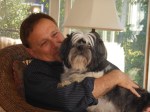
Stephen Kuusisto and HarleyABOUT: Stephen Kuusisto is the author of the memoirs Have Dog, Will Travel; Planet of the Blind (a New York Times “Notable Book of the Year”); and Eavesdropping: A Memoir of Blindness and Listening and of the poetry collections Only Bread, Only Light and Letters to Borges. A graduate of the Iowa Writer’s Workshop and a Fulbright Scholar, he has taught at the University of Iowa, Hobart and William Smith Colleges, and Ohio State University. He currently teaches at Syracuse University where he holds a University Professorship in Disability Studies. He is a frequent speaker in the US and abroad. His website is StephenKuusisto.com.

Have Dog, Will Travel: A Poet’s Journey is now available for pre-order:
Amazon
Barnes and Noble
IndieBound.org
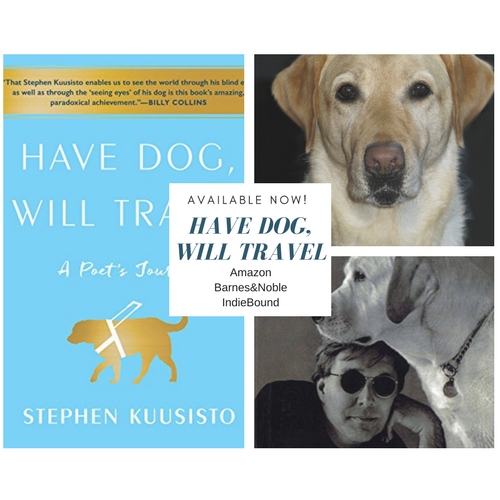
Have Dog, Will Travel by Stephen Kuusisto

(Photo picturing the cover of Stephen Kuusisto’s new memoir “Have Dog, Will Travel” along with his former guide dogs Nira (top) and Corky, bottom.) Bottom photo by Marion Ettlinger