Free Cookies, Evident Dignities

No one gets a free cookie in the work camp called America. You kids get back to work. Get on your scabby knees and scrub the jetsam.

Last night two cabs in Brooklyn refused to give me a ride. No to the guide dog. No to the man.

The man was told, despite the ardor evident in his heart, and perhaps observable on his smiling face to get back on his scabby knees.

No taxi. No cookie. Same old.

I never get used to it.

This came after a beautiful poetry reading honoring the late poet Deborah Tall at Bookcourt, a lovely indie bookshop. We had a good turnout and wonderful readers and wisdom and lyrical intelligence were all about us. About. We were about together honoring a poet who passed away young and who’s posthumously published final book is now out.

I said to someone, “well they can’t take our souls” in reference to Trump. Later I had to say it about the taxi men. You can’t have my big plush heart you bastards. And I’m terribly sorry no one gave you a free cookie. I haven’t gotten mine either.

Meanwhile I almost got run over yesterday while walking down Sixth Avenue when a bicycle messenger ran a red light and almost struck me, save that my guide dog made a quick maneuver and saved us both.

Meanwhile strangers, pedestrians, witnesses jeered the bicyclist who fell of his damned bike and was scrambling to get to his feet.

Meanwhile I thought he’s just another guy who didn’t get his cookie. I couldn’t be angry. I was alive. He was alive. We went our separate ways.

Meanwhile I like this recipe for the free cookie:

I part Walt Whitman’s breakfast (whatever he was having)

2 parts reexamined opinion (almost anything by Naomi Wolf)

3 generous doses of George Orwell’s “Animal Farm” and—

3 equally generous doses of Susan Sontag

Garnish with Christopher Hitchens “Notes to a Young Contrarian”

You can tinker with this recipe. It will accept many ingredients but the caveat is that the input, the human sine qua non must represent ardor and a history of assisting others. So, for instance, Ayn Rand doesn’t quality. No also to Norman Podhoretz.

You can put in Hilda Doolittle or Roberto Clemente if you like.

And of course we’re talking about spirits, so it’s up to you how you’re going to get this into cookies.

See? I’ve nearly forgotten being almost killed and then denied my rights.


Everything Has Its Magic Honored

The fence falls down, the boy needs new shoes, an owl has taken up residence in the apple tree and five clouds resembling horses crossed the moon last night—local magic is still safe in our district. I say it under my breath while walking my dog—local magic comes home with me tonight.

Do you remember those tiny mummified insects from Egypt? Beetles wrapped in linen with miniature hand carved sarcophagi? Everything will have its magic honored when they believe in living stars.

Blood and Feathers

I want the newly elected American President to have that “new car smell.” Alas, DJT has this odor of antimacassar and freshly peeled snakeskin. There isn’t enough Vicks “Vapo-rub” to cover it. Even a third rate used car comes standard with a urinal cake Christmas tree ornament hanging from the rearview mirror to hide the stink of teen sex and beer. I think the GOP should give out miniature mega-theric squirting bouquets.

It remains to be fully seen what they’ll be giving out. My sister who’s gay and her partner who’s Jewish fear they’ll have to wear pink stars in Trump’s vast used car lot and their fear is considerable. Everyone knows what hatred permits if they’ve been brutalized consistently throughout life. Some fears are intelligent. Pink stars may not be the order of the day in a Trump administration but upending gay rights—you can smell it. It’s what’s on the wind. Deporting people. Yup. Smells like bully boy testosterone.

The smell I’m mostly picking up is familiar in the midwest—blood and feathers. The whole world can smell it. It used to be a localized stink—Iowa, Ukraine, Guangdong, but now, it’s spindrift over Washington. We’ll need a mini-bouquet for each nostril. And for those who care enough, we’ll need them for our pets.

Meantime I’m still trying to describe the odor of Trump. I think it’s got something of the sweat of Andrew Jackson, who in turn carried in his skin the stink of Rome. It’s the stink of Jackson’s deathbed.

“Despite a legacy consisting of enough violence and death for twenty men, Jackson admitted to having two regrets on his deathbed: “I didn’t shoot Henry Clay and I didn’t murder John C. Calhoun.” In a life rich with murdering people for little-to-no reason, Jackson’s only regret was that he didn’t kill quite enough people. People like Calhoun, who, it should be noted, was Jackson’s vice president. No one is safe from Jackson’s wrath.”

Daniel O’Brien, How to Fight Presidents: Defending Yourself Against the Badasses Who Ran This Country


On Blogging in the Age of Trump

The Jungian psychoanalyst Marie-Louise Von Franz wrote a compelling book about men who have big bodies but remain children. Such men are often the life of the party, charming, at least at first. Then they tire of you (insert “children”; “wives”; “girl friends”;  “friends”) and jump ship (insert “leave home”; “skip town”) and find a new circle to hoodwink. While I know of no studies linking these “flying boys” (Von Franz’s term) with sexual assault, it’s a good bet that groping, rape, violence, and child abuse are all parts of their embodied politic.

So I’m in mind of these matters post election, 2016. In mind of boys who stay boys, embittered, predatory, loud, bullying. In mind of America’s contemporary addiction to public relations and self-branding, both of which are deeply tied to the “boy-man complex.” Every journalist or public intellectual in America who covers local, state, or national politics, human rights or business, or sports, or yes, higher education, should read Von Franz’s book about the terrifying reality and devastating consequences of the boy-man epidemic.

Anais Niin once said: “I hate men who are afraid of women’s strength.” Without knowing it she was referring to flying boys. At the risk of sounding like Robert Bly, true men are aware of their failings and capable of bravely addressing them. For my money, what little I may have, what’s so disturbing about Trumpism is it’s fealty to collective, loud, masculine weakness. Bigotry and bullying belong to the ten year old boy or the “mean girls” who emulate them.

So what does blogging mean in the age of Trump? Say you’re a human rights activist and modestly recognized public figure, a poet, someone who believes in the American intellectual tradition of John Dewey and Doris Lessing. The morning after Trump’s victory I thought of these lines from Lessing’s Golden Notebook:

“Ideally, what should be said to every child, repeatedly, throughout his or her school life is something like this: ‘You are in the process of being indoctrinated. We have not yet evolved a system of education that is not a system of indoctrination. We are sorry, but it is the best we can do. What you are being taught here is an amalgam of current prejudice and the choices of this particular culture. The slightest look at history will show how impermanent these must be. You are being taught by people who have been able to accommodate themselves to a regime of thought laid down by their predecessors. It is a self-perpetuating system. Those of you who are more robust and individual than others will be encouraged to leave and find ways of educating yourself — educating your own judgements. Those that stay must remember, always, and all the time, that they are being moulded and patterned to fit into the narrow and particular needs of this particular society.”

What does blogging mean now? To stay more robust and individual and when you’re encouraged to leave, do so in the quest of your own best education rather than adhering obediently to the narrow and particular needs of dominant culture. Trumpists believe this is what they’ve done, that they’ve bravely taken on fictional “elites” but they’ve merely leaned into the spit of baby boy adolescence. Spit is the language of resentments and playground canards.

Gloria Steinem (who is not without her flaws as I am not without my own) said: “Any woman who chooses to behave like a full human being should be warned that the armies of the status quo will treat her as something of a dirty joke . . . She will need her sisterhood.”

Sisterhood yes. And grown men. More of Steinem: “Women may be the one group that grows more radical with age.” Is it too much to expect our nation’s boys to grow into individuated free thinking men? No.

I will continue to blog in the service of this very idea.

The Poets of Coffee

Who are the great poets of coffee? Everyone knows William Carlos Williams was the poet of plums, Keats the poet of urns. Elizabeth Bishop, fish; Robert Bly had snowy fields; Ginsberg had cocks and balls; Emily Dickinson had the soul.

There’s Ron Padgett’s prose poem “The Morning Coffee” which is pretty good, though it’s not about coffee at all—you’ll have to read it, no spoiler here.

There’s the old nursery rhyme:

Molly, my sister and I fell out,

And what do you think it was all about?

She loved coffee and I loved tea,

And that was the reason we couldn’t agree.

Now there are plenty of poems that feature coffee and we’ll have a look—but there are no poems of coffee, the hot tropic wind of coffee’s phenomenology—in poem after poem, all written by excellent poets, coffee is a minor thing, lacking salience, like pillows on a couch. I do not dislike these poems. I’ll trade coffee for a pillow most of the time. Here are some of my favorite “almost coffee” poems:

“The Fight”

—Russell Edson

A man is fighting with a cup of coffee.

The rules: he must not

break the cup nor spill its coffee; nor must the cup break the

man’s bones or spill his blood.

The man said, oh the hell with it, as he swept the cup to

the floor.

The cup did not break but its coffee poured out

of its open self.

The cup cried, don’t hurt me, please don’t hurt me; I am

without mobility, I have no defense save my utility; use

me to hold your coffee.

**

“Recipe for Happiness Khaborovsk or Anyplace”

—Lawrence Ferlinghetti

One grand boulevard with trees

with one grand cafe in sun

with strong black coffee in very small cups.

One not necessarily very beautiful

man or woman who loves you.

One fine day.

**

“How Did You Meet Your Wife?”

—Richard Jones

Swimming the English Channel,

struggling to make it to Calais,

I swam into Laura halfway across.

My body oiled for warmth,

black rubber cap on my head,

eyes hidden behind goggles,

I was exhausted, ready to drown,

when I saw her coming toward me,

bobbing up and down between waves,

effortlessly doing a breaststroke,

heading for Dover.

Treading water

I asked in French if she spoke English,

and she said, “Yes, I’m an American.”

I said, “Hey, me too,” then asked her out for coffee.

**

Coffee is a stage prop in poetry—Wallace Stevens—“Coffee and oranges in a sunny chair…”

Gary Snyder: “There are those who love to get dirty and fix things./They drink coffee at dawn, beer after work./And those who stay clean, just appreciate things./At breakfast they have milk and juice at night./There are those who do both, they drink tea.”


Some poets get closer to coffee’s fizz in the nervous system. Neruda:

Take it all back. Life is boring, except for flowers, sunshine, your perfect legs. A glass of cold water when you are really thirsty. The way bodies fit together. Fresh and young and sweet. Coffee in the morning. These are just moments. I struggle with the in-betweens. I just want to never stop loving like there is nothing else to do, because what else is there to do?

**

The coffee plays in my coarse hair.

When it gets to my tongue it takes the rust off old family stories.

Regarding the premise of life, coffee entered me.

I breathed its steam; wrote with my finger when it found a window.

Coffee: a stop in midair.

—these are my lines, just off the top of my head, be-coffeed, quick, still trying to reach the world….


Notecard: the Best Poetry Reading I’ve Heard in Years….

where-i-come-from

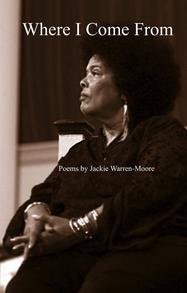
Photo: cover of Jackie Warren-Moore’s collection of poems “Where I Come From”

W. H. Auden famously wrote “poetry makes nothing happen” in his elegy for William Butler Yeats and poets have argued about the assertion ever since. Last night, hearing poet Jackie Warren-Moore read from her new book “Where I Come From” at the Artrage Gallery in Syracuse, New York—the poet reciting to a standing room only crowd of one hundred plus listeners, people who came out on a damp upstate night, who brought entire families, well, I saw how wrong Auden was. Poetry when read aloud by Warren-Moore commands attention, shakes loose the garments of habit, opens the brain, and “lifts” even while her poems are sharp, unsentimental, and hot. I felt lucky to be in that room. Poems were happening. Later I joked to a stranger (for it was that kind of reading—people had bumped along the ceilings of their skulls and then they were bumping into one another, loosened with affections) I joked that Jackie Warren-Moore had given everyone a chiropractic adjustment for the soul.

Jackie Warren-Moore’s reading will be available shortly on the “Talk About Poetry” podcast series which you can visit at iTunes. Or find it at Nine Mile Magazine. You can buy Warren-Moore’s new collection here.

Prologue (from my Forthcoming Memoir “What a Dog Can Do” )

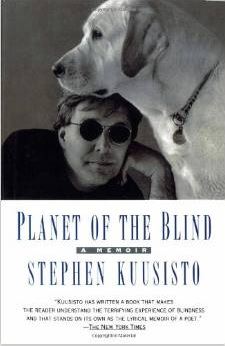
People ask: “what’s it like walking with a dog who’s trained to keep you from harm’s way?” Or they say: “I don’t think I could do that.”

Truthfully it’s like nothing else. There’s no true equivalent for the experience.

My wife is an equestrian. Years ago she was a guide dog trainer. “On a horse,” she says, “you’re hyper vigilant, aiming to avoid accidents by controlling your animal. Sometimes you and your horse will have a meditative rhythm. But you can’t count on horses to look out for you.”

A guide dog is not like a horse. She looks out for you. Always.

I can only offer hints of what a guide dog feels like.

Say you’re in Italy in a swirl of motor bikes.  It’s Milan with thin sidewalks, ugly street crossings and barbaric drivers. Montenapoleone street is crowded with what seems like all the people in the world.

Let’s say you’re walking at night to the Duomo with Guiding Eyes “Corky” #2cc92. Corky does her thing and relishes her job. She pulls and the pull is strong and steady and you feel like you’re floating. Her mind and body transmit through a harness an omni-directional confidence.

Why are you going to the cathedral with a dog? One of your favorite books is Mark Twain’s The Innocents Abroad which contains passages so beautiful you sometimes recite them aloud. Of the Duomo Twain says it has a delusion of frostwork that might vanish with a breath!… The central one of its five great doors is bordered with a bas-relief of birds and fruits and beasts and insects, which have been so ingeniously carved out of the marble that they seem like living creatures– and the figures are so numerous and the design so complex, that one might study it a week without exhausting its interest…

Now it’s just the two of you. You’re determined to touch birds and fruits and beasts and insects carved from marble.

There are skateboarders. Judging by the sound there must be a half dozen of them. Your Labrador eases gracefully to the left.  You hear clattering wheels. You think Milan must be dangerous for skateboarding what with its jagged paving bricks, broken sidewalks, and Vespas like runaway donkeys. Pedestrians surely dance with death every twenty feet. Milan is a fantastic, ghastly place.

In the midst of this your dog is unflappable. Trained to estimate your combined width she looks for advantages in the throng and sometimes she surges because the way is clear or she suddenly slows because an elderly woman has drifted into your path. Occasionally she stops on a dime, refusing to move.

There’s a hole in the pavement. It’s unmarked–there are no pylons or signs. A stranger says it’s remarkable there aren’t a dozen people at the bottom of the thing. Corky has saved you from breaking your neck. She backs away, turns, pushes ahead.

Yes, this is sort of what it’s like but there’s something else too—a deep affection between you, a mutual discernment. Each of you knows you’ve got the other’s back.


In the Raining World

I spoke once to the renowned Finnish poet Pentti Saarikoski by telephone. He was ill, dying in fact and receiving no visitors, but he said: “maybe we will meet one day in this mad world.”

I think of him often. I meet him. Have met him. Yesterday a lonely man, today a teenaged boy walking in rain.

Saarikoski knew his Heraclitus. “Whoever cannot seek the unforeseen sees nothing for the known way is an impasse.”

Rain fate. Let this be our character.

“The most beautiful arrangement is a pile of things poured out at random…”

In this mad world…


The American Smile

The American smile offers a containment: agreeable, ebullient, it imprisons tears; denies they exist.

Years ago, walking in Spain with a friend, who’d grown up under Franco, he said: “there’s nothing to smile about. Laughing from joy is different, it’s experiential. You’ve had a child, you’ve shared a lively song. Smiling is for crooks.”

“In Spain,” he’d said, “we know smiling is just the skeleton peeking through.”

Of course in America smiles are profitable. Very. If this was a defensible essay I’d tell you how much orthodontists make per year.

When my maternal grandmother died I saw my first undertaker’s smile. It was churlish, perfectly smiley–smile-wide, flash of exceptional teeth, then his lips remembered to cover the gravestones, but not before that invidious flex said “you can’t afford the Conquistador, the casket that conquers death.”

Blood Smoke

I am unaccountably sad this morning like a boy who recalls his prior life beside a river but has no words and the memory is without images, it’s nothing more than smoke in his blood.

Sometimes when I stand I feel my dead brother behind my knees. He was my twin.

It’s true: there are mornings when the first word that comes to mind is river.

Sadness is virtue. At least in this life.

Steam rises from coffee.

Water pipes groan Inside the walls of this strange hotel.

Cesar Vallejo, I love you.

Soon I must enter the day, leaving my kindly ghosts here in room 233.

It’s possible to be deeply sad and yet hopeful.

We’ll never know each other. We have no language for blood smoke. None at all.