From Welfare Queens to Disability Deadbeats


Paul Krugman’s blog post entitled “From Welfare Queens to Disabled Deadbeats” relates both the realpolitik and the rhetorical irresponsibility of our age. By “realpolitik” I mean good old fashioned preservation of power. By rhetorical irresponsibility I mean the red herring that social programs are the cause of our nation’s financial woes. Krugman writes:

If you want to understand the trouble Republicans are in, one good place to start is with the obsession the right has lately developed with the rising disability rolls. The growing number of Americans receiving disability payments has, for many on the right, become a symbol of our economic and moral decay; we’re becoming a nation of malingerers.


Now I of course (speaking as a blind person) am a professional malingerer. In fact I wake up every day wanting mints on my pillow. I want all kinds of stuff. Public transportation, solid veterans benefits, affordable housing, easy access to disability friendly technology, free wheelchairs for those who don’t have fat incomes—I’m actually something more than a malingerer Senator Elephant, I’m a believer in the good, old fashioned social contract. 

I say this having once upon a time been a recipient of Social Security Disability and Food Stamps. I also lived for a time in Section 8 housing. Why? Because I lost my adjunct teaching job largely because I was advocating too noisily for disability rights at the rinky dink college where I found myself fighting discrimination against students with disabilities. The tone deafness of the Elephant Pols has much to do with something that has nothing to do with disability and social services—it has to do with finding a new underclass to kick. Krugman writes:


What strikes me, however, isn’t just the way the right is trying to turn a reasonable development into some kind of outrage; it’s the political tone-deafness.

I mean, when Reagan ranted about welfare queens driving Cadillacs, he was inventing a fake problem — but his rant resonated with angry white voters, who understood perfectly well who Reagan was targeting. But Americans on disability as moochers? That isn’t, as far as I can tell, an especially nonwhite group — and it’s a group that is surely as likely to elicit sympathy as disdain. There’s just no way it can serve the kind of political purpose the old welfare-kicking rhetoric used to perform.

The same goes, more broadly, for the whole nation of takers thing. First of all, a lot of the “taking” involves Social Security and Medicare. And even the growth in means-tested programs is largely accounted for by the Earned Income Tax Credit — which requires and rewards work — and the expansion of Medicaid/CHIP to cover more children. Again, not the greatest of political targets.

The point, I think, is that right-wing intellectuals and politicians live in a bubble in which denunciations of those bums on disability and those greedy children getting free health care are greeted with shouts of approval — but now have to deal with a country where the same remarks come across as greedy and heartless (because they are).

And I don’t think this is a problem that can be solved with a slight change in the rhetoric.


 I don’t know what kind of bubble the elephant classes are living in. I suspect its a small bubble which is of course a matter of some substantial irony. But there are lives in the balance. I urge people with disabilities to fight back: don’t become today’s Reaganite “Welfare Queens” in Washingtonian discourse. 


Technorati Tags: , ,

Disability Rights and Education in the Election Season

The latest report from the Department of Education on disability rights enforcement and guarantees is out and can be read in an accessible pdf at:

http://www2.ed.gov/documents/news/section-504.pdf


In this election season it’s useful to remember the infamous moment during the primaries when Texas governor Rick Perry announced that if he became president “three departments of government would be gone of the first day”. Of course everyone remembers that he couldn’t remember the three he was planning to eliminate, a gaffe that ruined his campaign, but how many remember that “Education” was a department he did remember? My point (such as it is) is that MItt Romney if elected will pick up that cudgel despite his declaration during Wednesday’s debate that he cares about education and about children with disabilities. Don’t you believe it! 

Jeremy Bentham, Peter Singer, and Contemporary Disability Advocacy

Are disability lives not worth living? The long history of "abled" voices has said, and continues to say "no"–a "no" that has been complicated by pre-natal testing and divisive political rhetoric about the nature of what a qualified life really is. In 2005 the Terri Schiavo case demonstrated to disability rights activists that when it comes to protecting disability life, conservatives had more empathy and courage than neo-liberal Democrats (with the notable exception of the Rev. Jesse Jackson).

The very idea that a disabled life is not a life at all depends both on the medical appropriation of curative utility (life with illness only possesses value in relation to its amelioration) and simple metaphor (disability understood as a ruined identity, see Erving Goffman). The dichotomies of spoiled identity have a long history on both sides of the Atlantic–eugenics, forced sterilizations, the "ugly laws", institutionalization, and the Nazi "T4" mass murder of adults and children with disabilities. The pattern is one of distillation: disability, (post industrial revolution) is broadly conceived–has been conceived as economically unviable, hence lacking all capacity for the pursuit of happiness in the world of econo-biography.

The darker version of this is the resentment of social welfare (Hitler famously depicted people with disabilities as "useless eaters"). The utilitarian (Benthamite) position (Peter Singer) holds that the greater good of society must trump the needs of a minority in pain–"good" is understood as the potential for achieving pleasure. The Benthamite pleasure principle subborns life to economic life and forgoes the question of what constitutes individual autonomy when imagined outside of industrial labor. In turn it's the right of the majority class, the "duty" of the majority class to debate the probable happiness potential and index of the minority. Many disability rights activists and scholars have pointed out the inevitable connection of Jeremy Bentham's ideas (and Singer's fealty to same) as the foundational principles of Nazism. There is truth to this because eugenics was driven by the principles of Bentham.)

The 21st century extension of disability as a cathexis of the utilitarian body and the medical model of physicality (that abnormality only has value in relation to its likelihood of cure) is now intensified by pre-natal testing. Mr. Singer would counsel parents to abort a fetus if it's future birth would result in a child without arms and legs. In his view that child would have no likelihood of happiness and (more sinister of course) such a child would impede the greater happiness of society. Singer is no scholar of economies of scale or of their pre-history. The idea that a legless man might be a great singer or poet demands an appreciation of proto-industrial village life: the majority history of human kind. But enough of Singer.

A friend wrote me recently. She's a young writer and a new mother of a little girl with a disability. She wrote because she's experienced the insensitivity of her academic colleagues and friends who have opined that they couldn't imagine raising a child with an intellectual or developmental disability. My friend has been shocked by the thuggish candor of these remarks. And by turn of the imaginative poverty of the conceptualization of a challenged life as no life at all. This is the marriage of utilitarian philosophy (absorbed through capitalism's ubiquitous social rhetoric) and the medical model of disability which holds that physical difference without the prospect of cure is not worth enduring. We are living in creepy and reactionary times. And though I've been a life long liberal, I applauded the efforts of former Florida governor Jeb Bush to save the unimaginable life of Terri Schiavo. I've never felt any ambiguity about that. Perhaps my lifetime of nearly incomprehensible difficulty to live and stand among the able bodied has given me a strange capacity for steepened joy. Not an easy joy. Not a hot rod, drive your car fast joy, It's the joy of living beautifully in the solitudes of challenge–something your average doctor or utilitarian philosopher can't imagine because they don't understand the vitality of pain.

Some Poor Writing About Syracuse in the Chronicle of Higher Education

There's an article by Robin Wilson in the latest issue of The Chronicle of Higher Education entitled "Syracuse's Slide" that seems, at first glance, to be a substantive news article. In a nutshell Wilson's piece asserts that under the leadership of Chancellor Nancy Cantor, SU has declined academically, dropping some five points in a recent ranking by US News & World Report–a rating mechanism that is relatively non-transparent and which is highly contested within higher education. What's troubling about the article is it's reliance on the rhetorical device known by the Greeks as "pathos"–it asserts a decline is underway at one of the nation's premier universities, thereby raising the emotional temperature of the Agora. Pathos is an excellent tool and it's the one you want if you seek histrionics and readerly credulity. Wilson seems to have been duped by a minority group of faculty who are increasingly unhappy because they do not share the Chancellor's vision of "scholarship in action"–a plan to make the pursuit of higher education and engagement with local educational and civic organizations into a model for 21st century American colleges. That such a plan would have it's critics is hardly surprising. Certainly the histories of contention in higher education would make a generous, if unreadable book. But it's the pathos of the Chronicle piece I find most surprising and disappointing. Pathos is distinct from facts (logos) but it pretends to facts. Enter Wilson's reliance on a disgruntled minority–they assert that funding dollars drawn from tuition have gone up for the administration at the expense of teaching. That this is untrue and that the claims come from an unreliable source seems to have evaded Ms. Wilson who also seems to have failed to question the assertion that Syracuse University's bold embrace of community based scholarship and civic engagement is responsible for a five point drop in the US News index. There is no evidence for this, only pathos, and the latter belongs both to bad writing and to the evident angst of the oddly selective group of faculty who Wilson seems to have consulted. It's interesting that she didn't talk to Deans or faculty with endowed chairs or University Professorships. In fact the article is so unbalanced that one simply returns to pathos in the absence of careful reporting. One wonders who is really responsible for the claim that Nancy Cantor's administration engages in "divisive" leadership? I can attest that having taught at two Big Ten universities and at a first tier liberal arts college I've never and I mean never been a part of such a diverse and energized intellectual community before. All of which makes me wonder about the term "divisiveness"–that can't be code for saying we're concentrating too much on the poor, can it?


SK

Lunch

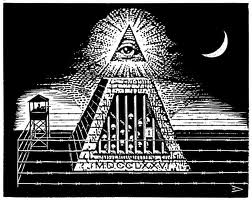
Prison Industrial Complex


America is a big prison.

The Los Angeles county jail is the largest psychiatric hospital in the United States.

I am horrified by what my nation has become.

These are my thoughts in the morning.

These are my thoughts in the evening. 

In the mezzo giorno I will eat an apple. 


Amerikka on iso vankila.
Los Angeles County Jail on suurin psykiatrinen sairaala Yhdysvalloissa.
Olen kauhuissani, mitä minun kansakunta on tullut.
Nämä ovat minun ajatukseni aamulla.
Nämä ovat minun ajatukseni illalla.
Vuonna mezzo giorno syön omenan.
At noon I feel better.
I don't think about the prison industrial complex.
There is a yellow butterfly in my garden.
I was completely blind two years ago. Now I can see the butterfly.
I am not in jail making art from mattress stuffing. 


Puoliltapäivin voin paremmin.
En ajattele vankilan teollisen kompleksin.
On keltainen perhonen minun puutarhassa.
Olin täysin sokea kaksi vuotta sitten. Nyt näen perhonen.
En ole vankilassa tehdä taidetta patjojen täytteet.


In the mezzo giorno I will eat an apple.

Vuonna mezzo giorno syön omenan.

Some Thoughts for my Friends in Finland and My Poet Pals in America

Olen kyllästynyt minun hallitus. Haluan rauhaa. Sanoin tämän, kun olin nuori ja olen edelleen sanovan näin. Kunnes ihmiset Amerikassa ymmärrä rauhasta he eivät nautivaurautta. Ja se ei voi tapahtua ennen kuin amerikkalaiset hyväksymään taloudensorrettujen. 
Kuten Paulo Freire sanoo: "On välttämätöntä, että heikkous voimaton muuttuuvoimana, joka ilmoittaa oikeudenmukaisuutta. Jotta näin tapahtuisi, koko irtisanomisestaon fatalismia on tarpeen. 
Olemme transformative olentoja eikä olentoja majoitusta."

I am tired of my government. I want peace. I said this when I was young and I am still saying it. Until people in America understand the dividends of peace they will not enjoy prosperity. And that can't happen until Americans adopt an economy of the oppressed. As Paulo Freire says: "It is necessary that the weakness of the powerless is transformed into a force capable of announcing justice. For this to happen, a total denouncement of fatalism is necessary. We are transformative beings and not beings for accommodation." 

Ruprecht the Monkey Boy

Ruprecht the Monkey Boy

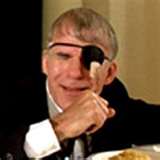
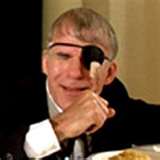
 If you'be ever seen the movie "Dirty Rotten Scoundrels" with Steve Martin and Michael Caine you will doubtless remember Mr. Martin's portrayal of "Ruprecht the Monkey Boy" who, owing to his misfortunes must have a cork on his fork lest he hurt himself at table. Now of course if you're a sensitive person or a righteous one you will be properly apalled by the movie's strategems knowing full well that the world of people with mental disabilities remains a terrible outpost of conditional human rights to say the very least. Then again, within the dynamics of plot, Steve Martin and Michael Caine are scoundrels, and Ruprecht is a posuer, the putative burden that Mr. Caine must carry thorugh life–the unfortunate grown child that he must contain in a quaint dungeon filled with monkey toys–for what else is a good man to do? And Mr. Caine is hunting for a credulous rich woman to marry so he can steal her millions.

Well, thinking of Glenn Beck's march on Washington I was reminded a bit of Ruprecht for Mr. Beck and the Tea Party are the agents of the corporati, who are in turn the rotten scoundrels of our time, who in turn will bilk the old lady out of her last nickel in the name of responsibility–we the upright, we the moral and just shall save the nation by fiscal responsiblity. This of course will mean a return to America of the 1880's–see Ruprecht, be-dungeoned, as all the poor and dazed must be. Make no mistake the Tea Party is as dangerous as can be for its paths to the civic square are as devious as those of Mr. Caine and Mr. Martin in the film aforementioned. The aim of the Tea Party is to steal people's loot while simultaneously appealing to their poorly examined sentiments. If they succeed in developing a real electorate then we will be fighting over who gets to live in the sreet and who gets to live in a state sponsored dungeon.

This is not much of a joke. Still I love the image of Ruprecht above with his cork on a fork. I know what he feels like. I really do.

S.K.  

Thank God for my Friends

Who tell me not to despair, that America hasn't become a vast, anti-intellectual morass despite evidence to the contrary. Thank you my dear pals who remind me that America has always been a rude, rootin' tootin' frontier where the arrogance of the angry mob has often been successful, except to say that on occasion our nation elects Jefferson or Lincoln or the two Roosevelts or J.F.K.–that yes, just so often our better natures do prevail. Oh my friends from your lips to God's ears. May it be so.

S.K.

Fable

Fable

I was trying to stand for something so I talked in the streets. Strangers passed me on the sidewalks and they looked away as if I was a tramp. In these times men aren’t supposed to talk about civil liberties or human rights while walking alone on the ordinary thoroughfares even though this is the country of Jefferson and Paine and Frederic Douglas. “Aha!” I thought. “I’ll get me one of those mobile telephones—not a real one of course, but one that’s been thrown away. And I’ll hold it next to my ear and talk about habeas corpus outside this Laundromat and people will say:”Ah, there is a man speaking the truth to someone unseen, but not to me—just the way we like it in

America

.”

Let this be a lesson to you brethren. My dead cell phone began vibrating and Lo, I received messages from the mournful dead. Naturally some were frivolous, dead people are jokers like the rest of us, so Ladislaw from an undisclosed Hansiatic city wanted to know how antinomianism is faring in Cincinnati and what can you say to a dead man like that?

But my dead phone received some very serious dead calls. The best was from a long dead caller who asked to remain unidentified. He wondered why capital is not re-invested by the most successful capitalists and pointed out that Dick Cheney has moved his money to

Dubai

. “Reagan is here with us,” said this incognito ancestor of someone who could be my neighbor. “Reagan just keeps asking, “How can they screw up my trickle down idea so aggressively?” And none of the dead have an answer for Reagan. The dead don’t understand greed either. 

Continue reading “Fable”

Class in Ten Minutes

I have a class in ten minutes–and so I’ve got to be fast. I’m 53 years old and went to public school  and then to college in the years before the ADA. Like all pwds in my generation I can report that geting an education was quite hard and that accordingly I found myself working even harder than my classmates.

Nowadays I see many students in higher education who, knowing they have accommodations and rights, will appear to use disability as a factor when explaining why they are doing less work.

Obviously this is a dreadful generalization. But I swear I’ve been watching this development over the past 8 years and I see that pwds who are teachers and professors may have to stand for renewed rigor in new and unexpected ways.

In haste this morning I’m hoping to start a little dialogue with burning sticks…

S.K.