The ADA is Under Attack

The ADA is under attack.  Next week, the House will be voting on a bill, H.R. 620 that would undermine the protections of the ADA and take away the rights of people with disabilities.  Please call your Representative and ask them to #VoteNo and #ProtectTheADA

Here are talking points:
·         HR 620 will take away the civil rights of people with disabilities

·         It will make people with disabilities wait for up to 180 days for services that other people have immediate access to

·         The wait may be even longer than 180 days because a business that is making “substantial progress” toward fixing a problem can take even longer than 180 days

·         HR 620 will eliminate the need for businesses to be accessible until a complaint is received; there will be no need to make a business accessible until someone complains; that will mean many groups building new buildings, renovating buildings, opening new businesses will not make their services accessible

·         HR 620 shifts the burden of accessibility from those who offer services to the person with a disability; no other group needs to prove their right to access to publically offered services

·         We should not be gutting the rights of people with disabilities; if there is a problem, we should be limiting the actions of a small number of lawyers who are bad actors

·         HR 620 will take away the civil rights of people with disabilities; would we ever think about eliminating the rights of any other group of Americans? This is disgraceful.

And here is a fact sheet from our colleagues at Disability Rights Education and Defense Fund (DREDF) about the myths and realities of this bill.

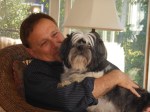
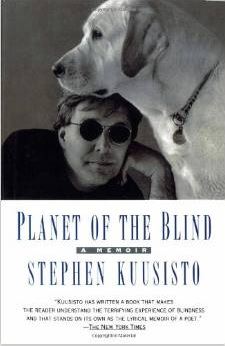
Stephen Kuusisto and HarleyABOUT: Stephen Kuusisto is the author of the memoirs Have Dog, Will Travel; Planet of the Blind (a New York Times “Notable Book of the Year”); and Eavesdropping: A Memoir of Blindness and Listening and of the poetry collections Only Bread, Only Light and Letters to Borges. A graduate of the Iowa Writer’s Workshop and a Fulbright Scholar, he has taught at the University of Iowa, Hobart and William Smith Colleges, and Ohio State University. He currently teaches at Syracuse University where he holds a University Professorship in Disability Studies. He is a frequent speaker in the US and abroad. His website is StephenKuusisto.com.

Scam Service Dogs are More Complicated than David Leonhardt Knows

David Leonhardt writes about fake service animals and their dishonest owners in the January 5, 2018 New York Times. I don’t know Mr. Leonhardt personally and so I have no idea what his private relationship to disability might be—one shouldn’t assume indifference—but when a writer uses the word “handicapped” in the 21st century one must wonder how versed the author is with disability. (I know at least a thousand disabled people and not one has his or her cap in their hands while begging on a street corner.) I wonder if Mr. Leonhardt would describe women as “wenches?”

It matters what you call us if you’re going to write about us. The disabled are members of society and if one supposes language doesn’t matter consider this: the word “handicap” carries within it (in addition to physical disadvantage) a whiff of dishonesty as in “a race or contest in which an artificial advantage is given or disadvantage imposed on a contestant to equalize chances of winning.” (Merriam-Webster.com)

The spectacle of American life has always carried “sub rosa” a popular suspicion, often translated into entertainment, that the disabled (or at least the ones seen on the streets) are very likely nothing more than scam artists. In popular imagination the words scam and handicap go together like baseball and hot dogs. It might also interest Mr. Leonhardt and his readers to know that the first motion pictures distributed in the United States invariably presented comic figures—men mostly—who swindled the public by feigning disability.

Comedy is one thing, reality where disability is concerned was often different. In the very era when those films were made “Ugly Laws” were enforced across the country—laws designed to keep the disabled off the streets and out of the public eye. By the late 19th century the rising middle class wanted to go window shopping or sit in cafes like the flaneurs of Paris. Public life offered a new kind of spectacle, the very streets were prosceniums. Asylums and prisons were hastily constructed to hide the disabled from view.

David Leonhardt’s article aims to highlight the current wave of faux service animals being passed off as necessary by airline customers who want nothing more than to bring their pets on airplanes. As a guide dog user I’m glad that he’s taking on the story. People who do not have disabilities are faking them so they can take their animals anywhere. I think Leonhardt’s motive for writing his piece was good. The problem is that public attitudes about disability are not informed by knowledge and sophistication. As I wrote just last week:

In the world of service animals, guide dogs are the gold standard. They are trained to guide the blind through heavy traffic, watch for low-hanging branches, take evasive measures when cars or bicycles run red lights, watch for stairs and even prevent their partners from stepping off subway platforms. Yes, they’re also trained to stay quiet and unobtrusive in restaurants and on public transportation. This professionalism is possible because guide dog schools spend tens of thousands of dollars breeding, raising and training each dog.

Leonhardt is right: the woman with a peacock claiming in the airport her bird is some kind of emotional support creature is in fact a problem. He’s also right to point out that when travelers feigning disabilities bring their untrained dogs on aircraft (with phony papers of course) they’re harming those of us who have genuine disabilities. They’re also trading on the extraordinary professionalism well trained service dog users and their canine companions have demonstrated for decades. Yes, there’s deception going on. I’ll grant this. And yes, this problem affects me and all of the disabled who rely on guide dogs, PTSD service dogs, hearing alert dogs, seizure alert dogs, mobility assistance dogs—these are dogs serving real needs and these teams have civil rights to travel wherever the public goes.

But forgive me: “scam” isn’t the right word to fairly describe what’s going on. Scam reeks of the old trope that the disabled are unseemly and might be, just like the beggars who imitated them, dishonest. Moreover I suspect many people who claim they require untrained dogs to manage even the simplest elements of daily life really believe this. In many respects the conundrum of fake service animals is more a sociological or psychological dynamic than a matter of the Americans with Disabilities Act. Beat with me here. The ADA attempts to guarantee the privacy of the disabled by stipulating if you have a service dog you cannot be asked to show proof of your disability.  This is fair. It’s the same principle employed in pharmacies when you read signs that say: “Please stand behind this line to guarantee customer privacy.” It ain’t nobody’s business and you better believe Americans like their privacy.

If you’re a veteran who has a traumatic brain injury or post traumatic stress and you have a fabulously trained canine companion to assist you, I’ll bet you don’t want to tell everyone about it. Certainly not in the cramped entryway of a jetliner.

So you see there’s nuance and scruple to this where the disabled are concerned. That our capacity and right to travel with our professional dogs is being eroded by elements of the public who want to game the system is undeniable.

Finally where the airlines are concerned and speaking as a seasoned traveler most of their personnel are poorly trained—as are the disability support teams in airports who are generally subcontractors. Every year the airlines destroy thousands of wheelchairs when paralyzed travelers are forced to hand them over as luggage. In turn pet owners who put their pets in cargo know that this is a life and death gamble. If the airlines can’t safely transport wheelchairs and poodles why would any emotional pet owner want to risk putting Fido in the cargo hold?

The airlines have as much to do with this problem as those needy pet owners. Make it safe for non-essential pets to fly down below and United, Delta, et.al. will go a long way toward solving this problem.

Stephen Kuusisto and HarleyABOUT: Stephen Kuusisto is the author of the memoirs Have Dog, Will Travel; Planet of the Blind (a New York Times “Notable Book of the Year”); and Eavesdropping: A Memoir of Blindness and Listening and of the poetry collections Only Bread, Only Light and Letters to Borges. A graduate of the Iowa Writer’s Workshop and a Fulbright Scholar, he has taught at the University of Iowa, Hobart and William Smith Colleges, and Ohio State University. He currently teaches at Syracuse University where he holds a University Professorship in Disability Studies. He is a frequent speaker in the US and abroad. His website is StephenKuusisto.com.

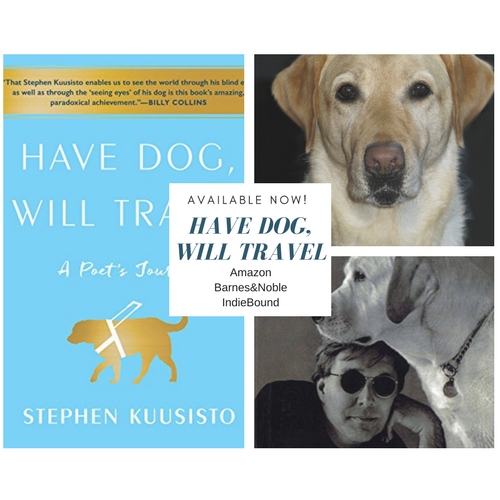
Have Dog, Will Travel: A Poet’s Journey is now available for pre-order:
Amazon
Barnes and Noble
IndieBound.org

Have Dog, Will Travel by Stephen Kuusisto

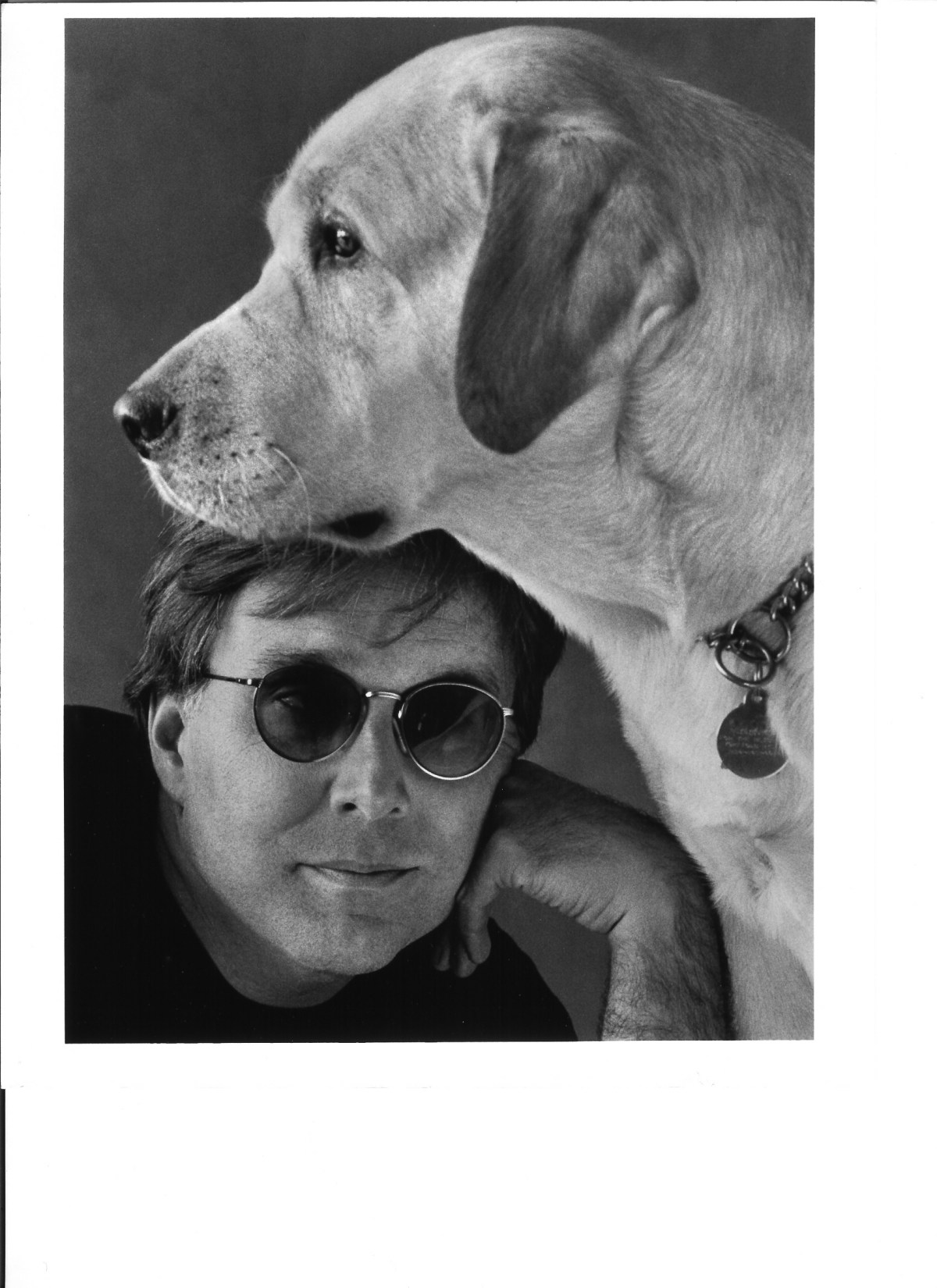
(Photo picturing the cover of Stephen Kuusisto’s new memoir “Have Dog, Will Travel” along with his former guide dogs Nira (top) and Corky, bottom.) Bottom photo by Marion Ettlinger 

Delta: Leave the Blind Alone

As a blind traveler who uses a guide dog I’ve flown a lot of places. My professionally trained dog lies under my feet and never stirs, no matter how long the flight. I’ve had four such dogs and all of them were trained by a top notch school in New York called Guiding Eyes for the Blind. Although going places with a disability isn’t always easy its generally achievable because protective laws are in place that guarantee the disabled rights of passage. In the United States both state laws—known as “white cane laws”—and federal laws, including the ADA and the Air Carriers Transportation Act have made it possible for blind people and their exemplary dogs to go anywhere the public goes.

In the world of service animals guide dogs are the gold standard. Trained to guide the blind through heavy traffic, watch for low hanging branches, take evasive measures when cars or bicycles run red lights, watch for stairs—even prevent their partners from stepping off subway platforms, everyone can agree that they’re the “few, the proud” just like the Marines. Yes, and they’re also trained to stay quiet and unobtrusive in restaurants and when using public transportation.

This canine professionalism is possible because guide dog schools spend tens of thousands of dollars breeding, raising, and training each and every dog. In turn guide dog teams have earned the respect and admiration of the public here in the United States and around the world.

Recently Delta Airlines, in an effort to curtail the appearance of fake service dogs on airplanes has issued a new requirement that actually hurts the blind. Delta is demanding that service dog users upload veterinary health certificates to their website 48 hours prior to flying. This is essentially a stumbling block—an obstacle designed to impede the blind while doing very little to halt illegitimate or phony service dogs from boarding flights. As a blind person who uses a tasing computer I can tell you that navigating websites and uploading documents isn’t easy. In fact its often ridiculously hard.

The blind and their amazing dogs are not the problem for Delta or other airlines. Fraudulent service dogs are a problem for sure, but really, do they think dishonest people who are already passing off their pets as professionally trained dogs will be unable to attach rabies certificates on a website? For sighted people this is a snap.

All guide dog users carry ID cards issued by the guide dog schools, certifying that the dog team pictured is legitimate and has graduated from a real service dog training program.

I don’t know what to do about the sharp increase in fake service animals on airlines, but I do know Delta and other carriers should leave the blind alone. We’ve earned our passage.

Stephen Kuusisto and HarleyABOUT: Stephen Kuusisto is the author of the memoirs Have Dog, Will Travel; Planet of the Blind (a New York Times “Notable Book of the Year”); and Eavesdropping: A Memoir of Blindness and Listening and of the poetry collections Only Bread, Only Light and Letters to Borges. A graduate of the Iowa Writer’s Workshop and a Fulbright Scholar, he has taught at the University of Iowa, Hobart and William Smith Colleges, and Ohio State University. He currently teaches at Syracuse University where he holds a professorship in the Center on Human Policy, Law, and Disability Studies. He is a frequent speaker in the US and abroad. His website is StephenKuusisto.com.

The GOP and Medicaid

I have relied on accommodations all my life from kindergarten to the halls of academe. I can count on one hand the times a simple request was treated with courtesy, understanding, and warmth not to mention efficiency. When I write about ableism, whether in the academy or on a common bus, I’m pointing to the fact that hostility to the disabled is rife, both in the United States and abroad. As I grow older—I’ll be 63 in March—I’m seeing how effective neoliberalism has been at creating systemic structures that make it harder for the disabled to live, and yes, this translates intersectionally across historically marginalized differences. This is hardly news to those of us who live in coverts of fragile identity, but one feels the need to keep typing. This morning I’ve awakened to see the GOP is trying to tie Medicaid to new work initiatives—a thing so heinous I can’t find the proper analogy for it—one pictures a plutocrat dangling medicine on a string before an elderly woman with a wheelchair—“C’mon, if you want this, stand up!”

When in the service of cruelty the powerful initiate stumbling blocks for the weakest and count themselves “prudent” and “efficient” one must remember that the role of democratic government is to assure the common good of the people. The only way to rationalize an opposing opinion is to say that many lives don’t matter echoing Hitler’s famous characterization of the disabled as “useless eaters.”

I am angry today. At 63 I’ve come to realize I’ve entered a doubly abject cohort—I’m disabled and old. I’m lucky because I have a job, at least for a little while longer. If all goes well I’ll get to appear useful for a few more years. But when I’m older, blinder, more inform, will I have to leap for a string? Will my job be crawling across the floor for amusement?

This morning it’s starting to look that way.

More About Being Blind in Higher Education

Recently I published a post about my life as a blind professor. I left a lot of things out, largely because the dispiriting narrative is a long one. In effect, I was aiming to get at the major issues—lack of respect from ableist colleagues, a generalized failure to make teaching and learning environments not just accessible but welcoming, the relentless difficulties encountered in the built environment. But one important thing I left out is that I’m demoralized by how difficult it is to get any traction on whatever is meant by “inclusion” since I have to fight for every minor accommodation. If this is true for me, and I’m well known, what must it be like for younger scholars?

When I was asked to teach abroad four years ago, and
I found the city in question was not guide dog friendly, I asked for a sighted companion to keep me from getting run over or lost. The university said no.

To this day I don’t know whether I’ll ever be able to teach abroad.

When I’ve raised this issue with successive administrators they shrug.

This is what I’m talking about: the shrug. The ableist shrug.

Imagine telling a Fulbright Scholar whose work has been translated world wide that he can’t have a life saving accommodation when teaching abroad. What kind of person shrugs this off?

The trap is that by writing about these things I continue to look shrill to the very people who are accustomed to ableism’s business as usual.

I can be painted as angry. That’s another dynamic of ableism.

I’m not angry. I’m appalled.

A few years back the Philosophy Department at Syracuse held a special summer session on disability. They had no accommodations. Disabled people came and had to leave. One famous disability studies scholar departed in protest. I’ve not heard of an apology from the department. We still hold events that are disability unfriendly across the campus. Am I bad for saying so? I don’t think so. Lonely perhaps.

What gets me is this: most of the faculty with whom I work or who I meet when traveling believe disability is exotic. Inwardly they think: “isn’t it niece that we let someone like this into our domain?”

But engagement and curiosity do not happen.

Moreover, because there aren’t many disabled faculty on any campus, our struggles are lost on the majority.

Of course I say: “someday you’ll need accommodations and then you’ll thank me for putting my hand in the bees nest almost daily.”

On Being Blind in Higher Education

I’m a blind college teacher. There should be nothing remarkable about this. Yet my daily presence haunts the academy. At all three universities where I’ve held tenure I’ve met obstacles to my participation in everything from meetings, classroom teaching, library research, online systems, even simple sporting events. All these basic things have been largely blocked.

Bad as these stumbling blocks are, and I promise you they’re lousy, what’s worse is the extraordinary degree of ableism I’ve met over the course of my roughly thirty year teaching career. Setbacks are one thing, perhaps even to be expected (at least initially) but prejudicial behavior is worse and I’ve experienced it over and over again. I’m a well known blind person. I have managed despite these problems to achieve “senior status”—that necrotic term for full professors.

Yet I’m not a full professor at all. I’m essentially a steerage passenger on a luxury liner, one who has wandered onto the wrong deck. This analogy should be ridiculous but it isn’t.

I’m still waiting for accessible “on boarding” materials at Syracuse University though I came here six years ago. I asked for them four times. Because I’ve never received them I know less about the place where I work than almost everyone.

Getting accessible research materials in a timely way is grueling and often impossible yet I’m expected to teach as much as anyone else—oh, and also to be a leader in my field.

A colleague criticized me not long ago for speaking out about accessibility problems, saying, “you set back our reputation.”

In the meantime disabled students tell me almost weekly how they’re patronized by faculty and how difficult it is for them to get the help they need to succeed. What do I do? I complain. All too often my reward for speaking “behind the curtain” to multiple administrators about access problems is that I’m essentially conceived of as a malcontent. The eye rolling says it all: I should go back to steerage immediately.

My “non-disabled” faculty colleagues are not generally reliable allies. Even the ones who theorize disability and confront the social and economic history of disablement are seldom on the front lines when it comes to speaking up. Can’t get into the famous basketball arena with your service dog? That’s too bad. We’re all going to the game tonight.

A famous scholar once wrote about the “spoiled identity” the disabled are forced to endure—have been forced to suffer—every day. The word for this is stigma and everyone who hails from a historically marginalized background knows what it feels like. There’s a moue of unhappiness at the sight of you. Many sighted people think the blind don’t know it when it comes but we do.

Lately blind students have been filing civil rights complaints against colleges nationwide. I have not done this because I keep thinking my persistence and whatever in me passes for eloquence will pay off.

But you see, there’s the problem. I want a broad coalition of faculty to speak up.

Disability and Whatever Is Meant by the Right to Life

I’ve always been displeased that anti-aborttion Christians have colonized the term “right to life”—effectively trademarking it. I support a woman’s right to choose. I also support the right of disabled people to enter this world. The two positions are antithetical. I know this. I’m a person with a disability. I know a great deal about cognitive dissonance. My “every day” is pure cognitive dissonance. 

Do fetuses have a right to life? What is “the right to life” precisely? Who defines that right? All too often America offers unwanted children lives of neglect and poverty. Is poverty a right? Forgive me for writing like a sophomore in Ethics 101 but too many conservatives utter the RTF slogan while simultaneously voting against social services that help women and infants succeed—and yes, they also vote against education and medical care for the disabled and elderly. 

The corporate medical community knows very little about disability but what they do know they don’t like. Genetic counselors routinely advise  against bringing disabled fetuses to term. Blind? No! Down Syndrome! No! I am horrified by this. Not long ago twin brothers in Belgium who went blind in middle age were allowed to end their lives under the nation’s physician assisted suicide law. Doctors agreed: blind life can’t be good. 

In the end I stand for positive imagination where disability life is concerned. I stand for full education and medical care for every citizen. Yesterday I applauded on Facebook Ohio’s law protecting unborn Down Syndrome fetuses from abortion. The trouble is, any obstacle to abortion is in fact a setback to a woman’s right to decide. This outcome deeply troubles me. The disabled may in fact be political red herrings in Ohio. Certainly Governor John Kasich opposes abortion and has a miserable record when it comes to supporting medical care and education.

In a society where women can’t raise children without fear of poverty and inadequate opportunities for health care and education both for themselves and for their children, I still stand for a woman’s right to choose. What Kasich did yesterday is cynical insofar as he’s not on board with progressive social programs. I know my desire to support disabled life is being manipulated. But I can’t shake it, this pervasive feeling that disabled life matters. Cognitive dissonance, yes.   

My Guide Dog is Dreaming

Her name is Caitlyn and she’s a yellow Labrador. Ten minutes ago she was eating her breakfast and now, curled on her bed, she’s talking in her sleep. It’s winter and very cold in Syracuse, New York and my canine pal has managed to take sustenance and go back to sleep in record time. 

Dogs found us thirty thousand years ago. One theory about this is that they coveted our midden heaps and then they stuck around. I won’t argue for or against this, save to say it’s possible dogs believed we were interesting and they liked us better than we liked ourselves. In turn they helped us hunt and stave off intruders. 

A dog dreaming by the fire is an ancient matter. A dog dreaming is a sign of love between us. Simple to say but most people don’t understand this. 

Love has many expressions. 

Jerry Lewis and “The Crippler”

In his book “Telethons” the disability historian Paul Longmore observed that in the late twentieth century, “nearly everyone who talked about telethons—whether they were defenders or critics, including most disability rights activists—focused on the MDA Telethon and its host, comedian Jerry Lewis. That was not surprising. In the intensely competitive arena of televised charity solicitation, the MDA’s became the most successful and praised of the programs, as well as the most scorned. In 1989 National Public Radio’s Scott Simon described it as “the largest, single-day, private fundraising effort in the world, an extravaganza of entertainment, and fundraising sensation.”

The scorn came from the growing disability rights movement which saw Jerry Lewis as a pitchman for pity and whose language “about” disability presented children as hostages to illness without seeing disablement as merely one factor among many that constitute a life. Now that Jerry Lewis has passed away, as we think about his long and remarkable career, it’s altogether proper to reflect on the damage he did to real disabled people. The harm wasn’t just his—the charity industry in the United States came of age through a combination of forces, a new mass media, first film, then broadcasting houses, direct mail appeals, and a post-war cult of nearly instant celebrity, the likes of which hadn’t been seen much before World War II.

In fact, Dean Martin and Jerry Lewis had become famous overnight. They went from performing in second string nightclubs to the famed Copacabana within weeks, and then to Hollywood. Martin was a lounge singer from Steubenville, Ohio, a town of blast furnaces along the Ohio River. Lewis was a skinny, peripatetic, wisecracking Jewish kid from Newark, New Jersey, whose parents were minor vaudevillians and he longed to be on a stage, any stage. The war was over. America was still young. Anyone could be anything. Martin and Lewis were overnight sensations. Not since the Great Caruso crossed the Atlantic to sing opera in New York had we seen such a meteoric rise from poverty to stardom.

Jerry Lewis had grown up in a town of crippled kids—the nation was a country of crippled kids. Newark was a polio city. In his novel “Nemesis” Philip Roth describes Polio-Newark circa 1940 as a city where “a paralytic disease…left a youngster permanently disabled and deformed or unable to breathe outside a cylindrical metal respirator tank known as an iron lung—or that could lead from paralysis of the respiratory muscles to death…”

As a teenager attending the movies Lewis would invariably have seen the infamous “short” starring Raymond Massey as “The Crippler”—the sinister, looming shadow of polio who lurks at the edge of the schoolyard to capture innocent children. “Please, Mister! Let me go!” they’d cry.  Then: “Oh, I can’t move!” The theater lights would go up. Ushers came around to collect donations for the March of Dimes, the charitable organization co-founded by the President of the United States, Franklin D. Roosevelt, the nation’s most famous polio survivor.

Lewis saw disability as most Americans of his time did—as an implacable thief, a menacing, unnameable dread. When Martin and Lewis began in showbiz the disabled were not generally out in public. Polio victims were kept out of sight. Any disabling condition was understood as a dreadful thing. But fighting “The Crippler” meant displaying children. Roth writes:

“During the annual fund drive, America’s young donated their dimes at school to help in the fight against the disease, they dropped their dimes into collection cans passed around by ushers in movie theaters, and posters announcing “You Can Help, Too!” and “Help Fight Polio!” appeared on the walls of stores and offices and in the corridors of schools across the country, posters of children in wheelchairs—a pretty little girl wearing leg braces shyly sucking her thumb, a clean-cut little boy with leg braces heroically smiling with hope—posters that made the possibility of getting the disease seem all the more frighteningly real to otherwise healthy children.”

Paul Longmore describes the post-war emergence of televised charity programming:

“The telethon was invented just after World War II by private health charities as a tool to tap into the emerging mass medium of broadcast television. “Telethon” is a portmanteau word combining “television” and “marathon.” The first “television marathon” aired in April 1949 on behalf of the Damon Runyon Cancer Fund. Transmitted by the National Broadcasting Company (NBC) to twelve cities in the eastern United States and hosted by TV’s first major star, comedian Milton Berle, it was a broadcast sensation.”

A broadcast sensation indeed. Americans wanted to be generous to those in need and following the war people had disposable income for the first time in years. Helping the ill was understood to be unambiguously good, even a national trait.

This is how Jerry Lewis got his start with the Muscular Dystrophy telethon. His first was in 1956. HIs last came in 2010. What Lewis “got” about disability came from his formative years. He was being charitable. He didn’t want to hear from contrarians who felt there was more to disability than kids on crutches and cures. By 1981 the nation’s views about disability were growing more sophisticated. Longmore relates how Evan Kemp, a man with a neuromuscular condition, a Republican, and a civil rights attorney, and whose parents had helped to found the MDA, wrote in the New York Times that the telethon’s pity approach to fundraising” “bolstered social prejudice against people with disabilities.” Longmore writes:

“He (Kemp) accused it of dealing in stereotypes that only served to hinder their independence and alienate them from the rest of society. In addition, claimed Kemp, the telethon reinforced “the public’s tendency to equate handicap with total ‘hopelessness,’ ” thereby intensifying “the awkward embarrassment” of interpersonal interactions, as well as strengthening public fears and buttressing social barriers. Kemp called on the telethon to instead depict the countless examples of independent disabled people who worked, raised families, and actively participated in community life. This new message, he concluded, would “be a service to the disabled and to the country.”

Lewis didn’t respond kindly to his critics. He said famously on CBS “Sunday Morning” in response to hearing disability rights advocates had accused him of marketing televised pity: “Pity? You don’t want to be pitied because you’re a cripple in a wheelchair? Stay in your house!”

He also said: “It just kills me to think about these people getting publicity. These people are leeches. They all glommed on to being Jerry-bashers. What did they have before that? They’re disabled people who are so bitter at the bad hand they’ve been dealt that they have to take down somebody who’s doing good. There’s 19 of them, but these people can hurt what I have built for 45 years. There’s a million and a half people who depend on what I do!”I’ve raised one billion three hundred million dollars. These 19 people don’t want me to do that. They want me to stop now? Fuck them. Do it in caps. FUCK THEM.”

In Jerry Lewis’s case, thinking charitably and the charitable entertainment industry weren’t necessarily compatible. Defenders of Lewis, notably columnist Bob Greene, tried to assemble some scruples. Greene wrote: “Regardless of what you think of Lewis’ tactics and style, the one undisputed fact is that, for a few days at the end of each summer, he manages to make millions of people think about others less fortunate than themselves. You may be appalled at how he does it. … But you can’t stop thinking about what he wants you to think about… .”

In other words, “don’t shoot the messenger.”

The problem was—and is—that the disabled were not obstructive. The critics of Mr. Lewis asked for greater sophistication and nuance from his telethons. Jerry Lewis treated them with contempt.

Jerry wanted to call his poster children “Jerry’s Kids” and that was pretty much that. In his groundbreaking memoir “Miracle Boy Grows Up” Ben Mattlin writes about being an MDA “poster child” and points out how demeaned he felt, for even a kid knows when he’s being employed as a symbol, and a pejorative one at that:

“On a fall Saturday afternoon Mom takes me to a studio downtown—a large, mostly empty windowless space. At the back, under very bright lights, a quiet girl a few years older than I am stands awkwardly with the aid of crutches. She has short, dark hair and wears a short green pinafore dress that exposes leg braces. Mom says she’s the outgoing model. I should speak to her for tips about what it’s like to be a poster child.

I watch silently. The girl doesn’t do much, just stands there as a camera clicks. Then a stout man in a dull tan suit waves for Mom to bring me over. I’m parked in my wheelchair next to the girl. An even fatter man in shirtsleeves starts snapping photos of the two of us. Am I supposed to do something? Besides squint at the bright light, that is. After a while, we’re told we’re done. I wonder, is this what it means to be a poster child?”

The trouble is, that’s exactly what it meant.
Nice People, Disability, and the Neoliberal Campus

“Nice people made the best Nazis. My mom grew up next to them. They got along, refused to make waves, looked the other way when things got ugly and focused on happier things than “politics.” They were lovely people who turned their heads as their neighbors were dragged away. You know who weren’t nice people? Resisters.”

― Naomi Shulman

As a disabled person I’ve never had luck with “nice people” since they tend to employ saccharine batting—their spun candy—as a shield of manners the aim of which is suffocation of cripples. One knows the type: a school administrator who, seeing a child with a wheelchair says: “We’re so lucky to have you here,” and then, two weeks later, tries to prevent that child from bringing her service dog to school.

You learn to get around it, fashioning your own brand of insistence, arguing for the rights of the blind, deaf, non-speaking, mobility challenged, neurodiversity inclusion—yes, though you despise the word “inclusion” since you know it comes from the 17th century by way of Latin inclusio(n-), from includere ‘shut in.’ In general one distrusts nouns  descending from verbs. Meanwhile “inclusion” is a choice word for neoliberals as it advertises “a place at the table” while it reinforces the system of separations embedded in the old verb. The “nice people” continue chattering. The university adopts inaccessible software for all it’s employees. Refuses to admit it. Gets pushed and pushed to fix the problem. Fixes the problem and publishes a news story about how they were interested in full inclusivity from the very start. Everyone is so nice nice. BTW: if there’s a word I dislike more than “includere” it’s “inclusivity” which has about it the whiff of the country club. ‘Inclusivity” means, “we’ve let you in, an we deserve some damn good press for having done it grudgingly.”

As I say, I’ve not had much luck with the nice folks. They reveal themselves. They flat out don’t like disability, the disabled, the lame and halt, and in their tricked out neoliberal meeting they’ll use disability as metaphor just as quickly as a vicious shop owner who doesn’t want your business because you have one of those damned disability dogs.

In university circles the myth is that the disabled are “complicated” or expensive. Forget the cripples pay as much for college as the apparently unencumbered. Forget that the disabled and their families have been estimated to have over 70 billion in discretionary income. (Oh dear, am I slipping from nice? I swear I’m trying to use the language of neoliberalism…) The cripples are complicated because they won’t stay “includere” and while we talk of inclusion we don’t want to make a habit of it.

And that’s the thing: neoliberal administrators at America’s colleges and universities think the world will “go back” to a former time if they just strangle the people and resources of the agora. We will “nice them to death” and get rid of faculty, problematic students, the humanities, the arts, oh, and disability services. We’ll do it by degrees. Because we’re nice. We’re incredibly nice.