Mozart’s Piano

It’s raining in Syracuse, New York where I make my living teaching university courses about disability and the arts. Later today the rain will turn to snow. Of the grayness I’m fond of saying I’m a Finn and it can’t phase me. Yet these last few weeks have opened a portal and the grayness is seeping in. This is the gray stain where a portrait once hung; the lithic gray of the imagination trying to picture the future. Poetry is helpful. Mozart piano sonatas are good. I admire Mozart’s speed and cheer in the face of death which was everywhere in his world.

Speed and cheer.

Now you’re getting somewhere Kuusisto.

Cheer is a funny word. It comes to English via old French chiere which meant face. It’s a mask, a disguise, a pose. In a very real sense cheer is stoicism. The British stiff upper lip.

But if that was all there was to it cheer would be a social lie and of course it isn’t.

Cheer is motion. It is “going further” than wasting one’s time talking to sinister capitalists.

It’s knowing you’ll derive from this planet something something you needed to take with you on your way.

That is why Mozart’s piano fast or slow is so tender.

The Old Jokes

Old Jokes

1.

Where do they go the old jokes? The Sumerian howler—”Something which has never occurred since time immemorial; a young woman did not fart in her husband’s lap.”

Up the chimney they go.

It’s safe to say almost no one laughs at the residue of smoke.

2.

But we do. Farts. Smoke. Bad breath. The old jokes tell us we ought to weep.

And poor old Freud who had no sense of humor and wrote and wrote and wrote about the matter.

3.

“You go first” was in fact the first joke.

4.

When a friend was dying I told her I’d just come up with punch lines, minus the tedium.

“OK,” she said. “Show me.”

“I’m not that kind of a pig,” I said.

Punch lines don’t need support.

5.

Sometimes I think dogs invented the first jokes because of their noses. We can only approximate dog words. All their words are hyphenated. Grey squirrel standing in gorse. Muskrat nibbling on chicory.

6.

Don’t forget last words. Oops. The finest epitaph.

A Short Essay on Nostalgia

I was born in 1955 when monoaural long playing records were in fashion and people still listened to jazz. As a little boy I loved Dave Brubeck and I often pressed my blind eyes to the thin fabric of the speaker as if I might get inside the record player. Somehow over the past few days that child has come back—he’s insisted I listen to those early records and I’ve acceded to his wish. I’ve listened to albums that were brand new in the mid 1950’s and while I’m generally immune to nostalgia I’ve been experiencing something like it—a fancy that times were more joyous and elegant back in the day. Foolish I know. I’m a disabled man who recognizes all too well what a horror show America was back then for every conceivable outlier group and I’m not liable to forget it. But Brubeck….

And Chet Baker by god! “My Funny Valentine” crackles from my old stereo speakers. Snow falling and jazz and coffee and wistfulness in what’s otherwise a dark time in our nation.

**

I went furniture shopping yesterday with my wife Connie. After we’d visited a couple of stores I turned to her and said: “These places give me the willies.” I’m not sure I can explain it but the oversized fluorescent cluttered showrooms with sofas and arm chairs made me feel like Pablo Neruda who saw intestines hanging from balconies and bones flying out the windows of hospitals. Furniture stores cause me to think of the dead. All those fiendish arm chairs.

**

When I was in my twenties studying poetry writing I didn’t have much nostalgia. When you’re young you’re too busy thinking about how to live and what do do. In my case I was fearful since being blind I had great difficulty conceiving of how to make a living. All disabled folks experience this though many are better at confronting it than I was. Essentially I was a poetry writing wretch. What use nostalgia?

**

Of course not everything has a use. Even Carl Jung thought so. The psyche has many mansions and some lack utility. If nostalgia has a sibling it is avoidance from which we derive the arts. It is the half grown sister of imagination. Yes its childish. Funny how children don’t experience it—they have only envy. A kid can be homesick but not nostalgic.

You can say, and you’d be right, that nostalgia doesn’t exist without an object. It should reference something lost and which has come to be an illusion. You’re nostalgic for that baseball glove with its smell of leather; for that 1962 black Rambler station wagon, Elvis Presley on the radio. By illusion I mean you’ll think all was better and one could argue this has a use but for something to be useful it should advance the cause and squishy remembrance is only useful if it keeps you from pain and of course it can’t. Nostalgia gives way to regret.

**

The salesmen in furniture stores didn’t study enough to become funeral directors.

**

Dave Brubeck: “In Your Own Sweet Way” Newport Jazz Festival, July 6, 1956

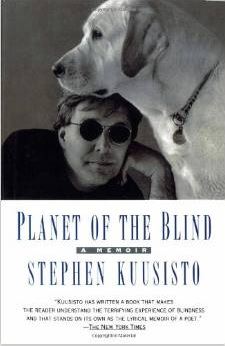
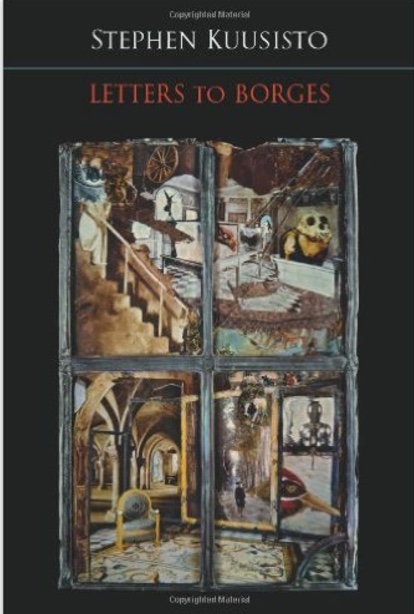
Stephen Kuusisto and HarleyABOUT: Stephen Kuusisto is the author of the memoirs Have Dog, Will Travel; Planet of the Blind (a New York Times “Notable Book of the Year”); and Eavesdropping: A Memoir of Blindness and Listening and of the poetry collections Only Bread, Only Light and Letters to Borges. A graduate of the Iowa Writer’s Workshop and a Fulbright Scholar, he has taught at the University of Iowa, Hobart and William Smith Colleges, and Ohio State University. He currently teaches at Syracuse University where he holds a University Professorship in Disability Studies. He is a frequent speaker in the US and abroad. His website is StephenKuusisto.com.

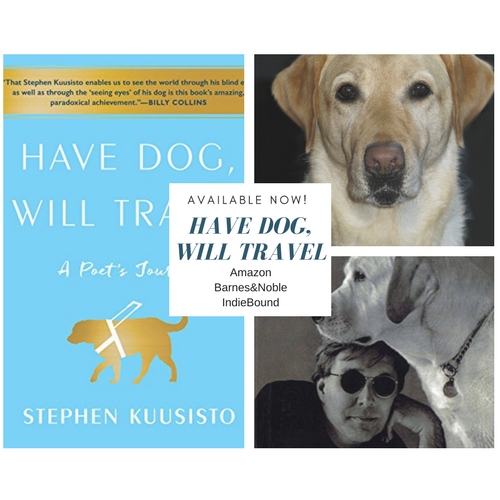
Have Dog, Will Travel: A Poet’s Journey is now available for pre-order:
Amazon
Barnes and Noble
IndieBound.org

Have Dog, Will Travel by Stephen Kuusisto

(Photo picturing the cover of Stephen Kuusisto’s new memoir “Have Dog, Will Travel” along with his former guide dogs Nira (top) and Corky, bottom.) Bottom photo by Marion Ettlinger 

About Yesterday or What Teachers Must Teach…

Yesterday I wrote a blog post about the perils of single issue politics and the erosion of critical thinking especially as these things pertain to teaching. Here are the things I suspect I’ll be accused of saying which I absolutely did not say: that racism doesn’t exist; that white people don’t have inordinate privileges; that minority opinions are fanatical; that the only way forward in the civic square is to become some kind of moderate.

I do not believe any of those things.

What I do think is that the common good has been demoted to fantasy. Listening to others is considered a waste of time. Any position that’s front loaded with rage is good.

Because these things are largely the case teaching is more important now than ever. From pre-school to grad school teachers have the opportunity to promote what Paolo Freire described as entering into reality:

“The more radical the person is, the more fully he or she enters into reality so that, knowing it better, he or she can transform it. This individual is not afraid to confront, to listen, to see the world unveiled. This person is not afraid to meet the people or to enter into a dialogue with them. This person does not consider himself or herself the proprietor of history or of all people, or the liberator of the oppressed; but he or she does commit himself or herself, within history, to fight at their side.”

Notice Freire’s fascinating disavowal of the egoistic considerations that accompany the impulse toward dogmatism.

Here’s another Freire quote I find useful:

“Because love is an act of courage, not of fear, love is a commitment to others. No matter where the oppressed are found, the act of love is commitment to their cause–the cause of liberation.”

**

I fervently believe love—a true experience of love—is abstaining from seeing the self only through singular positions. Liberation is knowing that disability, blackness, queerness, gender are bio political rhetorics of social constraint. Every. Last. One. Is an impoverishing tale.

Rage from a narrow ledge but you will be bitter and exploited.

**

My friend, the poet Preston Hood, who, among other things is a wounded war veteran writes about piercing through the illusions that separate us in a poem entitled “The Vocabulary Between Us:—

There is a thin covering
Between us & the world.

Sometimes it is the inward blue
Of our souls learning what to become.

Other times I hold you before me
Able to love all of what I have now.

**

Succumbing to individualized or identity rage is what the oppressors want of you.
This is what teachers must teach.

Stephen Kuusisto and HarleyABOUT: Stephen Kuusisto is the author of the memoirs Have Dog, Will Travel; Planet of the Blind (a New York Times “Notable Book of the Year”); and Eavesdropping: A Memoir of Blindness and Listening and of the poetry collections Only Bread, Only Light and Letters to Borges. A graduate of the Iowa Writer’s Workshop and a Fulbright Scholar, he has taught at the University of Iowa, Hobart and William Smith Colleges, and Ohio State University. He currently teaches at Syracuse University where he holds a University Professorship in Disability Studies. He is a frequent speaker in the US and abroad. His website is StephenKuusisto.com.

Have Dog, Will Travel: A Poet’s Journey is now available for pre-order:
Amazon
Barnes and Noble
IndieBound.org

Have Dog, Will Travel by Stephen Kuusisto

(Photo picturing the cover of Stephen Kuusisto’s new memoir “Have Dog, Will Travel” along with his former guide dogs Nira (top) and Corky, bottom.) Bottom photo by Marion Ettlinger 

Reading Bleak House at Christmas

I wasn’t cut out for holidays. Drunk parents. Too much catastrophe from kitchen to parlor. By the time I was in high school I saw the advantage to reading stout novels and claimed it was for school—later for college. Unless they are fleetingly sentimental drunks don’t care if you’ve disappeared.

I read Tom Jones while my parents drank scotch and burned a turkey. Vanity Fair as they fought over my father’s decision to un-retire. The Egoist I read while my mother wrapped old kitchen implements in newspaper—she thought melted plastic spatulas would be excellent for re-gifting. A “delicious” irony as my sister and I often rescued Christmas pasts by undertaking emergency house cleaning and cooking. I found 19th century novels were best. Tolstoy was right about all unhappy families. Melville and Dickens weren’t wrong either. Human beings thrown together by economies or architectures or marriages or patrimonies—all sink together while fashioning narratives designed to hold others in thrall to ugly misapprehensions. Ah, the novel! My holiday lifeboat these many years.

Some years I’m devoted to re-reading as is the case with Bleak House. The joys in doing so are almost unlimited:

“The universe makes rather an indifferent parent, I’m afraid.”

“But injustice breeds injustice; the fighting with shadows and being defeated by them necessitates the setting up of substances to combat.”

“Everything that Mr Smallweed’s grandfather ever put away in his mind was a grub at first, and is a grub at last. In all his life he has never bred a single butterfly.”

“There is something indefinably keen and wan about her anatomy, and she has a watchful way of looking out of the corners of her eyes without turning her head which could be pleasantly dispensed with, especially when she is in ill humor and near knives.”

“Mr. Guppy suspects everybody….of entertaining… Sinister designs upon him….he in the most ingenious manner takes infinite pains to counterplot, where there is no plot; and plays the deepest games of chess without any adversary.”

“He [Old Mr. Turveydrop] was a fat old gentleman with a false complexion, false teeth, false whiskers, and a wig. He had a fur collar, and he had a padded breast to his coat, which only wanted a star or a broad blue ribbon to be complete. He was pinched in, and swelled out, and got up, and strapped down, as much as he could possibly bear.”

“Lady Dedlock is always the same exhausted deity, surrounded by worshippers, and terribly liable to be bored to death, even while presiding at her own shrine.”

The delights of “Bleak House” are inexhaustible.

The Blind Eyes are Lonely Hunters: My Life in Higher Education

1.

They come late. They had some way to travel. The blind eyes enter a room. Sighted colleagues have read all the reports before them. And the man with the blind eyes sits down. Accessible materials are not provided. The others call him “professor” though it means little. He’s without info like a cat without whiskers; like a ghost without living people to haunt; a ballplayer without a glove. Now in his early sixties he comprehends how improbable his professional life really is. He’s not meant to be here. He’s been told so all his days.

Nevertheless…

He reads everything he needs to. Since the committee never gives him the materials in advance he must read the agenda and the report while everyone else has already digested them. In this way he is sub-literate and it proves their point, their implicit bias for atopic literacy is questionable. Reading differently, slowly, after the fact, from the margins, why that isn’t reading at all.

2.

That he’s lonely in the academy is unquestionable. Because he studied poetry in his youth he knows a good deal about loneliness and understands its spiritual and secular effects. He loves Jesus for his brave solitudes and his sacrificial acceptance of pain. That Christ never abandoned empathy, never unclenched the burning rose of love, he keeps in mind always.
But he’s lonely as a lost shoe, like a fish still respiring in ice. He’s a bird flying underground.
You see, he did study poetry. Analogies are his anodyne. He’s lonely as the rains arriving on time.

3.

Poetry, the writing of it, the study of it, was for him a reasonable accommodation. If he couldn’t read forty books in a semester he could read three poems well. He knew the smell of rotting pears and why it broke Goethe’s heart. He understood why Byzantine louts secretly hated their libraries. He saw in the Codex Sinaiticus proof of the inalienable wisdom that we’re small. We are very very small.

Human beings are questions asked of another question. Yeats: “The world is full of magic things, patiently waiting for our senses to grow sharper.”

As his eyes will never grow sharper he will open to magics.

More Yeats:

“Come away, O human child!
To the waters and the wild
With a faery, hand in hand,
For the world’s more full of weeping than you can understand.”

4.

So poetry was my first educational accommodation. And a beautiful irony it is, for poetry is not reasonable at all.

Tone ex nihilo.

I’m familiar with all those songs that start from nothing.

5.

I am a senior faculty member with a distinguished professorship at Syracuse University. I’m also conditional in the agora. Just two weeks ago a man who I assume was a professor, for he had the angular characteristic gestures of privileged catastrophe, came unbidden into my personal space (such a lovely modernist, cosmopolitan conceit, personal space) and told me that by not picking up my guide dog’s feces I was “antisocial”—which is of course confirmation bias at best, and unsympathetic gibbering at worst—but either way, it was snowing hard, I had no idea where a trash can might be, and who in their right mind picks on a blind person?

I’m contingent on my campus. Alright. Alright. I know all about the first handwritten manuscript in a Slavic tongue. Old Finn Vainamoinen is my secret friend. I know how to enter and leave the guts of dead shamans and steal their secrets.

6.

There’s a tremendous freedom to the imagination. Though I’m often not welcome in academic environs (insisting on accessible web pages; inclusive software; descriptive videos; braille signage ((of which Syracuse has very little))) demanding my dignity; I know all about the cuneiform implications of sharp edged shadows and all their ironic and skeptical intelligences.
Around me everything is alive.

All my poetic currencies stay at the right rate.

Stephen Kuusisto and HarleyABOUT: Stephen Kuusisto is the author of the memoirs Have Dog, Will Travel; Planet of the Blind (a New York Times “Notable Book of the Year”); and Eavesdropping: A Memoir of Blindness and Listening and of the poetry collections Only Bread, Only Light and Letters to Borges. A graduate of the Iowa Writer’s Workshop and a Fulbright Scholar, he has taught at the University of Iowa, Hobart and William Smith Colleges, and Ohio State University. He currently teaches at Syracuse University where he holds a University Professorship in Disability Studies. He is a frequent speaker in the US and abroad. His website is StephenKuusisto.com.

Have Dog, Will Travel: A Poet’s Journey is now available for pre-order:
Amazon
Barnes and Noble
IndieBound.org

Have Dog, Will Travel by Stephen Kuusisto

(Photo picturing the cover of Stephen Kuusisto’s new memoir “Have Dog, Will Travel” along with his former guide dogs Nira (top) and Corky, bottom.) Bottom photo by Marion Ettlinger 

Of Confirmation Bias and Disability

Confirmation bias is of course universal. The self, whatever it means, assembles a mosaic of preconceived views. Some are descended from the cradle; some from bad teachers. No matter what we say about it CB depends on a lack of comic irony, the inability to probe the limits of one’s customary ideas. I’ve several bad thoughts and they them come from unhappy engagements with a legion of hard hearted able bodied authority figures. Throughout my life from Kindergarten to today I’ve been told my disability is a problem.

So in a spirit of admission, my biggest confirmation bias is that I tend to think most if not all able bodied people are ableists and since I’ve been hurt over and over I anticipate the hurt. This means the open hand of my soul is often empty.

It gets worse. My disability bias absolves me of digging deep both inside myself and “out there” among strangers. I am hereby admitting I can be lazy.

Don’t get me wrong. I’ve had it with rank and file discrimination against the disabled and I’ll go to my grave decrying it. This isn’t an essay about going soft. This is about the difference between essentialism and soulful ambivalence.

Confirmation bias assures that I’ll go on thinking all white men are racists; all heavy set people are comedians; all able bodied people hate me.

Cultural theorists say, often with muscularity, that confirmation bias is sagacious.

But my grief and yours coincide.

I cannot grow without confronting my pain.

People are scared of disability. They believe without examination in compulsory normativity.

Most people despise their own liberty.

The central tenet of fascism is that all people outside “the party” are miscreants.

Freedom is, in all its beauty, a pursuit which means pain.

I will not participate in minimizing my pain or yours. Not will I adopt a cheap script.

CHRISTMAS 1961: UNCLE CHUCK

By Michael Meteyer

(From a Silly in Progress)

Uncle Chuck smoked five cigars a day, dressed like a tweed wastebasket, and was rumored to do unpalatable things with his hands.

A hug from Uncle Chuck was like a dive into a smoldering garbage bin, and would hang on you for days afterwards, like a miasma from a swamp of dead alligators, frog innards and spoiled wet tobacco and moldy latrines.

Uncle Chuck was a tenor with the voice of an angel. He sang songs from World War l.

His speaking voice was as plummy as a radio announcer from the 1940s. Everything about Uncle Chuck except for his odor was plummy, even his face color, even his body shape, which was round, with a crease in his forehead where you expected a stem to appear, as if he were a tomato.

There were rumors about Uncle Chuck. We were told as children, to never ask about Uncle Chucks history, which only made us more curious.

Was Uncle Chuck a murderer? Did he work for the government? Had he been a florist? Did he come back from the dead?

No matter: at every family gathering Uncle Chuck was central to a ritual that had evolved.

First there was the imbibing and storytelling, our paramount adult activities: and to this day I am so grateful I came from a clan of storytellers who cherished language as much as a Babylonian farmer cherished his hoe.

Then after the initial bonhomie, and then the giddiness, and then wild laughter, and then me and my brother Timmy would get in a fistfight, and the gathering would become sad and wistful… then it was time for Uncle Chuck to sing the mournful song “My Buddy”.

“My Buddy” was a song from the Great War about the death of a friend, which, although I didn’t know it then, was also about the death of youth, and the end of dreams, and the impermanence of… everything, especially precious family instances and crowded Christmas moments.

Uncle Chuck’s angelic voice- the voice of a plummy winged angel- brought tears to everyone’s eyes, even to those of us, adolescents, who had no knowledge yet of the preciousness of common things and tiring rituals.

I remember the thick snow falling outside, slow but insistent, illuminated by the multiple colors of lights on all the houses in the neighborhood. It seemed like each snowflake was a different color, but I realize now this was because of the Christmas lights on the houses behind them. Something like Plato’s Allegory of the Cave.

“Each snowflake”, Aunt Marla once confided to me in slurred tones, “Is not only a piece of time, which melts the moment you think about it; it is the secret kiss of an anonymish, ah, aninnymoosh angel who will protect you. And there are numberless angels… They shee everything you do. Except, we’ll, let’s just say they know when to look away. They know what it means to be alive. Most of them. They aren’t nosy, they just want to protect you. Did I tell you they were numberless? Like snowdrops? Like kisses from your Aunt Marla”?

Then she would giggle, and give me a kiss: wet, like a snowdrop, but much warmer, and then she would look deeply into my eyes, as if seeing all things past and future, but especially the present. And her eyes would fixate that moment into my consciousness like it was riveted by a laser beam.

But then her eyes would quiver and she’d burp or hiccup or something, and it rather changed the moment.

In Babylonian Times there were parties and rituals around the solstice, and lamps and torches set alight in the dark, and the presentation of gifts and the recitation of prayers to urge the Sun, the God that controlled the light, to come back, to return us to light and warmth again.

They acted as if light and warmth and illumination were as fragile and promising as a new born infant, as if everything, even the continuation of life, depended upon its growth and thriving.

Those Babylonians didn’t have snow. Or tinsel. They had their own form of crèches, and talked to the statuettes in them all year, as if they were alive, but that is a different thing, and I don’t want to get into it now.

Those Babylonians, they didn’t have snow, either.

They didn’t have, like I had, Gloria Matthews dressed up as the Virgin Mary in our fifth grade Christmas play.

They didn’t have, as we have, the Christ child.

And then as now, several thousands of years later, the prayers and the lights and the gifts and the love worked. The infant son, as good as God, began its way home us, bringing more light and longer days.

I’m sure the pagan Babylonians had their own version of doleful ballads and plummy Uncle Chucks.

And when Uncle Chuck finished singing, we were all as quiet as the stars in the night sky.

Then the adults would wipe away their tears, and begin to sober up for the journey home.

Michael Meteyer is a longtime friend of the blind, a newly retired orientation and mobility instructor. He studies creative writing at the University of Rochester with the poet Anthony Hecht and spent many afternoons riding horses with Lawrence Ferlinghetti. He lives in San Rafael, California.
Notebook December 12

I must admit I don’t care very much about writers’ homes. I wouldn’t want to go on a literary house tour and while I understand why a visit to Virginia Woolf’s house or Melville’s Arrowhead is captivating for some readers I’m not one of them.

**

I’m not contemptuous. If looking at Emily Dickinson’s bedroom gets you going, well by all means.

The rooms in which I write are without distinction.

(Yes, my critic, you will say “it shows” and perhaps mean it.)

**

Debussy. All those little fingers tracing the insides of clouds.

**

Snakes have advantaged dolor.

**

Ah Candide! You are the refutation of Freud’s super-ego.

**

I’ve been dreaming a good deal about a long dead friend.

**

A warlock hair grows from my nose.

Able-splaining 101

If you’re disabled you know all about it. The apparently “normal” person who tells you what you need to know is legion. BTW this figure can be anyone. Despite feminism, women can be able-splainers just as often as men. I recall distinctly the associate provost at my university who told me that a software package was “robust” when it comes to accessibility when in fact it was junk. Able-splainers have no shame. All they need is a cocksure belief that the disabled are deficient which means of course we’re dismissible and voila!

But did you know that silence is also a form of able-splaining? When the disabled say something is unusable silence is often the best able-splaining of all. And so economical!
Nothing says “that’s the way it is little dude” better than a good old fashioned round of silence.

The other day I got able-splained in a new way which trust me is a remarkable thing as I’ve pretty much heard or not heard it all. An elderly professor accused me of being antisocial because he saw me scoop my guide dog’s waste into a plastic bag and then gently place the bag in a snow drift.

I was carrying a harness, a briefcase, holding a leash, and having a conversation with another faculty member all at the same time.

And there I was. Busted. Imperfect. A hater of humanity.

What he was really saying was I don’t belong on his campus.

You know, us cripples with our animals, breathing tubes, mechanical devices galore, our irregular invisible needs—how polluting we are.

Ableism likes the world clean.

Stephen Kuusisto and HarleyABOUT: Stephen Kuusisto is the author of the memoirs Have Dog, Will Travel; Planet of the Blind (a New York Times “Notable Book of the Year”); and Eavesdropping: A Memoir of Blindness and Listening and of the poetry collections Only Bread, Only Light and Letters to Borges. A graduate of the Iowa Writer’s Workshop and a Fulbright Scholar, he has taught at the University of Iowa, Hobart and William Smith Colleges, and Ohio State University. He currently teaches at Syracuse University where he holds a University Professorship in Disability Studies. He is a frequent speaker in the US and abroad. His website is StephenKuusisto.com.

Have Dog, Will Travel: A Poet’s Journey is now available for pre-order:
Amazon
Barnes and Noble
IndieBound.org

Have Dog, Will Travel by Stephen Kuusisto

(Photo picturing the cover of Stephen Kuusisto’s new memoir “Have Dog, Will Travel” along with his former guide dogs Nira (top) and Corky, bottom.) Bottom photo by Marion Ettlinger