Poetry as artful plagiarism

“Poetry is an artful plagiarism sometimes, where odd combinations of words influence our language and heightens our experience.”    – Stephen Kuusisto


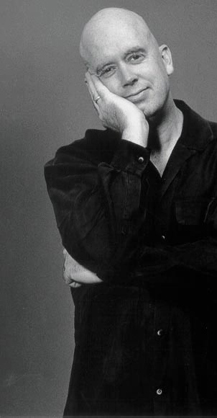
Professor Stephen Kuusisto is the author of Eavesdropping: A Memoir of Blindness and Listening” and the acclaimed memoir Planet of the Blind, a New York Times “Notable Book of the Year”. His second collection of poems from Copper Canyon Press, “Letters to Borges, is scheduled for release in October 2012.  As director of the Renee Crown University Honors Program and a University Professor at Syracuse University, Steve speaks widely on diversity, disability, education, and public policy. www.stephenkuusisto.com, www.planet-of-the-blind.com

Do's and Don'ts of Conversation

A clever little book, Do Not Interrupt: A Playful Take on the Art of Conversation, by Stephen Kuusisto ($14.95, Sterling) examines the do’s and don’ts of conversation. Lovers of language and communication skills will greatly enjoy this examination of the difference between merely talking with someone else and actually having a stimulating conversation.   ~ Bookviews by Alan Caruba

World Premier in Iowa City: See you there, Friday night, Feb 5th!

Imagine your world going dark. Contemplate the fading sight of a loved one. Grapple with the responsibility of delivering a diagnosis. Renowned
theater artist and UI graduate Rinde Eckert takes you behind the eyes
and into the heads and hearts of those surrounded by the shadows of
blindness. Crafted from interviews collected via an unusual
collaboration between Eckert and the University of Iowa Carver Family
Center for Macular Degeneration, Eye Piece
will feature performers from the UI Theatre Arts and Dance departments
and the School of Music as well as Eckert himself. With humor and
compassion Eckert will lead us on a journey through darkness toward a
different kind of illumination.

Rinde Eckert, Eye PieceRinde

Friday and Saturday, February 5 and 6, 8 pm
Sunday, February 7, 2 pm
Friday and Saturday, February 12 and 13, 8 pm
Sunday, February 14, 2 pm
Mabie Theatre

A HANCHER COMMISSION AND WORLD PREMIERE

Imagine your world going dark. Contemplate the fading sight of a loved one. Grapple with the responsibility of delivering a diagnosis. Renowned
theater artist and UI graduate Rinde Eckert takes you behind the eyes
and into the heads and hearts of those surrounded by the shadows of
blindness. Crafted from interviews collected via an unusual
collaboration between Eckert and the University of Iowa Carver Family
Center for Macular Degeneration, Eye Piece
will feature performers from the UI Theatre Arts and Dance departments
and the School of Music as well as Eckert himself. With humor and
compassion Eckert will lead us on a journey through darkness toward a
different kind of illumination.

RELATED EVENTS
Monday, January 25, 5:30 pm / 1289 Carver Biomedical Research Building,
Kelch Conference Room. Panel discussion about the creation of Eye Piece with Rinde Eckert, Dr. Ed Stone, Steve Kuusisto, and two cast members. Open to the public.

Tuesday, January 26, 12-1 pm / Braley Auditorium in UIHC’s Pomerantz Family Pavilion. Discussion about the impact of vision loss on family members with Rinde Eckert, Dr. Mark Wilkinson, and others. Open to the public.

This
project is made possible in part by a grant from the Association of
Performing Arts Presenters Creative Campus Innovations Grant Program, a
component of the Doris Duke Charitable Foundation.

It
is presented in collaboration with the UI Theatre Arts Department’s
Partnership in the Arts and the UI Division of Performing Arts’
Creating the Future Initiative. It is also presented in collaboration
with the University of Iowa Carver Family Center for Macular
Degeneration and the University of Iowa Carver College of Medicine
Writing Program.

Ota Benga Blues

I confess that war, pestilence, natural disasters and the nation’s collapsing infrastructure have recently done a good deal to erode my sense of humor. I’m guessing that you, in turn, likely have your own inner struggles with our blemished planet.

To cheer myself I decided to take a little walk around my neighborhood. The weather was fair after the Biblical Midwestern floods. I was feeling cautiously optimistic. As far as I could tell I wasn’t dead. 

Then I met them: a middle aged couple strolling about ten to fifteen yards ahead of me on the sidewalk.

Now you may well ask: “How do you know they were a middle aged couple, etc. since you can’t see worth a damn,” and I’d say to you that you’re absolutely right—they might have been past middle age—they could have been Senior Citizens, or perhaps they were a couple of lumpy Sasquatch wearing Izod shirts and shorts.    

And you’d be right to point out this “wrinkle” of veracity not merely in this instance but in all narrative employments rendered by means of my pen. 

It’s true: I have no idea what these two individuals look like. But if you want truth I suggest you read the “Style” section of the New York Times.

They were slow. And they were trying to go faster because I was coming up quickly from behind with my guide dog.

Their respective feet suddenly went “skippy-scuppy, skippy scuppy” and I could hear the drape of their considerable shorts making “zith zith” noises.

Yep. They were almost running to stay ahead of me. Then they reached the perpendicular turn that I was planning to take, and sure enough: they stopped and spun around (shorts making little gulping noises) and they stared as I came toward them.

In the split second when they might have said “Hello Citizen” or “Boy Howdy Pardner!” they said nothing.  They were staring. They were also blocking the very turn I was planning to take and since they had enough time to look at me and say something and chose instead to say zilch I felt the old “creepy crawly disabled person being stared at by toddling pink people blues”. 

It happens sometimes. I have a nickname for these kinds of people. I call them “Bob and Betty Boop”.

Continue reading “Ota Benga Blues”
On Being Alex Barton

Mrs. Marcia Cully
Morningside Elementary School Principal

Dear Mrs. Cully

My name is Stephen Kuusisto and I am blind. I was born blind in the mid 1950’s—an era when kids with disabilities were not encouraged to attend public schools. Because my mother was tough minded and persistent I went to the Oyster River elementary school in Durham, New Hampshire instead of the Perkins School for the Blind. Nowadays I make my living as a professor at the University of Iowa where I teach graduate and undergraduate courses in creative writing.   

When I heard the story of young Alex Barton who was “voted off the island” known as Kindergarten because he has behavioral problems associated with an autism spectrum learning disability, and that accordingly his teacher and classmates were simply annoyed by his presence, well, aside from my natural incredulity that such a thing can still happen in the United States, I felt a flood of long repressed tears. You see, I was once a kid like Alex Barton.

I still carry deep under my skin the barbs and taunts of mean spirited public school classmates who found ways to bully me simply because of my disability. I wrote a best selling book about my childhood experiences called “Planet of the Blind”. That book has now been translated into 10 languages. I also host a blog called “Planet of the Blind” where I advocate almost daily for the rights of people with disabilities.

Like many “baby boomers” with disabilities who helped to pioneer the concept of mainstreaming for disabled kids I keep hoping that the vicious and ignorant behavior that I experienced in public schools will at last become a thing of the past.

So you can imagine my deep distress upon hearing the story of young Alex Barton and his teacher Wendy Portillo. I won’t belabor the point. I’m certain that your school district and school board has been hearing a good deal about this affair.

I simply write in this instance to say that unlike the media or those who would take sides on this shameful matter, I am grieving for Alex and his family. The history of disability features a long timeline of stigmatization and I know personally how hard it is to overcome the effects of ridicule and substandard teaching.

I wish you and your community good luck and good sense. I hope it’s not too much to ask that your school district will now take this opportunity to think hard about disability with a renewed sense that kids with disabilities are real citizens too. 

As a final disclosure: I am posting this letter on my blog with the hope that I might hear from you in some affirming way. I’m sure we can agree that there are real lives in the balance. 

Sincerely,

Professor Stephen Kuusisto
The University of Iowa

Holy Cow – would ya look at all these LINKS!

Iowa blind advocates (Steve being one of them) disagree over court ruling on paper money

Advocates Disagree…(click for complete article)

Updated May 20. 2008 6:04PM
By Diane Heldt
The Gazette
diane.heldt@gazettecommunications.com    

A federal appeals court ruling Tuesday that paper money — indistinguishable by touch — is discriminatory to blind people was hailed by some advocates as a long-awaited step forward, while others said a change is unnecessary and plays into negative stereotypes about the blind.

Blind people have adapted and often fold money to distinguish the bills, but no longer would have to rely on others to help them if the Treasury Department makes bills of different sizes or prints them with raised markings, supporters of a change said.

"What’s at issue here is the ability to identify money without other people helping you," University of Iowa English Professor Steve Kuusisto, who is blind, said. "My view is, the most accommodations possible help the most people. To be opposed to accommodations that help people is narrow."

The American Council of the Blind sued for such changes, but the government has been fighting the case for about six years. The U.S. Court of Appeals for the District of Columbia ruling could force the Treasury Department to alter money, though the ruling is subject to appeal.

Continue reading “Iowa blind advocates (Steve being one of them) disagree over court ruling on paper money”

Why We Need TV and Movies That Include People with Disabilities: Part 104

So there I was today on NPR’s “On Point” program with two terrific blind professionals and I was feeling like the school kid who has to use the bathroom and can’t wait any longer to announce the matter. I needed to say that the reason blind people are so woefully unemployed and the reason that the public marvels at the accomplishments of exemplary blind professionals like Gordon Gund or David A. Paterson is that the film and TV industries continue to make blindness look horrible.  Who wouldn’t imagine, after seeing that dreadful movie “At First Sight” (with Val Kilmer and Mira Sorvino) that being blind isn’t  a minimal life? That movie came out at the same time as my memoir “Planet of the Blind” and it reinforced every cliché about blindness that I was trying to conquer. If the human resources professionals saw a prime time television show in which a blind person confidently uses state of the art assistive technology—heck, even showing the non-disabled characters a thing or two about the gizmos, well that would be as big a step toward changing the climate of unemployment for the blind as our well intentioned celebration of Governor Paterson’s oath of office. Let’s face it: the public thinks that blind people are scarcely able to navigate their living rooms. How could they possibly serve as good employees? That Ph.D. or Master’s degree must be some kind of a trick. That’s it! The “brainiac” blind woman or man is probably “faking it” just like those guys you see  begging for money with the phony sunglasses. Yep! That’s gotta be it! How do I know this at (insert company name here)? Because I just saw Disney’s film version of Mr. Magoo. Now there’s a blind guy for you! Ha! I laughed til  I dropped my popcorn on my plaid shorts. Boy Oh Boy  was that ever a good movie!

In case anybody’s wondering, I was once interviewed by a producer of ABC’s television program “20/20”about the possibility of an interview associated with the publication of “Planet of the Blind”. What did I do to ruin the deal? I mentioned that ABC is owned by Disney and that the new film of Mr. Magoo was a disgrace. They were very nice as they showed me to the door.

S.K.   

Professor Stephen Kuusisto
Department of English
The University of Iowa
308 EPB
Iowa City, IA 52242

Links:

Remembering Mr. Magoo

Cross-posted on Blog [with]tv

On Today’s Op Ed Piece in the NY Times

Good morning. I am privileged to have been asked to write an Op Ed piece for the NY Times concerning the ascendancy of David A. Paterson who will be sworn in as the nation’s first blind governor on Monday. You can follow this link to read the piece.

I wish that the Times hadn’t called the editorial “The Vision Thing” since I hate to be associated with George Herbert Walker Bush or his progeny. But they didn’t ask me.

Still, the success of David Paterson is something that all people with disabilities can celebrate!

S.K.

Professor Stephen Kuusisto
Department of English
The University of Iowa
308 EPB
Iowa City, IA 52242

LINKS:

What It Means to be New York’s First Legally Blind Governor
Who Is David Paterson?
Read All About It!
Thanks Blue Girl
The Vision Thing Brigit Abstract
The first legally blind governor  Thanks Heather
David Paterson to Become First Legally Blind Governor of NY on Monday  Thanks Anne
Rhetoric about blindness begins in paterson coverage Thanks BA Haller
Kuusisto on David Paterson Thanks Ken
Building the Internal World Thanks Jean Marie
Blind elected officials  Interesting! Thanks Penny
He’s Blind. I’m Deaf. What Do I Have in Common with New York State Governor David Paterson? Thanks David
NY Times Op Ed on David Paterson Thanks, Ruth


Listen to Steve on "The Exchange" with Ben Kieffer on Iowa Public Radio

View the Iowa Public Radio "WSUI" Program Schedule and you’ll find this listing for tomorrow:


February
                    2008

                   
Audio streaming requires the
                    free Real Audio player available here

                      Fri 02/22/08
                      Real Audio
                     
(stream)
                     
Podcast
                     
(download
                      MP3)

An interview with University of Iowa Professor Steve Kuusisto. He’s an author, educator and advocate for people with disabilities. Blind since birth he says sometimes even those working to help people with disabilities consign the disabled person to a second-class, defective status. That thinking is something Kuusisto is working to change.