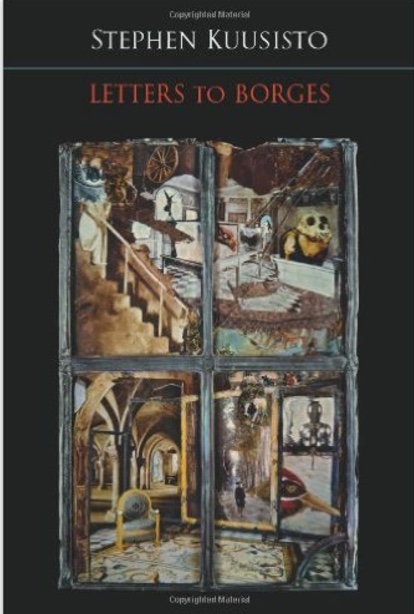
I don’t know what you are—my world is necessarily impressionistic—I see and do not see as blind people often do. This morning, early, you were there, poised in mid-air like a dream face and though nothing in your life concerned me you were mine for all of ten seconds. You made the dull bones in my wrists come alive. Though I couldn’t see you, not precisely, I touched the window…
Category: Uncategorized
What Does Your Online Journal Smell Like?

There are as many opinions in the digital age as ways to share them and what’s a middling reader to do if keeping one’s wits applies? (Check here if they need not apply.) Me? I’ve always tried to read broadly, by which I mean across disciplines certainly, but also to gather whatever contradictory opinions may be, if not likable, at least understandable. In 1970, when I was fifteen, I subscribed to both the Nation and the National Review. I read them with a magnifying glass, holding them close to my one good eye. Their pages had an identical odor, cellulose and iodine, mouldering promised, a smell that even today can make me nearly weep, especially in libraries. You know the fragrance of hopelessness and shivered glucose. So you’re reading William Buckley or Leonard Bernstein with your left eye which hops like a sparrow and you have a good whiff of promissory decay and what the hell, you’re only a teenager, and already you know despair leaps right off the page.
The nose recognizes memento mori first. That was always its job. Printed ideas are invariably sad, even when they propose optimism. Sorrow was in the delivery system, if you will. And no honest writer can ignore it. It’s the olfactory gorilla in the room. I mean what I’m saying. There’s the architecture of mephitic despair—for instance, what did J.P. Morgan’s library smell like in 1902? Short answer? The vapors of sorrow.
What’s the odor of digital writing? There is none, of course, which is perhaps the greatest lie in the history of scribbling. Odor ye will always have, though it sneaks up later.
Which brings me to a new category of apprehension: writers who, in the electronic age, garner promissory stinks. They may not smell of dead pulp, but their ideas will pull you by the nose eventually. I don’t need to name names. Noses are plenty smart.
I read with my imaginary snoot.
The GOP, End Times, and Health Care
I think I’ve finally figured out what’s going on with the GOP. The party is now stuffed with men and a few women who believe the world is ending, perhaps owing to religious mania, or worse, as a nostrum of ambition, but regardless, they think we’re in the end times. Alarming though this may be, what’s worse is their concomitant belief that material wealth will accompany them to heaven. As far as I can tell, this is the only explanation that explains a party that’s doing everything it can to push a disastrous and cruel health care bill through Congress despite the clear objection of the majority of Americans. Traditional politics is out the window. It’s Looney Tunes time—“That’[s All Folks!” The Book of Revelations meets the Great Train Robbery. You can add eugenics, Social Darwinism, racial hatred, disdain for women, a general dislike of poor people and their children, but really these are just sprinkles on the ice cream. The truth is darker, colder, and really much more terrifying.
Yesterday I tested my idea on a friend who’s both a disability scholar and the father to a disabled son. “Well,” he said, “there’s one more thing—it’s not just that they think they can take their money with them, they imagine they’ll leave the rest of us behind to suffer in Hell.”
That’s pretty much it. Rinse. Repeat.
Why I Adore Marty Feldman

Photo: Stephen Kuusisto with a dark suit jacket over his head, his face showing, eyes rolling and “cat who ate the canary” smile.
By now my wife is sick of this image, a photo of me doing my Marty Feldman imitation taken in Iowa City around ten years ago. I tend to post it a lot. I admit this. It’s my way of saying “what hump?” (I’m of course talking about Mel Brooks and his film Young Frankenstein, and the scene where Gene Wilder as the ambitious doctor apprises Feldman as “Igor” the hunch back and says in the supercilious and jaunty manner of all physicians to all disabled people, “Perhaps I can cure that hump!?” Feldman: “What hump?”
Like Feldman I had a childhood eye problem. His derived from a thyroid condition that left him with exophthalmic bulging eyeballs. Mine was retinopathy of prematurity and severe nystagmus–I couldn’t see much and my eyes moved uncontrollably. Everyone knows if you’ve flicking, wandering eyes you’re either a crook or a comedian.
“What hump?” was my introduction to what we call nowadays “the medical model of disability.”
When Young Frankenstein came out in 1974 I was a struggling college sophomore whose legal blindness was both a social and intellectual obstacle. The ADA was far off in the future and frankly I’d no language for my circumstances. I told people I had eye problems rather than tell them I was blind. I’ve been lucky to meet hundreds of brothers and sisters for whom disability was first a problem of language, then a matter of declaration. Closeted disability is legion.
And there I was in a dirty little theater in upstate New York when Marty Feldman hit me with satori. I saw my true self. I understood I could be joyously “Abby Normal.”
OK. It took me years to get joyous. You don’t become Igor overnight. And yes, I still worry about what others may think of me. One imagines some parts of the super-ego are healthy. But I don’t care what strangers think of my disability. Not a whit. Your ableist, facetious, shriveled, suck the persimmons exceptionalism means nothing to me. I even wrote a blog post about why I feel sorry for sighted people.
Marty Feldman did some artful jujitsu with his deformed eyes. I loved him for that. What a thing! And of course I was living in a provincial culture. Small town America. Middle of nowhere. No disability guides. Years away from meeting and joining the disability rights movement. Surrounded by fraternity boys and the faculty who loved them. But you see, when people show you possibilities with overt celebrations of abnormality even a kid with glasses thick as padlocks sitting in the front row of the Exchange Street Cinema, who felt like a crushed cigarette butt, who had no idea how he would “make it” in the world, well shit a brick, you change lives for the better.
I suppose I’ve now written my true teaching statement. Perhaps I should send it to the administration?
Good Morning, Mr. and Mrs. Benevolence
Literary Dog Games You Can Play at Home
Take a poem you love and substitute “dog” for it’s main conceit. “So much depends upon a red dog, glazed with rain water, beside the white chickens…” (A dog makes more sense than a wheelbarrow, yes?) “Because I could not stop for dog, he kindly stopped for me…” (Emily Dickinson on a bright day?) Auden: “Lay your sleeping head, my dog,/Doggish on my faithless arm…”
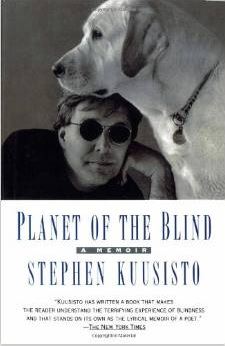
This is just a game I have to soften certain minutes. You know those minutes, the ones without sustaining warmth. I may have fewer of these minutes as I have a guide dog who goes with me everywhere. In a soul crushing meeting I can reach down and stroke her her, right there, under the table. This is always excellent. Then I silently add a canine “canto” or a question. What if John Keats had owned a dog? I think he’d have gotten on better with the nightingale. Paraphrasing Steve Martin’s comment on the banjo—“it’s hard to be depressed when you’re playing it”—it’s hard to meander and maunder over death when you have the company of a dog. I don’t mean to say you can’t do it. But it’s harder with a Labrador than a song bird.
Though Longfellow doesn’t say it, I like to think his Hiawatha taught people to draw their dogs.
(This is a variant game, poets who’d be better with canines.) Poor Ezra Pound: “When I carefully consider the curious habits of dogs/I am compelled to conclude/That man is the superior animal./When I consider the curious habits of man/I confess, my friend, I am puzzled.”
Ezra had acquaintances only. And was a poor judge of human character. A dog could have helped. Only beaten dogs liked Mussolini. But I digress.
Swinburne would have been better if he’d written of dogs.
From a Notebook, Early 1980’s, Helsinki
From a Notebook, Early 1980’s, Helsinki
I wonder what Ronald Reagan’s hair does when he’s sleeping? Does it have a traveling life like Gogol’s “nose” and if so, does it revert to a natural gray? Does it turn up wagging at a strangers door?
**
Pentti Saarikoski:
“Kaikki minkä valveilla
näen on kuolemaa,
kaikki minkä nukkuessani, unta.”
Everything behind us
Is death I see,
Everything slept, dream.
—Cafe Strindberg, Helsinki, coffee steam on windows…
**
Eyes so wild he can’t flirt. But what if flirting is boring?
**
Now and then I have to whisper to myself as if a train station is a library.
**
Dear Mother:
Again I have failed. This time in the Punjab. Please send train tickets and a little tin of biscuits with the Queen’s face on the lid.
**
Reagan’s “Star Wars”—like selling toasters really. He learned everything at General Electric. At an embassy party last night I saw all the young Georgetown men yapping that it’s real. Smiling, glassy eyed schmucks.
Of Spinoza and a Spruce Tree
No one reads Spinoza in my neighborhood. The elderly woman with her old dog hasn’t heard of the devaluation of sense perception as a means of acquiring knowledge. She’s never thought of a pure, emerald nest of dendrites zizzing the accidents in her head and it’s not that she’s old, or feminine, she’s not wrong headed, she just happens to trust what she sees.
I sit on an old wooden chair under the spruce tree. The eyes are not necessary for perfection of mind. And the woman who hasn’t read Spinoza walks by with carpet slippers on her feet. A thunderstorm is coming though it’s early morning.
From a Notebook, or Morning Jog
If you don’t like the dream, change it. Turn your dial from hearse to horse. Don’t kid yourself: the carbon underworld takes any charge. My hearse, well, it shivers, stands, becomes a stallion, runs off. So what I’m flip with grief? The grim reaper has a tear in his underpants. They fly off, crow like. Ha ha! Naked reaper. Now he’s just another dead guy.
**
My uncle M drank. Preferred vodka. Sometimes he’d go into the old horse barn and strike discarded radiators with a hammer. He was musical that way.
**
In my poems, or, go ask Freud
Old lovers flit through the trees—
Ah but what kind of trees—
Birches with gold ringlets
By the lake
Sometimes
High in the branches
They look down on me
Just a boy really
Searching
For mushrooms
**
Go to meetings with college faculty. More and more they speak neoliberal platitudes. They can’t hear themselves, or choose not to. Focus group. Task force. Sustainability. So I think about the Kreutzer Sonata—not Tolstoy, Beethoven, the second movement. I’m lucky, can replay the whole thing in my head.
**
It’s been said British writers have an elegiac sensibility while American writing is more optimistic. I don’t think so. America is a ghastly place. Writers have to move fast. Running for your life only looks like optimism—no one should mistake desperation for belief. Even Whitman would agree.
 Planet of the Blind