Disability, Higher Education, Inclusion, Oh My…

Why is the rhetoric of diversity and inclusion at universities invariably so wooden and dead one would rather succumb to the prolixity of self help manuals? Give me Leo Buscaglia over prose exhorting the building of individual competencies or better, let’s imagine collective talent and free students (and staff) of the corporatized idee fix of the happy happy individual. If we’re to be honest we should admit universities are competitive and structurally opposed to whatever is meant by inclusion. (I like Paolo Freire’s sense of it, grass roots, promoting literacy for all, but on the American campus the term seems to mean—“tag along” as if we’re all going for a nice walk and you’ve been invited, lucky you.)

Lucky you indeed. It’s estimated that almost three quarters of disabled college students fail to graduate. What was it? The food? Must have been the chow. Yes, inclusion stops at the classroom door; stops at the inaccessible website; stops when the disability services office posits there are just a few hoops you have to jump through to get accommodations and you better follow the procedures exactly or your semester will go down the drain faster than your costume jewelry. Structurally speaking disability is to inclusion as mice are to kitchens.

At most universities and colleges disability isn’t included under the rubric of diversity. As a former administrator once said in my presence: “we don’t want people to know we have learning disabled students, it will affect our rankings.”

Talk about “Typhoid Mary”—disability might be catching! But back to the rhetoric. Consider the following, a fairly typical “letter” which a prospective college student must give to a physician in order to receive accommodations on campus:

Please provide the following information under separate cover and on practice letterhead. The authorized release of information is to include but not be limited to the following:

1. Presenting diagnosis(es) utilizing diagnostic categorization or classification of the ICD or DSM IV. Diagnoses should indicate primary, secondary, etc., and significant findings, particularly in respect to presenting problems.

2. Date the examination/assessment/evaluation was performed for the presenting diagnosis, or if following the student for an extended time, date of onset and date of an evaluation of the condition that is recent enough to demonstrate the student’s current level of functioning.

3. Tests, methodology used to determine disability. PLEASE do not send copies of the student’s medical records.

4. Identify the current functional impact on the student’s physical, perceptual and cognitive performance in activities such as mobility, self-care, note taking, laboratory assignment, testing/examinations, housing conditions/arrangements. Is this condition temporary? If temporary, what is the expected length of time to recovery?

5. Describe any treatments, medications, assistive devices/services the student is currently using. Note their effectiveness and any side effects that may impact the student’s physical, perceptual or cognitive performance.

6. Recommendations for accommodations. Explain the relationship between the student’s functional limitations and the recommendations.

7. Credentials (certification, licensure and/or training) of the diagnosing professional(s).

This information is kept confidential except as required by law.

**

Again, the prose above is standard boilerplate. It’s what’s for breakfast. If you have a disability and want to go to college you’ll need to be medicalized and sanitized. This is what passes for accommodation language at matriculation for most university students. Get a doctor or a psychologist to affirm you are indeed disabled—moreover, ask a medical professional to articulate “for you” what you will need in order to succeed in higher education. The falsity of the claim—that a standard MD or Ph.D. knows much about disability and it’s circumstances is nearly laughable but not quite. Inclusion is in the balance. Let’s see your disability certificate kid. Let’s see what it says we “have to” do for you. Do you feel included? What’s that? Not quite? Perhaps you have a bad attitude.

A campus that’s inclusive is accommodating because it’s classrooms, it’s digital domains, it’s syllabi, it’s assignments, it’s library, all are “beyond compliance”—which in turn means no one should need a letter from a doctor or a specialized office with its reliance on “treatments” and “functional impacts” and “cognitive performance” and the like. This language by its very nature is not inclusive nor is it meant to be—it’s designed to weed out students who might be tempted to fake a disability, because lord knows, maybe extra time when taking a test will give certain underachievers an advantage. I know of no other area of diversity where one’s provenance and authenticity must be vetted and confirmed.

BTW, as a blind person I can attest that your average ophthalmologist knows next to nothing about how a person may live and function with a blinding eye condition. Hence question number 6 above is wholly inadmissible.

There is a distemper in higher education where disability is concerned, something that’s out of step with the best thinking in architecture, software, pedagogy, even environmentalism. Meanwhile, if you’re a student or faculty member with a disability you can be excused if you believe that being on campus is like attending a musical where the singers and musicians genuinely dislike you.
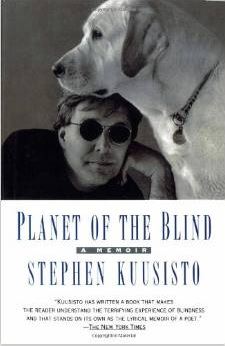
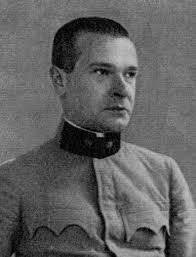
 

Blue Grief, Unforgettable: The Later Poems of Georg Trakl

Georg Trakl in military uniform

I have for some time been in possession of a ragged copy of Twenty Poems of George Trakl, translated by James Wright & Robert Bly, published by The Sixties Press in 1961. I bought the book around 1972 when, at 17, I was discovering poetry, though discovering isn’t quite right as I was very ill and close to dying from anorexia, and poignant as it may seem, poetry was showing me a bridge back to life. It was fitting that one lane of that bridge would be Trakl, who saw battle in the first world war, attempted to shoot himself, and wrote Wittgenstein for solace. I remember reading these lines of Trakl’s with amazement:

In Hellbrun


Once more following the blue grief of the evening 

Down the hill, to the springtime fishpond—

As if the shadows of those dead for a long time were

hovering above,

The shadows of church dignitaries, of noble ladies— 

Their flowers bloom so soon, the earnest violets

In the earth at evening, and the clear water washes 

From the blue spring. 

The oaks turn green

In such a ghostly way over the forgotten footsteps

of the dead

The golden clouds over the fishpond. 


Note: this personal essay will shortly become a book review, but not yet. I must describe the 17 year old reader who found these lines—who read them with one functioning eye aided by a magnifying glass, read them in a hospital. The boy was experiencing his own ars moriendi but he knew how to concentrate. Everything was clear to him. Outside his window Boy Scouts raised and lowered the flag mornings and evenings and he thought of how clean and noble they were and he thought of ghost-patients hovering in shadows and the bright cruelty of springtime roses. He thought of the hospital as a palace of sorts with its high court and ceremonies. He was improbably alive in blue April.

Georg Trakl’s work has never left me. In the forty plus years since I first read his poems with their aching precision—with images carrying tone, width, height, shade, blood, majesty, and despair—I’ve read many volumes of his work, necessarily in translation, always marveling at his mastery of immanence—of his abiding sense that souls and gods are invariably present in a fractured universe. These figures are as hopeful or abject as we are, as lost as we are, steeped in griefs as we are. For all his expressionistic and idiomatic imagism, Trakl is perhaps the greatest realist of all, for he feels the wounds of saints and ancestors as well as the living and renders the phenomenology of sorrow in lines that are unforgettable:

Black frost. The ground is hard, the air has a bitter taste. Your stars make unlucky figures.

With a stiff walk, you tramp along the railroad embankment with huge eyes, like a soldier charging a dark machinegun nest. Onward!

Bitter snow and moon.

A red wolf, that an angel is strangling. Your trouser legs rustle, as you walk, like blue ice, and a smile full of suffering and pride petrifies your face, and your forehead is white before the ripe desire of the frost; or else it bends down silently over the doze of the night watchman, slumped down in his wooden shack.

Frost and smoke. A white shirt of stars burns on your clothed shoulders, and the hawk of God strips flesh out of your hard heart.

Oh the stony hill. The cool body, forgotten and silent, is melting away in the silver snow.

Sleep is black. For a long time the ear follows the motion of the stars deep down in the ice.

When you woke, the churchbells were ringing in the town. Out of the door in the east the rose- colored day walked with silver light.


The lines above were translated by Robert Bly and James Wright, two American poets whose own work was influenced by what came to be called “the deep image”—a term meant to describe imagery in poetry that is as improbable and often disturbing as the psyche itself. It’s certain that poets of the 20th century like Trakl or Lorca, just to name two masters of starkly expressionistic verse were concerned with images both from dreams and waking nightmares.

“A red wolf that an angel is strangling.” One thinks of Lorca’s famous “arsenic lobster” falling from the forbidding skies of New York—the human soul, the body, both are petrified before the dead and dying towns and villages of a barbarous century. Lorca again:

In the sky there is nobody asleep.  Nobody, nobody.

Nobody is asleep.

The creatures of the moon sniff and prowl about their cabins.

The living iguanas will come and bite the men who do not dream,

and the man who rushes out with his spirit broken will meet on the

street corner

the unbelievable alligator quiet beneath the tender protest of the

stars.


Nobody is asleep on earth.  Nobody, nobody.

Nobody is asleep.

In a graveyard far off there is a corpse

who has moaned for three years

because of a dry countryside on his knee;

and that boy they buried this morning cried so much

it was necessary to call out the dogs to keep him quiet.


—from “City That Does Not Sleep” translated by Robert Bly


Peacetime never came following World War I. Lorca and Trakl wrote poems with strictures and pins in their hearts. Modernity couldn’t sustain the innocent. In literature the theme may have started with Dostoevsky but in poetry it became a sustained animadversion by the Twenties and Thirties. Nobody sleeps on the earth. The dead cry out. The hawk of God eats even refractory hearts.

Now a new edition of Trakl’s poems has been published by a small press in Syracuse, New York: Selected Late Poems of Georg Trakl, translated by Bob Herz, Nine Mile Press. (Disclosure: I am the co-publisher of Nine Mile Books and Nine Mile Magazine.) In a life as brief as Trakl’s (he died at 27) is it fair to say all his poems were last poems? Perhaps, but in his openhanded introduction Herz makes clear Trakl’s approach to language became phenomenologically resistant to custom—the rhetoric of war—and he embraced, in the hardest possible time, a purifying aesthetic:

Heidegger has a beautiful essay—really a lecture—on Trakl and language in which he talks about the naming and calling functions of the poetry, by which he means that we hear the naming and calling of the poem in our physical space, but the poetry brings the things named and called no nearer to us. What comes near to us is the presence of things in language, a “presence sheltered in absence.”      

Our appreciation of the optic-world is steeper or richer outside of first sensation, a tenet of early phenomenologists.  In Trakl’s poems we feel keenly the meaning or content of experience must be distinct from what we see. In bringing forward Trakl’s late work Bob Herz provides the opportunity for readers to gain a new appreciation for the lyric crisis of early 20th century poetry and what I’ll call for lack of a better description, the reverse-intentionality of Trakl’s poetics. As Herz points out Trakl’s poems exemplify swings of consciousness in which the world is at once achingly clear and simultaneously remote—a moral man must essentially reside in the unaffiliated space of imagination. Things are not what they seem. Things are what they seem.

Herz’s translations are evocative, accurate, and convey Trakl with perfect transparency:


Hohenburg


No one in the house. Autumn in all the rooms;

Moon-bright sonata

& the awakening edge of the twilit forest.


You always imagine the white face of man

Far from the turmoil of time;

Over a dreaming shape tending the green branches,


Cross & evening;

His star embraces with purple arms the one who makes sounds

Climbing up to uninhabited windows.


Thus the stranger trembles in his darkness

& quietly lifts his eyelids over a distant human shape;

There is the silver voice of the wind in the hallway.


You can order Selected Late Poems of Georg Trakl, translated by Bob Herz at:

http://www.ninemile.org/nine-mile-book-series.html

I Can’t Go on Beating Nixon

I grew up in a household of ideas, especially political thought. My father was a US-Soviet Ph.D. from Harvard and through him, even though blind, I read deTocqueville, Thomas Paine, and Trotsky. Some days it’s a wonder I grew up to believe in anything—cant being so serviceable, so slick. By 16 I understood in a familiar way Robert Conquest’s observation: “The behavior of any bureaucratic organization can best be understood by assuming that it is controlled by a secret cabal of its enemies.”

One can get away with a lot in the service of passion. When I was much younger I assumed it was enough (“it” being a political life form) to root against Nixon. Everyone I knew said he was a Fascist, but of course even the Students for a Democratic Society had trouble explaining this view. This kind of self-congratulation was the moral fault of my generation and perhaps it remains so. I think about this as a disabled academic. I’m on the fringe as it were, a blind professor. I’m not necessarily recognized as either competitor or citizen in the struggle for power, and I lament this until again I think of Mr. Conquest’s observation that: “We still find, especially in parts of academe, the damaging notion that everything is a struggle for power, or being empowered, or hegemony, or oppression: and that all competition is a zero-sum game. This is not more than repetition of Lenin’s destructive doctrine. Intellectually, it is reductionism; politically, it is fanaticism.”

Fanaticism is a terrible word. But it derives it’s authenticity as much from cant as from principle.

In a disability context, very few people believe the disabled should be shoveled up and buried (though some surely do) but the words are easy. When I read the so called manifesto of the man who murdered 19 disabled people in Japan last week I thought of how easy his rhetoric was. If everything is a struggle for power than Donald Trump must surely be correct, whoever has the best words wins. The best words are reductionist. In a zero sum game the cripples have to go.

When I was 17 I thought Nixon would disappear and then the world would be clean. Then I read Hiroshima by John Hersey and that was that.

Everything is a struggle for power, perhaps not in the way Conquest came to understand it. But he wasn’t wrong to understand that when human rights are reduced to rhetoric we’re doomed.

“Culture has completed its work when everything is a sign,” wrote William Gass. This is the most terrifying sentence I know.

I’m struggling in this election season, not because Hillary Clinton is a neocon or Trump is a small “f” fascist, but because American politics has no sufficient discourse against the struggle for power—which is to say it’s devoid of ideas. This was not always the case in the United States. Even if you opposed Ronald Reagan (as I surely did) I understood his position on the Soviet Union and the American economy. To have a position, however soppy, is still to believe in democratic opportunity. I give Reagan that. I always have. But now, only Hillary resists reductionism and that to me is a reason to remain awake at night.

I worry about the most vulnerable both at home and abroad. Only Hillary Clinton stands for the dignity of the disabled and the dignity of all those who are not, shall we say, persuaded by resentment of skin pigment.

Late Capitalism. What a headache. Getting rid of Nixon wasn’t remotely enough to manage the cabal of our enemies. Military Industrial Complex indeed.

The Man in the Moon Principle

In a short time I will enter the day, a tunnel looming with telephones and bullets. I live in Syracuse, New York and there are many bullets. But just now I’m  keeping a kernel of faith under my tongue like a pomegranate seed or my first dime from the Tooth Fairy. Disabled, I know the Tooth Fairy is a patron saint—she gives you small change when you lose something from your body. She’s related to the Man in the Moon who’s a cripple, who started out in Scotland gathering sticks (it’s good work for cripples) and did it so well he ended on the moon. If you’re sorrowing, look up, a very old arthritic man still stands up there.

My wife has entered the day ahead of me. She’s running a load of laundry. I can hear the machine making it’s horse cart sounds, clip clop. A water pipe clicks behind a wall. Very soon I too will become practical. I will vacuum dust and dog hair. I’ll read the scurrilous headlines. I will worry about my friends—many of them living on the edge, fearing that in their crippledness, blackness, redness, gayness, their gender, oh it’s a long list, that they will be yet again, today, this very morning once again targets. Christ, send us another Tooth Fairy if you’re not planning to come back. Buddha, drop some pearl teeth on the path this morning where I’ll walk my dogs.

**

Sometimes in the airport, though you’re simply blind, they meet you at the arriving airplane with a wheelchair. All you wanted was a sighted companion to help you find your connecting flight. They insist you sit in the chair. You have a dog. You don’t need the chair. You explain this. It becomes a tangled supra cultural mess. Eventually you have to walk away, going fast with your dog, as guide dogs go fast, just the two of you speeding into the unknowable shopping mall airport because, after all, a third rate sighted companion is no companion at all. And you find your way. It just takes a little longer. The point is, and it’s a Man in the Moon affair, for I believe he picked up sticks and gave them to orphans who took them home—fires are a matter of neighborly spirit, they are the first act of communitarian life—the point, you travel into the tunnel of a day and there are a thousand good samaritans for every doofus. In my personal idiom, I call this The Man in the Moon Principle.


Disability, Words Withheld, and Deadly Fictions


70 plus years ago the Germans were exterminating the disabled, a matter that still remains obscure to many of our regular customers by which I mean “the public.” (In my experience when you’re forced to use “the public” in any rhetorical sense you’ve already been exiled.) But today I’m not exiled, not Prospero, not hiding. I’m aware of epochal events, mindful of how they continue to influence us. The recent murder of 19 disabled citizens in Japan by a man whose manifesto called for the extermination of crippled people has garnered less than adequate attention in the world press, a fact that’s horrified disability rights communities across the globe. In her excellent article “Why did the mass murder of 19 disabled people in Japan barely rate?” (see link above) published in the Australian journal Daily Life, Carly Findlay writes:

This massacre is Japan’s biggest mass killing since World War II. Yet coming as it did amidst a series of ISIS-related terror attacks and unrest around the world, the media has been relatively quiet about this shocking attack. While I acknowledge the existence of compassion fatigue, I couldn’t help noticing there was little social media solidarity – unlike for Paris, Nice, Orlando, Kabul, Baghdad. There was no hashtag. No public outcry. Not even prayers. When I posted about it on Facebook, people told me they hadn’t heard about it. 

In this age of algorithmic curation, it’s no wonder this hasn’t been popping up all over our newsfeed: barely anyone is talking about it. Very few people are talking about the targeted massacre of 19 disabled people.


The murders in Japan raise an epochal question: “whose lives are finally, expendable in a neoliberal age of global human devaluation?” Note, I’d not have written this ten years ago as I’d have thought I knew the answer—the “inconvenient lives” of post-colonialism: Rwanda, Sudan, Iraq, but surely I’d not have said indifference to the murders of disabled men, women, and children was a de facto condition. I’d have been wrong ten years ago; insufficiently informed; limited by my own provincial belief that the Americans with Disabilities Act and the advent of Disability Studies portended advancements beyond the Ivory Tower, that the age of disability dignity was arriving, had arrived, would simply get better and better. And it has happened to a considerable extent. The United Nations Convention on the Rights of Persons with Disabilities has inspired international agreement that the disabled require and must be guaranteed access to all the advantages of civil society. The CRPD is, while not perfect a bold step, but it has yet to be fully implemented (the Republican House of Representatives here in the United States refuses to endorse signing it.) Still it’s a bold global statement that disabled lives are not just “worth” living—they ought truly to be lived.


In his book The Biopolitics Of Disability: Neoliberalism, Ablenationalism, And Peripheral Embodiment David T. Mitchell uncovers some of the dynamics of neoliberalism’s approach to the disabled body—barrier removal and an understanding of the very real effects of physical incapacity are nowadays routinely encoded into a globalized social contract. What Mitchell aims (among other things) to show is how the lived experience of disablement is not understood—that what we have is tolerance but not a deep embrace of disability based cultural practice. In turn, the absence of this embrace leaves open a broad incapacity (both locally and globally) to understand the alternative body, its diverse embodiment as something at once both real and abiding. The press can’t report on the murders in Japan because it has no vocabulary, no idiom, no reference point for understanding crippled lives as being rich and valuable. No language, no conception. No conception no reporting.

Those of us who teach disability related subjects from an inclusive set of discursive practices acknowledge the opposition: the squinting, rebarbative bio-ethicist and philosopher Peter Singer who has long argued disabled infants lack social value; the contemporary best seller by a middling and moist writer named Jojo Mayes which suggests a paralyzed life isn’t worth living.

We also don’t forget that inclusion within the world of neoliberalism is never an embrace but a form of sufferance. We’re allowed to be here and often barely. This is hardly hysteria. One merely has to consider how recent remains the publication of Robert Jay Lifton’s The Nazi Doctors which stands as a testimony against eugenics and human experimentation—the broader knowledge that disability is fraught with horror still remains poorly understood. Small wonder then, that the words of 26 year old Satoshi Uematsu who stabbed 19 disabled people to death in Japan should haunt the cripple-community, while seeming so foreign to reporters. This is what he wrote in his “manifesto” where he explains his butchery:

My reasoning is that I may be able to revitalise the world economy and I thought it may be possible to prevent World War III.

I envision a world where a person with multiple disabilities can be euthanised, with an agreement from the guardians, when it is difficult for the person to carry out household and social activities.

I believe there is still no answer about the way of life for individuals with multiple disabilities. The disabled can only create misery. I think now is the time to carry out a revolution and to make the inevitable but tough decision for the sake of all mankind. Let Japan take the first big step.


Consider in turn the following prose from the US Holocaust Museum’s website:

On July 14, 1933, the German government instituted the “Law for the Prevention of Progeny with Hereditary Diseases.” This law called for the sterilization of all persons who suffered from diseases considered hereditary, including mental illness, learning disabilities, physical deformity, epilepsy, blindness, deafness, and severe alcoholism. With the law’s passage the Third Reich also stepped up its propaganda against the disabled, regularly labeling them “life unworthy of life” or “useless eaters” and highlighting their burden upon society.

The term “euthanasia” (literally, “good death”) usually refers to the inducement of a painless death for a chronically or terminally ill individual. In Nazi usage, however, “euthanasia” referred to the systematic killing of the institutionalized mentally and physically disabled. The secret operation was code-named T4, in reference to the street address (Tiergartenstrasse 4) of the program’s coordinating office in Berlin.

Ashes from cremated victims were taken from a common pile and placed in urns without regard for accurate labeling. One urn was sent to each victim’s family, along with a death certificate listing a fictive cause and date of death. The sudden death of thousands of institutionalized people, whose death certificates listed strangely similar causes and places of death, raised suspicions. Eventually, the Euthanasia Program became an open secret.

On August 18, 1939, the Reich Ministry of the Interior circulated a decree compelling all physicians, nurses, and midwives to report newborn infants and children under the age of three who showed signs of severe mental or physical disability. At first only infants and toddlers were incorporated in the effort, but eventually juveniles up to 17 years of age were also killed. Conservative estimates suggest that at least 5,000 physically and mentally disabled children were murdered through starvation or lethal overdose of medication.


**

Silence becomes politicized even as it lives in the open. Since we know the murders of 19 disabled citizens in Japan stand as a heinous violation of human rights, how shall the stasis of quiet best be understood? Could it be as simple as this? That to acknowledge the horror would mean, necessarily acknowledging the terror of crippled refugees; of beggars who crawl on their arms; of homeless veterans whose wheelchairs have broken down; of the desperate blind in China? Is it the case that the particulars of human rights are too challenging for journalism in these times?  

from “Letters to a Young Cripple #8–Disability and Refugees”

Dear __________,


Each day I wonder how many disabled souls will be tortured or killed around the globe. I refract this, think of my black friends, their fears, the fright of women and children, all refugees—kaleidoscopic panic-shards spin even before I’ve had my first cup of coffee.

It does me no good saying: “the world was always this way.” It doesn’t help to observe: “It’s just the smart phone that makes us aware of it”—as if prior generations were clueless about atrocities. Voltaire needed no iPhone to write his refrains about the Bulgarians.

Howard Zinn wrote: “There is no flag large enough to cover the shame of killing innocent people.”

Every time I see an American flag spread across a Major League outfield prior to a baseball game I think of crippled refugees.

There are millions upon millions of disabled refugees right now. According to the Women’s Refugee Commission:

As many as 7.7 million of the world’s 51 million people displaced by conflict have disabilities. People with disabilities are among the most hidden and neglected of all displaced people, excluded from or unable to access most aid programs because of physical and social barriers or because of negative attitudes and biases. They are often not identified when aid agencies and organizations collect data and assess needs during and after a humanitarian disaster. They are more likely to be forgotten when health and support services are provided. Often, refugees with disabilities are more isolated following their displacement than when they were in their home communities.


There is no flag large enough.

See Disability Inclusion: From Policy to Practice.

As a single person, a sole disabled writer, I reflect routinely on the phrase “it does me no good” as it’s the expression you want if you want to trivialize human rights—the old “liberal” business of saying “it was always this way” to ameliorate horror. The successive phrase that always accompanies it is “at least we know it now.” (The conservative version is: “It was always this way and it’s never hurt us.”)

It does me no good to say I’m helpless.

It does me no good to say I’ve my own problems.

No good to say I’ll think about it tomorrow.

In October 2010 The United Nations High Commission on Refugees issued the following recommendations to the General Assembly. Forgive me, I need to quote this in its entirety:

The Executive Committee,

Emphasizing that this Conclusion applies to refugees with disabilities and other persons with disabilities protected and assisted by UNHCR in accordance with the provisions of international conventions and relevant United Nations General Assembly resolutions,

Taking note of its Conclusions No. 47 (XXXVIII), No. 74 (XLV), No. 105 (LVII), No. 107 (LVIII), No. 108 (LIX) and No. 109 (LX) and the entry into force of the Convention on the Rights of Persons with Disabilities and its Optional Protocol on 3 May 2008,

Acknowledging that refugees and other persons with disabilities include those who have long-term physical, mental, intellectual and sensory impairments, which, in interaction with various barriers, including attitudinal and environmental barriers, may hinder their full and effective participation in society on an equal basis with others,

Recalling the recognition by the Convention on the Rights of Persons with Disabilities of the inherent dignity and equality of persons with disabilities, recognizing that disability is an evolving concept and acknowledging the valued existing and potential contributions made by persons with disabilities to the overall well-being and diversity of their communities,

Reaffirming the importance of mainstreaming age, gender and diversity in identifying and responding to the views and needs of all persons with disabilities; and taking note with appreciation of UNHCR’s involvement in the inter-agency support group for the Convention on the Rights of Persons with Disabilities to support the promotion and implementation of the Convention on the Rights of Persons with Disabilities and its Optional Protocol,

Recognizing that the specific needs of persons with disabilities are often overlooked, especially in the early phases of humanitarian emergencies, and that they, particularly women, children and older persons with disabilities, are exposed to discrimination, exploitation, violence, and sexual and gender-based violence, and may be excluded from support and services,

Recognizing that children with disabilities are at a greater risk of abuse, neglect, abandonment, exploitation, health concerns, exposure to the risk of longer term psycho-social disturbances, family separation and denial of the right to education,

Acknowledging that services and facilities, including assistance programmes and protection, may be inaccessible to persons with disabilities,

Recognizing that refugees with disabilities may be excluded from support and services when repatriating and often have fewer opportunities for other durable solutions, namely local integration and resettlement,

Reaffirming the primary responsibility of States to take all appropriate measures to protect and assist persons with disabilities, in all situations,

Recognizing that host States, which are often developing countries, have limited resources and face various challenges in providing such services and facilities; reaffirming, therefore, the international community and UNHCR’s role to assist States in fulfilling these responsibilities, in the spirit of international cooperation and burden sharing,

(a) Calls upon States and UNHCR, in cooperation with relevant partners where applicable, to protect and assist refugees and other persons with disabilities against all forms of discrimination and to provide sustainable and appropriate support in addressing all their needs;

(b) Also calls upon States, UNHCR and all relevant partners to raise awareness on disability issues and to foster respect for the rights and dignity of persons with disabilities, by providing training on the needs, rights and capabilities of refugees and other persons with disabilities, among other things;

(c) Recommends that States, UNHCR and relevant partners ensure where appropriate a swift and systematic identification and registration of refugees and other persons with disabilities, with particular attention to those who cannot communicate their own needs, in order to identify their protection and assistance needs, including as part of a global needs assessment;

(d) Recommends that States include refugees and other persons with disabilities in relevant policies and programmes and provide access to services, including through the issuance of relevant documentation;

(e) Encourages States, UNHCR and all relevant partners to ensure the participation of refugees and other persons with disabilities through appropriate consultation in the design and implementation of relevant services and programmes;

(f) Encourages States, UNHCR and all partners to communicate information, procedures, decisions and policies appropriately to ensure that these are accessible and understood by refugees and other persons with disabilities;

(g) Encourages States, UNHCR and partners to enable children and youth with disabilities to access appropriate protection, assistance and education, and to ensure the inclusion of women and girls with disabilities, protected and assisted by UNHCR, in programmes to prevent and respond to sexual and gender-based violence and other forms of exploitation;

(h) Encourages States, UNHCR and relevant partners to adopt and implement appropriate and reasonable accessibility standards, including at the start of an emergency, and to ensure that all mainstream services and programmes as well as specialized services are accessible to persons with disabilities, including those services and programmes provided within the framework of international cooperation;

(i) Reaffirms the importance of international cooperation for improving the living conditions of refugees and other persons with disabilities, particularly in developing countries, through ensuring timely availability of adequate humanitarian and development funding and other resources, including sufficient support for host communities;

(j) Recommends that States and UNHCR, as applicable, ensure that refugee status determination and all other relevant procedures are accessible and designed to enable persons with disabilities to fully and fairly represent their claims with the necessary support;

(k) Recommends that States, in cooperation with UNHCR and relevant partners, ensure that refugees with disabilities have equality of opportunity for durable solutions and are provided appropriate support;

(l) Recommends that States, in cooperation with UNHCR and relevant partners upon request, ensure that persons with disabilities, other than refugees, protected and assisted by UNHCR have equality of opportunity for solutions and are provided appropriate support;

(m) Requests UNHCR to include disability awareness in its policy guidelines and training programmes and to ensure that relevant policies, guidelines and operating standards for UNHCR staff and implementing partners are in line with this Conclusion;

(n) Requests UNHCR to provide Member States with periodic updates on the follow-up to this Conclusion, including relevant financial data.

**

It grieves me that “literacy” can’t be found among the resolutions. Of disability and literacy there’s much to be said but notably the path to education requires requisite and appropriate accommodations as well as entry. I think, “how do we get iPads and Talking Books into the hands of refugees?” Wheelchairs just to get to school?

Refugee literacy is crucial as their lives are entirely like our own by which I mean, anyone can be displaced anytime, anywhere. With global terror and climate change the 21st century is shaping up to be the age of broken, wandering people.

Since I don’t believe in dystopian movies, I still wave books, accessible books, inviting books.

Employment Bullying and the New Figurative Disablement of Workers

There is a new “old” outbreak in America which for lack of a better term can be described as “workplace intimidation” and can also be called organizational bullying. One of the best online websites devoted to the problem is workplaceintimidation.com which has many resources and tips for how to respond to work day abuse and abusers. The site offers consulting services as well as information and is the brain child of Judith Munson. Judith calls work place bullying the “silent epidemic.”

Speaking as a disabled person I must say I’ve experienced lots of inappropriate behavior in the work place as “the disabled” are generally imagined to be workers of sufferance—that is, so the thinking does, we’re lucky to have a job and we should therefore shut up about our needs for accommodations or, gadzooks, our wish to be respected. Talk to people with disabilities who work (we’re about 30% of the disability population, on a good day) and you’ll hear stories of maltreatment that will curl your hair. One of the best books to tackle the subject is Ruth O’Brien’s groundbreaking volume Voices from the Edge which pairs trenchant legal analysis alongside first person stories of disability employment discrimination. (Disclosure: I have a short story in the book.)

What interests me is that discriminatory practices within management, which have always been directed at child laborers, women, people of color, and those few lucky disabled who actually land a job, are now widening out, becoming a tacit style, a matter that encourages thoughts of social contagion. Judith Munson explains this may have something to do with the recession of 2008 and writes:

Financial experts claim that the current recession and slow recovery has been extremely stressful on employers and managers. This might be to blame for the upturn in people using intimidation to get better performance and more productivity from their employees.

A lot of people these days are being overrun by more and more responsibilities where they work and they might not realize that they are actually using intimidating behavior on other co workers.Unfortunately, the people that use intimidation and bullying tactics in the workplace usually get away with the abuse. They will usually receive good periodic evaluations from their superiors and end up climbing the corporate ladder ahead of others.

I don’t think there’s a better description of the neoliberal workplace than this. From universities to manufacturing plants, from financial services companies to auto repair shops, contemporary employment centers on demanding fewer people do more and more. Because this is only nominally possible in most cases intimidation is the incentivizing dynamic of choice. Bonuses are out. Teamwork is severely limited. Transparency has gone down the drain. As the folk singer Greg Brown once sang: “You’re at pink slip’s mercy in a paper universe…”

In other words you’re lucky to have a job at all. Don’t talk back. Which leads me to my point: neolib work environments have successfully transformed able-bodied employees into disabled ones.Of course not literally but still, consider what’s generally being seen and reported across a wide landscape. Being asked to do more with less is eerily similar to being asked to do a job without the accommodations one needs. If the employee asks for help, she’s tagged as incapable. In disability circles we know all about this. It’s a very old story.

But the similarity doesn’t stop there. If you work differently, have a unique style, have opinions of any kind that are not in step, then you’re uppity. (This figurative re-wrapping of employees happens nowadays at dizzying speed. One minute Gladys was respected for her candor, the next, she’s a malcontent.) Moreover once personnel, whether they’re college faculty or accountants are told that their righteous indignation at being overworked or ignored is a character flaw, then bullying is OK—don’t “difficult” people need to be put in their place?

In order for this management charade to be widely accepted people must broadly fear for their jobs. Fear in the work force is what they used to call in the insurance business “the incitement premium”—you’ll buy anything if you’re properly scared.

Bullies must have buddies to rule the playground. Me? I’m not buying. But I can say what I think. I have tenure. At least today.


from a Journal, Circa 1980


I climbed to the top of Helsinki’s highest ski jump and swayed with my arms out like a fluid moon-struck Jesus but I then climbed down again, thinking of my mother.

**

Out in the courtyard as the evening news was going on, I played with a wooden top and laughed because it sounded like my cat.

**

You don’t have to be well known. Repeat. It’s enough to read books and drink tea. Rain welcome.

**

I love small littered towns one sees from the train.

**

The sun in memory is always as strong as before.

**

Theodore Roethke. My buttercup.

**

Water shining through the trees. What a bargain!

**

Blind I drive home through the glitter of moon-skin treetops.


from “Letters to a Young Cripple” #6

Dear ________,

I have this vexing personal trait, one I’m not proud of, and it’s this: I tend to think highly of myself. This isn’t quite vanity, it’s too much a qualité douce—but certainly I’m unintimidated most of the time. There are variants of course—one minute I’m a bit of a prick, the next I’m sulking since I think I’m the most interesting person in the room and my wits are being sucked straight out of my eyes by people blabbing moist gossip and so I take many trips to the WC just so I can properly hold my head in my hands. King George V said: “always go to the bathroom when you have a chance,” but I suspect he meant it differently than I do. It’s the only place when you’re in a restaurant trapped with people having sub-Cartesian table talk.

Now boredom is an interesting topic since it gets at morality. As Bertrand Russell said: “Boredom is therefore a vital problem for the moralist, since at least half the sins of mankind are caused by the fear of it.” I think highly of myself, dislike plodding speech, feel the itch of the damned when facing commonplace assumptions. If you want to be an activist you should know something about restiveness and irrationality. Otherwise you really are a prick. Thinking highly of yourself poses several dilemmas but this is the perhaps the most notable. God help us! The ordinary bugs me! Compassion fails! I want to jump out the window! But at least I know it. And I know what it means in ethical terms. I make choices and principle among them is the decision to not detest people. In a boring meeting? Work on your favorite chess problem. Recite to yourself a psalm or sonnet. Name all the players on the 1969 New York Mets. Just don’t do what I’ve done when my spirit has failed—don’t tell the poor sods what cattle they are—and trust me, as a crippled activist you’ll face colluders, quislings, prevaricators, and worse, and I’m merely saying, don’t let your outrage with the boring quotidian be your first move. I tell you I’ve made that mistake. As a blind child I was told I didn’t belong so often, so routinely, by so many boors that my half-sainted skin is pocked with the scars of custom and you better believe this is why I think highly of myself, for as of today I’ve never hit anyone, never kicked a dog, though I’ve slobbered and spit when confronted by meagre conventions and the unwritten rules of ableism. Yes! Think highly of yourself! Try like hell not to hate the unpleasant and despicable apparatchiks. When all else fails, tell them off. But don’t do it just because you’re stupefied.

Here concludes the sermon. Except for this. Disabled lives are in peril all over the world. Anger beats boredom but it seldom promotes effective change. Wits do. Crawling up the Capitol’s steps will do it. Standing up for those who don’t have voices or opportunities will always do it. But never contempt. Please don’t be like me when I’m weak and in a state of high offense. And then, stay unintimidated.

Will you forgive me if I end with a poem? This is by Sam Hamill, one of America’s finest poets and translators. The poem is really a sutra, not in the sense of summary, but something from the heart of Buddhist tradition. It speaks as all great poems do straight from the soul:

True Peace

Half broken on that smoky night,

hunched over sake in a serviceman’s dive

somewhere in Naha, Okinawa,

nearly fifty years ago,

I read of the Saigon Buddhist monks

who stopped the traffic on a downtown

thoroughfare

so their master, Thich Quang Dúc, could take up

the lotus posture in the middle of the street.

And they baptized him there with gas

and kerosene, and he struck a match

and burst into flame.

That was June, nineteen-sixty-three,

and I was twenty, a U.S. Marine.

The master did not move, did not squirm,

he did not scream

in pain as his body was consumed.

Neither child nor yet a man,

I wondered to my Okinawan friend,

what can it possibly mean

to make such a sacrifice, to give one’s life

with such horror, but with dignity and conviction.

How can any man endure such pain

and never cry and never blink.

And my friend said simply, “Thich Quang Dúc

had achieved true peace.”

And I knew that night true peace

for me would never come.

Not for me, Nirvana. This suffering world

is mine, mine to suffer in its grief.

Half a century later, I think

of Bô Tát Thich Quang Dúc,

revered as a bodhisattva now—his lifetime

building temples, teaching peace,

and of his death and the statement that it made.

Like Shelley’s, his heart refused to burn,

even when they burned his ashes once again

in the crematorium—his generous heart

turned magically to stone.

What is true peace, I cannot know.

A hundred wars have come and gone

as I’ve grown old. I bear their burdens in my bones.

Mine’s the heart that burns

today, mine the thirst, the hunger in the soul.

Old master, old teacher,

what is it that I’ve learned?

—Sam Hamill