Hang On Sloopy, You Too Will Be Disabled

It comes fast or it happens slowly. But Sloopy now can’t see. The ophthalmologist asks for his car keys. Its painful for Sloop because from the day he turned 14 in Arkansas he’s driven automobiles. He’s always defined himself as a “sexy beast” driver. (“That’s an American thing,” said my French roomate when I was studying abroad and we were talking about Jack Kerouac’s novel “On the Road”. In that classic “Beat Generation” travel romance we see “Dean Moriarty” who’s undivided nervous system and imagination are disposed to his hands and feet. He is a new creature: a cross country flat top driver living on amphetimine and accelerated games of chicken and roadside sex. Moriarty who watches telephone poles leap into the sky as he races through Kansas.) Francois couldn’t get it. “In Europe we just take the train and drink wine.”

Sloopy needs his car. In America its a reasonable accommodation. Towns are far apart in the United States, largely because they were founded by people who didn’t like other people. The aim was always to live at least a day’s wagon ride from some other town. As I said once to a room of social workers: “the tin lizzy was essentially a wheelchair for trapped minds.” It wasn’t your fault you were born to fundamentalist stake holders. But Henry Ford was your savior. In America the automobile saved millions from going out of their minds. This is what “On the Road” is about. And this is why Sloopy is devastated for he lives in Iowa thirty miles north of Cedar Rapids and now he’s trapped without true neighbors.

I see future Sloopys every day. They may go blind or they may develop the kind of back problems that prevent people from walking. They will be shunned by the other Sloopys. Yes I’m generalizing. But remember that Sloopy-ville was founded far from other burgs because, well, you see, most Americans are not like Thomas Jefferson; most don’t take a sincere interest in their neighbors. And the sad, superannuated auto was the only anodyne, and Sloopy knew. He knew it and now he can’t get anywhere and predictably his neighbors don’t care. See Rand Paul.     

Coming Out Blind

Blindness is a visible disability which is of course ironic in a hundred ways. Picture it: a blind woman comes down the street sweeping her white cane before her. She’s just an ordinary person who can’t see but her apparent lack of sight is extraordinary. She’s a cane wielding deviant, outside the flaneur’s contract, the agreed upon “look at me” public sport of open space that began with the industrial revolution and disposable income. After the industrial revolution everyone could join the Easter parade. Everyone could buy something deemed fashionable from the Sears catalogue. And all public space became a proscenium arch; every street became a cafe. The flaneur’s contract holds that everyone wants to be seen, everyone wants to be glanced at. The degree to which you’re good at the sport rests in your capacity to look at someone and not be seen looking, or, for advanced flaneurs, to look and be known for it. There are many variants. But not where blindness is concerned.

The first presumption is that the blind woman can’t stare back and won’t be aware she’s being assessed by the throng. “Throngsters” I like to call them—able bodied people who openly stare at the disabled. They think there’s power in numbers—they belong to the majority. They think their job is to stare at the wheelchair man; the autistic girl, the boy with cerebral palsy. Their staring says many things. You are not like me. You should go someplace else. You are a project for God. You make me uncomfortable. You are like someone else I know, who, despite my best liberal convictions, I feel sorry for. Above all else—you’re not sufficiently fashionable my friend. You’re busting my Throngster Flaneur. 

Of course disabled people know its worse than this. Much of the staring is cruel, accompanied by a moue of superiority. Or disgust. There are architechtonics of disapproval and of power. The throngster thinks his eye beams are like Superman’s X-ray vision, as he sees through the disabled woman he’s also shrinking her; its overtly aggressive—as I categorize you I further reduce you. Its a tiny tiny blind woman that you are. Can you feel it?

The latter question is the fun one since blind people know a ton of stuff—many can actually see something, though not all—and no matter what, we all know you’re staring at us.

Tap tap tap. Cane on sidewalk. Stare stare stare. Teenage boy wearing New York Yankees jersey and popping bubble gum. He stares at the blind girl. She’s not really a girl, she’s a full grown woman, but all disabled people are instantaneously infantilized by throngsters even the very old. Anyway, the blind woman knows she’s being stared at. Maybe she can see him up close. Maybe not. It doesn’t matter. Sighted people do a little hitch when they stare at the blind. Like a baseball infielder who’s about to bobble a routine grounder. They pause for a second. If you’re blind you can actually hear the screws in their necks. Tap tap. Hitch. Squeak. And staring, voila.

Every minute of being blind is a “coming out” and this is true for all visible disabilities. Sophisticated blind people are seasoned in the arts of disruption. I’ve actually pointed with my white cane, saying, “I know you’re staring at me, I can feel it. Didn’t your mother tell you that’s rude?” Street performance helps. Sometimes it helps a lot. Once while riding a commuter bus in Columbus, Ohio I was approached by a woman who announced loudly that she’d like to pray for me. I was an obvious mark, being a cripple and all, and I was wearing a business suit (having just come from an actual business meeting) but it was likely the Jesus Lady meant I was merely looking for a job. The throngster stare is always a reducing X-ray. It can reduce you in myriad ways. JL likely believed I was living a disabled life because of some moral failing (mine) and it was from a past life (metempsychosis) and right there on the proscenium bus we would together cast out the giggly snakes of blindness by getting down on our knees and wailing among the college students with their backpacks and Ohio State Buckeyes sweatshirts.

I told her (loudly) that she could most certainly pray for me but only if I could pray for her and all the people on this sad, mortal bus, for indeed everyone aboard had genetic defects, probable diseases, social sufferings, had been victimized by parents, lovers, or strangers—I went on and on, my voice rising, my contractual empathy pushing the envelope of the number 6 bus. And Jesus Lady got off at the next stop and several people applauded.

If you’re blind every day is coming out day. But the proper motto is, as Christopher Hitchens once said of Auden’s relationship to Chester Kallman: “Its better to be blatant than latent.”
  

My Honors Class Today, Which I Could Not Teach in the Flesh, Owing to a Very Sore Throat, Mine…

Matthew Briones in his book Jim and Jap Crow describes the racial discrimination suffered by Japanese-American citizens during and following World War II and contextualizes their oppression against a much larger framework of American racial intolerance. In our honors course on the San Francisco LIterary Renaissance we’ve been reading and discussing the work of Kenneth Rexroth who is often called the “father of the Beats”—the contrarian poets who came of age in the 1950’s and 60’s. During WW II Rexroth declared himself a “Conscientious Objector” risking imprisonment rather than serve in the armed forces. Rexroth was not the only  American writer or intellectual to refuse combat for moral or spiritual reaons during WW II. The poet Robert Lowell was imprisoned in New York City for his refusal to fight and his famous poem “Memories of West Street and Lepke” describes his life in jail alongside the notorious organized crime boss Czar Lepke. Its significant that declaring one’s status as a conscientious objector was not easy—the matter wasn’t as simple as simply not wishing to fight. Conscientious objectors or “CO’s” as they were called had to answer a number of openly vexatious questions in order to be declared ineligible for non combat status. Here are some examples:

  • Describe the nature of your belief which is the basis of your claim. 

  • Explain how, when, and from whom or from what source you received the training and acquired the belief which is the basis of your claim. 

  • Give the name and present address of the individual upon whom you rely most for religious guidance. 

  • Under what circumstances, if any, do you believe in the use of force? 

  • Describe the actions and behavior in your life which in your opinion most conspicuously demonstrate the consistency and depth of your religious convictions. 

  • Have you ever given public expression, written or oral, to the views herein expressed as the basis for your claim made above? If so, specify when and where. 

  • Have you ever been a member of any military organization or establishment? If so, state the name and address of same and give reasons why you became a member. 

  • Are you a member of a religious sect or organization? 

  • Describe carefully the creed or official statements of said religious sect or organization as it relates to participation in war. 

  • Describe your relationships with and activities in all organizations with which you are or have been affiliated other than religious or military. 
     http://www.nationalpeacemuseum.org/history.html

    For Kenneth Rexroth such questions were attractive. His views on nation states and industrial capitalism were highly developed and thoroughly oppositional. KR was famous for his articulation of what he called “the social lie”:  Here he is in his own words:

    “Since all society is organized in the interest of exploiting classes and since if men knew this they would cease to work and society would fall apart, it has always been necessary, at least since the urban revolutions, for societies to be governed ideologically by a system of fraud.” 

    For Rexroth then, all big governments are constructed around the exploitation of citizens and warfare is another plank in the corrupt house of industrial society. KR was wholly unapologetic in his views: 

    “There is an unending series of sayings which are taught at your mother’s knee and in school, and they simply are not true. And all sensible men know this, of course.” 


    Over at the Bureau of Public Secrets they ask: “Does the rejection of the social lie imply a rejection of the idea of a “social contract”?” They quote Rexroth: 

    “This,” says Rexroth, “is the old deliberate confusion between society and the state, culture and civilization and so forth and so on. There was once a man by the name of Oppenheimer who was very popular in anarchist circles. He said the state was going to wither away in a sort of utopia of bureaucrats who serve the state. And you are always being told that your taxes go to provide you with services. This is what they teach in school as social studies. There is nothing contractual about it. There is an organic relationship which has endured from the time that man became a group animal and is as essential a part of his biology as his fingernails. That other thing, the state, is fraudulent. The state does not tax you to provide you with services. The state taxes you to kill you. The services are something which it has kidnapped from you in your organic relations with your fellow man, to justify its police and war-making powers. It provides no services at all. There is no such thing as a social contract. This is just an eighteenth-century piece of verbalism.” 


    The state taxes you to kill you is about as deliberatively anarchicistic as one can get. Rexroth rejects the idea of cynicism or “disaffiliation”:

    “He isn’t disaffiliated from society, he is disaffiliated from the social order, from the state and the capitalist system. There is nothing unusual about this. It’s just that in America there is an immense myth which is promulgated by the horrors of Madison Avenue and Morningside Heights, by the professors and the advertising men (the two are now practically indistinguishable), that intellectual achievement lies within the social order and that you can be a great poet as an advertising man, a great thinker as a professor, and of course this isn’t true. There happens to be a peculiar situation in literature due to the fact that literature — and this is true of Russia too — that literature is the thing that sells the ideology. After all, just as the scribe knew in ancient Egypt, writing and handling words is the thing that sells the ruling class to the ruled. So departments of English are particularly whorish. On the other hand, a philosopher like Pitirim Sorokin can say at a meeting of a philosophical association, ‘of course we are operating on the assumption that politics attracts only the lowest criminal types’ — he happened to be speaking of the president of the United States. The entire pressure of the social order is always to turn literature into advertising. This is what they shoot people for in Russia, because they are bad advertising men.” 

    What is it, then, that holds
    the natural community of men together? 

    “The organic community of men is a community of love. This doesn’t mean that it’s all a great gang fuck. In fact, it doesn’t have anything to do with that at all. It means that what holds a natural society together is an all-pervading Eros which is an extension and reflection, a multiple reflection, of the satisfactions which are eventually traced to the actual lover and beloved. Out of the union of the lover and the lover as the basic unit of society flares this whole community of love. Curiously enough, this is Hegelianism, particularly the neo-Hegelians who are the only people who ever envisaged a multiple absolute which was a community of love. It is unfortunate that the Judeo-Christian wrath of Marx and the Prussianism of Engels has so transformed us that we forget that this is what lay back of the whole notion of the Hegelian absolute. But, irrespective of the metaphysical meanings, this is what makes a primitive society work. The reason that the Zunis all get along together is that they are bound together by rays which are emitted from one lamp and reflected from one lamp to another and these rays are ultimately traced back to their sources in each lamp in the act of the lover and the beloved. So the whole community is a community of lovers. This sounds very romantic but it is actually quite anthropological.” 

    “To counter this cohesive social force the state employs the social lie. 

    “The masters, whether they be priests or kings or capitalists, when they want to exploit you, the first thing they have to do is demoralize you, and they demoralize you very simply by kicking you in the nuts. This is how it’s done. Nobody is going to read any advertising copy if he is what the Reichians call orgastically potent. This is a principle of the advertising copy writer, that he must stir up discontent in the family. Modern American advertising is aimed at the woman, who is, if not always the buyer at least the pesterer, and it is designed to create sexual discontent. Children are affected too — there is a deliberate appeal to them — you see, children have very primitive emotional possibilities which do not normally function except in the nightmares of Freudians. Television is designed to arouse the most perverse, sadistic, acquisitive drives. I mean, a child’s television program is a real vision of hell, and it’s only because we are so used to these things that we pass them over. If any of the people who have had visions of hell, like Virgil or Dante or Homer, were to see these things it would scare them into fits. But with the adult, the young married couple, which is the object of almost all advertising, the copy is pitched to stir up insatiable sexual discontent. It provides pictures of women who never existed. A guy gets in bed with his wife and she isn’t like that and so he is discontented all the time and is therefore fit material for exploitation.”” 

    (Interview with Kenneth Rexroth, from Lawrence Lipton’s The Holy Barbarians, Messner, 1959). See link: http://www.bopsecrets.org/rexroth/sociallie.htm

    Although Rexroth is often associated with eastern poetry traditions he was in fact an ardent Christian—but by “ardent” one must add keen modifiers—“radical”; “communitarian”; “erotic” and “mystical”. In his famous essay on Thomas More’s Utopia he wrote: 

    “It has certainly taken a long time but Christians are slowly coming to realize that their religion, even when considered only a system of social ethics, is utterly incompatible with modern civilization. Catholic aggiornamento must be understood as the onerous and complicated struggle of the Church to free itself from unholy alliances and to return to the evangelical person of Christ and start over. This has led to a new emphasis on the theology of the Apostolic Age and the early Fathers of the Church in Alexandria and Asia Minor. This was a period before Constantine when Christianity was still a subversive creed offering its own social ethic in complete opposition to Imperial Rome. There was a similar movement amongst the Humanists of the early sixteenth century, contemporary with the Renaissance and the Protestant Reformation. They attempted to develop a social philosophy based on the Gospels, the Acts of the Apostles, Clement of Alexandria, John of Damascus and similar thinkers. Its basic concept was the establishment of a community of love encompassing all of society and having as its final end the divinization of the world. These words are John Damascene’s. They are also Teilhard de Chardin’s. They are also Karl Rahner’s. They are also St. Thomas More’s. This is the basic reason for the tremendous revival of interest in More today. Yale University is issuing a critical edition of his complete works. Accompanying it will be a popular edition of selected works in translation. Edward Surtz, S.J., and J.H. Hexter are editors of the Utopia in the complete works and the separate paperback editions by both Surtz and Hexter respectively together constitute the best text and the best introduction to it there have ever been. One of the most extraordinary things about the Utopia is the immense literature which has developed since the rise of our civilization founded upon covetousness to explain the book away. Pro-capitalist churchmen have dismissed the moneyless communism of the Utopia as just another of More’s witticisms, and attempted to prove that his slashing criticisms of sixteenth-century society were motivated by a scholastic defense of monasticism. Socialists, on the other hand, have dismissed his attempt to construct a society in which covetousness, pride, sloth and anger were inhibited to the greatest degree compatible with an organic social flexibility. To them such ideas have been just the reflection of the poverty of the pre-capitalist mode of production. They have seen his communism and his emphasis upon education, creative work and technology as an attempt to escape from this into a communist society with the unlimited satisfaction of human appetites as its highest goal. Since they cancel each other out, both arguments are obviously false.
    J.H. Hexter and Father Surtz have been leaders in the movement in More studies which has insisted that St. Thomas More meant what he said. Since they are themselves profound students of More’s sources in the pre-Constantinian past and amongst the pre-Reformation and pre-Counter-Reformation Christian Humanists who were his contemporaries and immediate predecessors, they are able to speak with completely cogent authority. More’s book, as Gibbon says of Boethius’s Consolation of Philosophy, “a golden book worthy of the leisure of Cicero or Plato,” and in fact surpassing either, has provided all languages with a common noun which means an idyllic society of social peace, justice and abundance inherently impossible of achievement. Marx and Engels constantly contrasted “Scientific Socialism,” their own kind, with all others — “Utopian Socialisms.” What they meant was that all other Socialist thinkers have undertaken schemes for the basic reconstruction of society for ultimately moral reasons, while their Socialism had accepted from classical economics an idea ultimately derived from Newtonian physics, that a society which released the maximum number of individual social evils would result in the greatest possible common good.
    Whether Adam Smith, Ricardo, Bentham or Mill, classical political economy was a pseudo-science of human relationships emptied of moral content, and so today its descendants, whether Marxist Communism or Capitalist Democracy, are founded upon amoral assumptions. But there are no such things as amoral societies. A value-neuter philosophy or
    science of man is a contradiction in terms. Therefore a society guided by value-neuter principles and amoral in the assumptions which underlie the action of its social mechanisms simply becomes ever-increasingly immoral until the acceleration of the destruction of human values drives its best minds from it in dismay. This is More’s argument in his criticism of sixteenth-century Europe, and of course it is also the argument of artists, writers, philosophers, even economists, on both sides of the Iron Curtain today. It is also the argument of Christianity, even at its most institutionalized and compromised, but it is an ever-mounting experiential, existential realization in the very guts of the most articulate Christian leadership.
    This is the relevance of More. He is one of the very few thinkers ever to try to construct a model of a community of love while recognizing the fragility and recalcitrance of his material. He did not believe that man was naturally evil. He believed that man was naturally good but prone to mischief. He did not believe that tinkering with the economy and the environment would ensure the automatic release of universal benignity. He did believe that it might be possible to construct an environment and an economy based purely upon natural law as distinguished in his mind from revelation (his Utopians are pagan) which would inhibit tendencies to social destructiveness and enable tendencies toward social peace, joy, creativity and familial community.”

    Social peace; joy; creativity and familial community…

    How I wish there was a transcript of Rexroth’s interview with the military board charged with deciding whether he was a true CO. 

    We can only imagine it. 

    All CO’s were required during the second world war to do some kind of public service. If they chose not to, they went to jail. Most CO’s had no problem with working on behalf of the public good—many were Quakers, or like Rexroth, communitarians with highly developed spiritual impulses for promoting love and tolerance. Like many objectors Rexroth went to work in a mental hospital and while he tended to patients, he looked for ways to use his strong labor and community ties to help Japanese-Americans elude imprisonment in the notorious “camps” which are discussed in Matthew Brione’s excellent book. 

    Just as KR tried to help Japanese-Americans during WWII by attempting to create a kind of “underground railroad” he helped successive generations of young people. Sam Hamill, the poet and essayist, and founder of one of America’s best known poetry presses (Copper Canyon) describes how Rexroth literally got him off the streets and off of drugs and let him stay in his home and read books. In this way its better I think to say KR was the asylum provider for the “Beats” rather than a father. 

    Later, Gary Snyder would say famously, “if you want to know a culture, know its craft” (I’m paraphrasing but this is close). Rexroth was not merely trying to save Japanese-Americans from concentration camps, he was deeply, reverently mindful of the humanity and the spiritual lives of his fellow Californians. In other words, KR refused to see Japanese-Americans as they were presented in US propaganda. Here’s an example:
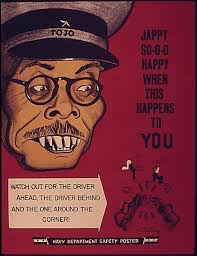


    Instead Kenneth Rexroth knew his Asian neighbors through thier poems. In this way, poetry and the translation of poetry is political because “craft” undermines the social lie, and reinforces our essential and collective humanity. Again, this is a spiritual belief, as potent as any anarchism. 

    Its significant that during the war Rexroth began translating Chinese and Japanese poetry into English. Its easy perhaps to say you love your neighbors—its more radical to prove you love your opponent. Its far more radical to build a seamless intellectual and aesthetic life around those beliefs. 

    Here are some examples of Rexroth’s translations from Japanese and Chinese that were supremely different from the American poetry that prevailed during the time:

    Tu Fu (712-770) 

    Winter Dawn

    The men and beasts of the zodiac 
    Have marched over us once more. 
    Green wine bottles and red lobster shells, 
    Both emptied, litter the table. 
    “Should auld acquaintance be forgot?” Each 
    Sits listening to his own thoughts, 
    And the sound of cars starting outside. 
    The birds in the eaves are restless, 
    Because of the noise and light. Soon now 
    In the winter dawn I will face 
    My fortieth year. Borne headlong 
    Towards the long shadows of sunset 
    By the headstrong, stubborn moments, 
    Life whirls past like drunken wildfire. 

     
    Tu Fu is considered by many to be the world’s greatest lyric poet and in Rexroth’s translation we see potent images and soulful discoveries that mark great lyrical poetry. In Tu Fu’s day, forty was old, and life was strenuous. Old friends have sat up all night, drinking, singing, sharing old stories. The stars of the zodiac are a reminder that life and its fortunes are beyond our control; moreover our lives are small when compared to great forces that march over us. Observations about our mortality and our apparent powerlessness in the face of nature are not confined to the ancients. In one of his own poems Rexroth writes an elegy to his second wife who died young: 

    Andree Rexroth (died October 1940)

    Now once more gray mottled buckeye branches 
    Explode their emerald stars, 
    And alders smoulder in a rosy smoke 
    Of innumerable buds. 
    I know that spring again is splendid 
    As ever, the hidden thrush 
    As sweetly tongued, the sun as vital — 
    But these are the forest trails we walked together, 
    These paths, ten years together. 
    We thought the years would last forever, 
    They are all gone now, the days 
    We thought would not come for us are here. 
    Bright trout poised in the current — 
    The raccoon’s track at the water’s edge — 
    A bittern booming in the distance — 
    Your ashes scattered on this mountain — 
    Moving seaward on this stream. 

    The simplicy and care evident in KR’s elegy for Andree are things he learned from the great poets of Asia. He’s both emotionally intelligent and clear of eye. Moreover, he believes poetry should speak to all and should not be consigned to the specialized “logos” of the academies. 

    Here’s another poem by Tu Fu, as translated by KR:

    Written on the Wall at Chang’s Hermitage

    It is Spring in the mountains. 
    I come alone seeking you. 
    The sound of chopping wood echoes 
    Between the silent peaks. 
    The streams are still icy. 
    There is snow on the trail. 
    At sunset I reach your grove 
    In the stony mountain pass. 
    You want nothing, although at night 
    You can see the aura of gold 
    And silver ore all around you. 
    You have learned to be gentle 
    As the mountain deer you have tamed. 
    The way back forgotten, hidden 
    Away, I become like you, 
    An empty boat, floating, adrift. 

    In ancient times it was not uncommon for poets to leave the world of c
    ivic affairs and choose solitude. Chang’s hermitage is nothing more than a lean to—a thing of sticks. Nature, the gods, the small things, mountain deer and overgrown paths are all composite elements of the human spirit—not things outside us but, when properly understood, parts of us. This is poetry as meditation: like Chang who is free of worldly things, Tu Fu becomes like an empty boat, floating, adrift. And implicit in this figure, is the freedom that goes with not caring where you might go. 

    Rexroth writes in one of his own poems from the forties of the losses young people endured in a century of wars:

    Between Two Wars

    Remember that breakfast one November —
    Cold black grapes smelling faintly
    Of the cork they were packed in,
    Hard rolls with hot, white flesh,
    And thick, honey sweetened chocolate?
    And the parties at night; the gin and the tangos?
    The torn hair nets, the lost cuff links?
    Where have they all gone to,
    The beautiful girls, the abandoned hours?
    They said we were lost, mad and immoral,
    And interfered with the plans of the management.
    And today, millions and millions, shut alive
    In the coffins of circumstance,
    Beat on the buried lids,
    Huddle in the cellars of ruins, and quarrel
    Over their own fragmented flesh.

    If the ancients suffered from the shortness of life and the confusing omens of heaven, the moderns suffer from urgencies caused by war, state control, and all the associated ruins of the spirit. If Rexroth teaches anything at all to the younger poets of the San Francisco Literary Renaissance its this keen and unrelenting sense that the poet’s business is to help people reclaim their flesh and their inner lives. To do less is to surrender to the coffins of circumstance. (Think cubicle.)

    Now onto our first assignment, due next Monday. 

    This is a creative writing assignment, one Rexroth would have loved. I want you to each write your own contemporary version of KR’s famous (some would say infamous) poem “Thou Shalt Not Kill”. I will not be grading you on your capacities as poets. But I expect you will look again at KR’s poem and attempt to write something that speaks to our age, the anguishes of your generation, the fears and horrors that you see all around. If you’re clever you will use some allusions as KR did—bring in some examples from the past, or ideas from books or moves if you like. In order to get a good “flow” with this assignment try to make it 4-5 pages. I have a feeling you will have fun. Get caffeinated! 


A Dream of the Enlightenment

Last night I dreamt about rational thought. I know my dream was about “sapere aude” since two small horses accompanied me into a book filled room; because I pushed my hand inside the sun and my companion (a dream companion, only half known) said: “You’re hand is in the sun and you’re not burning.” I wiggled my fingers inside a blazing star.

In Peter Gay’s excellent first volume on the Enlightenment he says:

“In 1784, when the Enlightenment had done most of its work, Kant defined it as man’s emergence from his self-imposed tutelage, and offered as its motto Sapere aude—“Dare to know”: take the risk of discovery, exercise the right of unfettered criticism, accept the loneliness of autonomy.1 Like the other philosophes—for Kant only articulated what the others had long suggested in their polemics—Kant saw the Enlightenment as man’s claim to be recognized as an adult, responsible being. It is the concord of the philosophes in staking this claim, as much as the claim itself, that makes the Enlightenment such a momentous event in the history of the Western mind.”

Excerpt From: Peter Gay. “Enlightenment Volume 1.” iBooks. https://itun.es/us/vuGqN.l

My two small horses were affectionate, like loyal dogs. I remember saying aloud to my half known dream pal that the horses were very dear. They were the soul itself, the composite soul, the Platonic soul. And there were lots of books. I felt alert, calm, open to surprise, and sufficiently adult and playful to have books and two horses with kind eyes. 

Poetry, Who is My Neighbor?

Rolfe Jacobson: The age of the great symphonies is over now.

Today I’m feeling the loss of several poets—Kizer, Kinnell, Strand…

One night, years ago, I ran as fast as I could with my guide dog, late for the opera,  and came hurtling toward the doors of Lincoln Center, and though they were already closed, an usher, wearing a long cape, saw us, and swung his door wide and we were admitted to the music.

May the departed poets be admitted to the great opera house.

**

Its a tenderness I sometimes feel. Half of the United States in poverty and I don’t know how else to say this—I feel it in my hands. The roots of my fingers ache because of injustice. Poverty is collectively rheumatic.

If I wanted anything it was the shy, unassuming dignity of my neighbors, my neighbors who are not like me.

I wanted my country to be more daring.

Tenderness, speaking on behalf of others.

**

“When Jesus was asked “[W]ho is my neighbour?” (Lk 10:29), his answer was: everyone. ”

Excerpt From: Johnson, Paul. “Jesus.” iBooks. https://itun.es/us/C8qKv.l


To My Future Biographer

I love reading biographies. In an strange way, for me,  it doesn’t matter very much who the book is about. The thing I like is narrative fidelity to oddness. If history cleans things up, or at least attempts to, the biographer keeps things messy. I like knowing that whatever passed for the erotic in Charles Dickens’ life caused him to be dishonest and often cruel, that he cultivated the public’s affection by inventing the literary reading. Dickens wanted to be liked though he was heartless; though he paraded sentimentality before his family and his readers in lieu of whatever it is we mean when we talk of self awareness. Charles Dickens had very little emotional intelligence. That’s “oddness” for sure. He was one of us.

If someone wrote my biography I think in all fairness the writer would have to say I wanted to be liked—wanted it too much—wanted it the way a blind child remains inside the man and still fingers the worry beads he played with in solitude. (His father had gone to the Middle East and came home from Beirut with beads he could finger and slide on a string, an accoutrement of loneliness.)

I wanted to be liked but like most of us, found ways to sabotage the hope. Life does this. The super ego is a hydra headed thing. You meant well when you placed lawn ornaments outside your house—they were inoffensive, or so you thought, a soap stone skunk and a daisy wheel. You didn’t know your next door neighbor dislikes chachkas, dislikes them the way some dislike dogs. You couldn’t have imagined he’d come by at night and kick them over. Your neighbor, an older man, no moist teenager. All you’d wanted was a little joy. You hadn’t thought a soap stone skunk would incite the old insurance man’s shadow—that Jungian nexus of subconscious anger and projection that’s largely unimpeachable if you spend time among human beings. The nasty neighbor saw too much of his own repressed pleasure in your innocuous skunk.

If someone wrote my biography I hope she’d say the setbacks didn’t set me back much. Wanting to be liked is only a tragic circumstance if you don’t possess irony. I hope she’d say I had plenty of irony. I could enjoy bad music when I had to. I could like people who didn’t share my core beliefs. I hope she’d say I climbed a security fence when I was young, in order to sit all night in a Greek temple. I was in a Lord Byron phase.

I hope she doesn’t say I loved animals more than people, though that’s a tempting thing.

Like Dickens I could be self-deceiving, though not in my personal relationships. And I don’t mean thievery. But while I profess to being an Episcopalian, I have sometimes supported military solutions to intractable problems. Thirteen years ago I thought the United States should invade Afghanistan. Now I see why the sermon on the mount doesn’t have footnotes. After 9/11 I tried to juggle my beliefs to fit circumstances. I pray for forgiveness. I try to learn from my transgressions.

I make up stupid songs; dance around the house until my wife has to retreat.

I struggle with my temper when I see gay people, transgendered people, people of color, foreigners, the disabled, women, you name it—when I see the marginalized being further marginalized.

In any event I wasn’t one of those blind people, who, having a tough childhood, grew up to pretend he wasn’t disabled.

Goodbye Tiresias

Sixteen years ago I wrote a memoir about growing up blind titled Planet of the Blind. The book continues to sell because it provides a rare glimpse into the complex and thrilling elements of beauty that the blind often perceive. Everyone realizes beauty but the idea that the blind are capable of being discerning esthetes remains vaguely foreign to most sighted people. After all, blindness is thought of as a complete blankness, a mineral state, something like the life of Ariel imprisoned inside a tree.

Then there’s this: beauty is in the eye of the beholder. If you’re eyes don’t work, what could you possibly know? A woman approached me once as I was entering the Museum of Modern Art in Manhattan. She saw my guide dog. She said: “Why go to a museum if you can’t see?”

I’ve learned to call these kinds of sighted questions, “blind envy” since the unguarded and moist subtext is “what does the blind man know that I don’t know?” If the sighted fear blindness, imagining its a mineral blank, they also suspect we’re onto something. The blind are Tiresias, the seer whose sight was stolen by the gods but was compensated with the gift of prophecy. These old figurations still haunt us—we’re either helpless or brilliant but whatever the case we’re probably deficient when it comes to beauty. Beauty is in the eye of the beholder. Its the eyes, stupid.

The sighted think music is OK for the blind. Its probably the right thing for us. What else would Stevie Wonder or Blind Lemon do with their lives? No joke. Throughout history the blind have been familiar as musical beggars. Pete Seeger’s recording of “The Blind Fiddler” is haunting and it sends a shiver down my back every time I hear it. We were beggars who played music long before we were recognized for having authentic talent, and in the old days, in the age of begging (which is not over in many corners of the globe) it was often thought that if we had any talent it was a miracle, a gift from God. “Blind Tom” the 19th century American slave child piano prodigy comes to mind. He performed as a “miracle” and while we like to think we’re beyond that, many talented blind people will tell you such a position is optimistic.

“How do you dream if you can’t see?” “How do you write about the world if you can’t see?” And most obviously, “How do you enjoy art if you can’t see?”

Pablo Picasso said: “I paint objects as I think them, not as I see them.” At the core of sighted ideas of blindness is the unrelenting misapprehension that blindness is an obstacle to thinking. Another way to say this is that thinking is seeing.

I’ve always like the community poets as opposed to the garret-only poets. Thinking is seeing but its also generosity. Generous thinking means a great deal to blind people who love art. If I can’t see a painting I can see it through my sighted friend’s eyes; moreover I can admire that friend’s poetry of description. Blind people do have friends. We go to the museum with them. Professor Georgina Kleege of the University of California at Berkeley, who is herself blind, and a writer and scholar on disability history and the arts, describes an experience she had with blind people at the Guggenheim Museum in New York:

Several years ago I introduced a group of visitors with low vision and blindness to an art work by the contemporary artist, Angela Bulloch. Her Firmamental Night Sky: Oculus.12 (2008) is composed of a round framework about twenty five feet in diameter, fitted with LEDs to simulate a night sky. The piece was installed in the glass dome of the Guggenheim Museum, some ninety feet above where we were standing. After I described the work, the group engaged in lively dialogue about other details and their own observations. A new visitor, who had been blind from birth, was quiet during this interaction, so eventually I turned to her and asked what she thought. She said, “I think this is the first time I’ve ever seen the night sky.”

Art is a field. We enter it and we’re both individually and collectively suffused with a renewed sense of the mystery of life. Art is not what we say it is. It’s always just beyond our narrations. And as any astronomer will tell you, no one has ever seen the night sky. We see versions. All sighted viewers are allowed to see versions. Your eyes permit you to see a subjective Platonic and imperfect model of something ineffable and delightfully strange.

When I was a little kid I said to my very Lutheran Finnish grandmother: “I wouldn’t want to be God.” “Why?” she asked. “Because I like surprises.” I said.

I love other people’s descriptions of art. They are, in no small measure, how I know the world. Sometimes when I get up close to a painting or photograph I can see elements of it. I love the tricks of perspective and light. But quite often I prefer my smart friend’s version. I like the poetry of others.

And someone hands you a description and you, in turn, make another ambient, turning, mobile sentence.

There’s no Tiresias involved.

Because I'm Blind I Hear Voices Below Ground

I hear the tree of the world under my shoes while walking my dog. You may hear it too, I claim no exception. Anyone can hear the tree. It has the leveling unconsciousness of attenuation and it sways below earth even in winter. Of course you hear it too. The light of day comes. Something infirm and sweet calls but you put it aside. There’s coffee to be made.

I claim no exception, but if blindness has an epistemology its this: I was long ago expelled from the sphere of the senses. I have half a sphere, a concave exaction. And a silver birch. Something to be proud of.