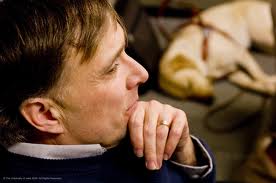
Self Interview, November 6

There are so many things I cannot say. My smallness is actually comforting. Sometimes as I meditate I grow smaller and smaller.

I love it when wise people laugh.

There is little else to go on.

**

I have a gizmo, looks like a cooking implement, an egg whisk, but its a kind of forked device, and you rub it over your scalp. The thing is so soothing. Now I’m trying to do this with my mind.
Its the inner fork I’m after.

Laughter.

**

Jesus said: A new command I give you: Love one another. As I have loved you, so you must love one another.

He should have added, share the scalp fork…

**

I love you little dog. I love you maple tree. I’m here now. I know what to worship, just this minute.

Don't Try This at Home

When doctors don’t know what you have–you know, “the thing” that bends you low, makes you sweat, causes you to entertain prayer, forces you to jump up and down like a mechanical toy from the 19th century, they call it an “idiopathic” condition.

Now of course there are different kinds of not knowing when it comes to the body. There’s not knowing and there’s not knowing. I hope this clears things up.

I have one of the commonest idiopathic ailments and you might have it too: I fucking itch all over. We’re not talking a minor league, Sunday school itch–the kind Huck Finn had when they told him not to scratch in church–that ain’t idiopathic my friend. We know why Huck was itchy. In fact studies have shown that ministers, preachers, priests, rabbis, zen masters, imams, and school teachers can cause itching by doing nothing more than moving their eyes. There’s a scientific term for this. Preachers who make you itch just by looking at you are known as ohptho-idio-paths, which is an elevated way of saying you break out in hives because they really don’t fucking like you.

There. I’ve dropped two “f bombs” in three paragraphs. But this reflects how serious idiopathic itching is. The doctor doesn’t know why you itch. You just boil all over with purgatorial pins and needles, with no part of your body unaffected.

You might be allergic to wine. Maybe food. Maybe air pollution. Agribusiness. Laundry detergent. But when you live without these things as an experiment, sequentially, sober, starving, hiding in the cellar, stinking so badly the dog won’t come near—nothing changes. You itch like an electrified sponge.

In my case the thing that most helps is an over the counter generic drug called loratadine–an antihistamine that’s commercially marketed as Claritin. When I take it the itching is vastly reduced. I stop tearing at my skin. I even get some sleep.

So why then did I spend last night “not taking it” and playing a game of mind over matter? Why did I lie on my bed of fire and send brain messages to every part of my straining body?

The answer? It’s the Lutheran Olympics. It’s a Scandinavian thing.

Brain to feet: “C’mon guys, can’t we all just get along?”

Feet to brain: “Captain, the engine room’s on fire and the door’s locked!”

Brain to hands: “Now just stop that! Grow up!”

Hands to brain: “Help! The tarantulas have escaped! They’re in our mittens!”

Other parts of the body have requested anonymity.

Please don’t try this. We are, as they say in TV land, trained professionals.

My Guide Dog is Licking the Floor

I'm in the airport sandwich shop. Guide dog Nira is doing her best imitation of an ant eater. If you're a long time guide dog user you tend to let these moments of crumb archiving simply occur rather than make a big deal out of it. It's OK. Three crumbs under the table and she's done. This is a good rule for life in general. Three crumbs. Everyone.

1972, Kenneth Rexroth and Eli Jacobson

In 1972 I took it into my head to end my life. It was easy: suicide was in the air. Today when people talk about the idealized late sixties and early seventies age of activism and protest, the “summer of love” or other trappings of youth culture they generally do so by way of nostalgia. But those were hard days and in my case daily life as a blind teen was becoming so difficult, in fact so preposterous, all I could do was self-medicate and starve.

No doctor or psychologist succeeded in diagnosing me. Anorexia was not widely understood in those days, and it was, in any case, thought to be a condition affecting girls.

They put meat on a string down my throat and took notes. I knew the obstreperous orderlies were Nazis. Knew the doctors were simpletons—knew the word itself described the children of simple people. I was 17 and in love with death and by Christ I wanted anyone who came in contact to see I was in love with it.

I loved Mick Jagger and John Lennon. Both were on heroin. Looking like you were at death’s door meant commercial success. Maybe if I looked that way someone would like me.

The gullible sad boy inside me was desperate for friends.

All that boy knew for sure was the adults were addled on booze and Nixon; the high school was a pipeline to prison; most of his teen acquaintances were cruel.

The gullible boy hadn’t read Kafka’s “Hunger Artist”. Hadn’t read Donald Justice’s poem “The Thin Man”:

I indulge myself
In rich refusals.
Nothing suffices.

I hone myself to
This edge. Asleep, I
Am a horizon.

When my “edge” became 98 pounds I started dreaming of life outside the body, dreams filled with clouds and snow. If there were people in my dreams I don’t remember them. Horizon dreams require no people—that’s one thing I learned from the unconscious in that bad year.

But awake I was easily deceived. I thought rock stars were tutelary angels. I imagined there were people in the world who would reach out to me, hold me close, cry out for my sake.

There were no such people.

My parents left me in the hospital, then drove home to drink whiskey.

The man in the bed next to mine spoke no English. He was from eastern Europe. He staggered from his bed, raised his gown, and proudly showed me his abdominal scar.

I remember thinking he’d achieved something.

One night I unplugged myself from the bed and wandered the halls of the hospital.

Strange to think a blind kid could walk the wards unnoticed but such things happen.

I heard weeping from many different rooms.

I heard nurses laughing from a stairwell where they’d gone to smoke.

My teenaged looted brain believed all sorrows were confirmatory.

Perhaps because I survived this period of my life the above awareness is why I hate Salinger’s Catcher in the Rye. Holden Caulfield is a liar. Anyone is a liar who thinks all sorrows are confirmatory. Or not a liar, but something more sinister, a projective delusionist.

Every day I meet my teen self. He’s still starving. I let him in.

Now the mystery is this: how did I get out of the Mick-Jagger delusional self-erasing, culturally confirmatory art of dying?

The psyche ain’t Hollywood. There was no single incident of transformation. And yet there was something “close” to that—a high school acquaintance had given me a book of poems by the poet Kenneth Rexroth. One day, holding the book an inch from my one “reading eye”—the eye I could use for close examination, though not for long, I read the poem “For Eli Jacobson” and began the tangled, slow, confused journey that all free thinkers must begin—that trip through the hard politics of our age, remembering the good souls who have come before, and yes, pledging our own merits, our own resolve to not give up. Here is Rexroth’s poem:

FOR ELI JACOBSON
December 1952

There are few of us now, soon
There will be none. We were comrades
Together, we believed we
Would see with our own eyes the new
World where man was no longer
Wolf to man, but men and women
Were all brothers and lovers
Together. We will not see it.
We will not see it, none of us.
It is farther off than we thought.
In our young days we believed
That as we grew old and fell
Out of rank, new recruits, young
And with the wisdom of youth,
Would take our places and they
Surely would grow old in the
Golden Age. They have not come.
They will not come. There are not
Many of us left. Once we
Marched in closed ranks, today each
Of us fights off the enemy,
A lonely isolated guerrilla.
All this has happened before,
Many times. It does not matter.
We were comrades together.
Life was good for us. It is
Good to be brave — nothing is
Better. Food tastes better. Wine
Is more brilliant. Girls are more
Beautiful. The sky is bluer
For the brave — for the brave and
Happy comrades and for the
Lonely brave retreating warriors.
You had a good life. Even all
Its sorrows and defeats and
Disillusionments were good,
Met with courage and a gay heart.
You are gone and we are that
Much more alone. We are one fewer,
Soon we shall be none. We know now
We have failed for a long time.
And we do not care. We few will
Remember as long as we can,
Our children may remember,
Some day the world will remember.
Then they will say, “They lived in
The days of the good comrades.
It must have been wonderful
To have been alive then, though it
Is very beautiful now.”
We will be remembered, all
Of us, always, by all men,
In the good days now so far away.
If the good days never come,
We will not know. We will not care.
Our lives were the best. We were the
Happiest men alive in our day.

For some, a minute comes when customary thought is broken up. The breaking can be like kindling or burglary—either way it promises a coming time. At 17 I hadn’t read much poetry.
I’d read George Orwell plenty and accordingly I could guess at some of Rexroth’s footprints.

I had to read beneath an electric blanket set on the highest number. My ribs were clear, my skin translucent. I was a lonely isolated guerrilla. I didn’t yet know I was fighting for disability rights. Had no idea I would some day live in the days of the “good comrades”—my friends in the disability movement—too many to name here. But how lucky I am to know them. To know even our defeats and disillusionments are good because we can envision the inclusive world of dignity and peace.

Well I don’t know. How can you tell others, how can any of us tell others, we were lifted by things as small and true as elegies? That in our despair we saw, somehow, against all the odds the sky is bluer for the brave?

In the good days now so far away we will have worldwide disability rights.

We will not starve for lack of of knowing our lives were the best.

A tenderness…

A tenderness sweeps past, aiming for someone,
By God I feel the air. I open my shirt—
Blind man on University Avenue
Baring his chest—

Hafez comes to mind:

“Why not become the one
Who lives with a full moon in each eye
That is always saying,

With that sweet moon
Language

What every other eye in this world
Is dying to
Hear?”

**

The eyes hear plenty.
But still, you have to close them now and then
And trust the air.

Its Raining in Syracuse: the Life I Always Wanted

Its raining in Syracuse, New York—a warm rain for late October, as if it arrived from Carolina by mistake. The world smells like dying leaves and smoky earth. Its a good day for anonymous lovers—we can at last see beauty in strangers across the rainy parking lots.

Yes, Whitman, I hear you in a moist half dream.

We are two fishes swimming in the sea together,
We are what locust blossoms are, we drop scent around lanes
mornings and evenings…

If you’re happy in rain you’re not fooled.

The political world—one kind of world—wants to dry me out.

Rain was always first. I remember the rains of boyhood. Alone in my grandmother’s Victorian ramshackle house…blind kid at a window. The house with its decidedly 19th century odors made manifest by rain…antimacassar of the dead…cedar wood boxes exhaling…I was lonely and thrilled.

I suspected early that rain was understandable by other means.

After a long life I wake up in rain guessing and guess.

This is the life I always wanted.

Rachmaninoff, Ding Dong, Blues…

“Good morning blues, blues how do you do?”

Blues got in this morning by bus—hung out formerly in archetypal paradise.

I’m doin’ alright, good morning, how are you?

Man says:

“Well I lay down last night, turnin’ from side to side…”

Blues says:

“Ding Dong. Here’s your coffin. Shall I leave it here on the porch?”

Sometimes you have to pull a hair or two, just to get your mind back.

Sometimes you need the self sufficient vigor of a Russian choir.

I mean, you need to be a one man choir.

Its all Rachmaninoff baby.

God never made no creatures without reason—I mean creatures, having no reason, who knows what God’s got going on?

Every one of my efforts to say something real goes the same way. But I got Rachmaninoff. Go on, bluesy sisters and brothers, click here:

http://https://www.youtube.com/watch?v=9mVKdE9ZEVE

In another minute…

In another minute I’m washing apples—lyric present—in another minute.
In another minute the rags and disguises of me are washed away
as though psyche was nothing more than sand—in another minute—
common sense, another, geese headed north,
words stacked like fire wood, another minute
I wash apples—and summer has grown old
but not like a thing one might touch—lyric present—
in another minute—summer struggling for breath.
My hymnal gleams out of reach on a high shelf.

Someone Has to Sing

Someone has to sing and it might as well be me. I twist my head off and put it in a tub. Rain falls on the head as it opens and closes my mouth. I guess you could say sometimes the journey visits you. The head, mine, sings I wasn’t satisfied with anything less than the heart. But the poor head—the heart is nowhere to be found. The head, mine, thinks of the heart walking barefoot in grass. And what orientation! The head sees Eastward. Perfectly. It sees that what happens in the blank sky is more than we can carry. He sings. He kicks his imaginary, remnant feet.

When I sing, occasionally, I’m expelled from the realm of the senses. This is when I know I’m calling for my life and yours.