Summer, song, brightness in air;
Sewing the flag of memory
After Winter’s battles…
Summer, song, brightness in air;
Sewing the flag of memory
After Winter’s battles…
All day I carried poetry books up and down the stairs helping friends move. The bindings of old anthologies were rough and asexual, a combination not found in nature. I thought of the poems inside those books as the clotted living hearts of oysters.
Later books stood cooling on the dark shelves. And I saw stray words fallen all over the house like flax.
I wanted to be useful so I wrote a poem–
It was about Orpheus and his birds
So every bird was in it
All the birds in the world
And every bird that has ever been
And you know
It was not beautiful but terribly alive
Like a god who assumes a single shape
In sudden wind.
Here in my neighborhood we have potters and poets. There are librarians too. And elephants that have been rescued from circuses. And there are no political prisoners; no one is held without trial or force fed. There are no drones for killing civilians; spies are encouraged to adopt an interest in horticulture. We are wholly naive over here. We don’t care if you say so. We can live with ourselves.
Living with ourselves means we understand human beings are each a multiple geography–inside we are many people. More confusing is our capacity for capricious and manifold states of mind. We know this. Sometimes when we wish to be brave we make cowardly choices and other times we’re surprisingly tough and daring. We can be dashing and lazy in the same hour. We keep our eyes on the general good which makes us honest but assures disappointment. The self is a problem, like a hanging bell.
We know the newspaper is fit only for wrapping fish. (Mallarme) We know our best thoughts are smooth as birds’ eggs.
A political life is brave if you’re an advocate for people without access to language. A political life is cowardly when lived in the service of those who control discourse. This is what came to mind for me when I heard David Gregory’s question to Glenn Greenwald on yesterday’s “Meet the Press”.
Mr. Gregory held the putative and prosecutorial stance of DC insiders when he asked Greenwald why he shouldn’t be prosecuted for aiding and abetting Edward Snowden who is on the run, having disclosed the true enormity of America’s domestic spying complex. Gregory defended his question as journalistic faites de affaires–an inadequate response given the circumstances. A translation of David Gregory’s question in vernacular would be: “isn’t telling the truth about government secrecy now a crime?”
I grew up as a provisional person–unwelcome in public schools, isolated, often demeaned by teachers and administrators. My point is that if you’ve been objectified and encouraged by rhetoric to feel abjection you learn to talk back. You also learn to view obfuscation as cowardice. Self-justifying to be sure. Up on its hind legs. But cowardice just the same. Putative and hostile questions are invariably the preferred vehicles for those whose legitimacy is in some doubt. In my case I remember a high school principal who had determined my blindness should prevent me from running with the track team. “You know you don’t belong, don’t you?” he said. (It was, I think, revealing that he had a large color photograph of Richard Nixon on the wall behind his desk.)
Disability teaches you to be suspicious of pejorative and accusatory rhetoric. When I heard Gregory’s question I heard the old voice of a minor league high school principal who was threatened by a blind runner.
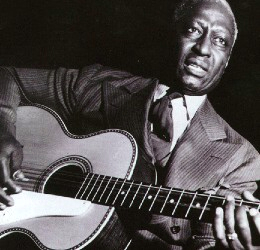
“Hey all you people, listen to me,
Don’t you ever try to build a home in Washington, DC:
It’s a bourgeois town…”
Mr.Huddie Ledbetter
I once got a phone call from a professor of engineering at a famous school who said he was assigning a problem to his students–they were to build a robotic guide dog. “What?” he wanted to know, “does a guide dog do?”
“Well,” I said, “the dogs are trained to guide blind people along the sidewalk and then stop at the curb–both the down curb and the up curb.”
“Check,” he said.
“They’re also trained to stop for stairs.”
“Check.”
“In addition,” I said, “they must account for the combined width of their dog-human team–they won’t try to squeeze through a narrow passage just because they might navigate it if they were on their own. They stop and search for another way.”
“Check,” he said. I could tell he was feeling pretty good about his chances. He probably had some experience with the Mars rover program.
“But here’s the kicker,” I said. “Guide dogs are trained in a thing called ‘intelligent disobedience’. When a blind person thinks its safe to cross the street he or she issues the ‘forward’ command. And if the dog thinks its unsafe it won’t move. It may even back up.”
“Oh,” he said. “Oh.” He was silent for a moment then he said: “I guess we’ll have to come up with something else.”
How do you hardwire a dog’s imagination? Or her remarkable intuition and judgment?
Wind in the trees brother. Only a few birds sing. Time is slow and the dogs lie down. I’m half in love with careful fences and an apple tree.
Worked all day. Built a church in mind. Passing neighbors on the street I could afford to smile.
Words don’t really get you places but their intentions do. In this way, words are sails.
I don’t know how to explain it, but shortly after my first walk with Corky I developed a dog muse. The voice wasn’t a cartoonish broadcast from the mind of my dog; not a stylized and sentimental thing. The dog muse was more compelling. As we walked through slippery valleys in the East Village I picked up radio sparks from the DM.
“You’re doing alright, you’re really doing alright.” Or: “See how we’re moving wide here? There’s something ahead we can avert with full on gracefulness.”
Having been a blind kid in rural New Hampshire who grew up on half-assed contempt I felt lifted, vivified. Corky and I had a combinative voice. The dog muse didn’t care about my spindly depressions and sullen retreats in dark rooms.
“Look how good you are now, crossing Brooklyn Bridge on a whim, going where you’ve always wanted to go.”
Corky and I would turn our shoulders moving rightward, crossing MacDougal Street and the DM would say: “Feel the pavement, its like old boards left out in summer in a marshy place, just for walking.”
Quiet late afternoon first day of summer, blond half-life of the mind decaying in the soft minutes, smooth electrolysis of easy thoughts. My twin brother died at birth and sometimes I swear he’s with me, breathing perhaps inside me. We are alive like no one who’s lived before. “If you are afraid you’re not living,” he tells me. Solstice, bees at our trellis, and the house so quiet now.
 Posted with Blogsy
 Planet of the Blind