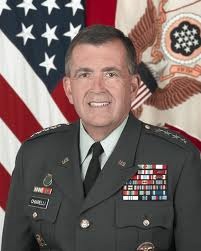
Obama Advisor Mistakes General for Waiter


Four Star General Peter Chiarelli


Four-star Army Gen. Peter Chiarelli — the number two general in the U.S. army — says he is absolutely not offended that Obama adviser Valerie Jarrett mistook him for a waiter at a fancy Washington dinner this week and asked him for a glass of wine.

It could have happened to anybody, Chiarelli tells CNN.

See:

http://articles.cnn.com/2011-02-05/politics/army.general_1_chiarelli-valerie-jarrett-wine?_s=PM:POLITICS

Disability in the Post-Physical World


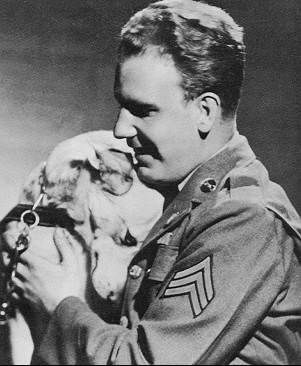
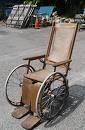
Rocking Chair Image of soldier with guide dog antique wheelchair


Button Button, Who’s Got the Button?

I once heard an engineer from IBM tell a conference of disability service providers that assistive technology would make disabilities disappear. This was in the late 80’s when the pc was still new and cool (as opposed to tricked out and cool). The engineer had all these examples of how computers could be tailored for people with disabilities. He was swept up in the poetry of his cause. Pointers, sticky keys, speech synthesizers, Braille keyboards—these he said would open the doors to employment and a more receptive culture for PWDs. When it came time for Q & A I ruined the whole thing by asking him what happens if the employer won’t buy the assistive technology? He had no answer for that. He mumbled something about not really understanding the question and beat it off the stage. Of course my point was that disability is a social construction and not a technical problem—that technology fits into the dynamics of disability as a marked category in the assignment of cultural values.

That engineer was a good man. He was longing for the post-physical world. He probably loved that Star Trek episode where the disembodied brain runs the entire space ship from atop a pedestal. 

Star Trek Brain  

Star Trek image of disembodied brain running the whole show


Of course the image above evokes Bill Clinton’s remark: “If you see a turtle on a fence post you can bet he didn’t get there by accident.”


Post-Physicality and the Millennial Imagination

Longing for the post-physical world is nothing new. The belief in Shamanism is post-physical imagination. In the Finnish Kalevala Steadfast Old Vainamoinen (poet and magician) journeys under the earth in search of magic words. Shamans travel far off in spiritual dimensions, leaving their bodies behind to be guarded by sacred animals. The anthropologist Victor Turner calls such people “liminal figures” because they step over the threshold of the culture and travel to the unknown.


Vainamoinen R.W. Ekman

Image of Vainamoinen playing his pike bone harp

In Kalevala Old Vainamoinen solves problems (his boat gets stuck on a rock) by playing a harp made from the jawbone of a fish. As he plays (and sings) the animals of the forest come to listen and finally the disembodied spirits of the sky appear. This is the Orphic imagination. Playing the harp Vainamoinen surpasses mere physicality and configures the mimetic enactment of a post-physical aporia—all contradictions of the body are resolved in reveries of out of the body travel.

This instant from Kalevala represents the poetry of the technical imagination, for Vainamoinen builds and then plays his harp. It is a dream of the body “improved”.

In our time the body-improved is the source of much intellectual and social discord. The pike bone harp is not so easily played. What does the improvement of the body mean? Who is in charge of the improvements? As Gore Vidal once famously remarked: “Politics is knowing who’s paying for your lunch.” Who is paying for the improvements? Who directs them? Do you get a “say” in the direction of your physicality?  How do we understand the social construction of the post-physical body?

As Donna Haraway famously writes we are now determinedly living in the post-physical body, a condition she calls  cyborgian. Post-industrial human beings are no no longer mere organisms. Logically enough this hybridization is not free of the territories of money and politics:

“By the late twentieth century, our time, a mythic time, we are all chimeras, theorized and fabricated hybrids of machine and organism; in short, we are cyborgs. This cyborg is our ontology; it gives us our politics. The cyborg is a condensed image of both imagination and material reality, the two joined centres structuring any possibility of historical transformation. In the traditions of ‘Western’ science and politics–the tradition of racist, male-dominant capitalism; the tradition of progress; the tradition of the appropriation of nature as resource for the productions of culture; the tradition of reproduction of the self from the reflections of the other – the relation between organism and machine has been a border war. The stakes in the border war have been the territories of production, reproduction, and imagination.” http://www.stanford.edu/dept/HPS/Haraway/CyborgManifesto.html


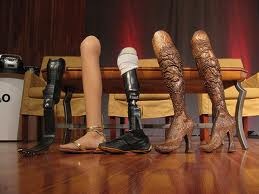
Star Trek Borg Image Aimee Mullins with racing prosthesis Aimee Mullins leg collection


The post-physical body is a confluence of material reality and imagination but it is also co-determined by or within politics. The production of material culture is therefore still a matter of 19th century economics. Accordingly the cyborigian person with a disability is a hostage of sorts. We are, it seems, living in the age of the promissory “improved” body—yet that body is still stuck between the territories of production (politics), reproduction (material expense) and imagination (compulsory normativity).

As of this writing the GOP is endeavoring to take apart the health care programs and social services that provide assistance to children with disabilities, the elderly, and veterans. My argument is that the imagination necessary to develop the post-physical body is at hand and it is simultaneously imperiled by 19th century economics. And that of course is where the word “disability” comes from.


S.K.


NPR and PBS under attack


CREDO Action | more than a network. a movement.


Tell Congress: Save NPR and PBS

Don’t let Republicans pull the plug on NPR and PBS.

Clicking here will automatically add your name to this petition to Congress:

"Fully fund NPR and defend public service media."

Sign the
petition!

We’re only a few weeks into the 112th Congress, and Republicans are already attempting to pull the plug on public media.

In a budget proposal made public on Wednesday, House Republicans announced plans to zero out all funding for the Corporation for Public Broadcasting (CPB), the nonprofit responsible for funding public media including NPR, PBS, Pacifica and more.

If the Republicans are successful, it would be a tremendous blow to the entire public interest media sector.

We cannot allow Republicans to destroy public media.

Tell Congress: Fully fund NPR and defend public service media. Click here to automatically sign the petition.

Republicans are disingenuously claiming that they need to cut funding for public media because of budgetary constraints. But what they fail to highlight is that national public broadcasting is remarkably cost effective, providing local news and information, free of charge, for millions of viewers while only receiving about .0001% of the federal budget.1

More to the point, it’s nearly impossible to put a price tag on the actual value of public broadcasting.

Public media is one of the last bulwarks against the corporate media where the combination of consolidation and profit-motive has long since shifted the focused to infotainment rather than substantive news. In many rural and less affluent communities, broadcasters rely on federal funding to provide the only available high-quality news and public affairs programming.

Without public media, corporate media monopolies would increase their already large control of what we see on television, hear on the radio or read in the newspaper.

This outcome should deeply worry all of us. The increased accumulation and consolidation of corporate power is a threat to our democracy. And nowhere is this more evident than in our media.

At a time when media consolidation is shrinking the number of perspectives we have access to over the airwaves and when newsrooms are shrinking, we need more diversity in our media not less. And we simply cannot afford to lose what public media brings to the table.

Tell Congress: Fully fund NPR and defend public service media. Click here to automatically sign the petition.

Conservatives have longed for any opportunity to defund NPR, PBS and other public media. And with Speaker Boehner wielding the gavel, it looks like they may finally get their wish.

Don’t let Congress pull the plug on NPR and PBS! Tell them reject cuts to public broadcasting. Click here to automatically sign the petition.

Thank you for defending public service media.

Matt Lockshin, Campaign Manager
CREDO Action from Working Assets

P.S. It’s been said that NPR receives 98% of its funding from non-government sources. But that’s highly misleading. The government — through the Center for Public Broadcasting — provides a significant source of funding for NPR and NPR member stations.

Notes:
1"Public broadcasting is critical to our democracy," Rep. Earl Blumenaur, The Hill’s Congress Blog, Jan. 20, 2011.


Facebook

Share on Facebook
Post to your feed wall

Twitter

Tweet this
Post to Twitter


© 2011 CREDO. All rights reserved. Questions? Send us an e-mail or write us at: 101 Market Street, Suite 700, San Francisco, CA 94105.

This is a message from CREDO / Working Assets. To change your email address or update your contact info, please visit: http://act.credoaction.com/subscrip/coa.html?id=16482-2810020-F8C13Mx

To remove yourself (judith abrams) from this list, please visit our subscription management page at: http://act.credoaction.com/s?i=16482-2810020-F8C13Mx

New Hampshire, 1959

IMG00109-20100820-1520

We’re eating dinner when the siren goes off.

Then the doorbell rings.

The horse barn is on fire! Neighbors are at the door!

Alarms wail and automobiles start up.

We rush into the weird twilight. My father says he can see the glow of the fire above the trees.

Our neighbors, the whole neighborhood, elders and children, all are piling into cars. The horse barn is on fire and the town is on the move. This is New Hampshire. Not everyone has television. Eisenhower is President. People still gather for things. When a local fraternity boy tries to become the world’s record holder for grease pole climbing hundreds turn out to watch him scramble up a pole and then descend in a series of ungainly leaps. He does this for days. Families spread out blankets, set up lawn chairs. The grease pole boy is a local wonder.

But fires are always preferred. Our immediate neighbors love fire gazing. They’ve studied the town’s alarm patterns and know where every fire is ccurring. They jump into their station wagon and roar out of the driveway.

My parents cluck their tongues. They believe that watching a scene of private or public misfortune is lowbrow behavior.

“It’s bad to gawk at other people’s tragedies,” my mother says. “Wouldn’t it be terrible if our house was on fire and strangers came to watch our possessions go up in smoke?”

I have tried more than once to convince her that we should follow the neighbor’s example and see a fire as it’s happening. My mother never bends and I’m forced to hear about the drama of burning houses from the neighbor kids. One boy who is my age tells me about a family that won’t come out of their burning house. They lean from the shattered windows and throw small possessions into the night while firemen shout at them to come down. Dolls and a rocking horse fly from an upstairs room. Dresses float like parachutes. The fire is in the back of the house and the inhabitants feel no pressure to escape. They’re New Englanders. No one tells anyone what to do. In New Hampshire no one has any authority. And so of course the firemen and the local sheriff strut and shout. They threaten to carry the family out by force. And a man’s hat sails out into the spotlight. And a pair of loafers. The neighbor kid saw all of this with his family. They sat in their car and drank Cokes and watched as the fire men carry the children out.

I long to be a part of the firewatcher’s brigade. Even though I can’t see a damned thing! I want to soak up the high spirits of the watchers and the certain drama.

Now the university’s horse barns are on fire and my mother decides that we ought to go and see what’s happening. Obviously no family is involved in this spectacle. And my mother loves animals. She is also quietly superstitious. She believes in sympathetic magic. Maybe she thinks that wishful thinking on her part will save the horses and that standing nearby is essential for this magic to work. Whatever the case, we’re suddenly in our black Rambler station wagon and following the neighbors down a dust choked access road that leads to the agriculture school. The flames are visible for miles. We must park in the weeds and walk through a pasture to get near the action.

I can hear the popping of the barn’s galvanized roof. And the shriek of horses is unlike anything I’ve ever heard before. Their cries are sharp as the edges of stones and the larger the animal the more terrible the cry. We stand in the dark listening to the horses in terror and the tin roofs exploding. My mother says that fire bursts like yellow leaves from a row of windows. Was she narrating for me because I couldn’t see? No! All the adults describe what’s going on, as if they were reporting for the radio news. The involuntary comfort of declaration comes over a crowd witnessing a scene of violence.

I hear there’s a fireman with a roped horse. They are rushing from a fiery door.

Someone says that was the last horse. All the horses are safe now.

A sonic rush of exploding chaff stops everyone for an instant. A silo has burst into flame.

I’m not sure how any of the spectators are getting their information but someone announces that the firemen can’t get the bull out of an adjacent barn. He’s too big.

A little girl I scarcely know starts crying. She can picture just as I can the horror of being burned alive.

I imagine the bull’s eyes as he stands in the flames.

Wait! They’ve gotten the bull out! A cheer goes up from the onlookers. The bull comes out with total dispassion. “Like an old car,” someone says. And the bull stands in tall grass while the barn blazes behind him and puts his head down as if to graze.

And there are scraps and bits of other sounds. Men cry out. There’s a whirring of generators.

A stranger tells my father that the drama of a fire is often very fast.

My father, always a prankster, says suddenly, “Look! That cow has only one udder!”

My mother tells him to be quiet.

“What’s an udder?” I ask.


S.K.
Peloponnese

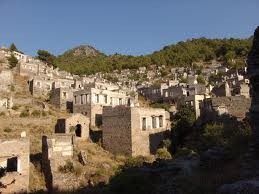
Greek Village

It was a village that smelled of baking bread but I can’t remember where—

A day’s bus ride from the capitol

& only a decade since their civil war…

American college kids

Took a cigarette break in the square.

They didn’t know a thing about the local graves.

I heard old men talking softly in the café.

I have always liked the way the Greeks

Can break your heart by means of whispers.


S.K.

Window in Florida

Window

I was sad this morning remembering my parents and their decency–their respective losses. I sat beside the telephone waiting for a call in my overheated room. I put my face against the sun flecked window. I cried. In the damp house of my spirit with my seeing-eye dog looking on I felt like I was nothing more than a shadow on a silver knife. I opened my eyes to the glass which was white and flowing and charged with sun. My tongue, my debtor, my companion, had private words then.


S.K.

Government Publishes Veterans Homelessness Report


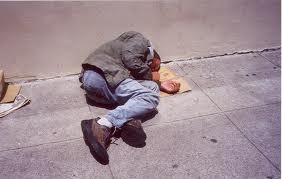
Homeless Man Sleeping on Sidewalk

From HUD and VA News Releases


Thu, 10 Feb 2011 12:29:00 -0600

Government Publishes Veterans Homelessness Report


WASHINGTON, Feb. 10, 2011 – The Housing and Urban Development and Veterans Affairs departments today published what officials say is the most authoritative analysis yet of the extent and nature of homelessness among military veterans.

According to HUD and VA’s assessment, nearly 76,000 veterans were homeless on a given night in 2009, while roughly 136,000 veterans spent at least one night in a shelter during that year.

The assessment, part of President Barack Obama’s plan to prevent and end homelessness in America, is based on an annual report HUD provides to Congress and explores in greater depth the demographics of veterans who are homeless, how veterans compare to others who are homeless, and how veterans access and use the nation’s homeless response system.

"This report offers a much clearer picture about what it means to be a veteran living on our streets or in our shelters," HUD Secretary Shaun Donovan said. "Understanding the nature and scope of veteran homelessness is critical to meeting President Obama’s goal of ending veterans’ homelessness within five years."

"With our federal, state and community partners working together, more veterans are moving into safe housing," Secretary of Veterans Affairs Eric K. Shinseki said. "But we’re not done yet.

"Providing assistance in mental health, substance abuse treatment, education and employment goes hand-in-hand with preventive steps and permanent supportive housing," Shinseki continued. "We continue to work towards our goal of finding every veteran safe housing and access to needed services."

Obama announced in June the nation’s first comprehensive strategy to prevent and end homelessness, including a focus on homeless veterans. The report, Opening Doors: Federal Strategic Plan to Prevent and End Homelessness, puts the country on a path to end veterans’ and chronic homelessness by 2015; and to ending homelessness among children and families by 2020.

Key findings of the report include:

— More than 3,000 cities and counties reported 75,609 homeless veterans on a single night in January of 2009; 57 percent were staying in an emergency shelter or transitional housing program while the remaining 43 percent were unsheltered. Veterans represent about 12 percent of all homeless people counted nationwide during the 2009 assessment;

— During a 12-month period in 2009, about 136,000 veterans — or about 1 in every 168 veterans — spent at least one night in an emergency shelter or transitional housing program. The vast majority of sheltered homeless veterans — 96 percent — experienced homelessness alone. Four percent of homeless veterans were found to be part of a family. Sheltered homeless veterans are most often single white men between the ages of 31 and 50 and living with a disability;

— Veterans are 50 percent more likely to become homeless compared to all Americans and the risk is even greater among veterans living in poverty and poor minority veterans. HUD and VA examined the likelihood of becoming homeless among American veterans with particular demographic characteristics and found that during 2009, twice as many poor Hispanic veterans used a shelter compared with poor non-Hispanic veterans. African American veterans in poverty had similar rates of homelessness;

— Most veterans who used emergency shelter stayed for only brief periods. One-third stayed in a shelter for less than a week; 61 percent used a shelter for less than a month; and 84 percent stayed for less than three months. The report also concluded that veterans remained in shelters longer than did non-veterans;

— Nearly half of homeless veterans were in California, Texas, New York and Florida while only 28 percent of all veterans were located in those states;

— Sheltered homeless veterans are far more likely to be alone rather than be part of a family household; 96 percent of veterans are individuals compared to 66 percent in the overall homeless population.

HUD and VA are working to administer a joint program targeting homeless veterans. Through the HUD-Veterans Affairs Supportive Housing Program, HUD provides rental assistance for homeless veterans while VA offers case management and clinical services.

HUD last month awarded $1.4 billion to keep nearly 7,000 local homeless assistance programs operating. The Department also allocated $1.5 billion through its new Homeless Prevention and Rapid Re-housing Program. Made possible through the American Recovery and Reinvestment Act of 2009, HPRP is intended to prevent persons from falling into homelessness or to rapidly re-house them if they do.

To date, more than 750,000 people, including more than 15,000 veterans, have been assisted through HPRP.

Related Sites:
U.S. Department of Housing and Urban Development
U.S. Department of Veterans Affairs
Interagency Council on Homelessness
Veteran Homelessness Report to Congress
Federal Strategic Plan to Prevent and End Homelessness


Defense Department News Through Facebook On American Forces Press Service’s Facebook page, you can post comments and share news, photos and videos. Go to http://www.facebook.com/pages/American-Forces-Press-Service/65137437532 or search for American Forces Press Service at Facebook.com.

Update your subscriptions, modify your password or e-mail address, or stop subscriptions at any time by clicking on your ‘User Profile’ page at https://service.govdelivery.com/service/user.html?code=USDOD. You will need to use your e-mail address to log in. If you have questions or problems with the subscription service, please e-mail support@govdelivery.com.

Have another inquiry? Visit the online FAQ at http://www.defense.gov/landing/questions.aspx for up-to-date information.

Get the help you, your family, and fellow servicemembers need, when you need it. Visit www.WarriorCare.mil to learn more.

Check out the National Resource Directory at www.nationalresourcedirectory.org, a new web-based resource for wounded, ill and injured service members, veterans, their families, fa
milies of the fallen and tho
se who support them from the Departments of Defense, Labor, and Veterans Affairs.

This service is provided to you at no charge by U.S. Department of Defense. Visit us on the web at http://www.defense.gov/.

Urgent Message from the Wounded Warrior Project

— Administration Misses Deadline for Implementing Support for Caregivers of Wounded Warriors; Nation’s Military Families Still Waiting for Promised Help —
The Department of Veterans Affairs submitted its plan for providing assistance to the family caregivers of severely wounded veterans as required under the Caregivers and Veterans Omnibus Health Services Act. While it is technically the next step in what has become a long process to provide the comprehensive services required under the law signed by President Obama in May 2010, it has brought help no closer to the veterans and caregivers who so desperately need it.
The following is a statement issued today by Wounded Warrior Project Executive Director Steven Nardizzi.
After nearly a year of waiting for the Department of Veterans Affairs to begin providing the comprehensive services required under the Caregivers and Veterans Omnibus Health Services Act, our nation’s wounded veterans and their families received the news yesterday that they must wait longer.
The VA plan submitted to the Committees on Veterans’ Affairs not only establishes no date for when these severely injured veterans and their caregivers will begin receiving the assistance and training they have been promised, but its unreasonably restrictive criteria also would effectively disqualify thousands of caregivers who are clearly covered under the law from receiving needed assistance.
While I applaud the continued commitment the Administration has made to support our military members and their families, we must do more than promise—we must deliver.
If bureaucracy and red tape are delaying help for the families of these brave men and women, that’s inexcusable. If the program is facing budget cuts, that’s even worse. We cannot and, in good conscience, should not balance the budget on the backs of those whom we’ve asked to sacrifice so much for our country.
On Monday, February 14, join us in an outreach movement to send a message to the White House:

  • Tweet your demand for support for wounded warriors.
  • Donate your Facebook status for the day.
  • Visit woundedwarriorproject.org for instructions and additional information.

Stay tuned for updates on this important legislative issue.

Steven Nardizzi, Signature
Steven Nardizzi
Executive Director
Wounded Warrior Project®