NPR: Unfit to Write About Disability

There’s a piece by Chana Joffee-Walt on NPR’s website entitled “Unfit for Work: the Startling Rise of Disability in America” which is so ill informed about its subject it reminds me of one of those Ronald Reagan stump speeches. Driven by anecdote rather than cultural analysis, her thesis is simple: the number of unemployed Americans receiving disability benefits has skyrocketed over the past twenty years. She intimates without fully declaring it, that there’s a vast social “scam” taking place–in the absence of good middle class jobs, and following the “end welfare as we know it” enterprise, poor people simply decline into aches and pains, thereby getting themselves declared unfit for work.

Alas, Joffee-Walt hasn’t done her homework, a matter that may be inapparent to many of NPR’s readers, just as Reagan’s audiences were unaware that behind the curtain the Gipper believed “facts were stupid things” and was untroubled by any and all of the misrepresentations of social programs that propelled his candidacy for president. Such arguments depend on pathos rather than facts. Joffee-Walt fails to address the biggest fact in the room, that disability is a social construction even more than a medical category, and in turn the artificial architectural and physical constraints marshaled against people with disabilities are both products of history and the industrial revolution. One wishes she had bothered to read Lennard J. Davis’ essay “Constructing Normalcy: The Bell Curve, the Novel, and the Invention of the Disabled Body in the Nineteenth Century”. Disability is entirely economic and has been so since the move to industrial models of labor. Those who cannot work in the factory were labeled “disabled” and that model of human economic utility largely continues to this day. Reasonable accommodations are the solution for workers whose physical capacities decline but as any seasoned person with a disability who has managed to remain in the workforce knows, obtaining accommodations is often so difficult, so humiliating, so Kafka-esque, most people give up.

70% of the blind remain unemployed in the United States, many of whom might well be able to work with the proper accommodations but employers don’t want to provide accommodations fearing the expense, though in point of fact most workplace accommodations are relatively inexpensive. Think of a laborer, someone who is required to lift boxes. He suffers a ruptured disc. He can’t lift boxes. Perhaps he could be retrained to work with software. Most businesses resist this kind of accommodation, preferring medical and social determinations that are no more sophisticated than those the Victorians had.

Another way to say this is that a nation that believes in work is also a nation that believes in accommodations. Joffee-Waitt misses this dynamic and ongoing dialectic and fails to illuminate the true nature of disability and joblessness. 

~~~~~~~~~~~~~~~~~~~~~~~~~~~
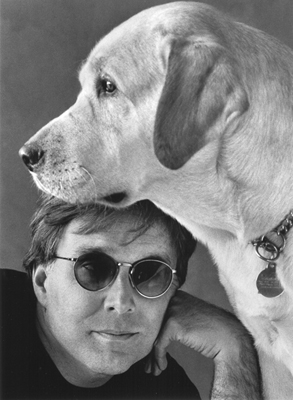
Professor Stephen Kuusisto is the author of Eavesdropping: A Memoir of Blindness and Listening” and the acclaimed memoir Planet of the Blind, a New York Times “Notable Book of the Year”. His second collection of poems from Copper Canyon Press, “Letters to Borges has just been released. He is currently working on a book tentatively titled What a Dog Can Do. Steve speaks widely on diversity, disability, education, and public policy. www.stephenkuusisto.com, www.planet-of-the-blind.com
United Airlines Casually Violates Air Carrier Access Act, Blames Blind Man

Yesterday while flying United Airlines Flight 882 from Portland, OR to Chicago, I was given an inaccessible seat. It was the middle seat in a three seat row, where, under the seats in front of me I discovered a set of metal stanchions, which, in turn made it impossible for me to get my guide dog safely underneath the seat–hence, out of the foot space shared with other passengers. Then, the airline stuck two people on either side of me.They asked me to get up so a non-English speaking passenger could get all the way in to the window seat. I complained and said they should reseat me where I could actually sit. They in turn looked at me as if I might be some kind of half human cockroach. The airplane was a Boeing 757 which has bulkhead seats in an exit row. People with disabilities are barred from sitting in an exit row. First class was full. Under the Air Carrier Access Act, my right to fly safely and in comfort is not up for grabs. But what really bothers me, even a day later was the easy dismissal of my situation by the United flight attendants. I learned from a fellow passenger that the crew even managed to gossip about me–was I some kind of cranky man? United, your record in this area has not been good for a long time. You embarrassed yourselves yesterday. But you had a full flight, didn’t you? 

Disability Rights and Education in the Election Season

The latest report from the Department of Education on disability rights enforcement and guarantees is out and can be read in an accessible pdf at:

http://www2.ed.gov/documents/news/section-504.pdf


In this election season it’s useful to remember the infamous moment during the primaries when Texas governor Rick Perry announced that if he became president “three departments of government would be gone of the first day”. Of course everyone remembers that he couldn’t remember the three he was planning to eliminate, a gaffe that ruined his campaign, but how many remember that “Education” was a department he did remember? My point (such as it is) is that MItt Romney if elected will pick up that cudgel despite his declaration during Wednesday’s debate that he cares about education and about children with disabilities. Don’t you believe it! 

The Morning Coffee Bioethics Blues

It’s early and this promises to be a long day. I have to fly to New York tonight where I’ll be speaking in the morning to high school guidance counselors about the honors program I direct at Syracuse University. It’s early though. I can still pack, walk my dogs, finish some business. The mind enjoys its small compensations. 


The mind likes coffee. The mind does not like contemporary bioethicists who subborn people with disabilities into categories of further abjection. Peter Singer and his posse. 

If you parse the thinking of the Singerites down to its minimalist acorn their thinking is that medicine is aimed at curing people, not assuring people the most dignified and diverse lives possible. Why am i thinking about this? It’s early and this promises to be a long day. I will likely be treated poorly by New York City taxi drivers, maybe airline personnel. My disability marks me as a sub-caste and there’s no getting around it. And American academics hold the same prejudices. The mind likes coffee. 


Last night I was explaining to my stepson how metaphorical thinking contributes to human manners of inequality. I told him that we think imagination is a terrific moral force, but in fact it’s equally primitive and awful–a thought he hadn’t quite allowed himself. My point was that symbolic thinking will kill us if we don’t master it. Just call me Ernst Cassirer. 


The utilitarian idea that good lives are those that are flawless, or can be made so is tied to the industrial revolution–good lives are lives that can be devoted to the factories. 


The mind likes coffee. 


Clearly I haven’t had enough this morning. 


Of Peter Singer:


“In an interview with The Independent newspaper in England, Singer said he would definitely kill a disabled newborn baby.

He indicated he would do so “if that was in the best interests of the baby and of the family as a whole.”

http://www.lifenews.com/2006/09/12/bio-1766/


Watch Out! A Blind Man Has Entered Your Shop!

I apologize for bringing my guide dog into your store. I apologize for needing your help. And I’m sorry you must point me in the right direction. I understand your day is precious. I know you were having a perfect meditation before I entered your establishment–you were navigating the circle within the circle, the dances of the gods known only to Proclus. And now, here I am, the walking manifestation of decay, a perilous figure from a lost battle. 

So much happens in the hubbub of the city, bells and parades, and then a blind man walks into your shop. You poor sonofabitch! Watch out! It might be catching! 

Yes, you should think of me as the soft breeze of calamity. 

Meanwhile, what am I up to? I want to buy a book at Barnes & Noble, but I’m told I can’t come in. I want to buy some batteries at the computer store on 6th avenue and Lo! I’m told I can’t come in. I want to take a taxi, and you guessed it, I can’t get in. 

Let’s review: books, batteries, and a business meeting. Not bad for a man who symbolizes malevolent fate! 


Thinking About Disability, Just After Lunch

“In most circumstances, disease is not an inevitable outcome of a single event occurring at a point in time but generally a probabilistic result of many events, each impinging on the organism at separate times and each producing its own sequence of biological reactions. The sum total of these events produces sufficient discomfort to the person to be recognized as illness….


Although the ultimate tissue reaction that has clinical expression may be the same in different persons, suggesting a uniform illness and, by extension, a disease entity in its own right, each person nevertheless probably has a unique and separate illness by virtue of the probability that no one else has the same combination and permutation of antecedents and their time relations. In this sense, every disease consists of multiple diseases; in this sense, too, there are no diseases but only sick people.”


W. Jeffrey Fessel, MD


In this sense too, there are no disabilities but only physical life in relation to time. Taken this way disability is simply an analogy to the multiple dynamics of entropy, for which, at present there are no solutions.


Mitt Romney's Big Lie and Why People with Disabilities Need to Know

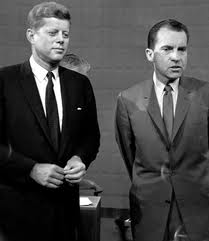
  JFK and Nixon at Debate


The big lie of this campaign has emerged and it’s this: “The American corporate tax rate is the highest in the world.”  This has been a central talking point of GOP presidential candidates since 2008 but now, in Mitt Romney’s hands it’s become the only talking point. Forget that it’s not true: it’s effective, much as JFK’s lie that the US was facing a “missile gap” with the Soviet Union was hard to beat in 1960. Lying in political circles only works when people already feel fear. (FDR’s famous line: “The only thing we have to fear is fear itself.” was an appeal to voters to resist the fear mongering of Wall Street and people shouldn’t forget it.) In a weak economy people certainly feel afraid. The corporate tax rate lie is this year’s missile gap.


Back in 2008 Igor Greenwald published an excellent article in SmartMoney entitled: “High Corporate Tax Rate is Misleading” and since nothing about corporate taxes has changed under Obama, it’s worth quoting from. Among other things Greenwald points out:


If you say something long enough and loud enough, there's every chance people will come to believe it's true, especially if your opponents tire of rebuttals.

This time-honored political strategy has been working overtime of late, as Republican presidential hopefuls romance the richer Florida retirees with appeals for cuts in corporate taxes.

You may have heard: U.S. corporations face one of the highest income tax rates in the world, though the mention of "rate" is often enough excised, so that what comes through is the assertion that corporations pay too much in taxes. This is simply untrue if your basis for comparison is the developed world. The truth is that while the 35% corporate income tax rate is high indeed, the creativity and global reach of U.S. corporations make them among the most lightly levied.

Between 2000 and 2005, U.S. corporate taxes amounted to 2.2% of the GDP. The average for the 30 mostly rich member countries of the Organization for Economic Cooperation and Development was 3.4%.

Why the disparity given the high federal rate, which rises to 39% counting state taxes? Part of the answer is that big U.S. companies have become expert at hiding profits in tax havens overseas. And many of the smaller ones simply pass through their income to owners who then report it on their personal returns. 

That Mitt Romney knows this is indisputable. That he’s willing to mislead voters is also clear. Romney after all has a brilliant strategy. And just like Nixon, who couldn’t argue with Kennedy about the missile gap without sounding like a wonky technocrat, Obama will find it hard to fashion a snappy comeback for the corporate tax lie. There are essentially three reasons for this: the very word “taxes” is loathsome to every citizen, “corporate” has only a foggy meaning, (Romney: “Corporations are people too, my friend.”) and finally, even though all serious economists discredited the idea long ago, the notion of “trickle down” profits still resonates with alliterate voters (Fox newsies, etc.)

President Obama has already demonstrated that the corporate tax attack is indeed his missile gap. His fumbled line about the healthy nature of the private sector is an indication that he’s on his heels. He needs to get off his heels right away. 

One way to do this is to avoid the spurious argument about the evident corporate tax rate (the old “no they’re not, yes they are” fight will only help Romney) and instead campaign vigorously on closing international corporate loopholes. That’s a position that will resonate with voters and expose Romney’s lie. 

I have a small blog, one that’s mostly about disabilities, sometimes about poetry and nonfiction. But I have a dog in this hunt. The Romney economic plan calls for the entire gutting of medicare, make no mistake about it. That’s also the Ryan plan. First the plan calls for taking money off the top of existing medicare and social security, then it calls for passing the federal money back to the states. In turn the states can use it anyway they want. You see, Romney’s lie at the top, the corporate tax rate lie, is the glittering and dangled pocket watch designed to mesmerize voters, especially middle class voters to vote against their own interests. Hell, it’s worked before.


The Barefoot Review seeking submissions

Jamie Sue, from The Barefoot Review, made contact and asked us to share the following post. Happy to do so…

What is it?

The Barefoot Review is a new publication. We welcome submissions of poetry or short prose from people who have or have had physical difficulties in their lives, from cancer to seizures, Alzheimer’s to Lupus. It is also for caretakers, families, significant others and friends to write about their experiences and relationship to the person.

What’s the Purpose?

Writing can be a tremendous source of healing and allow difficult feelings and ideas to be expressed. Unfortunately, every piece submitted can’t be published, however every piece is important. The process of writing, verbalizing feelings that may be subconscious or unexpressed is more important than the acknowledgment of publication.
We hope sharing this work online will help people facing similar difficulties find inspiration in the words of others.

What’s in a Name?

The Barefoot Review is named to evoke several meanings: baring your soul and expressing naked feelings. Bare feet ground you, give you balance, and connect you to the Earth. The review is here from a desire to help others.

Where is it?

The review is here, there and everywhere —www.barefootreview.com
Please be sure to read the submissions guidelines before sending us your work.
submissions@barefootreview.org
Question, compliment or complaint?
info@barefootreview.org

Essay: Disability Staring Contest

I am walking in a general direction, minding my own business. And you who stare at me because I travel with a guide dog–who imagine I can’t tell you’re staring, here: I give you my lonelines, for there is no harm in taking advantage of such situations. 

There is no harm in showing you your own contingent of bones. You sir, you are just an able bodied staring machine; your life is composed of a few tepid observations, that’s all. And you walk around with the borrowed majesty of of an idol. Instead of courae you have the false imperious. 

Here, at the brink of disorder and danger, my ordinary street crossing, I give you my primordial weight. 

My only affliction is the unforgiving earth. What’s yours?