Walking

You give it your all, you and your dog,

Alone, late Fall, together

In joyful agony

For both of you are old,

Both seek a lonesome

And artless fullness.

It’s empty the day ahead

The meaninglessness of sun

Following—or is it

The other way around,

Daylight beckoning,

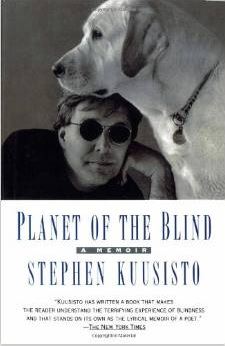
Maybe the old Labrador

Will know, his black face

White muzzle

Probing among roots.

Aging is often without guile,

Straight, entire,

Written between lines.

He’s found black currants

Keen friend, picks one

With his teeth,

Drops it in your hand.


The Body, Again


You never swim out into the same water

But I woke this morning, blind,

A flock of school children passing,

One child drawing a stick along the fence,

The music of people

Who have more than they can carry,

And I thought, I’m no longer

So fond of travel…

Not old but inside

I’m pushed now

Farther to a corner,

The birds of my flesh lifting

Coursing over my house.


From “Things to Think About in the Age of Trump” Part One

Have you ever been in an old style Italian greenhouse, the limonia, built close to the kitchen, so you could have citrus in winter, the tongue sensing something to live for? You could open the door and smell piney, sweet, uncompromising odors of the tropics, even on a day of cold rain.

Elegy for Pentti Saarikoski

Like many poets I wake thinking of delicate things, some apparent, others abstract. I think of Wallace Stevens “planet on a table”—the world we must make each day, and then I smell the  sweet ripening apples outside my bedroom window. I rise, feed my dogs, brew coffee, check the news hoping for breakthroughs in international understanding, put on my rough shoes and walk into the still morning. I’ll make something of this. Put on my little “peace hat” and pepper the aborning hour with words—names—Isaac Bashevis Singer, entelechy, sea cucumber, yellow mittens, mother-world. No one is about in my neighborhood. No one’s awake. The houses are all buttoned, windows dark. My feet love the wet road. I think I need to pardon my youth. I hear the Phoebe bird. The age I live in has a dark taste. I’m seldom prone to this but I do sometimes wish I was a bird.


I fed my heart but it fell from the nest…


I did the proper thing, read poems

While its wings were growing—

Just another shattered cup now

**

When young

Living in cheap apartment

I heard the eyelids next door

**

You get used to it

Able bodied people

Thinking you’re a creep

**

I had a dream

About Jack Kerouac

Somewhere somewhere

**

Back then, 1959, he couldn’t distinguish between dreams and daylight.

Even in sleep there were shadows or the footprints of shadows,

Twin brother in heaven?

**

The gardener cherishes a black flower–

Sad napkin:

A Lepidopterist’s poem

**

I am in love with blindness,

Do you understand?

Even old horses delight in walking.

Life when you taste it…

Life when you taste it,

It’s handsome and fatal,

A tall, dark stranger at every corner table,

Something whispered, a woman with a flower

On her shoulder, her nipples like living ice.

Life, certainly a romantic word,

When you taste it, Robin Hood, oak tree,

Dark-faced like a big river,

Laser lights before dying.

Life, a white napkin. But then dark, dangerous.

The taste of it.

A granite body with blood vessels,

Black meat and herbs.

Life as you live it. Carefully, leveling.

Taste life. It’s acorn water…


–Jarkko Laine

translated from the Finnish by SK

It’s when you read to yourself a true voice comes…

Not spoken

A rehearsal and a what if,

A talking back to your mother

Things you’d say

Running off

And won’t be forgot

But embellished,

Mrs. Havisham’s house

Was your childhood home

(There must have been a cake

With spiders, windows

Never opened)

All this under your tongue

Which insists

Like a cat prowling

Through grass

Page after page

There is a kind of future.


History is a Child Building a Sandcastle by the Sea

There are weeks, whole months, when I read only the ancients.

There’s a cut off: Paracelsus is modern—he believes in the future.

I mean the dark one, the river compulsive,

A man who made clocks from string…

Time is a game played beautifully by children.

Lately this is all I can think of.

When I was very small I lived by the sea.

Nobody loved me and I wasn’t confused.


The Washington Post’s Distorted View of Rural Disability

The Washington Post has published an article that purports to examine a steady increase in disability Social Security claims by poor families. Under the heading “Disabled America” the headline bellows: “One Family, Four generations of disability benefits. Will it continue?” If you’re disabled like me and you’ve a sense of disability history you have to shudder since the half-rhetorical question evokes an edict by Supreme Court Justice Oliver Wendell Holmes who infamously wrote: “three generations of imbeciles are enough” in Buck vs. Bell, a 1927 ruling that upheld the right of Virginia to sterilize “mental defectives” without their consent. (You can read more about the case here.) In short, the Post’s headline raises the specter of eugenics whether the writer or editor knows it or not. Either way its fair to say “shame on them.”

Shame also for committing the journalistic equivalent of what I call “Betsyism” for Betsy DeVos who presides loudly over our education system without experience, knowledge, or curiosity. Only Betsyism, the willful extrusion of facts for ideological purposes explains the Post’s perfervid and ill informed article. Why is it ill informed? Because like other mainstream media forays into the subject of disability and Social Security there’s only a singular narrative: the US is filled with fake cripples who are stealing from good old you and me–a story that received considerable traction two years ago when the redoubtable radio hipster Ira Glass rebroadcast (without journalistic fact checking) a spurious story from Planet Money asserting phony social security disability claims are officially out of control in America. The provenance of the story hardly mattered to Glass, who, when confronted with its falsehoods simply declared himself a journalist and shrugged. It mattered not at all to the doyen of “This American Life” that the tale was largely the dream child of a notorious rightwing think tank, or that the outright falsehoods contained in the broadcast might do tremendous damage to the disabled. Falsehoods about the powerless play well.

One also remember’s NPR’s broader foray into this terrain when Chana Joffee-Walt launched a blockbuster series of stories about disability benefits. Her stories argued there’s a massive fraud taking place, that the number of people claiming disability benefits has gone up alarmingly. What’s of interest from a disability studies perspective is that Joffee-Walt offered (as a means of laying the foundation for her story) that there’s no medical diagnosis for disability–a matter that she found shocking.

Disability isn’t a medical condition for obvious reasons: the limitation of function that renders a person “disabled” depends on multiple factors–some have etiologies, some have a great deal to do with structural and social barriers. This is why scholars who study disability do so through both medical and social analyses. A Betsey-esque analysis lacks this sophistication and suggests poor people with disabilities should be held as suspect for not being–well, rich. Or as Herman Melville put it: “Of all the preposterous assumptions of humanity over humanity, nothing exceeds most of the criticisms made on the habits of the poor by the well-housed, well- warmed, and well-fed.”

The Post’s article (which I won’t summarize) argues that poor people beget intellectually disabled children—actually pray to have them—for kids with bi-polar disorder or who are on the so-called autism spectrum are trailer park cash cows. A la Betsyism if you want people to believe an elitist narrative, startle them with the nefariousness of poverty as Reagan did with his mythological story about a welfare cheat who owned several Cadillacs. If you want readers to evince a collective moue of disgust tell them about real life hillbillies who are just like the characters in Katherine Dunn’s novel Geek Love—circus performers who’ll do anything they can to have crippled and deformed children—this is the insidious face of American poverty. Don’t tell your readers that impoverishment increases the likelihood of illness, that the lack of access to prenatal care and education increases the probability of childhood disability. Don’t tell them that the absence of accommodations in pre-school and all subsequent schooling assures failure for children with intellectual disabilities. Don’t tell them. Just insinuate the poor are up to dirty tricks. Don’t remind your readers that Adolf Hitler called the disabled “useless eaters.”

A Brief Essay on Squalorship

Over lunch yesterday with my friend P (whose identity I shall protect, for he is a goodly man) I uttered the word “squalorship” when detailing “accide”—the term for academic indolence. We laughed at the refinements of mispronunciation. Then, since I’m a blind person, I forked up a slice of lemon from my mediterranean salad. I chewed and swallowed. As for “squalorship” I prided myself on having coined a new term.

Resisting accide I decided to look it up. “Squalorship” is, according the Seadict online dictionary:

The living conditions available to a student who has been issued a

student loan from the Federal or Provincial governments;

also the living conditions available once the collection agencies 

start looking for the loans to be paid back.

**

I ate the lemon. I wondered “what is my name now” having swallowed. I thought “there are divisions of waters between the living and the dead; on the far shore, outside of time, where money is useless, has my father, long gone, also eaten a lemon?”

Here in the half destroyed world where we paint the walls blue, where children leave finger prints on the windows, what reconnaissance do we have? Which protean shape of identity becomes me, or you?

Lemon eater. Glad fool. Resisting accide. Still demanding cut glass ideas against Lilliputian strings.

**

Post lemon, its taste still on my tongue, I walked up a hill and thought of John Locke and his Letter Concerning Toleration. Locke, because he was Jefferson’s muse—more than Montesquieu or Hume. Why Jefferson with lemon? I’m preparing a course on Jefferson’s lives of ideas, both the good ones and the bad.

“That any man should think fit to cause another man — whose salvation he heartily desires — to expire in torments, and that even in an unconverted state, would, I confess, seem very strange to me, and I think, to any other also. But nobody, surely, will ever believe that such a carriage can proceed from charity, love, or goodwill. ”

Excerpt From: John Locke. “A Letter Concerning Toleration.” iBooks. https://itun.es/us/2Z92L.l

Of converted states I know very little, I confess. I can admit this much. And like Jefferson, I’m more of a deist (small “d”) than a contrarian Christian.

I love Locke’s figure (transitive) of a carriage. If salvation has value it must reside in motion. If motion has value it must be progressive.

What do I believe? Resisting accide. Value in the proper carriage.

**

“What of squalorship?”

College should be free.

Thomas Jefferson.

Jefferson and George Washington both enjoyed lemons.