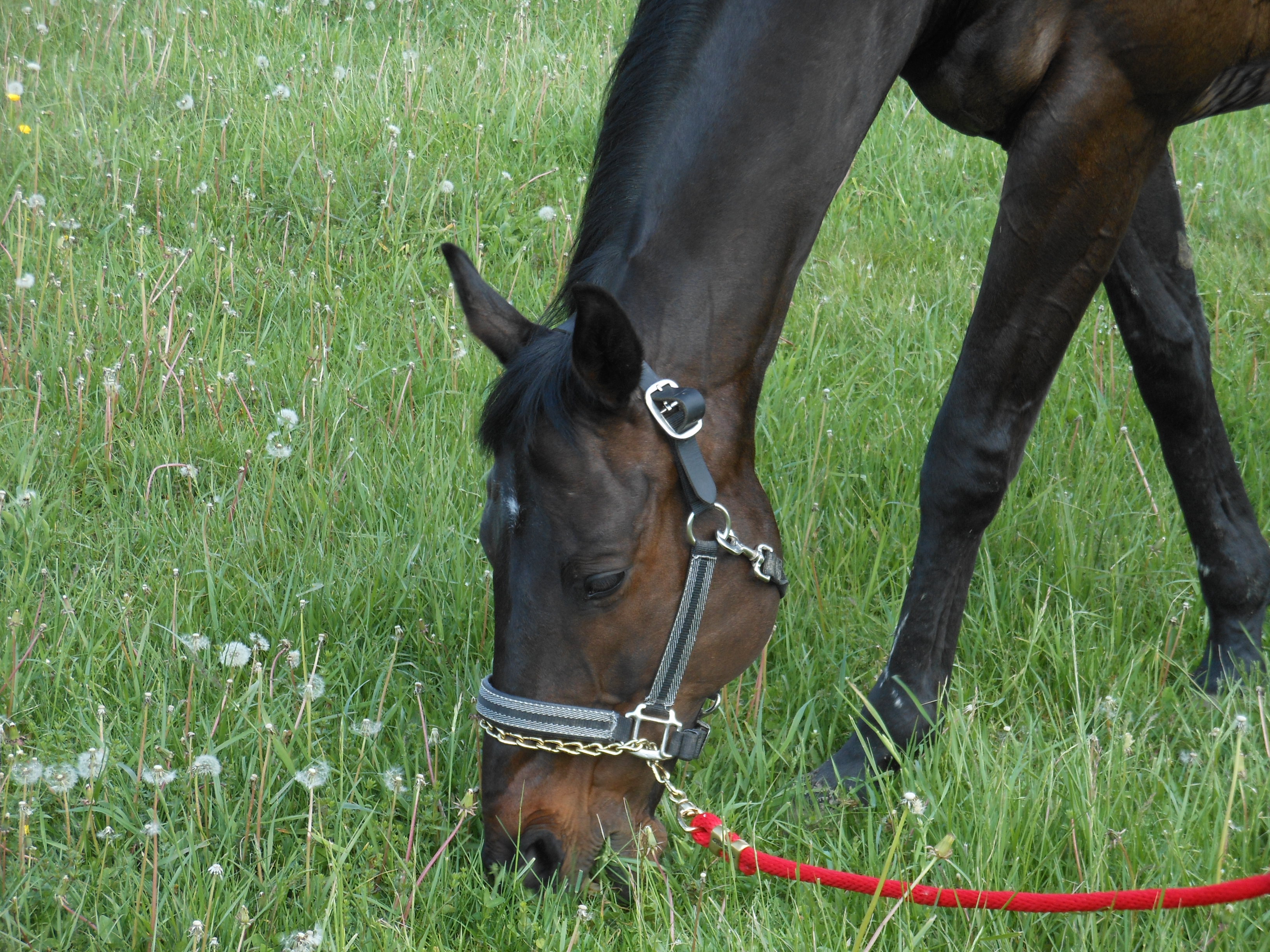
Ode to Luigi, a Thoroughbred


After everything I will love the face of this horse

Who sees a hemisphere without flies

And loves what he loves. 


His song, (which I do not know)

Is the same, forward and backward,

song of teeth, heart, and feet,


song in which all things rise

while in pursuit–

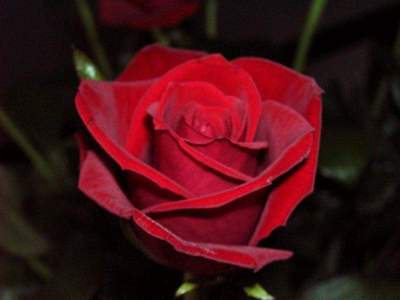
the last rose of summer, a yellow fence,


degrees of sight, circumstances of the grass.

Call him: you see his eyes first,

Intangible, bottomless, 


rich with humble discoveries.

The star on his head is a precious stone

which makes me sadly joyful like a boy. 


We cannot change seasons

or elude the dark,

but we can be touched by sky. 


Luigi
Photo: Luigi is a dark brown/bay thoroughbred.  This is a

close-up of just his face/profile as he reaches down to eat grass. 

He's wearing a black/silver halter w/ red lead line.

Insights from the Planet of the Blind: An Interview. Part 1.

After reading Planet of the Blind, Kathleen Avery, Senior Director of Marketing at Cleinman Performance Partners, had occasion to talk with the author (Stephen Kuusisto) about his story and all that he’s come to understand.  Thank you, Kathleen, for allowing us to share this with our readers.

Kathleen:  Your book is so rich with visual metaphor, just the most vivid descriptions.  I’m curious how you are able to reference such diverse imagery.  Comparing a man in a rain coat to the sails of Tristan’s ship or an elephant’s ear, for instance…

Stephen:  Well, the first answer to that question is about language.  All nouns are images.  If you say strawberry…or horse…or wheat field…or lighthouse in Maine – you automatically see these things in your mind.  This is why ancient people believed that poets were magical.  They could make you see things.. They once had a radio advertisement on NPR: “Listen to the Theater of your Mind.”  That’s how poetry works.  It throws off powerful nouns and the reader sees them; they’re called power nouns.

Kathleen:  But how do you know what a lighthouse in Maine looks like?

Stephen: I either do or do not (laughs).  And that’s the second answer.  There is a way in which imagination approximates things.  You can actually create things with language that don’t exist.  The poet Charles Simic says, “Go inside a stone, that would be my way…”  He takes you inside the stone and it is the universe all over again.  The truth is you can’t see that at all, but you can trick the mind into seeing what can’t be seen.  This is also why ancient people thought poets were magical.

And, of course, people describe things to me.

You know, people think that blindness is like living in a vacuum.  The general public tends to think that blind people are trapped inside the stone.  They will ask me how I could possibly go to an art museum.  Well, you pick your friends.  You go with friends who will describe what they see.  Is it an immediate experience?  No.  But I like it, because there is poetry in it.  It is mediated.

Kathleen:  Oh, how interesting would it be to listen to different people describe the same Picasso?

Stephen: That would be a fabulous NPR piece!

You can read Kathleen Avery’s interview in its’ entirety by visiting www.cleinman.com/insights-from-the-planet-of-the-blind

**************************

Professor Stephen Kuusisto is the author of Eavesdropping: A Memoir of Blindness and Listening” and the acclaimed memoir Planet of the Blind, a New York Times “Notable Book of the Year”. His second collection of poems from Copper Canyon Press, “Letters to Borges, is scheduled for release in October 2012.  As director of the Renee Crown University Honors Program and a University Professor at Syracuse University, Steve speaks widely on diversity, disability, education, and public policy. www.stephenkuusisto.com, www.planet-of-the-blind.com
 

Poetry as artful plagiarism

“Poetry is an artful plagiarism sometimes, where odd combinations of words influence our language and heightens our experience.”    – Stephen Kuusisto


Professor Stephen Kuusisto is the author of Eavesdropping: A Memoir of Blindness and Listening” and the acclaimed memoir Planet of the Blind, a New York Times “Notable Book of the Year”. His second collection of poems from Copper Canyon Press, “Letters to Borges, is scheduled for release in October 2012.  As director of the Renee Crown University Honors Program and a University Professor at Syracuse University, Steve speaks widely on diversity, disability, education, and public policy. www.stephenkuusisto.com, www.planet-of-the-blind.com
Poetry is to me…

“Poetry is an artful plagiarism sometimes, where odd combinations of words influence our language and heightens our experience.”    – Stephen Kuusisto


Professor Stephen Kuusisto is the author of Eavesdropping: A Memoir of Blindness and Listening” and the acclaimed memoir Planet of the Blind, a New York Times “Notable Book of the Year”. His second collection of poems from Copper Canyon Press, “Letters to Borges, is scheduled for release in October 2012.  As director of the Renee Crown University Honors Program and a University Professor at Syracuse University, Steve speaks widely on diversity, disability, education, and public policy. www.stephenkuusisto.com, www.planet-of-the-blind.com
 

Things are moving along with Copper Canyon Press

Just got the copy edited manuscript of my new book “Letters to Borges” coming soon from Copper Canyon Press. Michael Wiegers has done a fabulous job. Who says editing is dead? Not in Port Townsend!

The Black River Chapbook Competition: Deadline May 31, 2012

About the Prize

Dear Friends,

This is just a friendly reminder that the deadline for the Spring 2012 Black River Chapbook Competition is approaching.

The Black River Chapbook Competition is a semi-annual prize from Black Lawrence Press for a chapbook of short stories or poems. Entries should be between 16 and 36 pages in length. The winner will receive $500 and publication. Previous winners of The Black River Chapbook Competition include Helen Marie Casey, Frank Montesonti, D. E. Fredd, Sandra Kolankiewicz, Tina Egnoski, T. J. Beitelman, David Rigsbee, Lisa Fay Coutley, Amelia Martens, Charlotte Pence, Russel Swensen, and Nick McRae.

How to Enter

Please follow this link for information on how to submit your manuscript for The Black River Chapbook Competition.

The deadline for submissions is May 31. That’s this Thursday!

We look forward to reading your work!

Black Lawrence Publishing • 326 Bigham Street • Pittsburgh • PA • 15211

www.blacklawrence.com

The Barefoot Review seeking submissions

Jamie Sue, from The Barefoot Review, made contact and asked us to share the following post. Happy to do so…

What is it?

The Barefoot Review is a new publication. We welcome submissions of poetry or short prose from people who have or have had physical difficulties in their lives, from cancer to seizures, Alzheimer’s to Lupus. It is also for caretakers, families, significant others and friends to write about their experiences and relationship to the person.

What’s the Purpose?

Writing can be a tremendous source of healing and allow difficult feelings and ideas to be expressed. Unfortunately, every piece submitted can’t be published, however every piece is important. The process of writing, verbalizing feelings that may be subconscious or unexpressed is more important than the acknowledgment of publication.
We hope sharing this work online will help people facing similar difficulties find inspiration in the words of others.

What’s in a Name?

The Barefoot Review is named to evoke several meanings: baring your soul and expressing naked feelings. Bare feet ground you, give you balance, and connect you to the Earth. The review is here from a desire to help others.

Where is it?

The review is here, there and everywhere —www.barefootreview.com
Please be sure to read the submissions guidelines before sending us your work.
submissions@barefootreview.org
Question, compliment or complaint?
info@barefootreview.org

The Barefoot Review seeking submissions

Jamie Sue, from The Barefoot Review, made contact and asked us to share the following post. Happy to do so…

What is it?

The Barefoot Review is a new publication. We welcome submissions of poetry or short prose from people who have or have had physical difficulties in their lives, from cancer to seizures, Alzheimer’s to Lupus. It is also for caretakers, families, significant others and friends to write about their experiences and relationship to the person.

What’s the Purpose?

Writing can be a tremendous source of healing and allow difficult feelings and ideas to be expressed. Unfortunately, every piece submitted can’t be published, however every piece is important. The process of writing, verbalizing feelings that may be subconscious or unexpressed is more important than the acknowledgment of publication.

We hope sharing this work online will help people facing similar difficulties find inspiration in the words of others.

What’s in a Name?

The Barefoot Review is named to evoke several meanings: baring your soul and expressing naked feelings. Bare feet ground you, give you balance, and connect you to the Earth. The review is here from a desire to help others.

Where is it?

The review is here, there and everywhere —www.barefootreview.com

Please be sure to read the submissions guidelines before sending us your work.

submissions@barefootreview.org

Question, compliment or complaint?

info@barefootreview.org

Where Have All the Flowers Gone?

April is National Poetry Month

Someone wrote me asking why (I have) not been talking about poetry lately. I think the answer is complicated for its not correct to say that we don’t think about poetry like a caffeinated clock maker reciting Rilke as he works. We think about poetry with every little gear and pin. Daylight disappears and the windows grow dark and we’re still thinking about poetry. We even write poems though we’re less on display than we might be in other seasons. Why are we so introverted when it comes to the drums and snakes of the imagination?

Sometimes we are affected by a freshet of humility. We’re like the 100 year old monk who we met at a Finnish monastery. We were side by side in the sauna. I said to him: “Do you smell strawberries?” He told me that the smell was from his sweat, that he’d been eating only strawberries for about two weeks.

Have you ever sat with a 100 year old man who was entirely happy?

You see, sometimes poetry asks us to admit we know nothing at all. Try to write about that. Do it with happiness.

Are you happy enough?

Have you given away the proper things in this life?

I promise you that I’m looking always for the answers. I look with my skin. I walk around in the near meadow. I smile at light as it moves over the frozen earth like any blind man. I am lighter by the minute.

And you?

*****

Professor Stephen Kuusisto, blind since birth, is the author of “Eavesdropping: A Memoir of Blindness and Listening” and the acclaimed memoir “Planet of the Blind”, a New York Times “Notable Book of the Year”. He has also published “Only Bread, Only Light“, a collection of poems from Copper Canyon Press. As director of the Renee Crown University Honors Program and a University Professor at Syracuse University, Steve speaks widely on diversity, disability, education, and public policy.

Post originally published on Planet of the Blind