The ADA is Under Attack

The ADA is under attack.  Next week, the House will be voting on a bill, H.R. 620 that would undermine the protections of the ADA and take away the rights of people with disabilities.  Please call your Representative and ask them to #VoteNo and #ProtectTheADA

Here are talking points:
·         HR 620 will take away the civil rights of people with disabilities

·         It will make people with disabilities wait for up to 180 days for services that other people have immediate access to

·         The wait may be even longer than 180 days because a business that is making “substantial progress” toward fixing a problem can take even longer than 180 days

·         HR 620 will eliminate the need for businesses to be accessible until a complaint is received; there will be no need to make a business accessible until someone complains; that will mean many groups building new buildings, renovating buildings, opening new businesses will not make their services accessible

·         HR 620 shifts the burden of accessibility from those who offer services to the person with a disability; no other group needs to prove their right to access to publically offered services

·         We should not be gutting the rights of people with disabilities; if there is a problem, we should be limiting the actions of a small number of lawyers who are bad actors

·         HR 620 will take away the civil rights of people with disabilities; would we ever think about eliminating the rights of any other group of Americans? This is disgraceful.

And here is a fact sheet from our colleagues at Disability Rights Education and Defense Fund (DREDF) about the myths and realities of this bill.

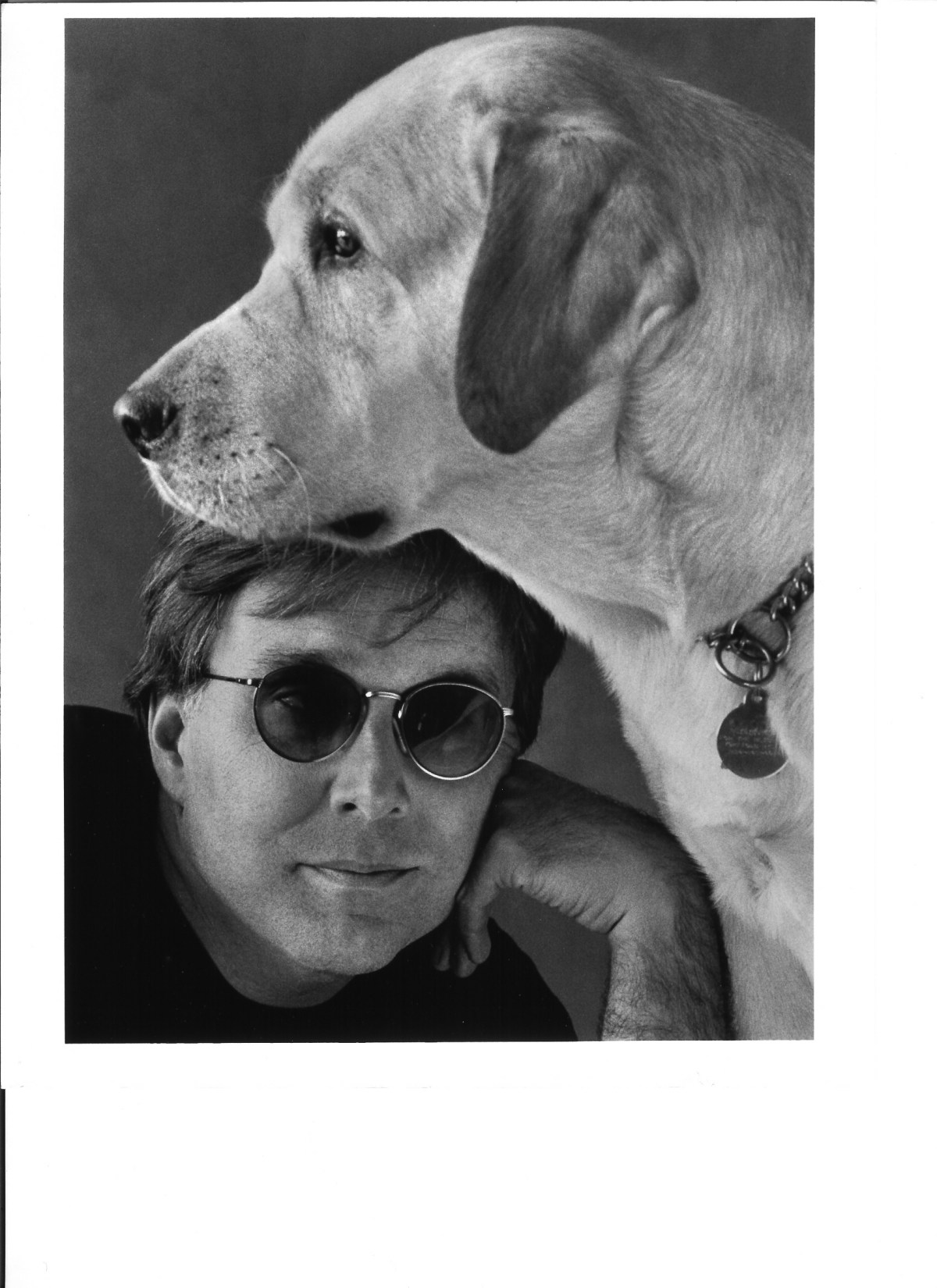
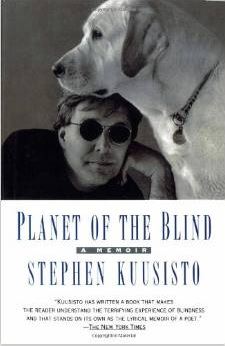
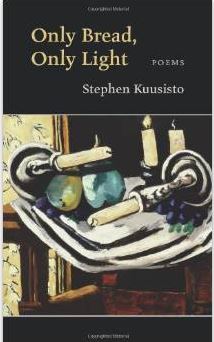
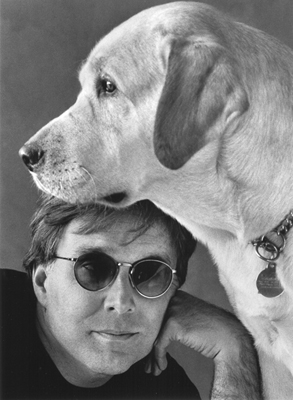
Stephen Kuusisto and HarleyABOUT: Stephen Kuusisto is the author of the memoirs Have Dog, Will Travel; Planet of the Blind (a New York Times “Notable Book of the Year”); and Eavesdropping: A Memoir of Blindness and Listening and of the poetry collections Only Bread, Only Light and Letters to Borges. A graduate of the Iowa Writer’s Workshop and a Fulbright Scholar, he has taught at the University of Iowa, Hobart and William Smith Colleges, and Ohio State University. He currently teaches at Syracuse University where he holds a University Professorship in Disability Studies. He is a frequent speaker in the US and abroad. His website is StephenKuusisto.com.

Delta: Leave the Blind Alone

As a blind traveler who uses a guide dog I’ve flown a lot of places. My professionally trained dog lies under my feet and never stirs, no matter how long the flight. I’ve had four such dogs and all of them were trained by a top notch school in New York called Guiding Eyes for the Blind. Although going places with a disability isn’t always easy its generally achievable because protective laws are in place that guarantee the disabled rights of passage. In the United States both state laws—known as “white cane laws”—and federal laws, including the ADA and the Air Carriers Transportation Act have made it possible for blind people and their exemplary dogs to go anywhere the public goes.

In the world of service animals guide dogs are the gold standard. Trained to guide the blind through heavy traffic, watch for low hanging branches, take evasive measures when cars or bicycles run red lights, watch for stairs—even prevent their partners from stepping off subway platforms, everyone can agree that they’re the “few, the proud” just like the Marines. Yes, and they’re also trained to stay quiet and unobtrusive in restaurants and when using public transportation.

This canine professionalism is possible because guide dog schools spend tens of thousands of dollars breeding, raising, and training each and every dog. In turn guide dog teams have earned the respect and admiration of the public here in the United States and around the world.

Recently Delta Airlines, in an effort to curtail the appearance of fake service dogs on airplanes has issued a new requirement that actually hurts the blind. Delta is demanding that service dog users upload veterinary health certificates to their website 48 hours prior to flying. This is essentially a stumbling block—an obstacle designed to impede the blind while doing very little to halt illegitimate or phony service dogs from boarding flights. As a blind person who uses a tasing computer I can tell you that navigating websites and uploading documents isn’t easy. In fact its often ridiculously hard.

The blind and their amazing dogs are not the problem for Delta or other airlines. Fraudulent service dogs are a problem for sure, but really, do they think dishonest people who are already passing off their pets as professionally trained dogs will be unable to attach rabies certificates on a website? For sighted people this is a snap.

All guide dog users carry ID cards issued by the guide dog schools, certifying that the dog team pictured is legitimate and has graduated from a real service dog training program.

I don’t know what to do about the sharp increase in fake service animals on airlines, but I do know Delta and other carriers should leave the blind alone. We’ve earned our passage.

Stephen Kuusisto and HarleyABOUT: Stephen Kuusisto is the author of the memoirs Have Dog, Will Travel; Planet of the Blind (a New York Times “Notable Book of the Year”); and Eavesdropping: A Memoir of Blindness and Listening and of the poetry collections Only Bread, Only Light and Letters to Borges. A graduate of the Iowa Writer’s Workshop and a Fulbright Scholar, he has taught at the University of Iowa, Hobart and William Smith Colleges, and Ohio State University. He currently teaches at Syracuse University where he holds a professorship in the Center on Human Policy, Law, and Disability Studies. He is a frequent speaker in the US and abroad. His website is StephenKuusisto.com.

Just Pete Seeger and his Banjo

Late morning, winter, dancing alone in the kitchen

Solo entertainment of a grown child

Just now he shucks off his cruel father

Who taunted him for being blind

A wind blows his torso dips

The father ghost retreats

To its covert—and his raving mother

She follows, carried by shadows

Dancing alone, not a poem,

Nothing literary about it

George Will and Yale’s Indians

There’s nothing like the prospect of overreaching do-gooders in higher education to stir the dormant juices of conservative pundits. In today’s Washington Post one finds George F. Will’s starchy prose condemning liberal insensibility at Yale University: “Yale Saves Fragile Students from a Carving of a Musket”–a bromide that’s so nearly insensible I wonder about Will’s civic future as it’s obvious he’s forgoing the potential value and goodness of human beings.

Will is incensed that administrators at Yale are concerned about the placement of an altogether remnant and ugly bas relief on the facade of Sterling Memorial Library. In truth it’s a hideous thing, a carving of a thick lipped Indian and a gnashing pilgrim, each clutching their cliched weapon—a bow and arrow and a musket. Make no mistake, they’re in combat, and no love is lost in this stupid, rebarbative vignette. George Will thinks it’s art, or at least, something to be cherished. You wouldn’t know that when the carving was made the curriculum at Yale (and elsewhere) centered on “the white man’s burden” and featured a heaping helping of Social Darwinism. Will cannot imagine that this mise en abyme has an untoward semiotic history. He’s chosen to read discomfort with the stone cartoon as a pean to the contemporary (perceived) coddling of emotionally needy college students, a link that’s about as sensible as saying wolves often dress up as grandmothers and this is why union wages are declining.

Poor Yale students! Poor babies! They can’t take a racist carving! Look! They require campus counseling services because they have mental illnesses! What weaklings! How permissive college administrators are! Will offer us the usual suspects—permissive parents, dewy eyed faculty, and a general decline in our nation’s moral fiber. You’d never know that the sculpture in question is actually quite despicable.

Detestable or ignominious art always lacks scruple and nuance. It’s purpose is to cement common opinion. Both the left and the right can create repellent art. I’d like Will better if he simply said: “Ugly art ye will always have with ye, and get over it.” That might be a defensible position but of course we know who’s paying for Will’s lunch and it’s not the art historians. The basic conservative tenet is this: “racism’s in the past, get over it. They’re just statues, dude.”

Trouble is (as theologian John Lamb Lash puts it) “You can die from kitsch. And we’re close to it.”  And you can certainly die on Native American reservations where healthcare is third rate and poverty is numbingly omnipresent. And images depicting old race wars are provably malign.

No. In Will’s stifling mental pup tent the problem is today’s students have permissive mommies.

Disability and Faculty Self-governance in the Age of Neoliberalism

When talking to faculty, students, and staff with disabilities who work or study at America’s colleges and universities, one quickly learns that higher education is broadly disinclined to treat disability in a concerted and efficient manner, but instead engages in widespread administrative deflection. From architectural barriers to simple pedagogical modifications colleges routinely drop the ball where equal access is concerned. So ubiquitous have these stories become one can browse the web for hours reading of school after school that has violated basic civil rights protections guaranteed by the Americans With Disabilities Act. From the University of Michigan, to Penn State to Harvard, one finds dramatic instances of disability discrimination. As a disability rights activist and professor who teaches that incorporating physical difference in the village square creates powerful opportunities and advantages I’m often asked why higher education performs so poorly. For many years I imagined these failures had simply to do with a basic financial resentment of the ADA, as one hears the widespread complaint from college administrators that it’s simply an “unfunded mandate.” The idea that barriers should be removed as a matter of civil rights is represented as a violation of libertarian principle. This seemed reasonable enough until over time I realized there’s a broader delegitimization of disability in the Ivory Tower and it’s only loosely connected to money.

In a recent interview at TruthOut Henry Giroux observes of Neoliberalism:

As a form of public pedagogy and cultural politics, neoliberalism casts all dimensions of life in terms of market rationality. One consequence is that neoliberalism legitimates a culture of cruelty and harsh competitiveness and wages a war against public values and those public spheres that contest the rule and ideology of capital. It saps the democratic foundation of solidarity, degrades collaboration, and tears up all forms of social obligation.


The past quarter century has seen the American academy shift from collaborative and democratic agreements about social obligations toward an embrace of monetized aggression. During this period the ADA has been overtly ignored by colleges of every kind. The two developments are syncretic, reflecting what Giroux rightly calls the failure to contest the rule and ideology of capital. It’s relevant to note in this context that “disability” first appeared in the mid-19th century as a term for laborers who’d been rendered unfit to work. The 20th century saw sustained advances in rehabilitation and employment services for people with disabilities, improvements which culminated in the passage of the ADA in 1990.

Neoliberal pedagogy and campus politics depend on limited faculty governance, the erosion of public debate, and the establishment of a culture of severe economic competition. Disability is re-inscribed as a 19th century problem. Accommodation services are sequestered—students are “sent” to ancillary offices for accommodations which they may or may not receive; faculty are taught nothing about pedagogy and disability; basic services like sign language interpreting or accessible technology are hard to find, and sometimes non-existent. At one liberal arts college where I recently spoke, a disabled student told me, “the disability office is hidden like an asylum.” Indeed. Disability is a drain on capital. Not because it’s an unfunded mandate but because after all is said and done, neoliberal visions of success are built as Giroux rightly says on cruelty and competitiveness.

Harvard and MIT are contesting the demands of deaf students and staff that instructional videos be captioned. Harvard’s opposition is symptomatic of the neoliberal university’s war on basic public values. In terms of governance Harvard’s resistance represents perfectly the academy’s abandonment of the principles of social obligation. But institutions only arrive at such a place when faculty are deterred from self-governance by the obligation to write endless grants and compete for provenance in the marketplace of capital ideas, when teaching and idealism are considered quaint and immaterial. In turn the civil rights of academic communities are “handled” by offices that are both physically and culturally distant from the “agora” or academic life of the campus.

The neoliberal campus relies on distention of self-governance and enforces centralized administration. Moreover it thrives on factionalism. A faction, as James Madison famously wrote in essay 10 of The Federalist Papers is a group “who are united and actuated by some common impulse of passion, or of interest, adversed to the rights of other citizens, or to the permanent and aggregate interests of the community.”

Because college faculty are often divided by competing interests and since some of these divisions reflect the complications and struggles of identity, it’s difficult to forge consensus about disability and disability rights—they seem tailor made for deflection, a problem for a specialized office. In other words, disability is often viewed by academics who are already narrowly factionalized as too difficult to embrace. As Lennard Davis notes in his book Bending Over Backwards: Disability, Dismodernism, and Other Difficult Positions:

Because disability is an amorphous identity with porous boundaries, other identity groups in the United States have had difficulty incorporating it into their goals. Previously legitimized groups such as Latinos or African Americans have been reluctant to admit disability into the multicultural arena. For example, in 1996 a disabled, white assistant professor at a historically black university found that the chair of the department and the dean of the school had recommended against tenure, saying that any analogy between disability and race was both methodologically unsound and insulting to the unique history of African Americans. For them, the categories of oppression were mutually exclusive and should not be mixed. After much public outcry from the disability community, the president of the university decided to award tenure to the assistant professor. Nevertheless, the issue of an identity defined by impairment as opposed to one defined by race or ethnicity is a sticking point for some. When some faculty members at Hunter College in New York City tried to include disability studies as part of the requirement for a multicultural curriculum, they were opposed by many of the ethnic and national groups that usually make up the progressive wing of the university. Hunter ended up deciding to omit disability from the curriculum.


From a disability studies perspective one sees how sectarian infighting among faculty concerned with categories of oppression can further the work of neoliberal administration, not by embracing the neoliberal brand of governance, but by replicating its effort to de-legitimize disability as a mainstream concern. De-legitimized disability remains in the province of non-academic offices. In turn university faculty fail to understand and embrace the nation’s largest minority. Such neglect reinforces a central fact of neoliberal administration which supports deflection where accountability is concerned and it represents rather broadly a further symptom of weakening faculty self-governance.


Me Before You, Benedict Arnold…

If disability is pictured as a thermometer one sees at the very top of the mercury scale “Courage” and at the bottom “Cowardice”—a register of willfulness or mind over matter which represents disablement as being entirely a state of mind rather than physical or neurological reality. How often does one have to endure the slogan: “the only disability is a bad attitude?”

Quite often it turns out. Courage is an easy word to bandy about. Whenever the first “c” word is used in media representations of the disabled, it’s invidious twin is suggested, as if living a crippled life is a stark affair when you roll down the street or follow your dog. You’re either heroic or you’re some kind of attitudinal traitor, a Benedict Arnold of the spirit.

Of course temporarily abled people don’t live this way. They’re not heroic in the supermarket, not cowardly when they shake their fists at drivers in front of them. The emo-thermometer is reserved solely for the cripple. I’ve lived with this fictitiousness all my life and if you’re one of my crippled readers I’m certain you have too.

Lately there’s been much consternation and outrage among disabled activists and their extended supporters about the film “Me Before You” as it depicts a paralyzed man’s decision to end his life, not merely because his disability is insupportable, but because he doesn’t want to burden the abled woman who loves him. The film is creepy, inauthentic, and ugly. What interests me however is it’s emo-thermometer reading: “Courage” becomes “Cowardice” or subsumes it in a way that suggests “the only bad attitude is a disability”—a twist that’s chilling and should alarm even the most seasoned viewers of films and television programs. Living with disability is presented in “Me Before You” as a traitorous act, a betrayal of love.

Love is presented as light while disability is dark and overshadows life. Now, ahem, life itself doesn’t work this way. In life trains arrive and depart, sunlight strikes the telephone wires, groceries are purchased, lawns are clipped—which is to say, life, living it, is, as any bird will tell you, simply a matter of the daily worm. Moreover living is essentially the hard thing, dying is easy.

This is what’s so objectionable about the film. Dying is easy. Disabled life is presented as a bad choice, a bad attitude if you will. “Me Before You” turns the standard (and already crappy) disability emo-thermometer upside down.

Ugh.


In Defense of Sherman Alexie


Copper Canyon Press Logo


I read yesterday with something more than dismay but less than horror of a literary scam. Perhaps I should say “more than dismay” means keen disapprobation; “less than horror” means (as far as I know) no animals or people have been harmed. (At least so far.)

Of the scam it’s enough to say a very fine American poet, Sherman Alexie, who served this year as the annual guest editor of a widely respected and venerable anthology called “The Best American Poetry” was victimized by a white poet who submitted work under an assumed Chinese name. Because the anthology reprints poems which have appeared in literary journals in the US over the course of the preceding year, the ersatz Chinese writer’s work had already appeared elsewhere under his false name.

The anthology is much beloved by poets and poetry lovers and for good reason, for though it’s difficult to prove “the best” in any arena, (the “best” is so entirely THE American hook—the “best” nonfat dairy substitute; the “best” of the “Lovin’ Spoonful”, etc.) the book always brings together remarkable poets and showcases their work in a highly readable volume.

The scam tricked Mr. Alexie and everyone else. The trickster whose poem was selected revealed himself in his contributors note, asserting he’s not of Chinese origin at all, but, golly gee, said he, isn’t it interesting his poems get rejected all the time unless he adopts a foreign name?

One should hardly think this is a probative question. As a poet myself, I can attest my rejection to acceptance rate is steep. I might be well known as a writer but my rejection rate remains high. This is the customary reception all artists receive, even those of us who’ve had some success.

The put upon, faux Chinese poet argued his poems are only evaluated if he uses a tricked out exotic nom de plume. For my money this is meretricious. Moreover it’s a cynical ruse, one that cuts two ways. It says: I won’t do the work of publication and reception under my own name; I will adopt a multicultural identity and prove that in the age of diversity respect, I too can earn respect by engaging in a sleight of hand. The first is a sin of omission, the second is a colonizing con, one that insults all artists who hail from historically marginalized positions.

Mr. Alexie, who is an award winning Native-American poet, learning of this misrepresentation, decided to keep the offending poem in the anthology, arguing con or not, the man wrote a poem. The poem can stand for itself. I admire Alexie’s liberality in defense of the poem. I also appreciate his dilemma. If he’d removed the poem he would effectively start an argument about poetry itself—who gets to write it, who doesn’t; what is freedom of speech; what is the relationship between “intentionality” in literature and “reception” by readers and editors; who, ultimately is the colonizer and who is colonized? It’s a long list of apprehensions certainly.

Me? I’m angry on behalf of Sherman Alexie who was misled and then felt he needed to stand up for art alone. I think he did the right thing.

But here is one more way to look at the this. My poetry publisher is Copper Canyon Press.

Their “logo” consists of two Chinese written figures. One represents “word” and the other “temple”. When they are placed side by side, they signify poetry in Chinese.

The ersatz Chinese poet fouled the temple. That will be his punishment. The temple will survive. No animals or people were harmed.


NPR: Unfit to Write About Disability

There’s a piece by Chana Joffee-Walt on NPR’s website entitled “Unfit for Work: the Startling Rise of Disability in America” which is so ill informed about its subject it reminds me of one of those Ronald Reagan stump speeches. Driven by anecdote rather than cultural analysis, her thesis is simple: the number of unemployed Americans receiving disability benefits has skyrocketed over the past twenty years. She intimates without fully declaring it, that there’s a vast social “scam” taking place–in the absence of good middle class jobs, and following the “end welfare as we know it” enterprise, poor people simply decline into aches and pains, thereby getting themselves declared unfit for work.

Alas, Joffee-Walt hasn’t done her homework, a matter that may be inapparent to many of NPR’s readers, just as Reagan’s audiences were unaware that behind the curtain the Gipper believed “facts were stupid things” and was untroubled by any and all of the misrepresentations of social programs that propelled his candidacy for president. Such arguments depend on pathos rather than facts. Joffee-Walt fails to address the biggest fact in the room, that disability is a social construction even more than a medical category, and in turn the artificial architectural and physical constraints marshaled against people with disabilities are both products of history and the industrial revolution. One wishes she had bothered to read Lennard J. Davis’ essay “Constructing Normalcy: The Bell Curve, the Novel, and the Invention of the Disabled Body in the Nineteenth Century”. Disability is entirely economic and has been so since the move to industrial models of labor. Those who cannot work in the factory were labeled “disabled” and that model of human economic utility largely continues to this day. Reasonable accommodations are the solution for workers whose physical capacities decline but as any seasoned person with a disability who has managed to remain in the workforce knows, obtaining accommodations is often so difficult, so humiliating, so Kafka-esque, most people give up.

70% of the blind remain unemployed in the United States, many of whom might well be able to work with the proper accommodations but employers don’t want to provide accommodations fearing the expense, though in point of fact most workplace accommodations are relatively inexpensive. Think of a laborer, someone who is required to lift boxes. He suffers a ruptured disc. He can’t lift boxes. Perhaps he could be retrained to work with software. Most businesses resist this kind of accommodation, preferring medical and social determinations that are no more sophisticated than those the Victorians had.

Another way to say this is that a nation that believes in work is also a nation that believes in accommodations. Joffee-Waitt misses this dynamic and ongoing dialectic and fails to illuminate the true nature of disability and joblessness. 

~~~~~~~~~~~~~~~~~~~~~~~~~~~

Professor Stephen Kuusisto is the author of Eavesdropping: A Memoir of Blindness and Listening” and the acclaimed memoir Planet of the Blind, a New York Times “Notable Book of the Year”. His second collection of poems from Copper Canyon Press, “Letters to Borges has just been released. He is currently working on a book tentatively titled What a Dog Can Do. Steve speaks widely on diversity, disability, education, and public policy. www.stephenkuusisto.com, www.planet-of-the-blind.com

From Welfare Queens to Disability Deadbeats


Paul Krugman’s blog post entitled “From Welfare Queens to Disabled Deadbeats” relates both the realpolitik and the rhetorical irresponsibility of our age. By “realpolitik” I mean good old fashioned preservation of power. By rhetorical irresponsibility I mean the red herring that social programs are the cause of our nation’s financial woes. Krugman writes:

If you want to understand the trouble Republicans are in, one good place to start is with the obsession the right has lately developed with the rising disability rolls. The growing number of Americans receiving disability payments has, for many on the right, become a symbol of our economic and moral decay; we’re becoming a nation of malingerers.


Now I of course (speaking as a blind person) am a professional malingerer. In fact I wake up every day wanting mints on my pillow. I want all kinds of stuff. Public transportation, solid veterans benefits, affordable housing, easy access to disability friendly technology, free wheelchairs for those who don’t have fat incomes—I’m actually something more than a malingerer Senator Elephant, I’m a believer in the good, old fashioned social contract. 

I say this having once upon a time been a recipient of Social Security Disability and Food Stamps. I also lived for a time in Section 8 housing. Why? Because I lost my adjunct teaching job largely because I was advocating too noisily for disability rights at the rinky dink college where I found myself fighting discrimination against students with disabilities. The tone deafness of the Elephant Pols has much to do with something that has nothing to do with disability and social services—it has to do with finding a new underclass to kick. Krugman writes:


What strikes me, however, isn’t just the way the right is trying to turn a reasonable development into some kind of outrage; it’s the political tone-deafness.

I mean, when Reagan ranted about welfare queens driving Cadillacs, he was inventing a fake problem — but his rant resonated with angry white voters, who understood perfectly well who Reagan was targeting. But Americans on disability as moochers? That isn’t, as far as I can tell, an especially nonwhite group — and it’s a group that is surely as likely to elicit sympathy as disdain. There’s just no way it can serve the kind of political purpose the old welfare-kicking rhetoric used to perform.

The same goes, more broadly, for the whole nation of takers thing. First of all, a lot of the “taking” involves Social Security and Medicare. And even the growth in means-tested programs is largely accounted for by the Earned Income Tax Credit — which requires and rewards work — and the expansion of Medicaid/CHIP to cover more children. Again, not the greatest of political targets.

The point, I think, is that right-wing intellectuals and politicians live in a bubble in which denunciations of those bums on disability and those greedy children getting free health care are greeted with shouts of approval — but now have to deal with a country where the same remarks come across as greedy and heartless (because they are).

And I don’t think this is a problem that can be solved with a slight change in the rhetoric.


 I don’t know what kind of bubble the elephant classes are living in. I suspect its a small bubble which is of course a matter of some substantial irony. But there are lives in the balance. I urge people with disabilities to fight back: don’t become today’s Reaganite “Welfare Queens” in Washingtonian discourse. 


Technorati Tags: , ,

Perception: a Guest Post by Author Sheila Applegate

Sometimes the miracles of life are just beyond the rules of logic.
When we change our perspective, we just might let a little magic into our life!


Please help me welcome new author and CNY neighbor Sheila Applegate to the Planet of the Blind.  Sheila is hosting a virtual book tour, assisted by my wife, Connie, via Authors' Virtual Solutions.  In her guest post below, Sheila brings a fresh new perspective to this planet of mine.

Tell me, have you ever had an experience like this?  If so, please feel free to share it in a comment below.

Perception

by Sheila Applegate

How we perceive the world around us has everything to do
with how we experience this world.

Have you ever been faced with a frustrating situation that
no matter how hard you tried to solve there just seemed to be nothing you could
do to change it?

Finally there is the moment of surrender in which you give
up because you do not know what else to do. 
Then out of nowhere you are presented with an alternative that you never
would have believed possible. A simple change in perspective seems to create an
opening for a magical solution.

I experienced this in the middle of an apple orchard on a
beautiful autumn day just this past September.

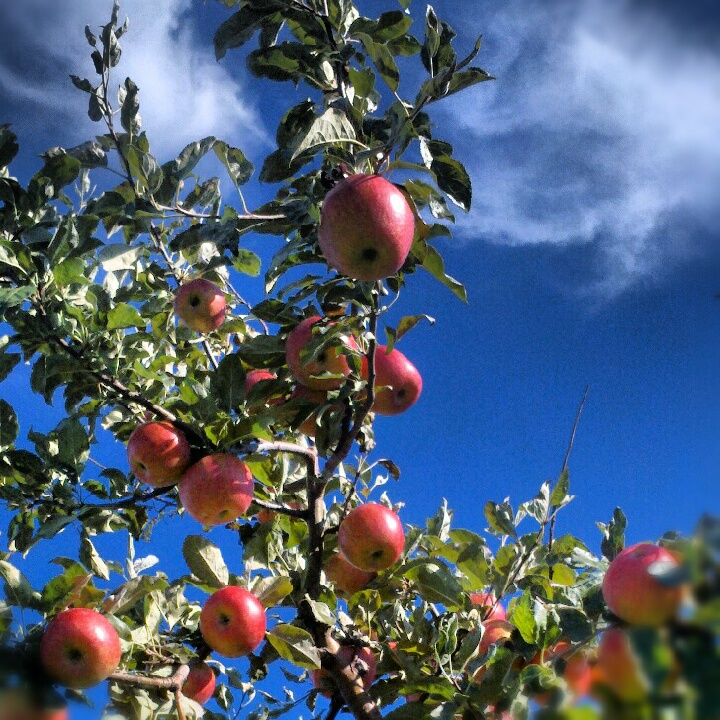
IMG_20120911_194137Image: photo taken looking up at branches of an apple tree highlights ripe red apples against a bright blue sky

The leaves were just beginning to change, radiating warm
colors against a crisp blue sky. As soon as my kids got home from school, I
piled them into the car for our first apple-picking excursion of the season.

We arrived at the orchard just in time to hop onto the wagon
for a ride deep into the orchard. My 7 year old niece was with us. She was
filled with such excitement that even my teenage children were as giddy and excited as they were when they were her
age.

As we arrived at the designated section the tractor driver
instructed us to stay within the two red flags, giving us about 5 rows to pick
from.

It was a picture perfect day as we picked apples and nibbled
on a few as we went. My kids showed their younger cousin how to take a bite of
an apple while it remained on the tree, a favorite prank their dad had
taught them when they were young.

It was a perfect afternoon.

Once our bags were full we piled them onto the wagon and
climbed up for the ride back to the parking lot. By now we were hot, thirsty and ready to head home. I reached into my
pocket for my keys, only to find an empty pocket. After a long search at the
car we all piled back onto the wagon, explaining to the perplexed driver why we
were heading back into the orchard.

This time, as he told the newly arriving apple pickers to
stay in between the flags he also announced to the group that we had lost a set
of keys, asking people to keep their eyes out for them.

Walking up and down the lanes of trees over and over we
could not find the keys anywhere. Wagonloads of people came and went. Each new group was instructed to keep an eye out for our lost keys.

Nothing.

The kids reached their limit. So I called for help. My
sister came to drive the children home. My friend brought me the spare key I had
at home. Unfortunately, the spare key did not have a computer chip and was
limited to opening the doors. So it was of no use in starting the car.

A call to AAA informed me that a locksmith would be sent to
the orchard to make a new key for a mere $200!  My bagful of fresh apples was starting to look
very expensive!

As my friend and I
waited for the locksmith we decided to walk into the now-closed orchard for
one more look. My friend threw his keys onto the ground in front of me.
Pointing out how easily it should be to
see my lost keys in the grass

I was shocked. As the
search had drawn out for so long, I was now starting to feel like I was looking for a needle in
a haystack. How on earth could I be missing something so easy to spot?

We reached the
familiar red flagged area and as my friend began his search I felt like I was past
my limit.

The thought of walking down this same grassy tree line again
gave me a stomachache. It was as if I could not look for one second longer.

Then I heard a voice from within,  "change your perspective".

A little intrigued, I lifted my gaze from the muddy earth
and once again noticed the incredible view of the horizon that had filled me
with such surrendered joy only a few hours earlier.

I felt my body begin to relax.  As I scanned the horizon, breathing the beauty
in for the first time in hours, I suddenly caught the shimmering silver of my
keys!

They were chest high, hanging on a branch, five trees away from where I stood, deeper into the
orchard than I even believe I had gone! 

I actually paused before going to them as my brain
recalculated the impossible.

There is still no logical answer for how those keys got into
that tree. Everyone has his or her own idea of how this happened. Not one of them
seems logical.

Sometimes the miracles of life are just beyond the rules of
logic.

When we change our perspective, we just might let a little
magic into our life!


~~~~~~~~~~~~~~~~~~~~~~~~~~~~~~~~~~~~

SA_image2

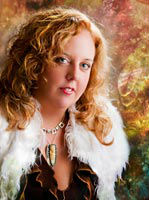
As a clinical therapist, motivational presenter, author & teacher, Sheila's passion is to provide a forum for people to process emotion & integrate spiritual understanding into their daily lives. Her new book, Enchanted One: The Portal to Love, provides readers with a guide to embracing love in every moment. www.sheilaapplegate.com
In celebration of the release of Enchanted One, Sheila is offering this raffle contest for multiple chances to win one of two Amazon Gift Cards.

TAKE NOTE (if I may be so bold)! PLEASE… Share your thoughts and comments below and to show my appreciation and support I am making this special offer (in addition to the raffle contest offer above!).
(Click all links for details).