On Susan Sontag, Taste, and Disability Inclusion

Susan Sontag once wrote: “Rules of taste enforce structures of power.” I’ve always liked this quote because as a disability rights activist I know what the late scholar Bill Peace called the problem of “the bad cripple”—the disabled who persist in their demands for inclusion are easily caste as people of bad taste. We’re the ones who spoil the even tenor of the dinner party or the golf course. We trouble the classrooms and the gymnasium. We’re a terrible burden on airplanes.

Two days I ago I sent an email to a faculty colleague saying that a PDF she’d forwarded to a wide range of folks was inaccessible. This colleague was wounded. She wrote me to say she’d tested the PDF and it was accessible on her machine. She felt that I’d mistreated her. She didn’t mean to say it, but I was the bad cripple.

The PDF was entirely unreadable by my screen reading software.

The professor in question talked to her departmental technology specialist who opined that the problem is that I use a Mac and that’s why I couldn’t read it.

The difficulty with this is that it’s entirely inaccurate. The PDF was fully inaccessible. But I became the problem “twice over”—for complaining and then for having the wrong kind of operating system.

I resent this. Moreover I dislike the assumption that I should never state the case, or by extension that I should be exceedingly kind to people who disperse inaccessible materials, as if it’s my job to make everyone feel OK about “the disabled.” I reject this principle. I might once have subscribed to it, say twenty years ago. But it’s not my job anymore.

Not long ago I pointed out that our human rights film festival and our disability film festival are inaccessible to the blind. No effort has ever been made to incorporate basic audio description for movies we show at my university.

When I brought this up a faculty member lectured me about how expense and difficult this would be.

Doing the right thing where disability and inclusion are concerned requires letting go of old cobwebby assumptions about disability accommodations, expectations, and the use of taste to enforce dominant power structures.

I’m sorry I hurt the faculty member’s feelings about the inaccessible PDF. She thought she was doing the right thing by checking it. The problem is that our university doesn’t have a syncretic and workable system for assuring that anything we do is accessible.

Not long ago we purchased an online program to educate staff about sexual harassment But the university never adequately tested the product and it was in fact inaccessible.

As a disabled faculty member I feel these things deeply.

It’s my hope that we’re heading in a better direction.

It’s my hope that in what remains of my career I’ll be freed from having to be the bad cripple.

My guide dog just looked at me as if to say “good luck with that.”
As Jimmy Hoffa Dies

–July 30, 1975

2:00 pm. Hoffa sits in the parking lot of the Machus Red Fox Italian Restaurant in Detroit and waits for his contact. The day is hot. Hoffa keeps the windows of his Pontiac open. He likes air conditioning but he isn’t going to pay for the gas. Though he’s been trying to quit he smokes a Pall Mall. He’s fucked: a man at the mercy of Gerald Ford and the Mafia and a hundred little fuckers every one of them dangerous. He smokes.

2:00 pm. Kuusisto sits on a roof in Geneva, New York listening to Billie Holiday. He’s 20 and blind and tiny crazed. He’s recently been in a mental hospital but now he’s alone and loves the line: “God bless the child that’s got his own”. He feels he understands it. He lights a joint wrapped in yellow wheat paper.

2:05 pm. Hoffa is agitated. No sign of anyone. He goes into the restaurant and gets some change from a waiter and phones a lieutenant. He blows off steam.

2:05 pm. Kuusisto is thinking about Holiday’s vocal energy vs. Leadbelly’s. On the Alan Lomax recordings he hears all the particles of Mr. Ledbetter’s body shouting together. Holiday still has this pain but she’s also found joy in emptiness.

2:08 pm. Hoffa is only aware of the apparent insult, not of the coming threat.

2:08 pm. Kuusisto turns the record over.

I’m alone…

I’m alone like a cabdriver who sleeps in his taxi dreaming of childhood. Red geraniums. Black currants. Sleep is a still life.

Last night I dreamt of my father, now long gone. He appeared beside a tall window at dusk, snow falling, and he was abosrbed, reading a book. I said, in the murmurous way of all sleepers, “that’s just as it was in life…”

Today the sun is strong. We’re allotted approximately 3 billion heartbeats in this life.

Disability and the Ableist’s Wall

With the recent passing of a close friend whose disability was central to his daily life, I seem to be leaning against walls. Let me clarify: they’re not visible walls. No, these are the walls of social containment. Let me further clarify: if you want to put someone “up against a wall” you must take for granted that the wall is either neutral or on your side. The obliging wall is a central truth when it comes to ableism.

You require medical care. You’re a wheelchair user. You’re shoved against the ableist’s obliging wall even though you’ve insurance. They push you against that wall and then you slip slowly out of your chair and onto the floor.

There are plenty of visible walls—the college auditorum with steps leading to the speaker’s platform. No disabled person would ever be a professor. There are conferences about disability where no effort is made to provide accommodations. My friend saw these things, endured them.

How they roll their eyes whe you point out their attitudinal walls. How they carry on about inconvenience and expense, as though designing things for human beings is a vast burden. (Making things accessible is often cheaper than making them inaccessible but the ableists are addi ted to their walls.)

Sometimes I think of ableism as being like an addiction to cigaettes. They know its bad for them but its such a daily ritual.


Lying in the grass midsummer…

Hi Pentti: the mushrooms are everywhere
Horses graze in the shadow of the barn
I’m drawing Coltrane’s wheel
On a fallen leaf
With my finger

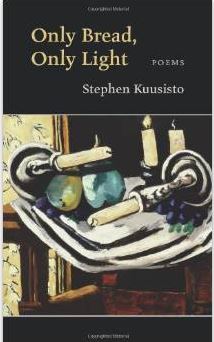
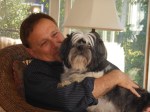
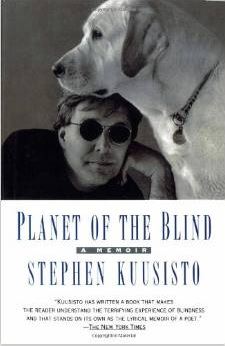
Stephen Kuusisto and HarleyABOUT: Stephen Kuusisto is the author of the memoirs Have Dog, Will Travel; Planet of the Blind (a New York Times “Notable Book of the Year”); and Eavesdropping: A Memoir of Blindness and Listening and of the poetry collections Only Bread, Only Light and Letters to Borges. A graduate of the Iowa Writer’s Workshop and a Fulbright Scholar, he has taught at the University of Iowa, Hobart and William Smith Colleges, and Ohio State University. He currently teaches at Syracuse University where he holds a University Professorship in Disability Studies. He is a frequent speaker in the US and abroad. His website is StephenKuusisto.com.

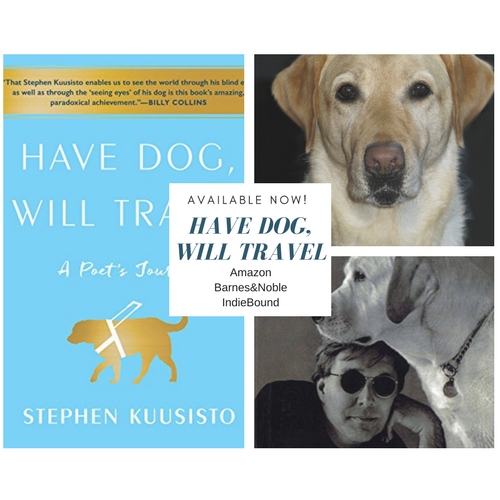
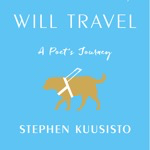
Have Dog, Will Travel: A Poet’s Journey is now available for pre-order:
Amazon
Barnes and Noble
IndieBound.org

Have Dog, Will Travel by Stephen Kuusisto

(Photo picturing the cover of Stephen Kuusisto’s new memoir “Have Dog, Will Travel” along with his former guide dogs Nira (top) and Corky, bottom.) Bottom photo by Marion Ettlinger