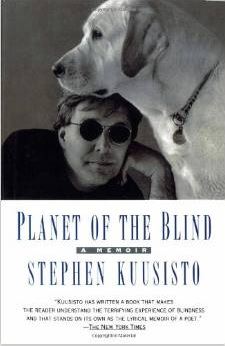
The Half-Finished Garden

Up early, dead father in mind, walking my dog

Thinking: “don’t moan, keep going”

Last summer’s plantings under snow

How many seasons remain?

Challenge, inventing hopeful names

Along the road—Locust Dharma

Branch to branch Bodhisatva….

Oh I could kiss you Transtromer—

Darkness against my cheek

Your Haydn, not mine, playing

Under my feet… Piano

For native country

How does it go?

Akhmatova

It was a long day, blazoned with hints from cumulous,

Forebodings—blackness in my wrists,

A fancy concerning self-harm—

As if customary sky may purchase

Or sell a life, in this case mine.

I’ve questions and no one to ask,

This static American business,

Bleaching yourself clear in public,

Being silent, a green chill

For a tongue. I was powerless

Today, strung across

My thirst with no one

To tell—correction—

The sun as strong as always.


Homage to Krip-Hop Nation

Yesterday I watched a Youtube video of disability activist and poet Leroy Moore. Mr. Moore is the founder of Sins Invalid—an arts program by and for the disabled and which promotes engagement with disability and black identity among other intersections. He is also the inventor of Krip-Hop, a poetics of spoken word poetry with powerful rhythms—a poetry of urgency and truth.

I’m just a white blind dude. I’m a white blind dude poet and nonfiction writer. Me? I’ve got broad interests. More than a few of my concerns have to do with trans-progressivism, which is to say I believe that oppression isn’t identical across diversity intersections but many of its mechanism are the same.

Here is Mr. Moore, reciting a poem after a black man with a prosthetic leg was brutally  wrestled to the ground by police in San Francisco. Here’s to Krip-Hop Nation.


On Blindness, Animal Pelts, and Revery…

If on some nameless island Captain Schmidt

Sees a new animal and captures it,

And if, a little later, Captain Smith

Brings back a skin, that island is no myth.

—John Shade, Pale Fire


Facts are produced by violence and are almost never the product of contentment. Artifacts are the spoils of empire. Even laboratories are places of conquest for every experiment aims to overturn the past.

Now I stand on a street corner. There is the traffic violence. There is also the hurried violence of passersby who race the clock.

Often I think of blindness as liberating, not because it is fact-less or non-violent, but because its more imbued with reverie than is commonly supposed. There are in fact whole moments when one must pause, listen, reflect, imagine, and let go of assumptions. One may say this is a romanticized version of vision loss, that its incompatible with reality, for there are aggressive and angry blind people and surely this is so, but let’s say its more likely a man or woman can have a brief moment of intellectual acquisitiveness when relieved of the visual impulse to grab or skin what’s before them. Romantic or not, blindness is a form of emotional intelligence.

Of course I’ve been put in mind of this conceit by virtue of the most often asked question thrown at the blind by sighted people—it has variants, but it goes like this: “Will your guide dog protect you if you’re attacked?” Or: “Aren’t you afraid of the dangerous streets?”

The answer to both is “no” but really the more interesting thing is the question itself for its predicated by the assumption that functioning eyes will protect you. Moreover its further based on the idea that although the world is violent, the eyes are a fetish. They are inherently magical.

Imagine believing such a thing, you sighted people! Hahaha! How can you ever hope for revery with your eyes open? Your hungry eyes that long to capture the animals and skin them. Perhaps some reader will prove me wrong, but I know of no blind person who’s house is filled with animal pelts.


But I Can’t

Disability says nothing but I told you so,
 Disability only knows the price you have to pay.
 If I could tell you I would let you know.
 I’d let you know how to rest,
 Sing a song of buoyant life.
 Disability says nothing but I told you so.
 It only knows the price you have to pay.
 Suppose all the clouds came down low,
 And the wilderness suddenly had words,
 Would silent lonely nature let us in?
 Would trees dismiss, say I told you so?
 If I could tell you I would let you know.
 If I could tell you I would let you know.


 – Posted using BlogPress from my iPad

Micro Memoir: the Moon and Edith Sodergran

There is something about the childlike face of the little dog, trust and appetite, he’s in the game no matter what. If a ball comes his way he’ll scoop it up. If you scratch his ears he will smile as dogs do—that sidelong open grin of the half accommodated predator who still recalls where he came from. I love him for not being me. He is not gifted musically. He’s not cynical like the birds flitting from branch to branch.

**

All that shines are the flowers from last night’s dream. Irises. Blue as flame on a cake.

**

So many rags and masks in my imagination’s closet. And the wind today blowing darkness against my chin.

**

Yes water and light are furnishings. Imagine that house, eh Mr. Aalto?

**

When Heraclitus invented lyric time he also created reality.

**

Dreamt the green reception of the sea—that first plunge—you can carry it with you.

**

The grey flock of academic colleagues, hunching along sidewalks. They know, inwardly, they’re custodians.

**

I write hastily, without expectation of thanks, very lonely, as always.

**

Quick story: I spent a winter reading Edith Sodergran, alone in the far north—Helsinki. One night, the moon, at my window, reached in, and searched my pockets.


Table Map

Down the road, down the road, all my friends live down the road. Old folk poem—down

the road and around the bend, ain’t got a letter in I don’t know when. Morning now. Rain.

If I think on it I’m remarkably simple. Papyrus, flute, true horse, following dog.

Up early, knocked about by nostalgia. I think boyhood lonesomeness holds clues.

Goemetrical, blazing, deathless,/Animals and men march through heaven,/

Pacing their secret ceremony. Thank you Kenneth Rexroth.

I sense the precise turn in the road, laid out by the gods’ hooves.

Day night our prancing. Thank you Pentti Saarikoski.

Living “up the road” from those I miss, what can it mean?

It means you are a centaur, with light in its eyes.

Micro Memoir: A Vague Love for Parsifal

One

Yes. There’s a suggestibility in books and last month when it was raining I read some mathematical calculations which were like various masks you’d find in a museum. Straight off I wanted to be a Victorian mathematician with pencil and tablet; Macassar oil, inked hat, a vague love for Parsifal, a fascination with godforsaken places. These—from an old volume of algebra.

You wouldn’t think you were suggestible. I am referring to myself. I’m confident I can remain half mad for one more day. It’s the damned books that push affections and dissatisfactions—it’s the books.

All I want is flowers in the window.

Two

Alright. A repeated fury has me by the toe. You see, the wind from dawn’s hourglass opened my eyes and I wasn’t ready. Now I want to tear the wreaths off my neighbor’s doors.

There are so many unknown forces in the genes. Today I am a rabid king. Beware lest I appear in your yard. As Pablo Neruda once said: “Please, I beg a sage to tell me, where may I live in peace?”

Three

I’m listening to Beethoven’s String Quartet #12 in E Flat, Op. 127.

How good on a dark day

To hear the strings

Like silver in a poor man’s room

A clean force.

Quartet #12—

Afternoon

Before a trip

Darkness against my cheek.


Four

I bought an umbrella from a street vendor. The sky was clear. The weather report called for many days of sun. Sometimes you need a prop for the dark, unconscious side of life. I bought the thing for my dead mother. And then she was there with me on 8th St. And the crowd around us formed a dense black ant pile and the confusion all about was indescribable.

Five

I fell out of a tree in 1955. Entered the world like a cicada.  There’s a chain of coffee places in New York City called “Pan Quotidien” which we are supposed to imagine means  “customary bread”–but I generally hear it as “ordinary pain” which brings me back to the cicada. He walks around and then gets eaten. Once when I was in college I asked an entomologist why insect scholars aren’t more philosophical. He said that science is exact. Which I still take to mean “being eaten is being eaten” and that’s that. You see, there’s no meaning in being eaten. And across the street from “Pan Quotidien” is a Methodist Church. For those who hope being eaten means something. I fell out of a tree. Talk a lot. Make a clatter with my unsupportable wings. That’s it.

Six

Birch branches curve slightly upward, less insistent than the oak. Across the street from me, in a different building, is a man who can explain why this is so, but we do not know each other.

Meantime, I guide my life by dreams, inefficient as always, prone to depression, occasionally putting my forehead down on the wet lawn early.

Seven

I wonder if I can stick to one thought, like a small hunting dog? Riding the train to New York, looking at the spoiled factory towns, the haunted river, can I hold with one thought?  I think I can be allowed a murmur. There has to be music in human silence. There may be music after this. Shadows fall together in the tall grass of a railroad siding.  Night crosses the desert of my understanding. I wonder if I can stick to one thought, like a small hunting dog?

Eight

Topographers of the 18th century, here’s snow with its rhymes and half words. I know how you put this on your maps. This is because I also try to avoid temporal distractions.

Nine

How does it begin, the collapse of wish?

When you can’t ask how it ends.

This is a joke of the rich

Who play chess with civic statues.

Ezra Pound would insert Greek.

ὄνους σύρματʹ ἂν ἑλέσθαι μᾶλλον ἢ χρυσόν

(Asses would rather have straw than gold.)

Three crows on my lawn,

All dancing sideways

Pecking at the remains

Of a Christmas wreath…

When I was a lad, well, you know—

I lived in the warrens of an outlawed sect called “the blind”.

Ten

My louche, unbuttoned, acerbic, free wheeling side pops up all the time. Says what it wants. Said once: the enemy stars are the same as ours–said it to a military recruiter and why not? And said once to a government agent who was photographing a protest against Ronald Reagan’s suppression of freedom in El Salvador: you know there are honest jobs, ones where you can make humble and lasting discoveries. And he of course photographed me.


Natural Selection

Last night I climbed from bed and walked my molecular sack downstairs for a glass of water. Then, without apparent effort I retraced my steps. Nothing stood in my way.

**

My thirst was triggered by natural selection—some of my ancestors did not successfully acquire their respective glasses of night water. Something prevented them from waking. Later they succumbed to the great Scandinavian flu epidemic of 1910.

**

Maybe my wife who was having a dream awakened me. Perhaps I have a wife because of natural selection. It’s likely that she chose me from among her suitors because she intuitively understood that I am the kind of man who wakes in the night and drinks water and thereby will continue to exist.

**

The aesthetic economy of survival is no small thing. A true story: someone introduces cats to a village where formerly there were no cats and those cats eat the mice. In turn the bees flourish. (Mice eat bees, particularly in winter.) The bees pollinate in greater numbers.

The flowers are beyond description. Monet paints them.

Notebook, October 2017 

King worm drops to the floor having taken too much Beethoven. There are no loudspeakers in nature. At first he thrilled to the sensations—moisty liminal guts buzzing with the string section,

all that rum ti tum zithing the straight line of his pooper but then Ludwig nackered him with tympani and you know, the poor bastard’s just a worm who’s lost. “How to you paint music?” he thinks, scooching his way on lemon-lime linoleum.

**

You breathed right up against the windowpane. Drew your mother from memory. Breathed again. She was gone.

**

Sometimes when I go to a funeral I’m aware the dead man knows my thoughts and there’s no blinking it away. This is why I don’t like ministers. They don’t get this.

**

Everything I touched today belonged to Rimsky Korsakov.

**

Last night I slept walked to the river.

All rivers wear black coats days, evenings, doesn’t matter.

Gave the river my white sleep shirt

Just to cheer it.

“You know,” I said, “textiles…”

**

I have always hated the laughter of drunks. Their mirth is terrifying, like the sounds we’ve recorded from the sun.

**

The water shining through trees. Lake of childhood.

Long ago I saw despair on the surface.

Don’t cry anymore!

**

King worm has a pair of wooden clogs which he uses as his winter and summer palaces. Wind blows darkness outside.

**

Do you ever see something innocent in the faces of old men and women? It’s the pink undamaged. Always a miracle since mostly we’re all ashes in rain.

**

I make mistakes over and over because I believe in assisting powerless human beings and animals. This means I argue with bureaucrats, sometimes noisily. The organizers don’t like me much. I sit opposite them, at a big table, trying to see myself as an organ, a stomach in a larger body.

**

Missing the daily mail. Cutting open letters with a horse head knife.

**

Dogs know the heavens do not turn in silence and they’re simultaneously cheerful.

**

Put on my little “peace hat” and pepper the aborning hour with words—names—Isaac Bashevis Singer, entelechy, sea cucumber, yellow mittens, mother-world. No one is about in my neighborhood. No one’s awake. The houses are all buttoned, windows dark. My feet love the wet road. I think I need to pardon my youth. I hear the Phoebe bird. The age I live in has a dark taste. I’m seldom prone to this but I do sometimes wish I was a bird.

**

Count on me

Says the pea-stalk reindeer

**

Birches clouds books


**

“Embraceable You”—Bill Evans

**

Up and down the museum stairs above the physical museum. That’s the ticket.