Why I’m Not a Wretch

Guide dog schools in the United States, charities all, like to say blind people are completed or set free by having dogs, an assertion that invites charitable dollars but isn’t entirely true. Fund raising lingo varies from school to school but the general pretense is: “with” a guide dog the blind have new opportunities, hope, freedom, and dignity leaving the public to imagine “without” a dog blind people are rather wretched indeed.

One school has the motto: “open your hearts for closed eyes” which is presumably Dickensian enough to moisten donors.

I am alive because of my guide dogs. I can never say enough about the advantages of having a professionally trained service dog by my side.

But I’m not more dignified because of my dog. I am more or less dignified because of myself.

Does the self, in the case of dog loving men and women feel better in situ “mitt” canine?

You bet. But follow the thread: is a man or woman more dignified because they take Prozac?

Dignitas, from Latin, means worthy. I am not more or less worthy because of my dog.

Now it costs a lot of money to breed, raise, and train each and every guide dog. It is altogether fit and appropriate to ask the public to assist with charitable dollars. But why the old fashioned idea that the blind are either dignified or without worth according to the provision of your services?

Tell true stories of success and joy. Leave out the semiotics of wretchedness.

If the guide dog schools tried this they’d be as daring as their clients who face the unknown with a strong belief in essential goodness.


A Friend is Rereading Gaston Bachelard

A friend is rereading Gaston Bachelard. She tells me by telephone. I picture revery as satellite transmissions. Oh Gaston, who wrote: “Daydream transports the dreamer outside the immediate world to a world that bears the mark of infinity.”

Oh to be transported each moment, so your house is never static but always in support of being.

And to be done with preparation and the politics of appearance.

Oh Gaston! “Toujours, imaginer sera plus grand que vivre.”

John Lennon said: “I’d sooner be Zappa.” I say, “I’d sooner be Bachelard.”

Which is the point of course. We’re all Gaston Bachelard. We’re all arriving, just now, just here, with the intimations of star-feathers and ancestral eyelashes blinking with spring, as this is all springs, and the heart is every heart and let’s be clear our hearts are dream houses with the windows wide open.

We’re all Gaston Bachelard. “A word is a bud attempting to become a twig. How can one not dream while writing? It is the pen which dreams. The blank page gives the right to dream.”

I even love his jokes: “Two half philosophers will probably never a whole metaphysician make.”

Some mornings we tinker at the edges of the page. Our houses are not yet warm with sun though light is coming up. We drink coffee. Listen to the old plumbing inside walls. Peel an orange. Remember even a minor event in life is an event of the world.


My Mother and the Telephone, Circa 1959

images-11

Image: classic desk telephone, black, with dial, circa 1950.


My mother was an alcoholic and was for the most part silent in the house. I always kept the silence for I understood and felt adult sorrows, much as dogs sense the unhappiness of their owners. Silence is always the giveaway in tragedy.

But a weird and wonderful change came over my mother whenever she was on the telephone. It was fifties phone: black and made of bakelight, a proto-plastic of great density. It was heavy as a paving stone, squat as a porcupine. And like an animal it sat in its protected corner in a shadowy nest of paper scraps and broken pencils. Because the phone was stationary my mother stood in the corner of the kitchen with her back to the room and leaned into that small corner and talked in earnest.

That was when she laughed.

While much of her day was spent in furtive retreat, while she slept at midday with the curtains drawn, while she often scowled in her privacies, the gadget, the appliance, the domestic device, the horn offered her a district of hilarity. She swayed in the corner, elbows propped on the formica and laughed.

In her laughter she was living, active, open.

In her laughter she was breathing, gasping, even thirsty.

I didn’t listen to what she was actually saying.

I did hear names—knew she was talking about people. Doris, Anna, Sonya—the names were the governing order of the laughter.

I was busy whittling the points of pencils with a jackknife. Blind kid with knife working diligently in the adjoining room…and then a windstorm of laughter—high, musical laughter, ascendant, open, rushing forward…

She laughed then listened, laughed again.

The laughter was like soap on the floor.

It was like the light at the end of the garden.

When she put the receiver back in its cradle she went absolutely silent.

I wanted the telephone.

It was a vessel.

There were people below decks.

When I was alone I picked up the receiver. It was heavy as a hammer. I put it to my ear and heard the  steady and flawless dial tone. It was like hearing a sound from beneath the house.

And I knew that if I waited a few moments the operator would speak.

She would tell me the time. Call me sweetie. Her voice, distilled from the darkness.

She was just a bit of the shy, unasked for sweetness of things.


A Disabled Writer’s “Take” on Donald Trump

97120-004-f792981d

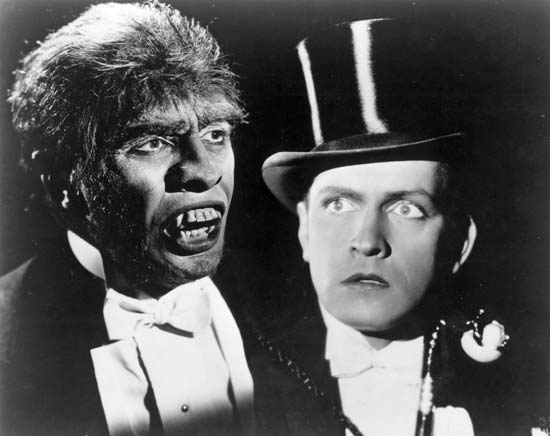
(Image: black & white still photograph, Dr. Jekyll and Mr. Hyde)

The only thing that trickles down in America is convenience: a suitably value neutral noun for a nation still struggling with Jefferson’s pursuit of happiness. Easy; proceeding without difficulty; advantaged—whether the subject is Wall Street, Madison Avenue, or Pennsylvania Avenue, the “flow” behind attainment is universally customized for ease. As a proposition ease sells better than happiness, the latter being too un-Christian or simply precarious as an appeal to voters for how would a coal miner become happy? He’d like a decent house, medical care, maybe a bass fishing boat. No commonsensical politician would ever promise these things but convenience allows for advantaged or leveraged inconvenience—“you wanted that job, but they had to give it to a minority applicant instead…” (Hats off to the ghost of Jessie Helms…)

Money never trickles down in America but suspicion and ill will are spreadable currencies. After all, if a man or woman isn’t happy, then he or she must by the laws of convenience envy someone who’s in good spirits. Envy is the gold standard of human psychology, not your first poopie as Freud would have it. Carl Jung’s theory of the “shadow” is more useful when thinking about the politics of convenience. As Stephen Diamond writes at Psychology Today:

‘‘The shadow,’’ wrote Jung (1963), is ‘‘that hidden, repressed, for the most part inferior and guilt-laden personality whose ultimate ramifications reach back into the realm of our animal ancestors and so comprise the whole historical aspect of the unconscious’’ (cited in Diamond, p. 96). The shadow is a primordial part of our human inheritance, which, try as we might, can never be eluded. The pervasive Freudian defense mechanism known as projection is how most people deny their shadow, unconsciously casting it onto others so as to avoid confronting it in oneself. Such projection of the shadow is engaged in not only by individuals but groups, cults, religions, and entire countries, and commonly occurs during wars and other contentious conflicts in which the outsider, enemy or adversary is made a scapegoat, dehumanized, and demonized. Two World Wars and the current escalation of violence testify to the terrible truth of this collective phenomenon. Since the turn of the twenty-first century we are witnessing a menacing resurgence of epidemic demonization or collective psychosis in the seemingly inevitable violent global collision between radical Islam and Judeo-Christian or secular western culture, each side projecting its collective shadow and perceiving the other as evil incarnate. 

Shadow projection is easy—even a kindergartner does it. As a disabled child I learned this first hand. I was a movie screen for shadow projections.  In grade school I received many lessons:

  1. Sighted children shared nothing.
  2. No one played fair.
  3. Hitting people was easy and the blind kid was a perfect target.
  4. Hiding things from the blind child was sport.
  5. Disarranging the blind kid’s possessions was also rather fun.
  6. See above.
  7. Sorry is absurd.
  8. Steal soap from the blind kid.
  9. Push him in the toilet whenever you have a chance.
  10. Always take the blind kid’s lunch.

Shadow projection is automatic. It’s the foundation of convenience. Once a person has been scapegoated then the utility of the projection becomes a conscious narrative. “He’s such a dweeb,” says the kid who’s pushed the disabled child into a wall. “He’s retarded.”

**

The Laws of Convenience are opposed to happiness. If we picture the LOC as an engine in the manner of DeLeuze, then it’s appropriate to say it runs on loss—whether it’s your mother’s breast or your neighbor’s kidney shaped swimming pool, the psyche doesn’t own it, cannot own it—so deprivation is its gasoline.

When the able bodied project their shadows on the disabled they’re saying in the unspoken lingo of the LOC, “you people are deprived and I will never be you…unless…”

And so, you betcha, another of the LOC is the “unless principle” (for so I shall call it) which is essentially Jungian. It’s the loathing one feels at perceiving the immanence of the shadow. This perception means knowledge but it’s incomplete—I don’t like you. I don’t know precisely why, but it’s convenient to say “I’ll never be you” and then the concomitant shiver…”unless”…which all rational beings must feel if they’re to have a self. I am me. I am not you. I am not my mother’s breast. The language most often used for this fragmentary consideration is represented in the phrase: “there but for the grace of God go I”.

The LOC employs God as the keystone of “unless”—which, is of course, one of the reasons fundamentalist types frequently approach the disabled in public spaces and insist on praying for them. Their shadows say, “I might be you, but with the will of God I will forever not be you, in acknowledgment of my faith, amen.”

This leads us to the next LOC which is the enforcement of sublimation by projection. The disabled must necessarily remain in their place if I’m to remain elect.

(You may substitute jews, muslims, women, people of color, queers, and your poorer neighbors, for another aspect of enforcement by sublimation is it’s protean queasiness. The Shadow is always thinking about—nay, sometimes planning on throwing up.)

**

Fundamentalism, whether Christian, Muslim, Judaic, Hindu, Buddhist, or Atheistic, is always predicated on convenience. There’s always a neck that deserves to be stepped on.

The disabled neck gets its comeuppance whenever shadow-convenience is in operation.

Donald Trump, the putative Republican nominee-to-be for President in 2016 famously mocked the physical disability of Serge Kovaleski, a reporter for the New York Times.

Katrina Pierson, Donald Trump’s campaign spokesperson, a former Tea Party volunteer for Ted Cruz, once referred to David Dewhurst, a disabled veteran running against Cruz as “deformed”.

Convenience, the state of being able to proceed with something with little or no difficulty has a shadow problem with those who must proceed with considerable strain.

One may consider this to be the final Law of Convenience. We don’t currently have a word for it, so I’m going to offer a neologism:

Slick plus bigotry equals “slickotry”—always glib on the outside. And on the inside, where things matter, it’s marked by thousands of tiny bat-like shadows.



From the First Guide Dog Department

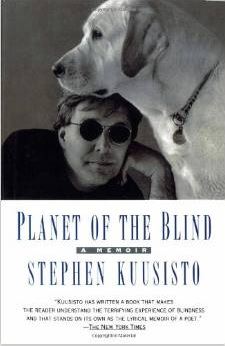
I was talking to myself rather often “post-dog”—which I imagined meant that happiness was having its way with me.

“Maybe I’m developing a talent for contentment,” I thought. “How often do we have the chance to admit this in our lives?” I thought.

“As often as you like,” I said.

“Be joyful as often as possible,” I said.

Corky and I rode the subway to Coney Island.  It was April and off season, but the famed Boardwalk was a grand place for a brisk walk. It was a blustery weekday in early spring and there were very few people about. We pounded down the wood planks fronting the ocean and I said things about well being softly, the way self-talkers tend to do. Corky had her head up, very high, to scent the Atlantic, and it was safe to imagine she was also thinking about delight.

Aristotle described happiness as “human flourishing” which he said involved activity and exhibiting virtue, and both should be in accord with reason. “Corky,” I said, remembering a day from childhood, “no one can be happy while walking the railing of a bridge…” “There was no reason in my youth,” I said. “And now you’re here and you are my virtue,” I said. I wasn’t sure what this meant. “A dog can’t be my full virtue,” I said. “She can only be the agent of my honor,” I said. “But it’s lovely, Corky, to be walking the boardwalk with you and the ghost of Aristotle,” I said.

A policeman approached and said, “Are you OK?” “He’s seen my lips moving,” I thought. “He probably thinks I’m lost,” I thought.

Could I tell him that happiness was having it’s way with me? Tell him about Aristotle’s sense of “Eudaimonia”—good spirit; a burgeoning; a man and his dog growing wings?

Could I say that after years I was seeing my life and the surroundings in which I found myself, finally, as objectively desirable? Would anyone on the street, much less a cop, know what I was feeling? I tried to imagine “joy-with-strangers-day” in New York. Something like the Reggae “Sun Splash” in Jamaica.

“I’m just happy,” I said to the policeman who was taken aback. “That’s a first for me,” he said. “I mean, no one ever says that, even at Coney Island!”

Had I been a self-talker throughout my life? I didn’t think so. In childhood development it’s called “private speech”—kids repeat the words they’re hearing, perhaps as a way to absorb them. “Maybe,” I thought, “I’m having the childhood I should have had.”


Aristotle, Happiness, and the Motives of Donald Trump

Aristotle described happiness as “human flourishing” which he said involved activity and exhibiting virtue, both of which should be in accord with reason. It’s no stretch to say America was, from its beginning, an Aristotelian state. Thomas Jefferson’s “pursuit” of happiness is tied inexorably to virtue, to reason, and to action. When John F. Kennedy called upon Americans to ask what they can do for their country he was echoing Jefferson’s idealism—happiness is crafted in action, and action must be in the service of others.

My “take” on Donald Trump is that he is decidedly un-American precisely because his call “to make America great again” has virtually nothing to do with the contentment or well being of our citizens. He espouses no virtues; promotes no civic minded activity in his followers; and virtually all his rhetoric is driven by pathos as opposed to logos. He is not at all interested in human flourishing.

Many have described his taint of small “f” fascism. His appeals to racism and misogyny are well documented. No one can know just how real these impressions are or to what extent his contemptible language reflects his personal thinking. But we can analyze his campaign statements in terms of American virtue.

It’s in this latter area I believe our nation’s broadcasters are letting us down. Because no one demands that he talk about virtues, he’s free to whip up fear and loathing. Trump’s campaign is predicated on extremist lies. To echo Barack Obama’s last State of the Union Address, the United States is not disrespected in the world. We are not a failing state. We have a vigorous economy. We are safer from attack than any other nation on earth. A true presidential call to action in this time, which is to say a virtuous campaign, an American campaign would incite our citizens to action—whether on behalf of the poor, the climate, our infrastructure, the aspirations of young people. Trump merely tells his followers that others are stealing their right to happiness, a stance many have compared to Hitler’s rhetoric.

In America we know that no one can steal your right to happiness. The freedom to strive is the measure of our diversity and our national aspiration.

Donald J. Trump is many things. But “American” he is not, except to say, he belongs to a long tradition of ugly political snake oil salesmen best characterized by H.L. Mencken:

The whole aim of practical politics is to keep the populace alarmed (and hence clamorous to be led to safety) by menacing it with an endless series of hobgoblins, all of them imaginary.

With Trump, it’s all Hobgoblins, zero of happiness; not even the promise of happiness, for his slogan “Make America Great Again” is one of Mencken’s goblins, signifying greatness for only some, not others. No virtue to be found that way. But plenty of vicious activity.

From the UN Special Rapporteur on the Rights of Persons with Disabilities


Meaningful participation for people with disabilities: a pending challenge for an invisible billion

GENEVA (4 March 2016) – “People with disabilities constitute at least 15 percent of the world population – the equivalent of the entire population of the Americas,” said the UN Special Rapporteur on the rights of persons with disabilities, Catalina Devandas Aguilar, who presented a report* today at the Human Rights Council on the participation of people with disabilities in public life and decision-making.

“Due to stigma we are mostly invisible, we rarely occupy positions in governments, and we are normally not consulted about policy-making, even when the issue directly affects us,” said Ms. Devandas Aguilar.

The human rights expert recalled that the Convention on the Rights of Persons with Disabilities, which has been ratified by 162 countries, obliges States to consult closely with people with disabilities, recognizing their right to participate in all areas of public decision-making, not just those related to their disabilities.

However, according to the Special Rapporteur this is still a distant dream. “Our voices are simply not heard. Our exclusion is a loss for society as a whole. And it goes against the idea of ‘leaving no one behind’. At this rate we won`t meet the new Sustainable Development Goals unless people with disabilities are treated differently,” she warned.

In her report, Ms. Devandas Aguilar urges all governments to engage in direct consultation with organizations of people with disabilities, rather than only those that advocate on their behalf. “States must prioritize the participation of organizations led and operated by persons with disabilities and support their establishment and functioning,” she explained.

The Special Rapporteur stressed the importance of engaging with groups who need considerable support, such as autistic people and those with intellectual or psychosocial disabilities.

“States must consult everyone and take their views into account; it’s simply not acceptable to exclude some people”, she said. Ms. Devandas Aguilar also raised concerns about the precarious situation of women and girls with disabilities, pointing out that in many places it is still unsafe for them to take part in open consultations.
(*) Check the Special Rapporteur’s full report (A/HRC/31/62): http://ap.ohchr.org/documents/dpage_e.aspx?si=A/HRC/31/62

The Special Rapporteur also presented her report on the Republic of Moldova (A/HRC/31/62/Add.2): http://ap.ohchr.org/documents/dpage_e.aspx?si=A/HRC/31/62/Add.1

Ms. Catalina Devandas Aguilar (Costa Rica) was designated as the first Special Rapporteur on the rights of persons with disabilities in June 2014 by the UN Human Rights Council. Ms. Devandas Aguilar has worked extensively on disability issues at the national, regional and international level with the Disability Rights Advocacy Fund, the UN unit responsible for the Convention on the Rights of Persons with Disabilities and the World Bank. Her work has focused on the rights of women with disabilities and the rights of indigenous peoples with disabilities. Learn more, log on to: http://www.ohchr.org/EN/Issues/Disability/SRDisabilities/Pages/SRDisabilitiesIndex.aspx

The Special Rapporteurs are part of what is known as the Special Procedures of the Human Rights Council. Special Procedures, the largest body of independent experts in the UN Human Rights system, is the general name of the Council’s independent fact-finding and monitoring mechanisms that address either specific country situations or thematic issues in all parts of the world. Special Procedures’ experts work on a voluntary basis; they are not UN staff and do not receive a salary for their work. They are independent from any government or organization and serve in their individual capacity.

Read the Convention on the Rights of Persons with Disabilities: http://www.ohchr.org/EN/HRBodies/CRPD/Pages/ConventionRightsPersonsWithDisabilities.aspx

For more information and media requests, please contact: Ms. Cristina Michels (+41 22 928 9866 / cmichels@ohchr.org) or write to srdisability@ohchr.org

For media inquiries related to other UN independent experts:
Xabier Celaya, UN Human Rights – Media Unit (+41 22 917 9383 / xcelaya@ohchr.org)

For your news websites and social media: Multimedia content & key messages relating to our news releases are available on UN Human Rights social media channels, listed below. Please tag us using the proper handles:
Twitter: @UNHumanRights
Facebook: unitednationshumanrights
Instagram: unitednationshumanrights
Google+: unitednationshumanrights
Youtube: unohchr


Disability and “Le Machine Hot”

Have you ever considered the flamboyant machinery of disability? Not the machine of desire like Deleuze, but of insistence. The Dis-machine is about insistency and each of us who’s claimed disability must be rendered robotic by our demands. Not the cyborg of Judith Butler the Dis-machine: it’s a childish contraption, irritatingly repetitive, always whiny and whinnying. So it’s loud, gets attention, and the human soul boils inside it.

**

Wasn’t that enough for you? Didn’t we give you a radio and some Braille playing cards? Oh yes, and didn’t we give you Social Security Disability payments? Isn’t it enough we didn’t tumble you into the sea?

What? You want to be of the earth like your neighbor?

**

Flamboyant: mid 19th century: from French, literally ‘flaming, blazing,’ present participle of flamboyer, from flambe ‘a flame.’

Disability, advocated for, is a repetitive life-long enslavement, stiff, mechanical. Vocalized it becomes hot, a conflagration.

The disabled, considered children by those without disabilities, are, effectively steam engines, wholly constructed; hot to the touch.

**

Now I don’t know you. You, my fellow passenger. We’re flying Iodine Air. The commuter plane is filthy and smells like gym socks. I don’t know a thing about you, Man Across the Aisle—you who imagine because I have a guide dog I can’t tell you’re sizing me up with the face of a reproving minister. Perhaps you don’t like dogs; maybe blindness upsets you. In extremis, I remind you of death, which is wonderfully ironic because I see you as a specialized proto-cadaver. That is, you’re biggest contribution to humanity will come when you’re dead and on a table. I’m on fire alright.

**

Desire’s basic function according to Deleuze and Guattari is to assemble and render itself mechanical.

All disabled are “Le machine hot” and you really shouldn’t touch me.

What is the constructive thing the disabled form?

**

This is the problem: the bio-political conditions of disability are stripped of effectual desiring-production and must, therefore, be voiced relentlessly, like the notes of a calliope.


Meanwhile the journalists trained their lenses on the crippled child who was allowed to meet the great basketball player. Normal people wept and considered the little boy “brave” for wanting to walk in the world.

**

This is the problem: there are no workshops for disablement mastery.

Cripples descend to the streets with their horrendous habits and torn tickets.

The desiring machines of crippledness are fueled by the chrysanthemums of healing.

These are not the true machines.

You see I feel as well as my body tells me I do. I throw flames from my wide mouth.


Spearmint Love

 No one knows if the apostle Peter’s femur is truly under the Vatican, though there’s strong evidence in support of the belief.
 
 No one knows how old the cosmos really is, but we know just enough to know it’s far older than any of our suppositions.
 
 In this way, neither evidence or knowledge are exclusive but in both cases unsentimental thinking is most advantageous.
 
 The poet Rumi wrote: “Your task is not to seek for love, but merely to seek and find all the barriers within yourself that you have built against it.”
 
 Substitute knowledge for love in Rumi’s declamation. It’s a guaranteed recipe for humility, which when achieved, leads you back to love.
 
 Insufficient knowledge is the greatest barrier to humility and also the greatest obstacle to love.
 
 Full knowledge is absolute humility.
 
 “Everything that irritates us about others can lead us to an understanding of ourselves.” (Carl Jung)
 
 This is all I really know.
 
 Oh, and spearmint gum doesn’t really have any spearmint in it.
 
 
 – Posted using BlogPress from my iPad

Thinking of Pentti Saarikoski

 I dreamt last night ghosts were beheading ghosts. Phantasmic, cruel, silent, voila! The dead dominated the dead.
 
 If you think it’s perfectly acceptable to mix untruth with nonfiction I’ll say Leon Trotsky was in my dream. He said to a tall ghost who was trepanning a shorter ghost, “Talk to me friend. Tell me anyway–Maybe I can find the truth by comparing the lies.”
 
 Oh but of course my dream didn’t contain Trotsky.
 
 Just ghosts, shimmering, anamorphic, genderless, cutting off their neighbors heads.
 
 Trotsky again: “As long as human labor power, and, consequently, life itself, remain articles of sale and purchase, of exploitation and robbery, the principle of the “sacredness of human life” remains a shameful lie, uttered with the object of keeping the oppressed slaves in their chains.”
 
 
 – Posted using BlogPress from my iPad