More About Bonding with a Guide Dog

At Guiding Eyes 1996


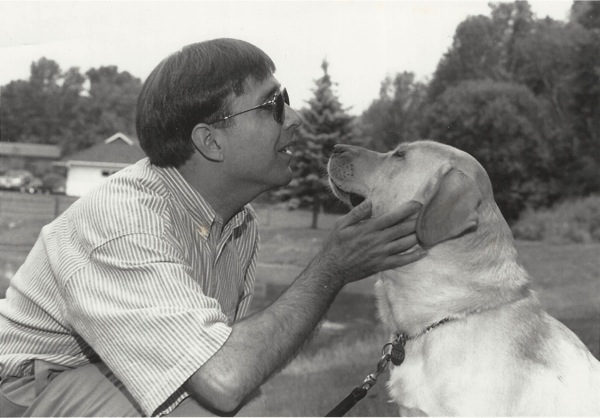
Photo of Stephen Kuusisto with his first guide dog Corky, taken on the grounds of Guiding Eyes for the Blind, 1995


Down by Fisherman’s Wharf It began to sink in—I was two persons walking with Cork. The boy who used to be me was there— a boy sparking with wonder. Then there was the man I was becoming. This bonding business, “becoming one” with a guide dog was a spiritual event. I sat on a bench and listened to the sea lions. Corky sat beside me. The boy listened to the sea lions. He thought they were talking the talk of the rocks—orgulous and pushy. Beautiful rocks, swimming stones. And Corky, tilted her head, her ears up, taking in the notes that sounded like protests from a rusted gate. 


The man thought at last he was congenial with his own flesh. He could understand why Buddha appeared relieved. The sea lions called. Someone had a flute. Someone was playing a flute. The man remembered a friend who went to a Florida swamp to read poems to alligators. The man thought the flute accompaniment to the sea lions was better. The call and response of the flute and the sea lions spoke something about owning our lives. 


The boy wanted to run down the wharf waving his arms. The blind boy had always been good at running wildly. The man understood that joy. The man and dog understood. The man and dog and boy got up together and covered the wharf with very fast footfalls. 


The man was meditative. He thought about C.S. Lewis who wrote: “No soul that seriously and constantly desires joy will ever miss it. Those who seek find. Those who knock it is opened.”
The Unknown, Beneficent Ghost

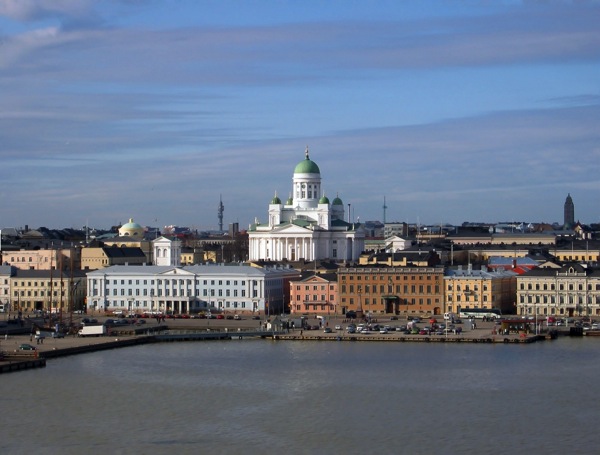
Suurkirkko Helsinki maaliskuu 2002 IMG 0629 copy


Photo of Helsinki’s famous harbor. 


Once I met a ghost in Helsinki. I was young enough to be surprised, old enough to worry. I was walking with my friend Tim. We’d stopped outside a toy store while Tim’s son Pablo went in to look at insect shaped kites. It was April, clear and dry. There was weak afternoon sun, the kind of light you get in the far north. We lit cigarettes, I remember, and started talking about poetry—Tim was a terrific translator and writer and he said something and I said something, and in accord I finally said—“I see!” And poof! There before us was an extremely old man. He was agitated. His skin looked thin as paper. He had a wisp of white hair on top of his head which stood up. He looked at us, pointed, shook a bony finger and said: “Why do you say you see? You don’t see! You understand! You understand!” “Yes,” said Tim. “You’re right.” And Tim looked at me, and I, with my legally blind eyes looked at Tim. And then we turned back and he was gone. Quite gone. Tim ran up the block and looked down a perpendicular street. The man had been frail, old as the city’s paving stones, and overtly present before us, and zounds! He’d appeared and disappeared in an electrostatic bolt of sadness and urgency. This is a true story. I knew inwardly this event had something to do with my being profoundly blind and pretending I wasn’t. What a good ghost. And what a peculiar city Helsinki really is. 

Disability and Higher Education

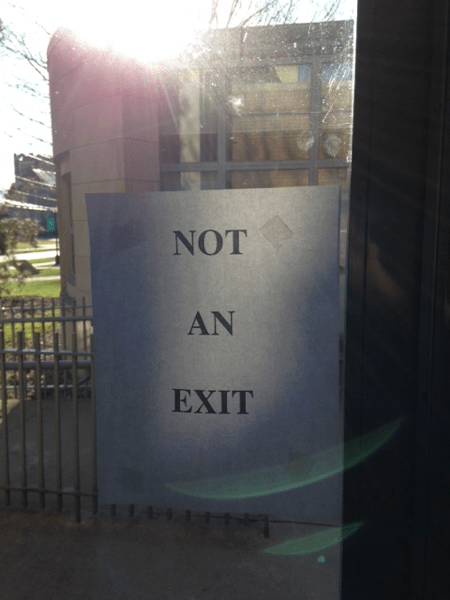
There’s an article today by Megan Rogers at Inside Higher Ed which highlights the unfortunate accessibility problems Professor Bill Peace and I experienced during a visit to Hobart and William Smith Colleges last weekend. One important thing that’s missing from Megan Roger’s article—and this is really significant—is my description of the colleges’ responsiveness to the situation. I spoke warmly and enthusiastically about President Mark Gearan who is a superb campus leader and is a “stand up guy” as they say in the vernacular. President Gearan has organized a team to address accessibility problems at Hobart and William Smith. I told Megan Rogers that in my experience this kind of prompt and professional responsiveness does not often happen in higher ed circles. I mentioned the University of Iowa which has a student disability center in the basement of a dormitory, which makes the office not only hard to find, but impossible to exit in case of a fire. Despite my repeated efforts to get administration at Iowa to fix this problem the problem remains. Accordingly I’ve grown to admire people at the top in higher ed who seek to redress problems when they’re discovered. I applaud President Gearan for his leadership and commitment around issues of inclusion and diversity.   

Ode to Gaea

When I dance I dance full out—

No one can take this joy away. 

I lean in music, stir in rain, then turn about. 


Some say the blind are filled with doubt.

They think we’re sad in the heart of day.

When I dance I dance full out. 


With strangers I’ve been known to shout

In glee—something—animal faith—stay.

I lean in music, stir in rain, then turn about. 


Call slow angels, souls with wings of doubt. 

Life taught them nothing in their day.

When I dance I dance full out. 


Clouds and tears, especially tears will out. 

Mendelssohn is right—a violin without delay.

I lean in music, stir in rain, then turn about. 


And you my friends, sighted or without,

What songs will you carry on this day?

When I dance I dance full out.

I lean in music, stir in rain, then turn about.   


On Being Brave

By Andrea Scarpino


My father standing at the rehab center’s exercise bar after he’d had his knee replaced. How he stood longer each day than he had the previous day. 


My friends the poets. How little Americans care about poetry. How little money there is to be made. How we write anyway. How we send our poems to magazines. How we log pages of rejections. 


My friends the musicians who make their own careers: weeks on the road playing shows, sleeping on couches, recording their own albums, being their own managers. My friends the artists, the actors, the activists. 


My brother, who packs up his life and moves to new countries because the work is better abroad, because abroad he is compensated fairly. 


My friends who have suffered terrible losses. How gray the world can look, how marked by loss. How they get out of bed anyway, make travel plans, mail loving packages, savor meals with friends, laugh heartily. 


My partner, mired in tenure bullshit. How he hasn’t quit fighting. How he keeps insisting on the high road. 


My younger self who fought through pain and experimental treatments to walk the hallways at school, to laugh with friends on the weekend. 


It’s a cold, rainy, windy day in Marquette, the winter on its way. The world feels a little too much, a little too demanding, pulling me in too many directions. I’m not giving anyone enough. 


And maybe sometimes being brave is overrated—putting on a good face when you want to curl in bed and watch TV. And maybe sometimes that is also being brave: gathering your resources for another day’s fight.

Who Needs Dirty Harry?

Smoky clouds were low over the harbor. The whole day was just that. Clouds above and in my head. That’s how blindness is sometimes. Corky and I walked up a long flight of steps in a zig zag San Francisco neighborhood. A stranger approached and said a famous car chase scene in one of the Dirty Harry movies was filmed there. It occurred to me I didn’t know anything about Dirty Harry. I smiled. Then lifted Corky’s harness and we were off. Its easy to lose people with a guide dog—one moves out at such a brisk pace most folks won’t try following you.


In a small park we discovered old men and women doing Tai Chi and we sat down and absorbed some peace. Corky and I were always finding discrete peace-places—as if walking together happily brought about geographies of invitational bliss.    


A Retraction about My Request for an Accommodation at Syracuse

If you live with disability long enough you will encounter many unreasonable people—bus drivers who don’t want you on the bus; teachers who wish you weren’t in their classrooms; information technology personnel who wish you’d just go away; taxi drivers who won’t pick you up; airport personnel who behave disgracefully; college professors who opine that students or staff with disabilities don’t belong in the agora. The list is considerable. 


I wrote this morning that Syracuse University refused my request for a sighted guide in order that I might teach in Istanbul. The message I received said quite simply, there’s no money in the budget but perhaps other departments can fund the request. But no there was direct mention that the request was being explored or was probable of success. 


A colleague and friend wrote me today to say I was too hasty in my judgment. In effect the proposal was being discussed and I pulled out too soon. Life with a disability is exhausting and even the most level headed advocates can get tired. I did not see in the email responses to my request any mention that there was ongoing discussion of the accommodation request. Apparently, unbeknownst to me, there was something afoot to make my request possible.


So I apologize now for saying that SU didn’t honor my request. I can’t however apologize for my frustrations. No one said the proposal was being appropriately discussed. I was left with the impression it was up to me to find the support. 


I’m soured on the business and it will take me some time to absorb my feelings. SU is not as disability friendly as it should be—a matter that’s been of considerable concern to students and faculty here for some time. But in fairness, my request was not officially denied.

Academia and Disability, Redux, Redux…

NewImage


Franz Kafka said: “By believing passionately in something that still does not exist, we create it. The nonexistent is whatever we have not sufficiently desired.”


I’ve had this in mind for two days—two days of disability related disappointments. Both involve academia—a sad visit to Hobart and William Smith Colleges with my friend Bill Peace where, at a conference on bioethics and disability, we discovered inaccessible facilities and a concomitant lack of awareness about the issue, as evidenced by shrugs from the organizers. No, I’m not kidding.


Now my own university (Syracuse) has decided my request for a sighted guide to help me safely navigate in Istanbul while teaching abroad this summer is simply not in the budget. I made the request because I’d have to leave my guide dog home—Turkey is not a guide dog friendly place. Imagine making your way in a city without sidewalks and ferocious traffic and all without help. SU has a billion dollar endowment but can’t afford a plane ticket for an assistant.


I’m kind of relieved. Now that I know my disability status is a risible inconvenience both on the road and at home, I can unplug myself from academic culture. I should have unplugged a long time ago. I’ve never been welcome. And this is where Kafka is wrong: I did sufficiently desire an inclusive academy. But at 58, after thirty years of fighting, I see I’m not going to live to see it. 


Here’s Bill Peace’s assessment of our experience at Hobart and William Smith Colleges:


http://badcripple.blogspot.com/2013/11/an-unexpected-humiliation-at-conference.html


A Modest Exquisite Corpse for Ted Berrigan

First Thoughts, Best Thoughts


**


Bird song in early snow and I’m on a journey.

I was a middling boy who loved Jules Verne.

I’m piloting a snow submarine with birds for a crew.


**


By some unestablished rule some event may have hurled its first “yes” at other events causing discrete happiness for unsuspecting people.


**


I am old. I like it. I feel snappy in my post-diluvian world. 


**


Met once at a Finnish monastery a monk who was 100 years old. We were in the sauna. His sweat smelled like strawberries.


**


I’m loosely arranged on a salad of calendar pages. 


**


Goddess of underlings, roll your sexy wheelchair!


**


Hilarity beyond the constellations, but “no religion too” —thank you Mr. John Lennon…


**


The isotherm of galloping winter brain. Let’s sneak around and knock on the neighbors’ windows!