
Some Thoughts on Casey Martin's Return to the PGA

We received the email below from a good friend, a longtime disability rights advocate:


I came across an interesting article in Golf.Com about Casey Martin. You may or may not remember when Casey Martin v. PGA was decided by the Supreme Court. Very briefly Martin sued the PGA under the Americans with Disabilities Act, asking for the right to use a golf cart in PGA tournament play as an accommodation. The underlying issue was how are accommodations determined to be reasonable. Was the “endurance” represented by the PGA rule that players walk the course truly essential to the game of golf? If not then riding a cart would be a reasonable accommodation. The decision was that riding a cart was a reasonable accommodation under the law.

Mr. Martin’s condition took him out of the game by the time the decision was made, but this year he is back in U.S. Open play.

The article provides a brief history of the case, but more interestingly discusses how the response to his return and use of accommodation reflects changes in society’s understanding of disability, accommodation, and what is important!

http://www.golf.com/tour-and-news/casey-martin-play-us-open-cart-14-years-after-legal-battles?hpt=hp_t2


NYTimes: Jeb Bush Questions G.O.P.’s Shift to the Right

“For the better part of three decades, there has been no more prominent family in Republican politics than the Bushes.
But tough talk about the state of the party on Monday by former Gov. Jeb Bush of Florida — who went so far as to say that Ronald Reagan and his father would have a “hard time” fitting in during this Tea Party era — exhibited a growing distance between the family, which until not very long ago embodied mainstream Republicanism, and the no-compromise conservative activists now driving the party.”

From The New York Times:

Jeb Bush Questions G.O.P.’s Shift to the Right

Mr. Bush said today’s Republican Party is out of step with the legacy of his father and Ronald Reagan.

Stephen Kuusisto
Director
The Renee Crown University Honors Program
University Professor
Syracuse University

Coming Soon: Letters to Borges by Stephen Kuusisto

http://rcm.amazon.com/e/cm?t=wwwstephenkuu-20&o=1&p=8&l=as1&asins=1556593864&ref=tf_til&fc1=000000&IS2=1&lt1=_blank&m=amazon&lc1=0000FF&bc1=FFFFFF&bg1=FFFFFF&f=ifr

Stay tuned for a special offer!

**************************
Professor Stephen Kuusisto, blind since birth, is the author of Eavesdropping: A Memoir of Blindness and Listening” and the acclaimed memoir Planet of the Blind, a New York Times “Notable Book of the Year”. He has also published “Only Bread, Only Light“, a collection of poems from Copper Canyon Press. As director of the Renee Crown University Honors Program and a University Professor at Syracuse University, Steve speaks widely on diversity, disability, education, and public policy.

Of Cripples and Lawyers

Thank you Smartasscripple. I say “unscrupulous lawyers for everyone!”


Ervin: How Can I Get In On Those ‘Unscrupulous’ ADA Lawsuits?

(SmartAss Cripple Blog)
June 8, 2012

CHICAGO, ILLINOIS– [Excerpt provided by Inclusion Daily Express] The horror stories have been going around for years. I’m sure you’ve heard them. The New York Times was ranting about it a few weeks back.

It all starts with unscrupulous lawyers. They recruit cripples to be plaintiffs in lawsuits suing small businesses for being inaccessible under the Americans with Disabilities Act. Maybe the business has no ramp or too steep of a ramp or a counter or shelf that’s too high. Then the case gets settled. The lawyers collect fees and then they pay the cripple a fee for their time.

The Times says a couple lawyers have filed more than 300 suits in the last three years in New York alone. And some cripples have built a cottage industry out of being repeat plaintiffs.

When I read about my fellow cripples teaming up with unscrupulous lawyers to behave in this manner, it really pisses me off. Why can’t I find an unscrupulous lawyer to team up with me? I mean, I live in Chicago, dammit. You can’t swing a dead cat by the tail around here without hitting an unscrupulous lawyer.

Entire article:
Unscrupulous

http://smartasscripple.blogspot.com/2012/06/unscrupulous.html
Related:
Disabilities Act Prompts Flood of Suits Some Cite as Unfair (New York Times)

http://tinyurl.com/ide0608127a


National Federation of the Blind Responds to Goodwill Statement on Subminimum Wages

Logo- National Federation of the Blind

Baltimore, Maryland (June 11, 2012): The National Federation of the Blind (NFB) today respondedto a statement issued by Goodwill Industries International, Inc., regarding its payment of subminimum wages to workers with disabilities.

Dr. Marc Maurer, President of the National Federation of the Blind, said: “Goodwill frames its opposition to fair wages for workers with disabilities in terms of choice.  Goodwill wants the public—and in particular its own employees with disabilities—to believe that the only choice that Americans with disabilities have is between receiving subminimum wages or receiving no wages at all.  This is a false choice based on inaccurate and self-serving propaganda put out by Goodwill and other subminimum-wage exploiters.  The reality is that workers with disabilities are not limited to the false choice presented by the industry that exploits them.  Workers with even the most severe disabilities can and do engage in competitive employment every day.  The way to lower the high unemployment rate among workers with disabilities is to enhance and expand existing programs—and to create new ones—that help them to find and maintain competitive employment, not to exploit them in subminimum-wage sweatshops.  These sweatshops proclaim by their policies and behavior to the public, to other employers, and to the employees themselves that the workers aren’t good enough to be regular employees earning real wages in regular business.  Disabled Americans reject this false and misleading representation.”

Goodwill issued its statement in response to an inquiry from WUSA, the CBS television affiliate in Washington, D.C.  WUSA made the inquiry in its report on the NFB’s call for a boycott of Goodwill Industries, which was issued last week after repeated attempts to meet with Goodwill officials.  NFB representatives were interviewed on camera and, along with the WUSA reporter, sought to speak with Goodwill’s president and chief executive officer, but Goodwill declined a meeting or to be interviewed on camera.


Comedian Uses Speak It! On iPad To Deliver Punch Lines


Lost Voice Guy

We at POTB recommend "Lost Voice Guy"!


(The Guardian)
June 6, 2012

SUNDERLAND, ENGLAND– [Excerpt provided by Inclusion Daily Express] A sense of apprehension fills the club as Lee Ridley, who has cerebral palsy and cannot speak, walks on stage. As he jabs at his iPad, awkward laughter trickles through the capacity crowd. Then, through a text-to-speech app called Speak It!, he tells the audience he'd like to begin by dealing with their laughter and the elephant in the room. "Don't worry about it," he says. "It's fine. It happens all the time and I'm used to it. You were thinking, 'Here comes another wanker with his iPad.'"

Ridley assures the crowd, at the Mission comedy club in Sunderland, that he is definitely disabled, though; it's not just "really good acting" and he's not drunk either — despite what embarrassed parents tell their children when they are asked "awkward questions" as he passes. He continues his set, mixing the abstract and the absurd with attacks on Cameron's welfare reform. There are anecdotal jokes as well as sharp one-liners and, although it doesn't define his routine, disability is a constant theme.

"When I realised I'd never be able to talk again," he says, "I was speechless." Sometimes the monotone, somewhat staccato delivery of his iPad adds to a punchline; occasionally it detracts. But the strength of his material shines through: he selects skits from a vast bank of recorded stuff depending on crowd reaction, yet also keys in "live" stuff off the cuff, too.

Durham-born Ridley, now 31, was diagnosed with cerebral palsy, which affects muscle control and movement, when he was just six months old, after becoming ill and falling into a coma. "It means I can't speak and my right side is weaker than my left. So I walk funny, too. I also developed epilepsy as a teenager. Obviously, I didn't have enough to cope with."

Entire article:
Lee Ridley: making comedy out of silence

http://tinyurl.com/ide0606127


Ah, Budapest!

Budapest

By Andrea Scarpino


Budapest: Scenes The baths: blue and yellow and white tiles lining the floors and walls and ceilings, a labyrinth of mineral pools ranging from cold to tepid to steaming hot. One pool reeks of sulphur, and the metal handrails leading down the pool steps are corroded and discolored by the water's sulphur content. One steam room overwhelms with eucalyptus– "I feel like we're inside a tub of Vic's Vapor Rub," I whisper to Zac. Some pools have bubbling jets that you can use to massage your feet or back, and the extra-hot pools are usually placed near extra-cold pools so you can move back and forth between them. When I do this, my legs tingle and shake. "It's good for circulation," an older man next to me says. He's just had a total knee replacement, and he's spending all day in the bath moving from hot to cold pools as part of his rehabilitation. One bath's steam and sauna rooms are separated by sex–and thus able to be used without a bathing suit–and groups of women friends chat lazily as they sit naked next to one another in broiling heat. I can only stay in the 120 degree steam room for four minutes before my nose stings with each inhalation and the floor burns my feet. In those four minutes, I have sweated more than I think I've ever sweat. Massage: a tall, wide woman with bright red hair and a halting accent leans her entire body into mine, kneads my legs with more force than they have ever felt, digs her elbows hard into my spine. While working on my legs, she explains "Hungary's hard history," but when she begins work on my back, I can't pay attention to anything she says; all of my energy is consumed by not bursting into tears from the pain. With each knead or push or stretch, my muscles feel like they're tearing in half. "You more flexible now," she says when the massage is finished. "I hope so," I reply. For two days, my back and neck ache. The streets: feel like Paris: wide and open with trees everywhere, zooming cars. Gelato on every corner, wine bars, huge open outdoor restaurants with TVs showing Euro Cup soccer games. I walk for hours, past museums and art galleries, past cute clothing stores, just to be walking through Budapest, just to see and smell everything. I cross each of Budapest's bridges, stare into the Danube, take photographs of monuments and public art. I eavesdrop on people speaking Hungarian, a language different from any I have studied–I can't understand even the simplest sounding words. I step into supermarkets, hold vegetables and fruit I've never seen before, wonder at aisle after aisle of pickled products: cabbage, beets, peppers stuffed with sauerkraut, cucumbers, eggs, vegetable medleys. All my guidebooks say Hungarian cuisine isn't vegetarian friendly, but the supermarkets are full of delicious looking vegetables and fruits, grain-filled bread, freshly made paper-wrapped cheese. The apartment we're renting has a kitchen, and I make huge salads with greens I can't identify and an amazingly creamy feta cheese. Buda Hills: lush and green and overlooking the Pest side of the city. White stone castle and tower walls, liberty statues, people picnicking, stalls selling knickknacks–post cards, shot glasses, Hungarian dolls and ceramic pitchers. I try over and over to take a good photograph of sprawling Pest–that's why I climbed all this way in the first place. But the photos don't come out big or important or clear enough. There's a feeling to this city that I can't capture in a 5×7 inch space–a grandness, an elegance, a liveliness. I give up, put the camera away, and just stare, try to absorb all that I can into my memory.

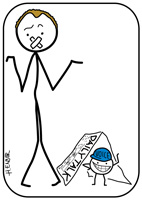
Dear Ableist America:

I used to want very much to play with you but now I see right through you. What a coward you are, afraid of your own feet and hands, your knees, your lungs. You’re afraid to stand on your own, frightened of thinking itself. Even your eyes terrify you. As the old song goes: “I don’t want to play in your yard, I don’t like you anymore…”


Yep, I’d rather play Solitaire than hang out with you. You’re so afraid of becoming crippled you actually give off a smell. It’s an odor like shoe polish and burning wires. You know exactly what I’m talking about. There aren’t enough sporting events and fast cars to save you. Not enough Botox.


I would pity you but I’ve lived all my life with yours for me so I know it’s stupid. What you really need is a just and equitable health care system but of course you’re afraid of this for thinking about it forces you to think about your bodies rather than a new BMW.

You poor poor lambkins.


Fear is the parent of cruelty. Fear is in the soup, it’s even in the drinking water as prescription drug runoff. You ableists are now peeing your fear into the drinking water.


“He who is not everyday conquering some fear has not learned the secret of life.” That’s Emerson. I think of this when you ask me how I can go places when I can’t see.


I know more secrets than you and I can’t bear your gibbering. Grow up. Conquer your terror about your own mortality. Get over yourselves to find at least one secret.


BTW Ableist America, I like my solitude. Capiche?