

Giant Panda in Coliseum

panda Coliseum, Rome loofah


It was in the time when the Romans were gentle. Before Caligula or Caesar Augustus. It was the era of the loofah and genial public bathing.

At the coliseum one could watch the giant panda eat bamboo shoots.  

And of course, in turn, the Romans took up synchronized chewing, for they understood the spirit of the panda.

Those were good days.

We all know how history went. Optima dies, tempus fugiteven Virgil  wept for the demise of the panda’s appearances in the dappled, sun drenched arena.

Slaughter can’t hold a candle to a good “group chew”.

(This sounds better in the original Latin.)

Here are some examples of things that sound better in the original:

corruptisima re publica plurimae leges
In the most corrupt state are the most laws (Terence)

deos enim religuos accepimus, Caesares dedimus
The gods were handed down to us, but we created the Caesars (i.e., the rulers) ourselves

cucullus non facit monachum
The cowl does not make the monk


**

Lately I have not been blogging much owing to the pressures and fatigue of travel. I was in Seaside, Oregon, teaching in the fabulous low residency MFA program at Pacific University http://www.pacificu.edu/as/mfa/ from Jan. 7-14 and then I went home to Iowa City just long enough to repack my suitcase and take off for Sarasota, FL where I’m currently a scholar in residence at the John and Mable Ringling Museum.


 

Seaside Oregon  Hindu Animal Hypnotist

The Beach in Seaside Oregon        Hindu Animal Hypnotist, Poster


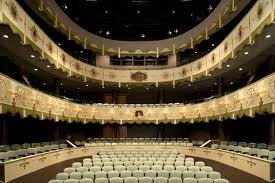
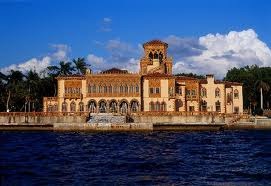
The Ringling museum is a special place. It hosts the Ringling art collection, the circus museum and library, the historic Asolo Theater and of course the magnificent Venetian “Palazzo” built by John and Mable Ringling in the early 20th century. I’m here studying the history of people with disabilities in the circus and living in the cottage that the Ringlings built for the captain of their yacht.


Ringling Cottage                                 Theater                                              Ringling Mansion



Ringling Cottage    Historic Asolo Theater 

  Ringling Mansion


I find it altogether lovely and odd to be living in the Ringling guest cottage on the grounds of this great estate. But as the rapper Eminem says:

“The truth is you don’t know what is going to happen tomorrow. Life is a crazy ride, and nothing is guaranteed.”


I think that also sounds better in the original Latin.


More to come…


S.K.

Backup Plans

Music silhouettes


By Andrea Scarpino

My friend Phil, a pretty fantastic musician, recently wrote on his website about the power of the backup plan, about how everyone’s insistence that he have a backup plan for playing music was detrimental to his own development as a musician. In ensuring he had a way to survive financially if music didn’t pay the bills, he followed paths that didn’t aid his musical development. That maybe he would have been better off as a musician if he hadn’t worked so long and hard to develop and secure a backup plan, if he’d just jumped into making music instead.

Like musicians, poets hardly ever support themselves writing or publishing poetry. Prose writers have a little more hope, but even then, most of us rely on some other job to put food on the table. In fact, I don’t know a single person who supports herself financially entirely from her own writing.

So it seems most artists need to have other skills to support ourselves and our art. Do those other skills constitute backup plans? I make my living as a professor—is that a backup plan or a career that runs alongside my dedication to poetry? What would it even look like to just do poetry?

The MFA is the only degree I ever wanted. It’s considered a terminal degree but it represented to me the lack of a backup plan—in going to graduate school for something as ridiculous and elusive and non-money-making as poetry, I was choosing for myself a life dedicated to art. A life rich with beauty and language. I was choosing to do something entirely for me. What I wanted from my graduate studies was time—to read, to write, to study other people’s words—and careful attention—from my professors, other students, and myself—on my work. That I’ve been able to make a living so far in part because of my graduate degree feels like an unexpected bonus.

My mother also wanted to be an artist, but was told by her parents that they wouldn’t pay for her college education if she studied something as frivolous as art. So she changed majors. I’m not sure she ever recovered, if all the other things she’s done in her life (all of them backup plans?)—working for various orchestras, fundraising, teaching second grade, raising children—measured up to the life she would have lived if she’d followed art. My own decision to go to graduate school for poetry was maybe, in some small way, a redemption of her deferred dreams. My own small stand for art. My own small refusal of a backup plan.

Although Phil sees his focus on education as having pulled him away from music, I’m realizing that maybe my MFA was a way to renounce the backup plan, a way to embrace poetry. Of course, I could be fooling myself—maybe I, too, would have been better served by writing and reading and doing poetry instead of working towards a degree. What I do know for sure is that following art against the advice of everyone who says it’s impossible is an act of tremendous courage. An act of tremendous faith.


Poet and essayist Andrea Scarpino is the rust belt bureau chief for POTB. You can visit her at: www.andreascarpino.com

Hair Dye Teachings

By Andrea Scarpino

For Gracie’s memorial, I dyed green highlights into my hair. Her favorite color was green, so with the help of her mother and sister, I bleached big streaks of my hair, then covered the bleach with green. I loved it. It reminded me of Gracie. It reminded me not to take myself so seriously. Reminded me that beauty is socially constructed, means different things to different people, shouldn’t be given the weight we give it. With all the eye creams and wrinkle erasers I’m told to buy, all the products that will keep me looking young—and therefore beautiful, and therefore relevant, and therefore important—it felt nice to look in the mirror and see those green locks, watch how they changed as I washed my hair.

Back in Marquette, the green got quite the reception. Some people asked why I chose green, some just cocked their head as if they were trying to make sure they were really seeing what they thought they were seeing. A teenager in the grocery store audibly gasped as I walked by, grabbed her friend’s hand and said, “That girl has green hair!” After that, I felt some sort of civic duty to keep my hair dyed fun colors—some sort of education of the masses, an extolling of differences. A superficial extolling, yes. But sometimes that’s a start.

Then the green mostly faded, in some places to a turquoise blue, in others a light grassy shade. In some, just bleach. I started to feel a little unkempt, especially since I’ll be seeing my colleagues and students at the beginning of January. I started to worry that I wouldn’t be taken as seriously in a professional setting with variously-colored hair. So I bought another jar of dye—this time a deep purple—to cover what’s left of the green and re-color the bleached places.

So far, the purple isn’t as visible as the green once was, blends in more with my dark hair. And I’m realizing I don’t really like that. That I prefer the brighter, crazier coloring. That it makes more sense to me, somehow. Yes, it’s only hair dye, and there are more important things in the world to think about. But in this youth and thinness valuing culture, with all the emphasis we’re told to put on looking “right,” looking the part, fitting in, I miss that one small reminder not to take it so seriously. Not to worry so much about what other people think. I miss that reminder of Gracie. Her sweetness. Her vulnerability.

Poet and essayist Andrea Scarpino lives in Marquette, MI and is a frequent contributor to POTB.

Ed Roberts Day

The following article comes to us via Inclusion Daily Express:

Celebrate Ed Roberts Day On January 23
(The Californian)
January 10, 2011

SALINAS, CALIFORNIA– [Excerpt] For a person with a disability, it can be difficult to find role models or leaders to look up to. I think that’s why having some understanding of disability history is so important. People look up to other people whom they know have had similar experiences — people they can relate to; people who have transcended their situation in life and taught society lessons that it needed to learn.

One such person from the disability community was Ed Roberts. Roberts contracted polio as a teenager and relied on a respirator to breathe. He is known as the “Father of Independent Living” because he founded the first Independent Living Center in Berkeley in the 1970s. He was the first student with significant disabilities to attend the University of California at Berkeley and later founded the Physically Disabled Students Program on campus.

In 1975, he was named the director of the California Department of Rehabilitation and was instrumental in the implementation of regulations that established civil rights for people with disabilities. Roberts died in 1995.

On Jan. 23, we will celebrate our first “Ed Roberts Day” in California. Recently, U.S. Rep. George Miller, D-Martinez, introduced House Resolution 1759 to declare the support of Congress for a national “Ed Roberts Day.” The resolution was co-sponsored by Central Coast Congressman Sam Farr, D-Carmel, who has been a strong supporter of people with disabilities in our community.

Entire article:
Denika Boardman: Salute trailblazer Roberts on Jan. 23
http://www.InclusionDaily.com/news/2011/red/0110b.htm

Record Discrimination Rates for People With Disabilities

Disability Related Employment Discrimination At Record Levels

A spike in disability related job bias claims led to an all time high in the number of federal job discrimination charges filed last year.

The Equal Employment Opportunity Commission, or EEOC, handled 25,165 claims of workplace discrimination based on disability in fiscal year 2010, up 17 percent from 21,451 the previous year. Those claims were among nearly 100,000 the EEOC received last year for job bias, marking the largest number of charges handled in a single year by the federal agency.

http://eeoc.gov/eeoc/newsroom/release/1-11-11.cfm

Employment – Labor Department Report Shows Employment Rate for People with Disabilities Falls to 21%

The U.S. Department of Labor’s Bureau of Labor Statistics has released disability employment statistics for December showing that the percentage of people with disabilities in the labor force was 21.0. By comparison, the percentage of persons with no disability in the labor force was 69.6. The unemployment rate for those with disabilities was 14.3 percent, compared with 8.9 percent for persons with no disability, not seasonally adjusted. The apparent discrepancy between the 21 percent employment rate and 14.3 percent unemployment has to do with how unemployment is defined. Not being in the labor force is not the same thing as being “unemployed”. People are classified as unemployed if they had no employment during the reference week; they were available for work at that time; and they made specific efforts to find employment sometime during the 4-week period ending with the reference week. http://www.bls.gov/news.release/empsit.t06.htm

Scholarships for Blind and Visually Impaired Students

This has crossed our desk and we want to pass along the announcements:


Please Distribute these two scholarship announcements

On behalf of the American Council of the Blind

2011-2012 Academic Year Scholarship Announcement

The American Council of the Blind (ACB) annually awards approximately twenty scholarships ranging in amounts from $1,000 to $2,500 to vocational, entering freshmen, undergraduate and graduate college students who are legally blind, maintain a 3.3 GPA and are involved in their school/local community.  Applications may be submitted beginning December 1st and all materials must be received by 11:59 pm Eastern Standard Time on March 1st.  

To read the scholarship guidelines and complete an on-line application, please visit:

www.acb.org/scholarship

For more information, please contact the ACB National Office at: (202) 467-5081 or (800) 424-8666. 

On behalf of the Council of Citizens with Low Vision International, we announce our CCLVI Fred Scheigert Scholarship Program.  Three scholarships in the amount of $3,000 each will be awarded for the 2011 – 2012 academic year.  Please share with others the following scholarship announcement.  If there are questions or additional information is required, please e-mail to scholarship@cclvi.org.  Thank you!

CCLVI Scholarship Announcement:

The Council of Citizens with Low Vision International (CCLVI) will award three scholarships in the amount of $3,000 each to one full-time student in each category; entering freshmen, undergraduate and graduate.  College students who are low vision, maintain a strong GPA and are involved in their school and/or local community are encouraged to apply. 

Applications may be submitted beginning January 1st and all materials must be received by March 1st.  Scholarship monies will be awarded for the 2011 – 2012 academic year.

To read the scholarship guidelines and complete an on-line application, please visit:

www.cclvi.org and click on the “Scholarship’ link

Applications will be available to submit on-line until March 1st at 11:59 pm Eastern Standard Time.  Please plan ahead so that documents mailed will be received by March 1st.  Please note, no faxed materials will be accepted.  Questions may be directed to CCLVI at (800) 733-2258. 


S.K.

Bus Again

In ten minutes I will catch a bus. I will thereby join 7 billion human beings who hope for peace in our new year. There are more than 7 billion people who wish for peace but public transit riders are reasonably enough rather prayerful. I also hope that there will continue to be public transit in this new era of Tea Party exceptionalism. Gotta go!

SK

Local World, Or Greetings from Iowa City, IA

Postcard Iowa City, Iowa


When Wallace Stevens wrote: “The world is ugly and the people are sad” he was speaking in a specialized tense, “The Stevensian pluperfect” on behalf of an ordinary evening in New Haven.

The phrase, at once autocratic and abstract sounds right. But let’s contrast Stevens’ lines with these by Greg Brown, a folk singer from Iowa City: “The world ain’t what you think it is/ it’s just what it is.” One way to understand the difference between these two sensibilities is to say that Mr. Greg Brown has had his heart broken by local girls: (he grew up on a strawberry farm) while Wallace Stevens broke his heart on Schopenhauer, a matter that did not necessitate leaving his room. The difference matters since what we call “the local” in American literature is inexhaustible and organic and its words don’t spring from a vacuum. In other words: all human losses are local and are balanced by recoveries which occur in real fields and strawberry patches. This takes work, whether we’re talking about the psychiatrist’s couch or rebuilding your barn.

The people are sad. Living is hard. And some days the landscape does not support the hopes of the psyche. The landscape is as elusive as the heart.

All landscapes, and especially Midwestern ones, appear elusive at first glance.

Michael Martone writes: “The Midwestern landscape is abstract and our response to the geology of the region might be similar to our response to the contemporary walls of paint in the museums. We are forced to live in our eyes, in the outposts of our consciousness, the borders of our being. Forget the heart. In the flatness everywhere is surface. This landscape can never take us emotionally in the way smoky crags or crawling oceans can. We stare back at it. Beneath our skins we begin to disassemble the mechanisms of how we feel. We begin to feel.”

And to this I must add that there are Midwestern sounds that surprise us, trick us out of our rooms.

Snow crosses the fields of Iowa and it sweeps along the river valley and behind it the strange winter thunder can be heard like an upturn of tempo by Sibelius.

Something is coming. Better roll up the windows of the car. We begin to feel.


S.K.


Christmas Jazz

He is a tender man with some experience of the shortest days. He is a man who has a long life line in his palms. He is one who worries: thinks of the exiles, the political poor, animals, music, hysteria. Some poetry he likes, some he considers rubbish. Sometimes he sets the night on edge with his lamp. He loves the early dusk. Loves people who take up cooking because of anxiety. Loves to outwhistle the teakettle. Stares at the mapped shadows on the snow. And he isn’t much for larger plots–the revenant or prodigal; old money falling out of the wall; hen scratches in bibles; nostalgic symphonies–not these. But bring the tree indoors. Play some Mingus. My pretty little lullaby. You can’t beat it. Else winter will break all our hearts.


S.K.