Melancholia on the Fourth


I have been trying to cheer myself, what with two suspect wars at hand and watching 4,000 young Iowans boarding planes for Afghanistan. “Cheer” is course the wrong word, trite in all its variations. But I have been opposed to these conflicts and continue to oppose them. I will try any spiritual nick-nack, any mega-theric penny candy I can find.

Today I remembered an anti-war poem from the Viet Nam era by Bill Knott entitled “Prosepoem to Hart Crane”. Knott’s poem is better than penny candy. I first encountered it in Robert Bly’s magazine The Seventies. Here are its opening lines:


India and China, please help, there is a famine here, an

American famine, there’s no longer enough America to

Feed Whitman or Poe, and I’m getting very thin. Oh drop-

ping bombs upon what no longer exists! Glances traveling

through life and death…  


**


My melancholia on the fourth is marked by this unshakable sense that our nation is dying spiritually, that there are few heroes of the moment who might stand and say that our job is to feed the world, embrace human rights, and to finally, finally reject imperialism.

To paraphrase Lou Reed, somewhere an arms manufacturer is laughing til he pisses his pants.


My job, the job of conscience, the job of laughter that isn’t burnt, of tears that are not bled out is to play the same song over and over.


Here, for what its worth, is a poem I wrote against the “wars” almost three years ago.


Life in Wartime


There are bodies that stay home and keep living.

Wisteria and Queen Anne’s Lace

But women and children too.

And countless men at gasoline stations.

Schoolteachers who resemble candles,

Boys with metabolisms geared to the future,

Musicians trying for moon effects…

The sky, which cannot expire, readies itself with clouds

Or a perfect blue

Or halos or the amoebic shapes

Of things to come.

The railway weeds are filled with water.

How do living things carry particles

Of sacrifice? Why are gods talking in the corn ?

Enough to feel the future underfoot.

Someone is crying three houses down.

Many are gone or are going.


S.K.


P.S. We at POTB believe that Bill Knott and Robert Bly continue to be national treasures…
Finding Meaning in a Dropped Nail: Disabilities and Personal Archaeology

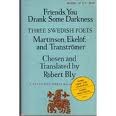
Gunnar Ekelof Friends You Drank Some Darkness Bishop Gene Robinson


The Swedish poet Gunnar Ekelof wrote: “When you have come as far in meaninglessness as I/each word is interesting again…” These words are like things hidden in the dirt which we dig up with an archaeologist’s spade. Even the personal pronoun “I” can be retrieved from the loam of history. Ekelof holds the “I” up to the light, dirt still clinging to it. He says that perhaps it was a flint shard “that someone in his toothlessness used to scrape his tough meat”.

Pronouns are embedded in a long history of sufferings. Each generation must bury them in order to live. I remember first understanding this when as a teenager I dug up a 19th century burial ground of old bottles–patent medicines all. That was a burial site of spring and fall toothaches and infant deaths. And the high school students cleaned the bottles and took them home and put flowers in them.

Under the dark membrane of the cultural or collective unconscious are nails and broken wheels; spaces filled with unease; mutilated faces and broken hands; blind children, dark and alone; the smiles of consumptives; glittering rivers in their ancient beds; wounded soldiers making their ways on homemade crutches; oh and there are abstract assertions down there–crippled survivors are the merchants of catastrophes, the mendicants of the evil eye. The ancient pronouns with the dirt still clinging still have meanings, miscast though they may be, like the figures of an Italian circus. Human sentimentality has no sophistication. See, this man over here has the evil eye. We must kiss the bull’s horns.

Each generation must bury the sufferings of the past in order to live. And yet, when we dig these shards of mutilitation up, when we hold them to the sunlight, we must know that they stand for. This is the work of cultural advancement. We must know that torture is torture and not miscast it as an “enhanced interrogation technique” as the W. Bush white house (spelled small) did recently–an Orwellian miscasting that was glibly echoed by our mainstream press. Waterboarding is torture. It was always torture. Hold a buried pronoun up to the light. The people who came before us understood this matter.

This is why we pay attention to old suffering. We do not see it as prologue to our own. Susan Shweik’s excellent book on the history of “the ugly laws” in the United States tells us a good deal about the ways that civic spaces were closed to people with disabilities or people who were in any way deformed. The good and tasteful citizens of Chicago or Columbus, Ohio, or scores of other cities wanted people who made them uncomfortable “off the streets” for indeed, are not our civic byways places of recreation and amusement? By the late 19th century America had plate glass windows and the new ideal that our cities were places for shopping–the city was a new proscenium arch with its Santa Claus. No one wants to see a cripple in front of Macys. Hence the ugly laws.     

Old suffering is not a prologue. But it informs. Troubles. In Iowa City, Iowa where I now live, the city fathers and mothers are trying to get the pan handlers off the down town streets. The pan handlers are not violent. They cause no trouble, unless of course the matter is essentially an aesthetic problem. And of course Americans won’t say this. They’ll say that the pan handlers are a nuisance. If being asked for a buck is a nuisance then of course we can create an enormous category of nuisances: the clock on the bank is a nuisance, for it causes me to recall that I’m in a hurry. Grazing cows are a nuisance: they make a man look away from the road. The fluidum of earning and paying is a nuisance. Yes, the economy is a nuisance. And purple Mohawk haircuts; rose bushes; other people’s lullabys–these are all aesthetic problems. They cause me to have to think. How I resent this! How I resent the other people! (Are we getting “close” to the “Tea Party” types yet?)

Here come the people with disabilities–both visible and invisible. They project the dread of the underworld to my easy eye–my lazy eye–my shopper’s eye. Oh I do not want to be inconvenienced by an old dirty bottle dug up from behind the shopping mall, a blue vial that once held patent medicine. I do not want to be inconvenienced by knowing of the infant mortality rates in the U.S. or the numbers of homeless veterans or the unemployment statistics for people with disabilities. Please do not make me think of these things.

The long struggle of people with disabilities lives in our contemporary language and it lives in our culture’s nonobservance. I would ignore the past if I could. But it is all around me.

Even so, I do not believe the past is prologue. Gene Robinson, the first gay bishop of the American Episcopal church does not think the past is prologue.

Again, Gunnar Ekelof: “the little word You, perhaps a bead that once hung from someone’s neck”

Let us imagine someone who was brave, who asked difficult questions, who held onto hope with everything she had. Who did not forswear imagination.


“Yes, I long for home,
Homeless I long for home,
Home to where love is, the one, the good,
Home to my real home!
That home is bright –
In my mind I open the door,
See everything awaiting me there.”


–Gunnar Ekelof 


S.K.  


How Many Things are Required of a Person With a Disability to Be Beautiful?

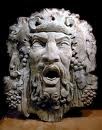
Head of Bacchus-Dionysus


“What then,” writes Marsilio Ficino “is the beauty of the body?” He answers the question this way: “Activity, vivacity, and a certain grace shining in the body because of the infusion of its own idea.”

I have pondered these two sentences for over thirty years.

Ficino was a Platonist and accordingly he undermined his own perception that the body might imagine itself–that the body could be beautiful and unique by asserting that “the ears be in their proper place, the eyes in theirs, the nostrils in theirs, etc.” This is the old Platonic idealization of arrangement and proportion–an idea more Apollonian than Dionysian. One may say that Nietzsche had it right: Greek tragedy began with Dionysus as its only character, hence it was an art of disambiguation and deformity. Later the Greeks embraced the Olympian gods and began to worry about the proportions of noses and the straightness of limbs.

Accordingly I believe that people with disabilities must be beautiful in a Dionysian way though we can and should steal Ficino’s sentence about activity.

People with disabilities put their bodies back together not in idealized, Platonic shapes, but in Dionysian infusions of thrilling oddity. See! The broken god is putting himself back together. The god is full of activity, vivacity. He has a certain grace though his feet will be wrong. His feet will be not quite neighborly. His feet will represent a separate realm of physicality and not the eidolon of Appollonian perfection.

Activity, vivacity, broken feet, blind eyes, arms and legs seasoned by catastrophes. How beautiful is the body that understands its own idea! The Dionysian body. Blind though it is, it still opens the windows when the moon rises.

Crippled though it is, it still rolls its chair down to the beach to see the shiny rain between sea and sky. The body takes these things into itself. This is the wisdom of the body. That it understands its own vivacious and incomplete idea. That it has its own relations to the strangeness of nature’s most unpolished gestures. How wise the crippled body is! It is the oldest body! It has a long memory!

The crippled body rejoices and mourns without shame.

It says the soul and the body are not inside and out.

These ruined limbs say their living must be thorough.

The Swedish poet Gunnar Ekelof wrote: “Deep in me abides a freshness that no one can take from me, not even I myself…”

These ruined limbs say their living WAS thorough, perhaps more thorough than the occasions of a straightened man.

The art of the broken body day after day is the infusion of its own roads in winter or on windless summer days.


S.K.


Rumpole and the Hand of God

Maybe because my father was a scientist and the nuns who taught at our school all had college degrees in their subjects—the nun who taught my seventh and eighth grade science classes had a master’s degree—but I grew up thinking that one of God’s great gifts to us was a world that didn’t operate by magic.

via lancemannion.typepad.com

Mr. Mannion has spritus mundi and the chicken and the egg nicely circumscribed in his "free thinker's tea cup"–I dare say..

Disabilities: Forms of a Fair Kind Among Us

Eugene-Roberts

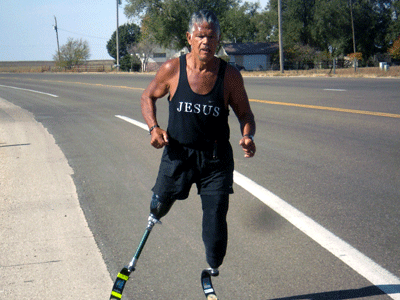
Photo of Eugene Roberts, marathon runner


What do I believe? I believe that disabilities are a fiction. Only the physical body with its boils and fevers, its losses and displacements is real. Accordingly I believe that every day, everywhere, people with disabilities must negotiate two dynamics: the literal materiality of physical systems, and (far worse) the figurative errors of hyper-semiotic “normate” culture–a culture addicted to a heavily marketed and entirely false idea of physical perfection. Whether we’re talking about the fashion industry or the worship of spectator sports–Hollywood heroes or telegenic politicians–we’re talking about the public’s idealization of bodies and body types, an idealization that marks all deviations with stigma.

By today’s standards Jean Harlow would be too fat for the movies. Clark Gable wouldn’t pass his screen test. The “normate” culture believes in the emperor’s new clothes. It thinks you’re lacking in all value if you wear a size 6 dress. God help you if you have a birth mark, crooked teeth, a bump in your nose, or you’re pigeon toed. 

What do I believe? I believe that people with disabilities have a certain inner balance, a richness and clarity of their own natures. I believe that people with disabilities possess inherently beautiful forms for all form is composed of lines and planes, twists, colors, diverse arrangements. And all the better.

The interior lives of people with disabilities are harmonious with the diversity of nature itself. These things I believe. I believe the soul needs nothing added to it to be beautiful. I believe all figures of creation are beautiful. I am rooted in this. I find I cannot be moved.

What do I believe? I believe Peter Singer doesn’t know enough about art. I believe that wounded warriors are only measured by the spread of our welcoming arms. I believe that one day we will look on the age of Hollywood and Milan and Madison Avenue and cluck our tongues at the slavishness of conformity and the simplicity of taste and habits that ruled these times. I’m not saying this revolution is coming tomorrow.

What do I believe? I believe in the beauty of aging. Like Ficino I believe the body is subject to time and time is beautiful. I am rooted in this. I find I cannot be moved.

What do I believe?

Art can deceive us and it can save us.


S.K. 

Dreaming of Socrates

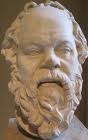
Socrates


I had this dream last night: Socrates was telling me about beauty. I could see that Socrates himself was not beautiful–that in fact he looked like an old boxer with a badly healed nose. Because I tend to think in dreams I wondered who broke Socrates’ nose. Was it an Athenian guard or did Plato do it? When I woke up I found that I was troubled by this dream-like nose, the Socratic proboscis.

I shall endeavor today to rid myself of Socrates’ nose, his oneiric busted beak. And good luck to me in this art, for if Plato was correct the ruined nose is a creation of the gods.

Why would the gods break Socrates’ nose while I slept? Surely they can’t still be jealous of this human quest for truth and beauty after 2000 years?

Oh what a nose that was.


S.K.   


Why All Americans Should Root for Mexico in the World Cup

mexico-usa-soccer


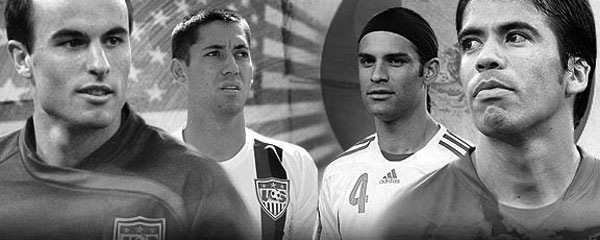
We at POTB like this article by Johnny Punish over at Veterans Today.


Excerpt:


Mexico is now the only team in our beloved North America left in the World Cup tournament. Over the last decade or so, Mexico, the country and it’s peoples have been beaten up by many in the US Media for being a weak burden on the USA.  We hear the grumblings about drug wars, immigration, and brown peoples who don’t share our values.  But Mexico is changing fast and we’re missing another opportunity…    


S.K.


Today is National PTSD Awareness Day, Pass it On

This past week, the U.S. Senate passed a resolution submitted by Sen. Kent Conrad [D-ND] marking today, June 27, as National PTSD Awareness Day. Boy, have we come a long way. See full article at:


http://ptsdcombat.blogspot.com/2010/06/30-years-in-making-national-ptsd.html?utm_source=feedburner&utm_medium=email&utm_campaign=Feed%3A+ptsdcombat+%28PTSD+Combat+%3A+Winning+the+War+Within%29


S.K.


G 20 Summit: People Give Up On Their Souls


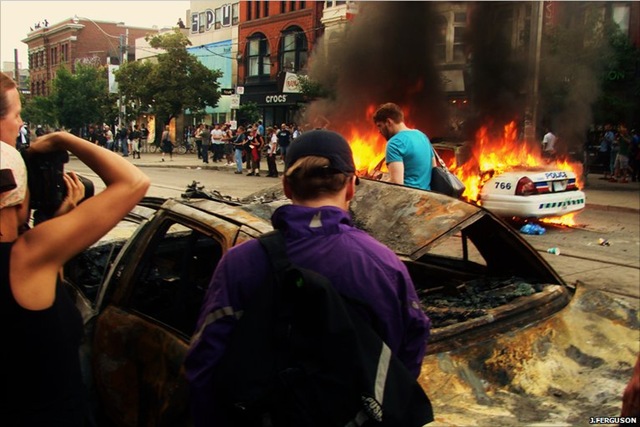
Photo of burning police car by James Ferguson


Police car burning in Toronto

Photo by James Ferguson see BBC News


Violence just brings more violence,” a woman said into a megaphone as an anarchist set fire to a police cruiser. “What you guys are doing, it’s breaking my heart.”


See full story at The Star.


I am not a visionary. I claim to be a practical idealist. The religion of nonviolence is not meant merely for the rishis and saints. It is meant for the common people as well. Nonviolence is the law of our species as violence is the law of the brute. The spirit lies dormant in the brute and he knows no law but that of physical might. The dignity of man requires obedience to a higher law-to the strength of the spirit….

The rishis who discovered the law of nonviolence in the midst of violence were greater geniuses than Newton.

–Gandhi

See: http://www.mkgandhi.org/nonviolence/index.htm


Nonviolence is a powerful and just weapon which cuts without wounding and ennobles the man who wields it. It is a sword that heals.


–Martin Luther King Jr.


That’s all nonviolence is–organized love.”


–Joan Baez


See more at: Waging Nonviolence


See also: Quaker Quaker


And: Center for Christian Nonviolence


S.K.

Oh La! Thunder on the Prairie! N'est pas?

Wallace Stevens picture of a tornado


Lately I’ve been reading the posthumous poems of Wallace Stevens. I think of them as Stevensian “out takes” or Stevens “unplugged”–they have all the oddness of French symbolism and neo-Platonism that marks the poet’s best work but the poems are,for lack of a more sophisticated word, “goofier” than even the silliest of Stevens’ poems from the published canon. And so last night as a massive thunder storm swept into Iowa City and as the tornado sirens were sounding–as I was waking my wife and gathering up loose possessions and urging my guide dog down to the cellar, well, I felt the sequenced absurdities of life and death that circulate in Stevens.


Poo Pah!  Bangalore! The tornado knocks on our front door!

He’s a darkling dumbell. He’s pure gestalt!

Aptest angel, without anthem!


Yes, poor tornado. There are no rekindled lips to sing his praises. Oh but we can pull his tail. We can mutter poems in the basement. All is order there, and elegance, two candles and three sets of eyes under the stairs…