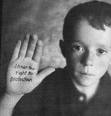
A Song of Praise for Child Protective Services

child abuse poster


by Laura Castle

Radio demagogue Michael Savage recently spewed some hatred toward “the vermin in Child Protective Services” on his show (September 21, 2009.)  Responding to an unfortunate incident in which little girls were temporarily removed from their home because of innocent bathtub photos, Savage blasted the “demented perverts in America who work at CPS whose entire goal is to take children away from normal families and give them to perverts.”

For decades the incidence of children in emergency rooms who have been beaten by their parents was merely whispered about by worried doctors who had no recourse, no legal right to intervene and nowhere to turn.

In 1962, the term “battered child syndrome” was introduced to describe the injuries seen so often by physicians that did not appear to be accidental.

In the beautiful, shining year of 1974, Child Protective Services (CPS) was established nationwide to investigate reports of child  abuse. It was designed not only to protect children from abuse, but to encourage family stability.

Today the process of investigation includes interviewing, observing, and information gathering in order to determine the validity of the report  and determine whether or not intervention is necessary for the child’s safety.

When CPS workers find problems in the home that do not warrant removal, they will encourage the family to take child parenting classes. An example might be a child who is spanked too hard and too often, but does not have the injuries that would warrant immediate removal from the home. Contrary to the hysterical rants of those who think being hit is good for a child, CPS does not forbid parents to spank children although it will help parents learn more effective methods of discipline.

Some Statistics:  In 2004, approximately 3.5 million U.S. children were involved in investigations of alleged abuse or neglect  and 87,000 children were determined to have been abused or neglected. Would the hate mongerers prefer that these children just quietly die because many other homes that were investigated were found to not be abusive? Or would their rants against CPS be less hysterical if they knew that 1490 children died in 2004 of abuse or neglect?
These were the children that CPS did not discover in time. When Mr. Savage spews fear and resentment towards an organization that saves as many children as CPS does, he makes it less likely that a worried neighbor will report the family next door whose child’s cries of pain pierce the night.

I take personal offense at Mr. Savage’s attack on CPS as I grew up before the United States had this agency, an agency  to which teachers, doctors and neighbors are legally required to report suspected child abuse with guaranteed anonymity.

Would Mr. Savage and his ilk like to see a return to the days when a little girl could lie in bed night after night, terrified with blood pouring from her nose, with blistered buttocks and legs from a beating with a belt, hearing her mother and her brothers and sisters scream in pain as her father attacked them?

Would Mr. Savage want the teacher the next day to look at the bruised and cut, badly dressed, dirty little girl and be helpless to intervene? 

I was that little girl and I would not sentence today’s children to the isolation and terror of a battered child in the 1950’s and 60’s.

Today this is what would happen: At the age of five, when I entered kindergarten, my teacher would observe that I was bruised, cut and dirty and that I seemed unusually terrified of adults. Knowing that she was legally required to report her concerns, she would make an anonymous call to CPS and express her worries about my home situation. Within 3 to 24 hours, a CPS worker would arrive at my home. Stunned by the incredible filth and stench that would greet him  at the door (dirty diapers, layers of dust, clothing strewn everywhere, filthy, unwashed dishes, big Florida cockroaches swarming), he would urge immediate removal of me and my brothers and sisters.

I sometimes wonder how my life would be different if CPS had existed in the 1950’s and I had been rescued at the age of 5 instead of running away at thirteen.

What difference would eight years less of beatings, emotional abuse and neglect have made on my ability to handle stress? How much less anxiety would I experience today?

I will never know, but I send songs of praise and love to the organization that works so hard to rescue today’s battered children. Thank you CPS!

Yes CPS makes mistakes and we must work to make it more efficient and less prone to error.

Ranting against an organization that saves so many lives not only hurts children, but it can also place CPS workers in danger of retaliation.

We must choose to focus on the good that CPS does. I send a heartfelt and long overdue thank you to Child Protective Services on behalf of all the lives they save.


Laura Castle lives in Florida and she writes (among other things) about violence against women and children. She is a frequent contributor to POTB.
On Getting out of Iowa, for All the Right Reasons

There’s a lovely essay in yesterday’s New York Times by our friend Joe Blair who coyly describes himself in the bio line as a pipe fitter from Iowa City. That Joe is modest is certainly a fine thing–we who have no modesty recognize that it is a virtue. As a person with a disability modesty might have killed me in days of yore. But I digress. Back to Joe’s essay. Joe’s son Michael is autistic and when Joe and his wife Deb discovered that Michael loved the ocean more than anything (and that’s a “real” “anything”) they decided to get out of Iowa and move to Massachusetts. They’re in the very process of the move having found a place in Newton, hence a 30 minute drive to the sea. Iowa City is a 30 minute drive away from the Mississippi if you drive like a state trooper with Montezuma’s Revenge.

The poet Hokusai had 947 changes of address during his life. (See the post below. I should add for the sake of full disclosure that Joe Blair, essayist, alum of the University of Iowa’s graduate workshop in nonfiction writing has made his living in Iowa these past years by running his own heating and cooling business. Pipe fitting is a part of that enterprise but if you’ve ever looked an electronic furnace in the eye and rearranged its petulant circuitry, well I rest my case. Joe, back in town for the purpose of “finishing up” following his family’s move came over and fixed my furnace on the day of first snow. May the gods of Vesuvius bless Joe for many reasons. But I digress.

Joe has moved to Newton, in effect taking a risk in a depression (for that’s what this is, let there be no mistake) and I know that such faith is the right stuff. To quote old Joe Campbell, it’s always best “to follow your bliss” and Lord knows the ocean is the greatest bliss factory on earth.

Out here in Iowa you can blindfold yourself and stand in a corn field and sometimes in the wind it sounds like Cape Cod.

But Joe’s son Michael knew the difference. And Joe and Deb did too. “Look! Toto got away! He got away!”

Take a look a Mr. Blair’s splendid piece on autism as a form of knowing.

Pipe fitter, indeed.


S.K.

Fixing the Furnace on the Day of First Snow

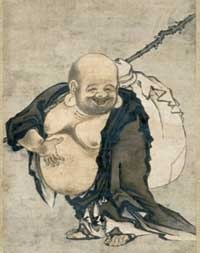
Zen Monk with Knap Sack


The Zen monk pictured above is happy. Why is he happy? Because like the poet Hokusai he will have 947 change of addresses in his life. He will not need to call the furnace repair man on the day of first snow.

See how happy he is! The only snow is inside his head! His heart, which he borrowed from a Panda bear, is hot as can be. (Yes, Gladys, Panda’s have hot hearts. Hot little hearts! Hotter than the Mongolian sausage…)

Poof! Now the furnace is working and we are poor but warm.

We who own the house are rooted by changes in the weather.

Unlike the monk above we cannot escape.

Oh but leaning lightly on our elbows is free!


S.K.

Unable to Rejoice

I am a disability rights advocate, activist, agit prop thespian cum blogger and on my good days I say that the congressman who hates the poor, who despises them because they are a drag, who wishes them ill because he has absorbed the trans-toxic American mythos of Puritanism ergo thinks the poor don’t work hard enough hence deserve ignominious and inhumane characterizations in the body politic–that congressman (as I say, on my good days) I imagine will not win.

On the good days I tell myself that the congressman (or senator) who loathes the poor (but not poverty itself) will become a fossil like slave holders or witch hunters.

It’s a state of mind, the good days. As artificial as cheap perfumes. And like fake Chanel it doesn’t last long. For most elected politicians on capitol hill are avid haters of the poor. They snicker to themselves when they hear that 130 American military bases are toxic superfund sites. They snicker as the veterans struggle for rehabilitation and adequate medical care. They certainly snicker at the prospect that we need a health care overhaul to assure that the poor can be treated in our nation’s clinics and hospitals so that they too might practice preventative medicine.

So the good days are the first to flee.

Maybe I’m just in a bad mood because its snowing in Iowa City and my furnace is broken. We need a circuit board and we can’t get it til Monday. It’s going to be 20 degrees tonight and there’s already snow sticking to the lawn. Maybe if it was a beautiful, mild autumn day I’d still be lingering in the prosperous imaginative state wherein I imagine the demise of the Scrooges who would step on the hands of children or steal pennies from the blind if they thought it would get them re-elected.

The Scrooges are in both parties. They’re mostly little corporation tee shirt wearing fascists with shiny shoes.

So I’m in a lousy mood without my furnace. I think I’ll go and do what Ted Kennedy used to do when he needed cheering up and have a bowl of New England clam chowder.

Hooray for the Jehovah’s Witnesses and the airline executives! Hooray for the toxic generals and Raytheon.


S.K.

A Dream of Robert Bly


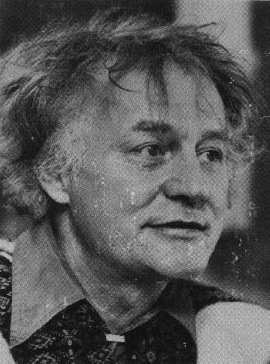
Robert Bly


Last night I had a dream in which the poet laureate of Minnesota, Robert Bly was with me. Dreams can do this. In dreams people can be “with” each other.

This feeling can either be cold or warm. For instance one can dream of one’s drunken uncle who in turn chases the dreamer through the highly articulated house of the unconscious. That of course would be a cold dream. But last night’s affair was warm for Mr. Bly was with me in a small town coffee shop and he was reading aloud some poems and my dream brain was undergoing the electrolysis of love as the poet Kenneth Rexroth would say. 

I should say that I’m a 54 year old visually impaired poet, essayist and teacher whose interest in poetry happened overnight in the kind of story that’s familiar to thousands of writers and book lovers: I was 17 years old, I was ill, hospitalized, deeply depressed, and just then a local poet named Jim Crenner gave me a book of Robert Bly’s poetry. The book was Silence in the Snowy Fields.

No one can tell you where the secret road connecting soul and the thing we call human reason will take you. But young people who are “in extremis” need someone to tell them the road exists. Jim Crenner gave me Robert Bly and Robert gave me this poem:

Poem In Three Parts


I


Oh, on an early morning I think I shall live forever!

I am wrapped in my joyful flesh,

As the grass is wrapped in its clouds of green.


II

Rising from a bed, where I dreamt

Of long rides past castles, and hot coals,

The sun lies happily on my knees;

I have suffered and survived the night

Bathed in dark water, like any blade of grass.


III

The strong leaves of the box elder tree,

Plunging in the wind, call us to disappear

Into the wilds of the universe,

Where we shall sit at the foot of a plant,

And live forever, like the dust.


Imagine if you will that I was a lonesome child. Blind in rural New Hampshire I made friends early with a mossy stone in the woods. I spent hours alone with my face pressed into the marl, watching as best I could as inch worms moved in the dark maze of a boulder’s crevices. For music I had the crows and the phoebe. In those days, circa 1959 a boy could spend whole days alone under those trees. The “real kids”, the strapping ones, athletes and braggarts were playing touch football in sunlight.

How alone I was!

I was like a forgotten fence, tight and stalwart and standing for something.

By the time I was 17 I was so thoroughly ashamed of my disability and so mindful of my losses where the adolescent world was concerned that I decided quite literally to starve myself. Boys of course can be anorexic as we now know, but in 1972 hardly anyone understood this. I discovered that I could take control of disappearing. By the spring of that year I weighed 96 pounds and I resembled a concentration camp survivor, all hip bones and ribs and sunken eyes.

In the psychiatric hospital a young resident physician from Ghana was trying to get me to drink a milk shake. The man in the bed next to me who was from Poland kept weeping and saying something about a light bulb. Occasionally he would climb from his bed and raise his hospital gown and try to show me a scar on his stomach but of course I couldn’t see well enough to properly acknowledge it. I’d say: “Karl, that’s a big scar!” And he would be temporarily happy in a way I didn’t understand and he’d climb back under his sheets.

Robert Bly’s poetry woke me up. Silence in the Snowy Fields woke me like the tutelary voice in dreams that says farewell to us as we are waking. That’s a voice that stays with you all day, secreted at the edge of your eyes and just below your ears and down in your viscera for the entire body knows this voice. And by God that voice is as lonely and ecstatic as the boy’s heart that lay atop that mossy stone and tracked a civilization of inching things and knew somehow that he was meant to be there despite the peculiar heart break of the enterprise.

Only poetry can give us the soul’s propriety. Only the poem can tell us that solitude and sweetclover and the victory swallows are equally parts of our soul’s actions.

Though we make all the world an algorithm lining up the churches and jeweled caskets, the eyes of animals, occidental numbers, post mortems of the dream, the soul has its own road and if you’re lucky someone gives you a book of poems that puts you back in touch with your proper wonder though its a lonesome affair.

Oh, I think we are meant to live forever with this news.

It was good to see you last night, Robert!

S.K.   

Everyone Wants to be Disabled on Long Island

The New York Times has been reporting a story about retired workers from the Long Island Railroad claiming and receiving disability benefits at a 97 per cent rate. In many cases the workers retire early without any clear sign of a disability and then file disability claims that allow them to take home fat six figure retirement salaries. 

Graft of this kind is not new. But what interests me is the 97 per cent rate of successful disability claims because to my way of thinking this indicates that there’s tremendous collusion between the railroad union, the doctors who work for the railroad, the corporate executives who move the paperwork, and the federal government which pays out the claims. “Look!” I say to myself, “Look! Disability benefits can be efficiently provided in this nation!” While thousands of disabled war veterans struggle to get rehabilitation, education money, wheelchairs and prostheses of all kinds, look! It’s possible to move things right along without a hitch!

And so of course my suggestion is to take the money from the L.I.R.R.’s phoney disabled retirees who are playing golf and driving imported automobiles and simply transfer it to veterans. The L.I.R.R. and the Federal Railroad Retirement Agency or whatever its called have already proven that paper work just gets in the way of rapid delivery.

Of course you should know by the by that I’m not joking. There are wounded warriors in this nation whose very lives hang in the balance.


S.K.   

Anniversary


By Andrea Scarpino


(Somewhere in Germany)

I first met Zac when he was tabling for the Green Party at a student activities event on the University of Cincinnati’s campus. He had shoulder length hair, a blond goatee, and was wearing a bright tie-dye shirt. I thought he was the cutest hippy I’d ever seen. I walked by his table a few times with friends and pretended to browse the Green Party literature while secretly checking him out. When he said, Would you guys like to sign our mailing list? I immediately responded, I’m not a guy, but I’d be happy to sign up. As I walked away from the table, I chided myself for sassing the cute boys.

Now, nine years later, I’m celebrating our anniversary by spending time with good friends in Germany, and he’s celebrating back home in Los Angeles by writing application letters for the philosophy job market. Which in a funny way, speaks to the unique quality of our relationship. I moved to Columbus in part because Zac was already there in graduate school, and I moved to Los Angeles when he got a job there. We’ve traveled across the US and internationally together, regularly read each other’s work, read books that the other recommends so that we can talk about them to one another, run races together, cook together.

But even with so much time and energy invested in one another, I’ve always done my own thing, had my own friends, made my own explorations of the world. And so has he. When Zac and I had been together less than a year, I moved to France for nine months. I’ve traveled to South Korea and now Germany without him, and he’s traveled to Mexico and a myriad of US states without me. We don’t always like each other’s music (mine tells stories, his often involves terrifying sounds) or feel passionate about the other’s pet projects. I tend towards high energy and anxiety and he tends towards absolute calm and extreme understatement. So be it. Zac is a wonderful, caring, loving person who cooks me amazing food and concocts drinks to suit my every whim, buys me cute clothes for birthday presents, and always makes sure we have enough coffee, dessert and greens on hand in the house. He looks out for me, I guess I would say, and I try my best to look out for him.

So nine years have passed since our first date watching the presidential election debates between Bush and Gore. I visited a museum about the Nazi party, ate delicious salads, laughed with my friends. I walked on cobblestone streets and visited Nurnberg’s walled old city, which is now filled with cute cafes and clothing stores. I wore my scarf all day, mostly because it’s colder here than in LA. It would have been more fun to have Zac here with me, but given everything, it was still a lovely way to spend an anniversary. And next year’s the big 1-0. I want to throw a decade party to celebrate. In the meantime, more reading, more travel, more delicious food. I can’t wait.


Andrea Scarpino is the west coast Bureau Chief of POTB. You can visit her at:

www.andreascarpino.com

People with Disabilities More Likely to be Crime Victims Says DOJ


no_access_symbol


The following Associated Press article comes to us from The Inclusion Daily Express. It is easy to picture a woman alone navigating on a dark street with her wheelchair becoming a target for a mugging or worse. It’s easy to picture a blind or visually impaired person walking with a cane being roughed up or worse. It’s equally easy to imagine people with developmental disabilities becoming targets of cruel sport as we saw not long ago in Corpus Christi, Texas. These scenarios are characteristic of what we might imagine as indefensible people trying to make their ways in a world of jeopardy. But the matter is more complicated than this for disability in these United States is a co-dynamic of poverty, unemployment, lack of educational opportunities, and a lack of adequate housing and transportation. These are the incitements for the victimization of people with disabilities and not, as the public might imagine, the mobility or conceptual issues inherent in the disabilities proper. And yet I suspect that the latter scenario will be the imagined response of many who read the AP article.


S.K.


DOJ Study: People With Disabilities Targeted More For Violent Crimes
(Associated Press)
October 1, 2009
WASHINGTON, DC– [Excerpt] Disabled people are 1.5 times more likely to be victims of violent crime than nondisabled people, according to a government study.

The study on crime against people with disabilities, released Thursday by the Justice Department, found that people 12 or older with disabilities in 2007 experienced about 716,000 nonfatal violent crimes, including rape or sexual assault, robbery and assault. They were also victims in 2.3 million property crimes, such as burglaries, motor-vehicle or other thefts.

According to the study, the first of its kind, the violent crime rate was 32 per 1,000 for disabled people 12 or older. That’s compared to 21 per 1,000 for the nondisabled for the same age group.

It is unclear to what extent disabled people were targeted because of their physical status. Nearly 1 in 5 of the violent-crime victims believed their disability was the motivating factor.

Entire article:
Disabled people more likely to be victims of crime

http://www.InclusionDaily.com/news/2009/red/1002a.htm
Related:
Press release “First National Study on Crime Against Persons with Disabilities

http://www.ojp.usdoj.gov/bjs/pub/press/capd07pr.htm
Crime Against People with Disabilities, 2007 (U.S. Department of Justice)
http://www.ojp.usdoj.gov/bjs/abstract/capd07.htm

Praying for Peace and a Different Rhetoric

woman protester with peace sign

It’s autumn in Iowa City, Iowa where I teach courses in literature and disability studies at “the big state U” and like tens of thousands of my fellow Americans I find that I cannot square my conscience with the prevailing rhetoric that America must “stay the course” in Afghanistan. In my humble opinion it is time for our troops to come home from Iraq and Afghanistan and its time for our nation’s leaders to conceive of the serious multi-lateral diplomatic challenges that face all (and I do mean “all”) nation states in the post 9-11 world.

I do not believe Afghanistan can be usefully compared to Viet Nam. I do not believe that the Russians’ history there has any bearing on the current American situation.

But I do believe that we are wildly unpopular in 90 per cent of Afghanistan for the simple reason that we are outsiders. And the longer we stay and kill civilians whether by accident or design the fiercer will grow the resistance to our presence.

No call for additional troops can solve this. NATO has largely abandoned us.

I see no evidence that by staying American forces can win over the fiercely tribal rural regions which comprise most of Afghanistan.

Me? I’m just a minor league philosopher-poet in a small town. But if history is any guide we may win more loyalty from Afghans by leaving “as a military presence”.

“Almighty God, Father of mercies and giver of comfort: Deal graciously, we pray, with all who mourn; that, casting all their care on you, they may know the consolation of your love; through Jesus Christ our Lord. Amen.”

Amen.


S.K.