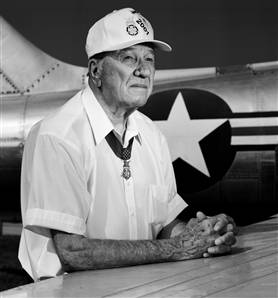
Virtual March on Washington in Support of Veterans

We have received the following announcement here at POTB and we intend to participate.


S.K.


Please Sign Up to Participate

First-ever virtual ‘march’ on Washington for disabled vets

http://march.dav.org/default.aspx

The DAV is organizing a march on Washington to raise public awareness and let lawmakers know voters care about veterans. But you won’t need to travel to participate and have your voice heard.

This march is going to be completely online, the first-ever Virtual March on Washington for Veterans. The DAV is working to ensure this will be the easiest and most convenient way ever to stand up for veterans. Together, we will generate greater public awareness and support for strengthening federal policies that provide health care and other earned benefits to disabled veterans.

To sign up to participate in the Sept. 15 virtual march, simply visit http://march.dav.org/default.aspx and enter your e-mail address at the top of the page. Your ZIP code will also be needed so lawmakers know which constituents care about the needs of veterans and their families. DAV will send you an e-mail the night before the “march” as a reminder. DAV will not share your e-mail address with or sell it to anyone, nor will DAV use it to solicit donations.

On Sept. 15, the official day of the march, there will be video messages posted from a variety of veterans, family members, veterans’ advocates, lawmakers and a few surprises. There will be opportunities to chat with those leading efforts to better the lives of veterans. And there will be easy-to-use tools for you to directly contact your representatives in Washington, D.C. If you cannot visit the site the day of the march, don’t worry; it will all remain online.

Remember, after you sign up, please help encourage others to do the same. Forward this e-mail, post links on your social networks, blog about it and tell everyone you know.

Those who have put their lives on the line for freedom are depending on you.

Thinking Quietly of America's Civil War Veterans with Disabilities

They are subjects of a complex history and we know them (if we know them at all) as brave and insistent men who fought a hard post-war fight for disability benefits.

The soldiers of the Union Army pushed and pushed all over again for the first lifetime disability pension in American history. Initially the U.S. government offered disability pensions only for battlefield injuries. The soldiers pictured here at the famous Armory Square hospital in Washington, DC would have fit this category. Notice by the way that the men in the front row are holding their oversized crutches –the crutches were a “one size fits all” variety and In fact they were a liability when trying to walk.


Civil War Amputees  


Injuries received in war are more subtle and complex than they are instantaneous. Nowadays we all tend to understand this. (Or one hopes we do?) The soldiers who came home from the battlefields of the American Civil War were often crippled for life with maladies that included tuberculosis, infections, internal organ damage, progressive vision and hearing loss, not to mention post traumatic stress–which in those days was called madness.

The soldiers organized. The Union Army or “Grand Army of the Republic” kept marching for lifetime disability benefits. When President Grover Cleveland vetoed the first bill that provided for lifetime disability care for American veterans the veterans threw him out of office in favor of Benjamin Harrison who immediately signed the first guarantee of lifelong disability care into law.


I wonder if any of the men pictured above met the poet Walt Whitman who volunteered in the army hospitals in Washington. Whitman was a familiar figure in the dark and terrible wards. Thinking of this connection reminds me that just as we owe the immediacy of modern poetry to Whitman’s “Leaves of Grass” those of us in the disability rights communities owe a great deal to the soldiers who insisted that the care and treatment of disabilities should be a lifetime pact. Their work spurred on the adoption of 20th and 21st century social programs and laws that continue, however imperfectly to promise dignity to all.


S.K.

They're All Strange Cities

Being blind I have this little bit of luck: I’m not prepossessed of the idea that I “know” the place I’m visiting. On the airplane headed for Tucson I hear the businessmen talking of golf–Tucson is for them simply a kind of shopping mall.

By faith he sojourned in the land of promise, as in a strange country…

Being blind its all a strange country…

To which I’ll add: by faith its all a strange country…

I don’t get my news of the United States from TV.

I take my news from well meaning strangers.

I take my news from the sheep eating apple peels.

Its all a strange country…

I can find well meaning strangers.

I can walk in strange cities alone.

Can you?


S.K.

Talk to Me, You Big Lug

If you spend enough time in the world of blogs and if in particular you spend lots of time thinking about people with disabilities you will see very few representations of those same people just being people. There are thousands of obligatory images or stories about pwds (persons or people with disabilities) seen counteracting their disabilities by mountain climbing or skiing; or they are dressed in Madison Avenue business attire–seen conquering the world of business. To be sure, these are important images, especially when our culture thinks of “the disabled” all too often as jobless or at least bereft of human satisfactions. I think the large head of cultural disableism works its way into the nooks and crannies of assumptions–so much so that pwds themselves fall prey to writing or posing for stories in which they appear as over-compensators who go above and beyond the realm of ordinary living. My meager post for today concerns the simple observation that “just hanging out” is what I like to do. Here’s an old photo of me with my late guide dog “Vidal” and yes, we were just hanging out. Vidal wasn’t being Rin Tin Tin and I wasn’t fresh from climbing Everest. I’m sure Vidal could have been Rin Tin Tin but he preferred eating cat food to heroism and mostly I prefer my sofa to mountain climbing. I also like to eat Doritos. & so my brief point here is that just being is its own compensation. Just knocking around. That’s the kind of story I’m interested in.  


KuusistoS_BI_19686


S.K.

C'mon Dancing Bear, Shake It!

It was a bad century in Mother Russia or Schenectady and the circus was the only public fun the people could enjoy because the stocks and the pillory and the dunking stool had been taken away. (Well, okay, Russia never had these things, they only had ritual horse draggings but its the same deal.) Anyway as I say, it was a bad century and the villagers, the noble rustics needed all the diversions they could get. That’s why when the circus came to town no one stayed home. Not even the crippled people were kept away. They were wheeled in or, in some instances they were carried aloft like lumber but in any event all were given seats.   

Is good the people get dancing bear, is good they see brutish creature perform ballet. It makes even the most besotted think about their lot.

God bless Smolensk or Schenectady.

Yes it was a bad century especially for the bears.

Compare and contrast this vulgar circus with the declining hours of your own small town newspapers.

Today’s online version of the dying local press allows the noble rustics to throw dung and horse chestnuts at their neighbors who of course are guilty of public intoxication or shop lifting.

The villagers write blog responses to these things. Their contempt knows no bounds.

The dancing bear was pulled over for DUI and his picture is under the headline.

“Whoa!”  writes the first blogger. “Dancing bear looks just like all the other village idiots. Thank god we now have our own village idiot here in Lone Tree or Horseheads  or Dumas which is NOT pronounced “dumb ass”.”

This is just the beginning. Vulgarity Fair is just getting started.

“Dancing bear looks like my neighbor except for the shrunken head.”

“Dancing bear is soooo obviously un-American. He was drinking foreign beer!”

“He looks almost as bad as he smells.”

“Did he have pants on when they pulled him over?”

“Dancing bears don’t wear pants in this country you moron.”

“I told you the dancing bear was French.”


Meanwhile, out behind the local high school there’s a toxic dump left over from the late 19th century when there was a boot blacking factory that later became a battery acid factory and now as they dig a fiber optic cable trench the pcbs are leaching into the drinking water but the Picayune isn’t following that story for indeed as the dying newspaper’s editors well know, you’ll never find a dancing bear among pcbs. No one reads that stuff.


S.K.

Doctor, Doctor, Mister MD

I am an amateur. No one is less informed about medicine than I. Oh I don’t mean that I can’t pronounce chemical names or explain how DNA and RNA are room mates. Any boob can do that. Yep, DNA has these interesting hydrogen-carbon bonds. Crick and Watson ain’t got nothin’ on this baby. 

The thing I can’t figger out is how the insurance companies and their sympathizing  cadre of duck walking doctors at the AMA (American Medical Association) continue to be opposed to health care reform in these United States. But even if I can decipher that, I can’t fully comprehend how they get to politicians. Do the lobbies simply stuff money in the pockets of senators and representatives? Is it that simple?

Money plus fear creates strict obedience on capitol hill.

The insurance companies want no reform. This makes sense. They’re making money at record levels and the system of letting the uninsured bob or drown at the doors of emergency rooms doesn’t affect them–after all, the poor are served as unfunded mandates, which means that the states have to pay for their care–which means that currently almost no one is paying reliably for this.

In short people in politics or in the corporate offices of the health insurance industry or in the halls of the AMA get good Christmas bonuses for letting the poor die.

Is this a holy thing to see?  William Blake wrote:

Is this a holy thing to see
In a rich and fruitful land,
Babes reduc’d to misery,
Fed with cold and usurous hand?

Is that trembling cry a song?
Can it be a song of joy?
And so many children poor?
It is a land of poverty!

And their sun does never shine,
And their fields are bleak and bare,
And their ways are fill’d with thorns:
It is eternal winter there.

For where-e’er the sun does shine,
And where-e’er the rain does fall,
Babe can never hunger there,
Nor poverty the mind appall.


It is of course Blake’s last stanza that explains the AMA. The sun is shining in their gated communities.  

The AMA and the health insurance lobbyists are comfortable with two Americas. They are eating well in perfect sunshine and their children lack for nothing and like the young Siddhartha they see no poverty at all.

Indeed the AMA thinks poverty is someone else’s problem.


S.K.

A Valediction of the Essay


I find I want to write an essay. First I need a prologue. I cut open a pomegranate with a hunting knife.

& myth is no match for genuine seeds.

Still I thank Persephone as I eat. (Old stories offer partial enchantments.)

How many impure processes are there? 

There’s dying of course.

Aesthetics.

Gardening.

Reason.

**

Yet the essay functions as a stone door.

It stands for partial knowledge.

Displays permanence.

Invites visitors, particularly at night. 

**

Like music the essay must reveal the personal past.

It must deliver thousands of trivial expressions the way water carries seeds.

The evening itself is pleasing to us.

**

My final American destiny is to misunderstand the labyrinths.

The shopkeeper knows more than I about this nation.

I’m just a stone carver & a polemical one at that.

I should write in the cemetery.

The essay has gone somber on me.

All I can do is to try and be mannerly. 

**

Thinking of Heraclitus: 

Old man nibbled leaves
Got by on wits and viscera

**

The other side of the tapestry: praise something.

Early today I walked in and out of three gentle shadows.

I was allowed, briefly, to imitate the Fates.

**

We are using up these precious years, little ones.


S.K.  

Families For All


There’s a welcome post at Change.org’s Autism site.

Meg Evans writes about a recent legislative victory for families with disabled parents in the State of Maryland.  

Evans writes:

“Governor Martin O’Malley has signed new legislation, following its approval by the state House and Senate, to prevent discrimination against people with disabilities in Maryland family law proceedings by ensuring that an individual’s mental or physical disability cannot, in itself, be sufficient grounds for denying custody of a child to that individual.”

The victory above would seem self-evident but alas, all too often people with disabilities are denied the rights described above.

There is still a ghost in these United States–a Victorian figure replete with Dickensian chains and dark robes. Its the ghost of Eugenics and it haunts 21st century America as surely as the ghost of Christmas past.

Accordingly the news described above is no small matter. This represents a strong “shot across the bow” that families with disabilities are “real families” pure and simple.

I take heart from stories like these.


S.K.

Susan Boyle Stands for Something Besides a Song


The following article from The Guardian comes to us via Inclusion Daily Express.

S.K. 


Susan Boyle Is Great For The Learning Disability Cause
(The Guardian)
June 8, 2009
GLASGOW, SCOTLAND– [Excerpt] As someone with a learning [intellectual] disability, it’s been great to see Susan Boyle getting so far on a talent show. You rarely see people with a learning disability in the media, and in the last few weeks Boyle has rarely been out of it.

But, like anyone who is put in the media spotlight, she has found it hard to deal with her new fame and growing media attention.

The main problem is that the general public don’t understand what a learning disability is and how it affects a person’s life. And that includes the producers of Britain’s Got Talent.

Some people have suggested that people who have a learning disability, such as Susan Boyle, should be stopped from going on Britain’s Got Talent. This would mean denying 1.5 million people with a learning disability in the UK the chance to take part and have the same opportunities as everyone else. This makes no sense and is discriminatory.

Entire article:
Susan Boyle is great for the learning disability cause

http://www.inclusiondaily.com/news/2009/red/0608a.htm
Related:
Kelly Clarkson: ‘People Have Been Vicious About Susan Boyle’ (Entertainment Wise)

http://www.inclusiondaily.com/news/2009/red/0608b.htm

How to be a Creative Writer 101

First: become the characters you are writing about.

This morning I am Roskolnikov, capable of cruelty but still able to fall in love with women and with Jesus. I am Russian at this hour. I drink my tea from a glass and carry a Finnish knife in my boot. I thank the scribes of Patmos for the New Testament because it says  Christ will forgive me. Where’s my damned landlady?  I have only fifteen minutes if I’m going to kill her.

Oops.   

Time’s up.

The landlady wasn’t in her usual place. Generally she sits in the glorified closet beside the entry and chews cardamom  seeds and gives the evil eye to children on the street. I’ll have to kill her tomorrow. Now I have to go to a lecture on French philosophy. I need a drink.

On the way to the bar I become woozy with sentimentality. I love the awnings over the small shops and the sad paint of my city. I love the brave urbanized Russian grass. I must sit. Alas I am out of tobacco. I now love strangers.

Step Two  

Stop being the characters you are writing about.

This is a Jekyll and Hyde thing. (Yes, that story really “is” about finishing your novel.)

Now you are free to be even more unpredictable.

Sobriety is not sobriety.

The one who never drinks understands Roskolnikov feels the tenderness of God when he sees the pink roof of a dog’s mouth.

In the next class we will discuss why poetry is better than the newspaper.


S.K.