Do You Live in Syracuse, NY, Have a Disability, and Want to Help Study Access Issues?

Do you find some streets in Syracuse difficult to use because of how they are designed or managed?  

The Inclusive Public Space research project at the University of Leeds, together with the Burton Blatt Institute, want to hear about your experiences as a pedestrian! More information about the project is available at https://inclusivepublicspace.leeds.ac.uk/.  

They want to hear from pedestrians who have had any kind of difficulty with roads, streets or sidewalks in the city of Syracuse – particularly people with disabilities, older adults, parents or caregivers. Anybody interested can participate without leaving their home, as all interactions can be by phone or online. Please consider participating and spreading the word.

If you’re interested in participating, or would like further information, please let them know by: 

–        submitting your details at Inclusive Public Space Project – Expression of Interest Form (link: https://leeds.onlinesurveys.ac.uk/expression-of-interest_usa); 

–        email at IPS.Project@leeds.ac.uk, or 

–        phone (voice/relay/text) at 678-701-3771 or 315-314-4179. 

Upriver From the Poem

Always this implausible and resolute desire to write. Who would do such a thing when there are such fine alternatives? What is this resolution? Go to the poets and they’re seldom any help. They become high minded what with God and love and the soul. You know the drill. It’s wonderful when Philip Larkin says “books are a load of crap.”

But the resolute voice pushes the body to its resolute desk for it doesn’t merely belong to the American president and the voice-arm insists on the loveliness of meanings. And sure the matter is more urgent for the hopes of life hang by a thread…Langston Hughes:

“Hold fast to dreams,
For if dreams die
Life is a broken-winged bird,
That cannot fly.”

So I say the desire to write and its resolutions have to do with keeping dreams alive. And some mornings this work is like mouth to mouth resuscitation; other days it’s a damned lucky thing, the words come trippingly and as Theodore Roethke would say you’ve been struck by lightning.

But whatever it is, you’re trying to mend the broken winged bird.

Then of course there’s the muses meet schadenfreude thing, again best depicted by Langston Hughes:

“Looks like what drives me crazy
Don’t have no effect on you–
But I’m gonna keep on at it
Till it drives you crazy, too.”

The Saramago Syndrome

If you’re disabled you almost never get the microphone and if you do you’re pressured to squander the moment, telling the non-disabled there’s no such thing as disablement, there are only bad attitudes. Blind people like me are asked to reassure the sighted. This holds true for all disabilities.

Able-bodied-microphone-land (ABML) is a Lewis Carroll kind of place. As the Beatles once sang: “you know the place where nothing is real…” The latest version of this is a stage adaptation of Jose Saramago’s novel “Blindness” where the audience sits in complete darkness and hears a story of blindness as contagion. Yes. Blindness as COVID. Presumably sitting in darkness adds verisimilitude. “By God, Brother, this must be what it’s like!” I’m here to tell you: blindness doesn’t represent anything and real blind people don’t sit trembling in the dark.

This play with its audience participation trick really troubles me. I’ve spent the last thirty years traveling the world talking about disability as lived experience. Disability is just like anything else–left handedness or having big feet. When it’s metaphorized it becomes a superstitious fiction designed to frighten the temporarily normal.

I’m not going to tell you that the blind can do anything the sighted can. You wouldn’t want me operating on your brain, at least not with our current technology. But it should be clear–blindness is no obstacle to living a full and rewarding life. The public doesn’t understand this. When I’m on a bus with my guide dog someone invariably approaches and wants to pray for me. Strangers want to give me coins. They can’t conceive that I’ve a professional life, a family, that I’ve been known to water-ski.

Saramago’s blindness is not only silly, it contributes to ever more superstition. I think we can all agree we need less fear and nonsense in our lives. As I write this it’s estimated that 70 per cent of the disabled remain unemployed in the United States. Accommodations to help them in the workplace are inexpensive. What’s holding them back? Well, alright, I’m going to call it the “Saramago Syndrome.”

I said radio, not rodeo

I said radio, not rodeo….

This ain’t my first radio. Back in the day the ur-radio was big as a house. There was a shining city of vacuum tubes if you looked behind it. Terrible things came out of it: Arthur Godfrey, insipid jingles for soap.

Of course it rides you, the radio, which is the irony for you thought you were just having some leisure, and Lo! Radio is in the saddle and rides mankind.

This is why the song “Video Killed the Radio Star” was nonsense.

**

One may think of disability, any disability as a kind of phosphorescent blindfold: at once brilliant and impenetrable. What it feels like on the inside is not the pathos of intellectual life but a hot fuse of a million cultural negligences. We cannot celebrate the body that ages. We can’t imagine it’s languages in the West–instead cover it over or turn away. Ableist static pours from the radios and steams on the internet. It hangs in the disorderly world, inflated by the winds of reactionary advertisements for normalcy.

I long for the allure of disablement with all its ellipses. Spirit relieved of alienating metaphor. The world may be heavy with gravitas but we all can dance.

**

I remember Allen Ginsberg chanting “smoke, don’t smoke” over and over again.

Radio-rodeo, radio-rodeo…

Beware the crippled child the radio said…[^]

**

“Quit pickin’ on the poor old radio sonny, it’s gonna get sucked up by a black hole soon enough…”

**

The crippled child loved his radio. It was one of those new portable ones. He carried it from room to room like a votive pillow.

**

Like everything else in America radio was saved by Black people and immigrants.

**

Sad radio, filled with other people’s tears.

**

At the blind school, a radio in every room.

The Gratitude Dance

Asian women are murdered in Georgia; violence seeps through every public space. Then a smug purveyor of essential oils and new age healing posts on Twitter a recommendation for centering yourself as if nothing else is happening. People are dying but get yourself some nice new yoga pants. What does care of the soul even mean?

It’s a struggle every day. How do I pull myself together, commit to justice and look after myself?

I think of the self, myself and yours as connected and you can call this what you want–Jacob Boehme’s “Signature of All Things” has long been important to me. The 16th century German mystic saw God’s presence flowing through everything from pine stumps to windows to a man or woman’s bones. The “signature” comes from early book making–it’s the thread holding the pages together inside the spine.

Is it simplistic to say love flows invisibly through all things? Yes. And yet I’m never giving up on love.

White supremacists can’t touch the signature.

I don’t do yoga (probably to my detriment) and I’m not much for essential oils but it’s not lost on me that one of the massage parlors where women were murdered advertised aroma therapy.

Love is impeded, shattered, criminalized, but it flows and it never stops.

Herman Melville at the Steakhouse

So I had this dream two nights ago. The setting was a New York steakhouse like the former Ben Benson’s–lots of dark paneling and celebrity customers, businessmen, politicians, and a few tourists. (I once met Ed Koch at Benson’s and had a nice chat with him about guide dogs.) Anyway, I was eating a steak with a micro-dot side of creamed spinach when someone said, “Oh, look over there! It’s Melville’s whale!” And there he was, the white whale, enormous, his head thrusting through the far wall, his great jaw resting atop a table.

Yes the great whale was a customer. Oh you hilarious unconscious! What a terrific, ironic and silly vision of whiteness chomping in companionable and vaguely corrupt luxury.

Like many I’m thinking of Oscar Wilde on this St. Patrick’s Day

Like many I’m thinking of the Irish writer Oscar Wilde on this St. Patrick’s Day. Not the Wilde of drawing rooms, the famous man of wit, but the writer who was jailed for being queer and loud–or so received opinion has it–but the true reason he was persecuted lies in this easy to overlook passage from his essay “The Critic as Artist”:

“Ethics, like natural selection, make existence possible. Aesthetics, like sexual selection, make life lovely and wonderful, fill it with new forms, and give it progress, and variety and change.”

This was too scary for British society and it’s too dangerous for the governing classes even now. Notice it’s not the nouns that frighten, it’s the analogies. If ethics are like natural selection they must necessarily evolve; if aesthetics are like sexual selection, they must also be a matter of primal desires, a thing that scares the pants off the Chinese government or American conservatives who even now hate Robert Mapplethorpe. Analogies make poetry powerful and destabilizing.

Today from Myanmar to Moscow writers and scholars are being persecuted and I’m thinking of them today, as I so often do.

Professor Big Hair at Super-Big-Box University and the Soul Murders of Academic Ableism

This occurred years ago. I’m in the story or it’s the fellow I once was, a dupable man, barely 40. Many disabled have versions of this and while my variant happened at a university it doesn’t require ivory towers. You just have to be a cripple who, miracle of miracles, lands a job.

**

Back then I was naive and imagined a warm reception from my new faculty colleagues. As a creative writing instructor hired into a tenure track job at a large and reputable university I thought I was joining a team. But as I crossed the threshold I knew something was wrong the way one senses the floor in a dilapidated house has weakened and you shouldn’t set foot inside.

**

The blind require assistive technology. Without it we’re at a tremendous disadvantage. As I began my teaching career at Super-Big-Box University my talking laptop and software had yet to be delivered.”That’s OK,” I thought, “people will understand my situation.”

I was wrong.

**

The back story about Super-Big-Box U and my place in it is ugly. It’s funny about ugly employment stories, those involving discrimination, those ones, those those those ones, they don’t unfold slowly. You, Mr. Ms. newly arrived have already been set up.

More of the back story: my mother died the night before I taught my first class.

**

My mother’s death shouldn’t matter though it was horrific and I was charged with telling the doctors to stop their efforts to resuscitate her. She bled to death from botched heart surgery.

I went to class.

**

What I didn’t know but would learn–though not quickly enough if you know what I mean–was the creative writing program hadn’t wanted to hire me in the first place. The larger English Department had a say in the matter and voted heavily in my favor. The CW faculty had a narrative. It went like this: “There must be something wrong with him. He doesn’t know how to teach at our level.”

Forget my best selling memoir and a brand new book of poems from a major press and a long academic resume–the Iowa grad degree–there had to be something wrong, something terribly wrong.

**

Black academics and people of color, women, queer and trans folks know the story. If “intersectionality” has a qualitative spoken pejorative dimension it’s this: “there has to be something wrong.”

The disabled are especially vulnerable to this because in the meritocracy where everyone must run far, jump high, and read fast they’re obviously faking it. We don’t belong in the classrooms, seminars, laboratories, lecture halls–(try to find a lecture hall with a ramp leading to the platform). Higher ed aims to keep people like me at a distance. We have to be fakers. We’re certainly not as smart as we pretend to be.

**

There was a woman on the faculty who was fiercely opposed to my being hired. She had big hair which shouldn’t matter but she’d bring it up in every setting. “I have big hair,” she’d say. And repeat it. Anyway she couldn’t contain herself and during my interview asked: “how can you teach if you’ve been out of the academy?” (One might conceivably reply: “how can people within the academy teach?”)

My publication record and credentials couldn’t defeat the ableist suspicion I was a faker.

**

Another faculty member, a rootin’ tootin’ cowboy asked: “how can you write so clearly about the world if you can’t see?”

It was a creepy question, one of those stuffed potatoes Black folks and People of Color and Women know all too well. It means: “how can you be one of us when you’re just pretending?”

**

In “Helen Keller: A Life” by Dorothy Herrmann the following passage jumps out:

It was largely a lonely triumph. As the twenty-year-old Helen soon discovered, college was not the “romantic lyceum” that she had envisioned. At Radcliffe, which had been forced to accept her as a student, she was more profoundly aware than ever before of her blindness and deafness. Only one of her classmates knew the manual finger language. Another girl had learned to write Braille, copying as a present Elizabeth Barrett Browning’s Sonnets from the Portuguese, but Helen never heard from her after graduation. The other students tried to be friendly whenever they saw her at a local lunchroom, and according to Helen, “Miss Sullivan spelled their bright chatter into my hand.” But she was painfully aware of the gulf between them, even though her classmates tried to bridge the gap by such lavish, awkward gestures as buying her a Boston terrier, which she promptly named Phiz. Presumably the dog would compensate her for what they were either too timid or too busy to give and what she secretly longed for: “the warm, living touch of a friendly hand.”

Here’s another revealing passage:

Of Helen’s professors, only one, William Allan Neilson, who later became the president of Smith College, took the time to master the manual finger language so he could communicate directly with her. As Arthur Gilman was closely associated with the college, she and Annie were politely ignored by the rest of the faculty and administration, including the autocratic Agnes Irwin, the dean of Radcliffe, and the august Dr. Charles W. Eliot, the head of Harvard.

The snub did not surprise Annie, who was still furious about the plot at the Cambridge School to separate her from Helen. “I would much prefer to have people despise me as they certainly would if they guessed how full of distrust and contempt my heart is towards my fellow beings,” she wrote to Hitz. “I know it pains you to hear me speak in this way and doubtless it will hurt you still more to have me write it: but I want you to know just how detestable I am. I find people hateful and I hate them. Mr. Gilman seemed to me a fair specimen of our noble race. . . .”

“Radcliffe did not desire Helen Keller as a student,” Dean Irwin later explained to an interviewer. “It was necessary that all instruction should reach her through Miss Sullivan, and this necessity presented difficulties. They were overcome and all went well if not easily.”

Helen was wounded whenever her classmates passed her on the stairs and in the lecture halls without a sign of acknowledgment. Most of her teachers were “impersonal as Victrolas,” she recollected years later, and “the professor is as remote as if he were talking through a telephone.”

**

At far too many colleges faculty and administrators are still “impersonal as Victrolas”. You need only visit the web site LD Online for an overview of the struggles students with learning disabilities face when asking for accommodations. Or you can visit the U.S. Department of Justice page and read about the findings against American colleges including Duke University, Chatham University, The University of Michigan, Swarthmore College, Colorado College, Millikin University, The University of Chicago–on and on.

**

Meanwhile, back at stately Big Box U…

First day, six grad students, no talking computer, I asked people to introduce themselves.

Funny how this works. I said that without my assistive technology I’d need them to help me for a couple of weeks.
They didn’t hear it. For them technology meant game boys and things you type with. That one might need it for reading, well that wasn’t conceivable.

The disabled say things the able bodied people hear in only their own terms.

And so…

I asked the students to read aloud.

One woman, incensed, dropped out of the class.

She reported me to Professor Big Hair.

Big Hair accosted me in a hallway.

(Bigots love hallways and know how to use them.)

“Mandy says you’re making students read aloud. That’s not teaching!”

I explain.

“That’s not teaching!” She repeats herself. “Big hair! Big hair! Not teaching! Not teaching! Not one of us!”

**

Vivian Gornick wrote a brilliant essay some years back called “at the university: little murders of the soul” in which she relates how arid and disappointing it was to be a visiting professor of creative writing:

I once worked in a writing program in the South where another writer working with me was a woman my own age from New York. This department also boasted a Black Mountain poet as well as a novelist who wrote magic realism and a philosophic nature essayist. Before I left New York people said to me, “What a golden company you are fallen among. You’re in for a winter of great conversation.” As it turned out, none of us had very much to say to one another.

Gornick details how the faculty avoided one another and also made themselves unavailable to newcomers.

You can only imagine what happens when the newcomer is blind.

Some other things Big Hair told me:

I’d need a third published book for tenure, and not the two required of other faculty.

I wasn’t hired to teach more than one genre, though of course I was.

And in turn, my recommendations as to which students we should accept were not just ignored, they were scoffed at.

Back to Gornick:

I taught my classes, read, went for long walks, sat at my desk, and spoke nearly every day with someone in New York. Yet, increasingly, I became more and more aware of those around me with whom I did not: talk or walk or eat. “Why doesn’t he want to know me?” I’d find myself thinking as I collected my mail. “Why doesn’t she want to have coffee?” walking across the campus. “Why don’t they invite me to dinner?” in the middle of reading a student paper. The faces of my indifferent colleagues appeared in the air before me, occupying not my thoughts but a space on a field of inner vision. Gradually, these faces appeared so often they made the space shimmer, and then the field itself expanded to accommodate my unhappy concern. New York receded in imagination. My friends became voices on the telephone. Every day now the people who did not speak to me loomed larger than those who did.

**

Imagine teaching classes when the narrative has spread that you don’t know what you’re doing.

Now add the rank and file indifference Gornick describes, a wholesale unwillingness to engage with others, but especially outsiders.

Stir in ableism, the belief that the nondisabled are superior, and voila! You’re got the inertness of bigoted silence.

**

I later discovered the student who disclosed I didn’t know how to teach had been dispatched to my class by Big Hair. She essentially did Big Hair’s bidding, declaring me incompetent. Ableism 101. What’s interesting is this student went on to have an academic  career, one in which she presumably imagines herself exemplifying opposition to normalcy.

Ableism is still on the plate. It’s quite possibly what’s for dinner at the parties I’m not invited to.

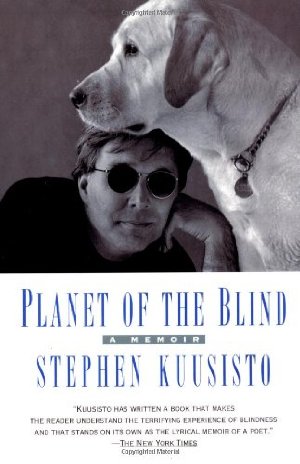
Digital Disabilities and the Mob-self

Lee Siegal, enfant terrible of the eminence grise, whose essays cover everything from literary fancy to Groucho Marx wrote (when the internet was still aborning) that laptops were destroying the cafes. The book in question is “Against the Machine: Being Human in the Age of the Electronic Mob” and I recommend it though with a disabled person’s admonition–Siegal is too “normal” to grasp how the digital age has improved the lives of folks like me–blind or isolated by mobility obstacles–for us the internet “is” the cafe.

Before proceeding let me attest–yes I spend too much time on the computer; I’ve been trolled on Twitter; have spent gelatinous hours trying to free myself from the radar forest of super-egos who’ll smack you down for the most innocuous things. As the poet Robert Bly wrote to a dead bird: “forgive the hours spent listening to radios”–we’ll not get this time back. Siegal is correct that “more and more people are able to live in a more comfortable and complete self-enclosure than ever before.” If we’re doing the Hollywood game, his book is “The Culture of Narcissism” meets “Amusing Ourselves to Death” with a hint of Bernard Rosenberg and David Manning White. The internet “is” our first true “mass culture” and it’s the ark with all the social animals aboard.

Siegal is at his best when describing the moist and vain forms of internet solipsism and one should expect no less for he’s one of the funniest public intellectuals in the US. I’m fond of these passages:

“The Internet’s most consequential changes in our lives, however, are the ones woven into our everyday routines. Maybe your teenage son—or daughter—spends hours every day and night corresponding with dozens of new “friends” on MySpace or Facebook; perhaps he’s uploading a forty-minute-long video of himself dancing naked, alone in his room, onto YouTube, one of the world’s most highly trafficked sites. Maybe your officemate is addicted to political blogs like Little Green Footballs, or Instapundit, or Firedoglake, in which dozens, sometimes hundreds, of people, argue with each other passionately, sometimes abusively, on interminable threads of commenters. Or your other officemate spends all of his time buying merchandise on eBay, or your boss, a high-powered attorney, closes her door on her lunch hour and logs on to JDate, a Jewish dating service, where she fields inquiries from dozens of men.”

And:

“Perhaps your husband is, at this very moment, shut away in his office somewhere in your home, carrying on several torrid online affairs at the same time under his various aliases: “Caliente,” “Curious,” “ActionMan.” When he emerges from his sequestered lair, red-faced and agitated, is it because he has been arguing for moderation with “KillBush46” on the political blog Daily Kos, has failed in his bid to purchase genuine military-issue infrared night goggles on eBay, or has been masturbating while instant-messaging “Prehistorica12”?
Then again, maybe your husband died four years ago from a rare disease, and thanks to information you discovered on the Web, you were able to find a drug that kept him alive for twice as long as he would have lived without it. An Internet grief support group helped get you through the pain of your loss and introduced you to people who are now trusted friends. They led you, in turn, to an online dating service where you met your second husband, and began a new life.”

Siegal captures the terrible and ordinary qualities of loneliness in the digital age, though as a poet I’m reminded that nothing is new under the sun when it comes to vulnerability and solitude. Here’s “Danse Russe” by the poet William Carlos Williams, a poem written in the early years of the twentieth century:

If I when my wife is sleeping
and the baby and Kathleen
are sleeping
and the sun is a flame-white disc
in silken mists
above shining trees,—
if I in my north room
dance naked, grotesquely
before my mirror
waving my shirt round my head
and singing softly to myself:
“I am lonely, lonely.
I was born to be lonely,
I am best so!”
If I admire my arms, my face,
my shoulders, flanks, buttocks
against the yellow drawn shades,—

Who shall say I am not
the happy genius of my household?

(Of course these days we know the answer to the last couplet, the Twitter troll will say he’s not the happy genius of his household–why to even have a house means the writer is privileged and clearly contemptuous of all those who cannot dance and sing softly while alone. Why this is a terrible man! And by the way, who does he think he is comparing himself to a happy genius, some mythic force, really–talk about patriarchal privilege!) Yes, that was a long parenthetical, but you’ll admit it does have merit. If you won’t admit it you can go on Twitter straight away.

**

So Siegal is funny and his thesis that we’re less and less independent of the delivery systems is a sound one.

Still as a blind person I must say I’ve experienced more than marginal freedom from the machine. Siegal’s nostalgic cafe is presented this way:

“I GO TO STARBUCKS, sit down, open my laptop, and turn it on. In the old days—ten years ago—I would be sitting with a pen and notebook, partly concentrating on my writing and partly aware of the people in the room around me. Back in that prehistoric time, my attention faced outward. I might see someone I know, or someone I’d like to know. I might passively enjoy trying to figure out why that couple in the middle of the room are speaking so intensely—are they moving closer together to relish their intimacy or because there is a crisis in their intimacy? And who is that guy with the fedora—and why the red sneakers? Is he an original, or the copy of an original? I might be watching everyone, but some people might be watching me, too. My situation is just as permeable as theirs. A stranger could come over to my table at any minute, his sudden physical presence before me unexpected, incalculable, absolutely enigmatic in the seconds before he becomes one kind of situation or another.
But here I am, sitting in the future—I mean the present—in front of my laptop. Just about everyone around me has a laptop open also. The small mass of barely variegated gray panels looks like a scene out of Fritz Lang’s Metropolis, but with modems and Danishes. I can hardly see anyone else’s face behind the screens, and no one seems to be doing anything socially or psychologically that might be fun to try to figure out. They are bent into their screens and toward their self-interest. My attention, too, is turned toward my ego. But I am paying attention in a different way from what I do when I read a book or a newspaper. I am opening e-mail sent to me, writing e-mail expressing one or another desire that belongs to me, clicking on Google looking for information to be used by me. Ten years ago, the space in a coffeehouse abounded in experience. Now that social space has been contracted into isolated points of wanting, all locked into separate phases of inwardness.”

I don’t know how many internets there are but in these paragraphs there’s a lost world of the flaneur, the cafe goer, whose causal watching represented the true bounty of modernism. To me as a blind man this was never real, and moreover, having lived an isolated life in an industrial nation without good public transportation my experience of space couldn’t be more different than Siegal’s version. The internet has made it possible for me and those like me to enter civic spaces.

I won’t say Siegal has “sighted privilege” as that’s the problem with instant solipsism (forgive us John Lennon). That he doesn’t think as I do is a good thing. And so the true problem is  we’ve got the instantaneous but not the civic collaborative to make glorious use of this moment, one  when I can debate you, learn something, and you too, you can learn. But learning, true education, depends on the absence of fear.

Referring to Malcolm Gladwell’s essay collection “Tipping Point” Siegal writes:

“What cultured, thinking people have been suspicious about since the advent of the written word is the herd thinking that commerce encourages. They fear that the supplanting of independent thought will result in the victory of prejudice and bias, and of the stereotypes that they produce. That it will result in the rule of the mob. Gladwell, however, doesn’t fear the mob. Rather, he aspires to bring out the mob-self in the individual. He speaks of “the mistake we make in thinking of character as something unified and all-encompassing.” Like that boy or girl we knew in high school who would do anything to please anyone, Gladwell sees other people not as people but as an audience.

He writes, “When we are trying to make an idea or attitude or product tip, we’re trying to change our audience in some small yet critical respect: we’re trying to infect them.” Where the Internet creed is “connectivity,” Gladwell’s ideal social type is the “Connector.” The Connector is a person who knows lots of other people. If you want to win an audience, sell an “idea or attitude or product,” you go to a Connector. Because they know a broad range of people, Connectors can be the starting point of a tipping point:

‘The Connector belongs to many different worlds—politics, drama, environmentalism, music, law, medicine, and on and on—and one of the key things she does is to play the intermediary between different social worlds.’”

I do not know what it means to see other people not as people, but as an audience for potential sales though I believe Facebook and Twitter prove the point.

I do know that digital spaces have made a more connected series of engagements for those of us who have often been shut in or out.

As for the mob inside myself, that’s the work of poetry. See Williams.