Mozart

Improbable yes but I dreamt of him
As if we were pals
And though we were indoors
Rain fell and it was beautiful
Water coursing down walls.

One of us said
We only get so much—
He said “opera is for the young,”
“String quartets, for dying.”
He was alive alright.

The dream is an antiquated device
Driven by voice and water
Its separate parts so ingeniously assembled
We rise and fall through elements
But he kept writing.

Design Justice, Planet Health, Disability…

Uncle History came stomping in with fire wood in his arms. Aunt Certainty said: “Soon we won’t need the stove and there will be no forests.”

**

Leon Trotsky: “The end may justify the means as long as there is something that justifies the end.”

“There is a tendency at every important but difficult crossroad to pretend that it’s not really there.”

― Bill McKibben, The End of Nature

Aunt Certainty keeps these quotations on her refrigerator.

**

Disabled, I think of design justice, about making our built environment eco-friendly–or more than that, let’s imagine healthy access and conceive of diversity, inclusion, and planetary health as equivalencies. These things are really there as Bill McKibben would put it.

**

In her new book “Design Justice: “Community-Led Practices to Build the Worlds We Need” Sasha Costanza-Chock puts together the beauty of design, the insistence of inclusion and imagination, and human rights and proposes a powerful reformation of how we think about the built worlds we live in. She outlines the formative principles of the Design Justice Network:

“Design mediates so much of our realities and has tremendous impact on our lives, yet very few of us participate in design processes. In particular, the people who are most adversely affected by design decisions—about visual culture, new technologies, the planning of our communities, or the structure of our political and economic systems—tend to have the least influence on those decisions and how they are made.

Design justice rethinks design processes, centers people who are normally marginalized by design, and uses collaborative, creative practices to address the deepest challenges our communities face.”

Reading this I sat bolt upright in my chair.

As a blind man I’m one who is normally marginalized by design. Double entendre fully intended.

That wasn’t the first passage to catch my eye. Sasha Costanza-Chock describes in almost withering detail her experience attempting to pass through an ordinary TSA airport screening. She’s non gender conforming. The body scanner with its AI and algorithms flags her. She becomes a public display, a crisis, a freak, a debased citizen. The built environment creates pejorative values for non-normative bodies. Don’t I know it? I’ve walked through thousands of airports with my guide dogs, always on edge, frightened of what’s coming next since the TSA is not kind, not welcoming, often untrained, many times malevolent when I arrive with a dog in harness. I’ve been screamed at, pushed, yanked. I’ve had uninformed agents demand that I take the dog’s harness and training collar off—things entirely unacceptable. I’ve been pointed at and made to stand around for nearly uncountable minutes while agents confer about the ADA. One impatient woman shoved me because I was in her way and she wanted her suitcase.

Participation in design processes is crucial just now, right here and now, for the very designs by which we live are being transformed before our eyes.

Design justice means we are less alone.

Let’s not be overwhelmed by new possibilities.

**

In order to create a more welcoming town, a cleaner river, and yes, use collaborative practices to address our deepest challenges we must finally end the economic advantages of structural inequality. Peace, Design Justice, and Planetary Health, (which I’m capitalizing) depend on new visions of industry.

Here are the essential principles of design justice:

“1. We use design to sustain, heal, and empower our communities, as well as to seek liberation from exploitative and oppressive systems.
2. We center the voices of those who are directly impacted by the outcomes of the design process.
“3. We prioritize design’s impact on the community over the intentions of the designer.
4. We view change as emergent from an accountable, accessible, and collaborative process, rather than as a point at the end of a process.
5. We see the role of the designer as a facilitator rather than an expert.
6. We believe that everyone is an expert based on their own lived experience, and that we all have unique and brilliant contributions to bring to a design process.
7. We share design knowledge and tools with our communities.
8. We work towards sustainable, community-led and controlled outcomes.
9. We work towards non-exploitative solutions that reconnect us to the earth and to each other.
10. Before seeking new design solutions, we look for what is already working at the community level. We honor and uplift traditional, indigenous, and local knowledge and practices.”

**

If you’re disabled or gender non-conforming, or you hail from any marginalized group you know about the need to be heard. You know even more about the absolute need for accountable, accessible design processes.

I once met with administrators at my university. They’d purchased software which everyone on campus was directed to utilize. It was blind unfriendly. When I pointed it out, a senior admin said: “you’re mistaken. This program has robust accessibility.”

It didn’t matter that I was 100 per cent correct. Nor did it matter that as a long time vision impaired computer user I might have given them insights into what makes a good program. I was not conceived of as a full community participant–moreover when I called the company that made the software they had no accessibility engineer.

We believe that everyone is an expert based on their own lived experience, and that we all have unique and brilliant contributions to bring to a design process.

**

Earth is on fire. Community based politics have never been more important. Sustainable, community-led and controlled outcomes should necessarily involve new kinds of engagements.

Problem. Solution. Inclusion.

In the US wheelchairs are incredibly expensive and most wheelchair users can’t afford them.

Solution: invite unemployed machinists and scrap metal dealers and engineering students to repurpose discarded materials and then build high quality mobility devices right in our own communities. Break the monopoly of the one or two wheelchair manufacturing companies that are currently in cahoots with existing rehabilitation agencies. And come up with new models of financial support that lift up everyone.

As Sasha Costanza-Chock writes, we need to discuss “the raced, classed, and gendered nature of employment in the technology sector…” Moreover we need to make “a shift from arguments for equity (such as “we need more diverse designers and software developers”) to arguments for accountability and community control (“those most affected by the outcomes should lead and own design processes and products”).”

**

Equity alone is not accountability. Nor is it related to community control.

Listening to the lived experiences of the disabled is one way to learn the language of the local.
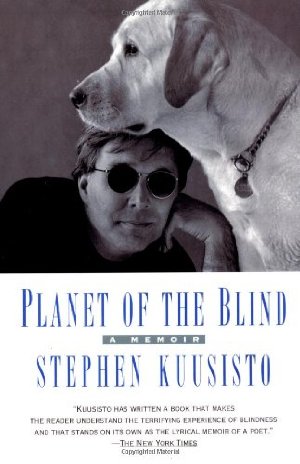
In the Cripple Comedy Engine Room…

I think it was Oscar Wilde who said the 19th century was Balzac’s invention. I could look it up but I won’t. Balzac, part flaneur, part philosopher, always the story teller. Of course Wilde meant something more: in the Human Comedy Louis Lambert becomes unhinged trying to understand modern existence. Who better than Wilde to understand we laugh at our own peril?

I’ll propose that laughing at one’s own peril is laughter itself and if the first rule of comedy is to find amusement in the pain of others it was modernity taught us otherwise. It’s you, stupid, you’re the one. So in the twentieth century Balzac became Beckett: “You’re on Earth. There’s no cure for that.”

I wrote a terrible limerick last night. It was disgusting. Needless to say it can’t be shared. It didn’t have race or women or disabilities in it; just a man with his nether parts. The point is, when you’re disabled you need humor to get by. Yes Lou Reed was right, you need a bus load of faith; but a snarky joke, even when unshared does wonders.

Mel Brooks said something like “tragedy is when I cut my finger; comedy is when you fall in an open sewer and die.” That’s how my private cripple comedy works. The shop owner who refuses to admit me and my guide dog falls into a man hole but in my version he doesn’t die—he lives for all eternity with Richard Nixon who wears Bermuda shorts and black phlebitis compression socks and pushes a beach comber’s metal detector muttering, “Jesus, Spiro, I know it’s here somewhere, we’ve got to find it before Ted Kennedy shows up!”

I’m not talking about disability standup or performativity. This is the inner life; the engine room. Disabled we face micro aggressions; macro; put downs; eye rolling; outright contempt from the abled. Or worse, we get their treacle: the “you’re so inspirational” pity party shit. And if that’s not bad enough, we get the disabled themselves who make a big deal out of running the marathon because after all they’re super cripples. The media buys it every time. Meantime the ordinary disabled are unemployed. Behind every story about the long distance runner with his guide dog are 100 blind people without work.

Down in the stifling engine room of self survivorship it’s always like those submarine movies where pipes are bursting because a depth charge has gone off and gritty sailors are smacking everything in sight with wrenches. This is one of the reasons I love submarine flicks: they’re about the inner lives of the disabled. We get it together under pressure. The other reason I love those movies is because the sailors almost always get revenge.

Years ago I worked at a famous guide dog school. I discovered that one of the most influential members of the board of trustees, a blind man, actually hated the blind and he was loud about it. He called them “mooches and leeches” meaning the clients who received guide dogs free of charge (a necessity since 80 per cent of the blind remain unemployed even today) were just “takers” and therefore were unworthy of respect. The man is dead now. He was briefly famous. He became a federal judge. He absolutely hated the disabled. My engine room was flooded every time he opened his mouth. One day I imagined him tied to a stake in the Roman Coliseum, lions circling. This helped some. But when I pictured him as the emperor Augustus things were funnier. Augustus spoke disparagingly to common men who were dressed in cloaks and ruled that only toga clad men could enter the forum. He said, pointing to the elect: “Behold them, conquerors of the world, the toga-clad race of Romans!” So I pictured old “mooches and leeches” in hell sporting a toga, waving a white cane and shouting at winged rats.

The cripple comedy engine room is a tough place. The disabled experience a lot of put downs. When they come from another disabled person—one who’s done well in life—it’s just intolerable. Alas there are bullies everywhere.

I tend to consign people to imaginary hells. It’s the oldest literary trick in the book. Every year I reread a little Dante. You can’t read a lot of Dante because then you’re stuck down there.

When you laugh at oppression you’re no longer the court jester, the funny cripple who pleases the king. You’re tough, shrewd, and you know how to employ your wrench. Another word for this is comfort, as in self acceptance. I’ll close with a quote from comedian Josh Blue who has cerebral palsy: “The thing about my comedy is that I’m so comfortable with my disability that you don’t have a right to be uncomfortable, if I say something that’s hard in my life but put it in a way that maybe you have not thought of, and I’m laughing at it, it gives you the ability to laugh at the same thing within yourself. I feel like every person has a disability in some way. Whether you’re dyslexic or Republican or whatever.”

It’s the sea horse’s coordinates that interest me…

It’s the sea horse’s coordinates that interest me as I’m a man living in a house of shells.

**

Couplets: reminders of coronary ambitions and lonesome disappointments.

**

Once, in New Hampshire, standing in the cashier’s line at a drug store, I heard a little boy shout: “Jay-zuz! Jay-zus!”

**

The boy’s mother shouted: “That’s it! No birthday for you!
The boy went on: “Jay-zus!

**

I will never know what that was about. Tragic recipes revealed in public but with key ingredients left out. Faces.

**

Did you mean to impress me with your mushroom lore?
I know. These fascinations. Gods and goddesses on the dark lawn.

**

On Consolation…

As a blind kid who was often treated cruelly by adults and children I early developed my own instinct to assist others.

**

In my case this has not been always good but it’s largely to the good, a fine but requisite distinction.

**

In general, faces can’t keep up with fast distinctions. This is what poetry is for.

Covid carousel…

I blog almost daily. Sometimes I’m under the couch and I dictate words to the Mac. When sitting upright I type. Yes and occasionally I’m only half under the couch.

At least I have a couch. I have a computer. Depressed though I may be I can decide whether it’s a supine, under the furniture day or it’s time to sit upon the wing backed chair.

“First thought, best thought,” Jack Kerouac said. Jack, I’m now on the leather love seat, thinking about your unrivaled haikus.

In my medicine cabinet
the winter fly
has died of old age

Now to me that feels like a COVID poem.

Medicine; winter; died; cabinet; fly; age…

A bird on
the branch out there
— I waved

For Kerouac the most important thing about his version of haiku was the picture and the kick. No syllable counts.

Who has time for syllable counting?

Not me. Here’s one just now:

Blind

I heard a fly
About the room
Lost

Blogging gives a writer an advantage not found in a formal approach to the page. I’m talking about speed blogging which is the only kind I do.

Clumsy fingers
Can’t pull nose hair
Mind runs hot

Yes I’m half the day under the sofa.
Yes I’m lucky to have a sofa.
Yes the sofa is beneath a roof.
I have heat and food for now.

And mind, that old gambler, dreaming of horses still unborn.

The Toy Theater

If you spend enough time trapped in your head you eventually become nostalgic even if you’re young. My guess is even a ten year old recalls her first stuffed dog with fondness. As a child in Helsinki I had a toy monkey which I hid in a little cupboard and together we had our own private toy theater. I also had a wooden top that sang while spinning. My first playthings. One can say nostalgia “is” a puppet theater with figures moving in and out of shadows, vivid for a moment then less so.

G. K Chesterton was perhaps the greatest connoisseur of the toy theater. As Gary Wills puts it: “he was led to wonder what thing, however slight and trivial, was not fathomless by reason of its existential act.” Chesterton wrote: “If living dolls were so dull and dead, why in the world were dead dolls so very much alive? And if being a puppet is so depressing, how is it that the puppet of a puppet can be so enthralling?”

In Chesterton’s view existence reduced to its bare minimum is a mystical excitement and all we should ever need. I view nostalgia as the unbidden, quiet reminder of this.

**

Camus got it right. “Every act of rebellion expresses a nostalgia for innocence and an appeal to the essence of being.”

**

Long ago when I was young enough to think about style for the first time I thought suede shoes were excellent—not the Chet Atkins variety but the “Hush Puppy” kind, the beige ones. I was 13 and those were some good shoes. The shoes of nostalgia will fuck you up.

Of the Hush Puppies I recall after wearing them for a day or two they tended to stink. Then my father said: “Your shoes smell like dead rats.” “How do you know what dead rats smell like?” I asked. “I was in WWII,” he said.

BTW I could never get my father to talk about the war. He fought in the Pacific. There were lots of rats.

What I’m getting at is not all memory items are properly Chestertonian. Toy monkey, yes. Beige Hush Puppy no.

Tartuffe in the Faculty Senate

College faculty are (to my mind) like those lobsters you see in restaurant tanks.

There are of course many kinds of professors. In the faculty senate you’ll meet the following Moliere-esque figures:

The “Tartuffe” is an administrator, usually a dean or provost who will tell you with affected gestures that he, she, they, what have you, cares a great deal about blah blah blah but never helps out.

The “Harpagon” is also an administrator, but he, she, they, can also be a faculty member. The Harpagon is driven by rhetorics of cheapness but he, she, they, generally drives a nice car.

Statue du Commandeur: a rigid, punctilious, puritanical type—“this is the way we’ve always done it. If we changed things for you, we’d have to change things for everybody. Yes, it certainly must be hard…” See:

The Geronte: when his son is kidnapped he says: “Que diable allait-il faire dans cette galère?” (What in the deuce did he want to go on that galley for?” In other words, he brought this upon himself. “Really, shouldn’t you try something easier? I could have told you.”

“I am, I fear, Inclined to be unfashionably sincere.”

–Moliere

The Rutabaga Party

I remember a poem by James Tate about a man who walks into a field and eats raw rutabagas–I think that’s right, though this may not be exactly what Tate wrote and I could look it up but I’m not going to and anyway no one really cares. Maybe it was turnips. The point is that there’s in each of us a desperate poverty of imagination and a terrible hunger also and we’re not likely to solve the problems with our current tools. So much for poets. They suggest what ails us. Poets are not generally problem solvers. Kurt Vonnegut Jr. used to say that if you’re looking for the smartest people in any given university you should avoid the English department and head over to Physics.
But I suspect they eat turnips over there as well.

So I’m sitting on the couch in my tattered bathrobe and the planet is dying and the politicians are talking about cancel culture. They think wearing a mask during the pandemic is a cultural issue and by god they have the right to spread the virus and nothing is more important than defending Mr Potato Head. I’d prefer it if they said: “raw rutabagas for everyone!”

This would be better for the nation in many ways. The rutabaga contains the following: Calcium: 60mg (6% of the recommended dietary allowance for adults) Iron: 0.6mg (8% of the RDA for adult men; 3% for women) Magnesium: 28mg (7% of the RDA for men; 9% for women) Phosphorus: 74mg (11% of the RDA for adults)
Potassium: 427mg (13% of the RDA for men; 16% for women)
Zinc: 0.3mg (3% of the RDA for men; 4% for women).

You see? You won’t get rickets if you eat rutabagas. But all you’re going to hear about is how the liberal elites are trying to cancel your superstition and hatred.

One more thing about the rutabaga. It contains phytonutrients, including lutein and zeaxanthin. These antioxidants are important for eye health, and consuming enough of them may help prevent cataracts and macular degeneration, two eye diseases related to aging.

I think unhappy centrist Republicans should start the Rutabaga Party.

Ode to Doofuses Everywhere

Of the word doofus these are its principal synonyms:

berk [British], booby, charlie (also charley) [British], cuckoo, ding-a-ling, ding-dong, dingbat, dipstick, featherhead, fool, git [British], goose, half-wit, jackass, lunatic, mooncalf, nincompoop, ninny, ninnyhammer, nit [chiefly British], nitwit, nut, nutcase, simp, simpleton, turkey, yo-yo…

Now of course if you’re disabled like me and you had a disabled childhood you heard a lot of demeaning terms during your formative years. I make no excuses for those who still use them nor am I cheering ableism. Half-wit is ugly, as is simpleton, nutcase, nut, lunatic, mooncalf and fool.

But I do like ding-dong and yo-yo.

**

Doofus is thought to be related to goofus. Some say it’s akin to doo-doo.

Why do I care?

Because there’s an innocence to the word.

**

Stan Laurel is a doofus, saintly.
Moms Mabele, Kurt Vonnegut, doofuses, saintly.
I grieve the steady erosion of land upon which the doofus can stand.
You can’t be a doofus, saintly, if you’ve a manifesto.
Charlie Chaplin! Doofus!
Walt Whitman!

**

Yes I’ve lived in Doofus-ville. Most of my life actually.
Here’s a tip: the saintly comic innocents are never to be found in city hall.

**

Here’s a quote from G.K. Chesterton that helps illuminate the necessity of the doofus:

“Every confession that man is vicious is a confession that virtue is visionary. Every book which admits that evil is real is felt in some vague way to be admitting that good is unreal. The modern instinct is that if the heart of man is evil, there is nothing that remains good. But the older feeling was that if the heart of man was ever so evil, there was something that remained good—goodness remained good.”

You see the doofus stands for what remains good when the human heart is ever so small “e” evil.

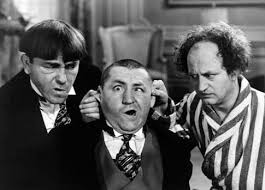
One of my favorite quotes from the Three Stooges:

“How’re we gonna get in pictures? We know nothin’ about movies!” “There’s a couple o’ thousand people in pictures now who know nothin’ about it… three more won’t make any difference.”
(Curly & Moe)

The doofus knows there’s a good-goodness about showing up.

It comes over one, like a sentiment, what to call it?

It comes like sentiment, what to call it? Is it hope? “Put the spy glasses down boys! That’s land!”

Early yesterday I heard two cardinals singing while snow was falling. Hope is the thing with feathers. I told you: there’s general feeling about it.

In today’s academy we’d invent an interpretive grid which could be lowered over the feathered imaginary; we’d call it hope theory. We’d find a way to hold the “h” word up for suspicion–hope is a product of capitalism; it’s a religious fantasy, it’s the opiate of the masses. No one should be allowed hope without critique–it’s a gateway drug to innocence.

**

Of innocence one thinks many things.

In more innocent times we asked questions like “what’s the “beyond” in Bed, Bath, and Beyond? We were max-innocent. We asked because the answers would be foolish. If nothing else the Trump years have rid us of vapid fancies.

Meanwhile one thinks of Will Rogers: “An onion can make people cry, but there has never been a vegetable invented to make them laugh.”

Now this is true as far as it goes. He means peeling. I’ve yet to peel a rutabaga and just crack up. The name of the rutabaga will make you smile but so what?

In more innocent times…

Well of course there never were such times. But a fool and his nostalgia are not so easily parted. But there never were such times. While people watched “What’s My Line?” on their Dumont televisions they were executing the Rosenbergs.

Will Rogers: “Things aren’t what they used to be and probably never were.”

Peter Charles Hoffer’s splendid book “Clio Among the Muses” tackles this very problem. In short we’re living in an age when as he puts it, “there’s too much history to bear.” We’re also prone to believing only the history we like and the devil take the hind most. Christopher Columbus butchered and enslaved human beings. Hey, my grandfather loved Christopher Columbus. The latter view is a call for more innocent times.

Hoffer notes that suffering is crucial to our understanding of greatness in human beings, noting that Lincoln was not the best educated candidate for the presidency but he was certainly the greatest sufferer:

“Lincoln served as president during the most horrific and perilous of all American wars. His life, until the Civil War erupted, did not seem to prepare him for greatness. But it did prepare him for suffering. Often lonely, beset by images of his dying mother, melancholy and depressed, he identified with others’ suffering. Suffering taught Lincoln to hide a portion of his thoughts and feelings, and the empathetic suffering he exhibited during the war. The poet W. H. Auden wrote, “Let us honour if we can; The vertical man; Though we value none; But the horizontal one.”

In more innocent times…

Will Rogers: “The worst thing that happens to you. May be the best thing for you if you don’t let it get the best of you!!”

**

More about innocence:

Don’t imagine your shoes are innocent. They know the moist, ineluctable whispers of the unconscious. And don’t imagine that just because pharmaceuticals have been pushed as the cure for depression there’s no such thing as the unconscious. Freud and Jung had it right and even your pharmacist knows it, knows it because his shoes are dark and moist. Even the dancing pump and the foam filled cross-fit shoes of leisure are filled with half starved archetypes. The murderer knows his shoes. The priest. The politician. I take no pleasure saying so, I”d prefer innocence encasing our precious feet.

In her novel “The Cold Song” Linn Ullman writes of Jenny, an aging socialite who’s preparing for a party in her honor:

“She looked at the shoes, paired up like well-behaved children on the floor by her bed. Such pretty shoes, the color of nectarines, from the sixties, she remembered the store where she had bought them.”

Ullman knows. The shoes look pretty but they’re steeped by the drains and threads of the unconscious and they’re not well behaved children at all. And we know about those stores from the sixties don’t we?

**

Shoe, I have not loved you with my whole heart;
Truss, I fear you’re coming…

Emergence of old age.

Dante: “we call shaggy all words that are ornamental.”

Ornaments of this aging vulgar tongue…

Pray the noblest words alone remain in the sieve…

For Dante, language was new—it was his language, the juicy vernacular. English ain’t so new anymore. “Make it new, make it new,” he cries, waving his stick. That “he” is me.

Spoon me some glottal stops, shout me some noble ballate.

Had me a literary education. Learned about recitations charmingly delivered. But at night I kicked frozen turds on the icy street. In those days I talked to anyone. Fable fable.

Gettin’ old. Just want to rest my head on the bosom of moral philosophy. Ain’t that the way of it? Start and end with moldy books and sinister shoes.

**

Imelda Marcos had one thousand six hundred pairs of shoes and a lot of blood on her hands. The unconscious won’t let you “buy out.” As for those shoes, Imelda’s, they were telephones to the torture chambers.

**

I went to the shoe store and placed my feet in the measuring pans. My feet transmitted a sudden and stark message—“we feel shy down here; we’re under examination. Please get us back inside our shoes.” I wondered about this. The tragedy of it. “When,” I wondered, “had my feet learned to be timid?” “It’s the whole damn system” I told them. “Capitalism has taught you to feel incomplete.” But when your feet are farouche the whole body jumps that way. The temporal lobe said: “I too don’t wish to be known.”

I really wanted Mozart just then. Anything other than the grey neural distress that emanated from my feet and circled outward to the farthest ring of my skull. “Jesus,” I said, “you’re just buying some shoes.” But the temporal lobe said: “There’s no such thing as just. Would you just saw off your hand?” So I was forced to conclude, encouraged to conclude, the body’s anguish is like intense moonlight.

The shoe moment helped me recognize what my autistic friends already know. There’s no “me”—there are only the eager, bristling, dancing, component parts. Now ask yourself how you get through the day?

Oh my feet, you moth eaten grand seigneurs, keep talking. It’s OK.

You can have your shoes back even if they’re not without red dreams.