It Takes a Village to Sell a Book: Tips to Help Your Favorite Author

If YOU know an author, or if you have a favorite author you’d like to support (hint, hint) what can YOU do to make a difference?  Here are some ideas for meaningful things you can do to help spread your enthusiasm for any author dear to you.

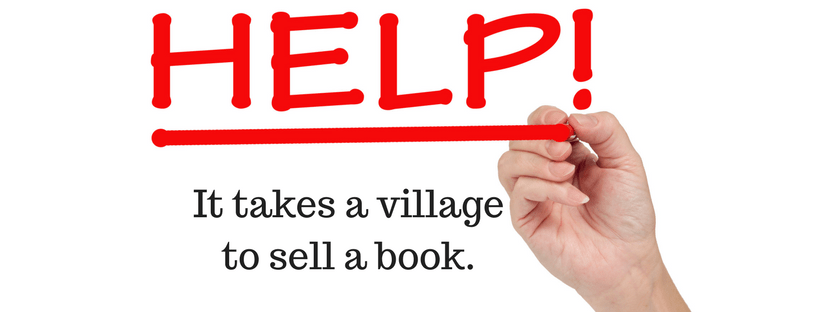
Help! It takes a village to sell a book

By C. Kuusisto

Now that books can actually be published online with a few key strokes (compared to bygone days) chances are you know someone who has written a book.  Or an eBook.  Think about it for a minute.  Browse the shelves of a library or your local bookstore or on Amazon.com and you’re looking at exceptional efforts made by some extraordinary individuals, each with a passion to share his or her message with the world.  Granted, some books are better than others but that’s another story.  Story – get it?!

Not everyone has the inclination or ambition to make such a mark on the world.  For those of us who don’t, unless you know an author personally, it is very easy to take their efforts for granted.  A book, just one book, represents hours, months, sometimes years of toil and trouble. While some consider it a labor of love, others may consider their book the worst “assignment” ever.

I know; I’m married to an author.

So if YOU know an author, or if you have a favorite author you’d like to support (hint, hint) what can YOU do to make a difference?  If you’re reading this post, I’m assuming you have an interest in doing so.  Well then, here are some ideas for meaningful things you can do to help spread your enthusiasm for any author dear to you.

• Check out the author’s web site and buy a book!  Buy another one and gift it to a loved one.  Or a friend.  Or both.

• Buy another copy and donate it to your local library.

• TALK about the book.  Word-of-mouth advertising is priceless!

• Follow his/her Virtual Book Tour.  But don’t just read the introductory blog posts.  Click the links!  Visit the hosts’ blogs; write comments.  Show some love!  Bloggers LOVE comments!  Internet search engines love links.  Follow an author on a virtual book tour, participate, and you’ll help make “noise” online.

• If he or she is offering a reading at a local bookstore or other venue,  GO!  And buy a book!  Ask him/her to sign your book.

• Bring a friend with you! Treat him/her to a copy.

• Help arrange for a reading at a local venue.

• Write a book review.

• Visit Goodreads.  “Like” the book.  Add it to your bookshelf.  Recommend the book.  Leave a comment/review.

• Visit Amazon.com. “Like” the author.  Like the book.  Recommend the book.  Leave a review.  Same goes for any other online book seller site…

• Are you a Twitter user?  Connect!  Then borrow the link from either Amazon or Barnes and Noble and share with your followers.  Or share your favorite quote.

• Are you on Facebook?  “Like” the author and/or the book and tell your friends why you like it.  Important: Leave Comments!  SHARE!

• Are you a blogger?  Ask your favorite author if he/she will provide a guest post.

• If you are a blogger, offer to interview your favorite author and publish it to your blog.

• Make a video of your interview and post it to YouTube and to Facebook.

• What other social media platforms do you use?  Google+?  Pinterest?  Instagram?  Use them to help spread the word.

• Share the book with your book club.  Ask the author if he/she will do a virtual online meeting with club members to discuss the book.

• Start a book club!

• Contact your favorite author and ask “what can I do to help spread the word?”

You may have some other ideas.  Please feel free to share them in the comments.

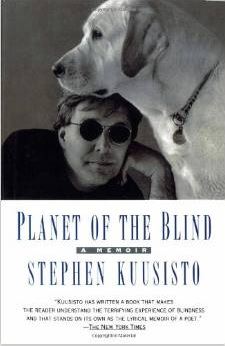
Oh, and just for the record, Stephen Kuusisto’s new book “Have Dog, Will Travel” is now available for pre-order on both Amazon and Barnes and Noble.  It will take a village to sell his book, too.  No doubt he would appreciate YOUR help.  Share the news, will you?  Steve’s book “Planet of the Blind“, a NY TIMES Notable Book of the Year (1998), touched a lot of lives; this we know.  The hope – the expectation – is that this one will, too.
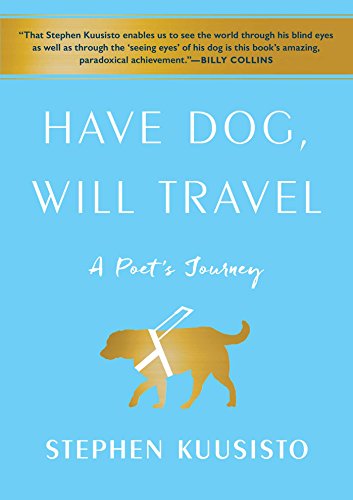
Have Dog, Will Travel: a Poet's Journey by Stephen Kuusisto

Notes:

First Image: The word HELP spelled out in red by a hand holding a pen. Underneath HELP it says “It Takes a Village to Sell a Book” in black letters.

Second Image: Cover of author Stephen Kuusisto’s new book. Light blue background with white lettering: Have Dog, Will Travel A Poet’s Journey. Included is an graphic image of a gold-colored dog wearing a harness and at the top of the cover is a testimonial by poet Billy Collins.
Delta: Leave the Blind Alone

As a blind traveler who uses a guide dog I’ve flown a lot of places. My professionally trained dog lies under my feet and never stirs, no matter how long the flight. I’ve had four such dogs and all of them were trained by a top notch school in New York called Guiding Eyes for the Blind. Although going places with a disability isn’t always easy its generally achievable because protective laws are in place that guarantee the disabled rights of passage. In the United States both state laws—known as “white cane laws”—and federal laws, including the ADA and the Air Carriers Transportation Act have made it possible for blind people and their exemplary dogs to go anywhere the public goes.

In the world of service animals guide dogs are the gold standard. Trained to guide the blind through heavy traffic, watch for low hanging branches, take evasive measures when cars or bicycles run red lights, watch for stairs—even prevent their partners from stepping off subway platforms, everyone can agree that they’re the “few, the proud” just like the Marines. Yes, and they’re also trained to stay quiet and unobtrusive in restaurants and when using public transportation.

This canine professionalism is possible because guide dog schools spend tens of thousands of dollars breeding, raising, and training each and every dog. In turn guide dog teams have earned the respect and admiration of the public here in the United States and around the world.

Recently Delta Airlines, in an effort to curtail the appearance of fake service dogs on airplanes has issued a new requirement that actually hurts the blind. Delta is demanding that service dog users upload veterinary health certificates to their website 48 hours prior to flying. This is essentially a stumbling block—an obstacle designed to impede the blind while doing very little to halt illegitimate or phony service dogs from boarding flights. As a blind person who uses a tasing computer I can tell you that navigating websites and uploading documents isn’t easy. In fact its often ridiculously hard.

The blind and their amazing dogs are not the problem for Delta or other airlines. Fraudulent service dogs are a problem for sure, but really, do they think dishonest people who are already passing off their pets as professionally trained dogs will be unable to attach rabies certificates on a website? For sighted people this is a snap.

All guide dog users carry ID cards issued by the guide dog schools, certifying that the dog team pictured is legitimate and has graduated from a real service dog training program.

I don’t know what to do about the sharp increase in fake service animals on airlines, but I do know Delta and other carriers should leave the blind alone. We’ve earned our passage.

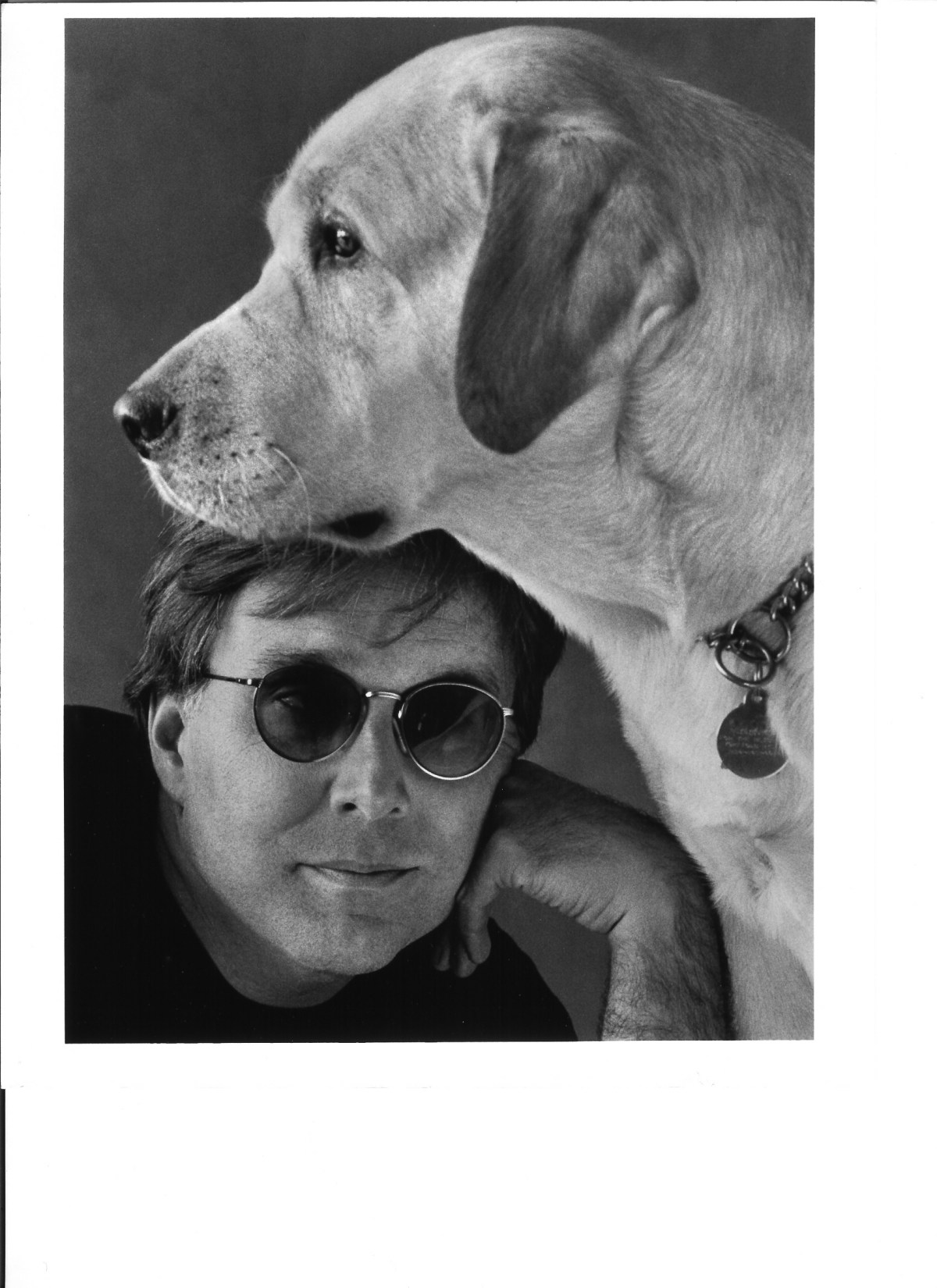
Stephen Kuusisto and HarleyABOUT: Stephen Kuusisto is the author of the memoirs Have Dog, Will Travel; Planet of the Blind (a New York Times “Notable Book of the Year”); and Eavesdropping: A Memoir of Blindness and Listening and of the poetry collections Only Bread, Only Light and Letters to Borges. A graduate of the Iowa Writer’s Workshop and a Fulbright Scholar, he has taught at the University of Iowa, Hobart and William Smith Colleges, and Ohio State University. He currently teaches at Syracuse University where he holds a professorship in the Center on Human Policy, Law, and Disability Studies. He is a frequent speaker in the US and abroad. His website is StephenKuusisto.com.

National Federation of the Blind Statement on Delta’s New Service Animal Policy

National Federation of the Blind Statement on Delta’s New Service Animal Policy

Baltimore, Maryland: (January 23, 2018): The National Federation of the Blind stated the following with regard to the new service and support animal policy announced by Delta Air Lines on January 19:

We are deeply concerned that Delta Air Lines has taken this action without consulting the National Federation of the Blind, our division the National Association of Guide Dog Users, or any other democratically elected representative of blind Americans. Blind people have safely and successfully used guide dogs for decades, but this policy fails to make a clear or practical distinction among guide dogs, other “service and support animals” (as Delta puts it), and pets. Onerous restrictions on guide dog handlers do not resolve anything and violate the principle of equal access for passengers with disabilities. Furthermore, we believe that elements of Delta’s policy, as currently articulated, violate the Air Carrier Access Act.

We are particularly troubled by the requirement that guide dog users submit paperwork to Delta forty-eight hours before flying. Travelers without guide dogs are not required to plan their travel forty-eight hours in advance. Furthermore, guide dog users will no longer be able to fly Delta in family, medical, or other emergencies. We believe that this forty-eight hour requirement is both unnecessary and unlawful.

We are asking for an urgent meeting with Delta and stand ready to work with it and other airlines to craft fair and reasonable policies to address the concerns of air carriers, their personnel, and their passengers, without imposing undue, unsupported, and unlawful hardships on guide dog users.


###


About the National Federation of the Blind

The National Federation of the Blind (NFB), headquartered in Baltimore, is the oldest and largest nationwide organization of blind Americans. Founded in 1940, the NFB consists of affiliates, chapters, and divisions in the fifty states, Washington DC, and Puerto Rico. The NFB defends the rights of blind people of all ages and provides information and support to families with blind children, older Americans who are losing vision, and more. We believe in the hopes and dreams of blind people and work together to transform them into reality. Learn more about our many programs and initiatives at http://www.nfb.org.


CONTACT:

Chris Danielsen

Director of Public Relations

National Federation of the Blind

(410) 659-9314, extension 2330

(410) 262-1281 (Cell)

cdanielsen@nfb.org

NFB President Receives Automotive Innovation Award

NFB President Receives Automotive Innovation Award
Baltimore, Maryland (January 22, 2018): Mark A. Riccobono, President of the National Federation of the Blind, has received one of the inaugural Autos2050SM awards. The awards are being presented by the Auto Alliance and the Alliance for Transportation Innovation.

President Riccobono is among twelve state and national political leaders and automotive innovators who will be honored at a dinner and awards presentation in Washington, DC on January 24. The new awards and dinner are part of the larger Autos2050SM event.  

On October 25, 2017, the National Federation of the Blind and the Auto Alliance hosted a first-of-its-kind gathering of consumers with disabilities, auto representatives, ride-sharing providers, and policymakers. The purpose of the gathering was to discuss the advances, challenges, and path forward for autonomous vehicle development. It was a key step in the ongoing conversation about how autonomous vehicles can be developed and deployed safely, while considering the needs of the 57 million Americans with disabilities.

On January 29, 2011, President Riccobono became the first blind individual to operate a vehicle independently. He navigated a course at Daytona International Speedway as a demonstration of how technology can allow the blind to drive.

“As much as I appreciate the honor of this award, its significance is greater than recognizing the National Federation of the Blind,” President Riccobono said. “It is also a sign that leaders in the automobile industry recognize the importance of incorporating the input of the blind as the next generation of automotive technology is designed. This gives us hope that new autonomous vehicles will provide a level of mobility and independence that the blind have never experienced before, enhancing our ability to live the lives we want.”

“The Autos2050 Driving Innovation Awards are designed to honor those who have made significant contributions over the past year,” said Mitch Bainwol, president and CEO, Auto Alliance. “Mark and the NFB have been tireless and effective advocates for the needs of the entire disability community in the ongoing national debate around the development of autonomous vehicles.”


###

About the National Federation of the Blind

The National Federation of the Blind (NFB), headquartered in Baltimore, is the oldest and largest nationwide organization of blind Americans. Founded in 1940, the NFB consists of affiliates, chapters, and divisions in the fifty states, Washington DC, and Puerto Rico. The NFB defends the rights of blind people of all ages and provides information and support to families with blind children, older Americans who are losing vision, and more. We believe in the hopes and dreams of blind people and work together to transform them into reality. Learn more about our many programs and initiatives at http://www.nfb.org.

CONTACT:

Chris Danielsen

Director of Public Relations

National Federation of the Blind

(410) 659-9314, extension 2330

(410) 262-1281 (Cell)

cdanielsen@nfb.org

Shakespeare and the First Hint of Daylight

Of the assassins Shakespeare had little use except to push them around on the stage. It’s a smooth irony that a Shakespearean actor killed Abraham Lincoln. Beauty killed the beast; the printing press killed the president. Poor Lincoln died while watching a farce. This is how I’ve awakened today—lugubrious and itchy. So what?

Why write a blog and share morsel thoughts with abandon? I was a very lonely child. I couldn’t see and I used to go outside and shout “Is anybody out here?” Sometimes other kids wouldn’t answer. Why play with the blind kid—he just ruins the baseball game?

Is anybody out here?

Once when I was in graduate school in Iowa City I was so lonesome I turned the lights on and off repeatedly in my apartment. Maybe space aliens would come?

I love this hour before dawn. Winter. Just now I hear the furnace kick on with a hum. A loyal machine. Earnest. The furnace is like a good dog.

On the campus of Syracuse University there’s a wonderful statue of Abraham Lincoln riding a horse and reading a book at the same time. His horse knows where they have to go. I love that statue more than I can say.

Ben Okri’s “The Famished Road” is the greatest novel of the 20th century. Why hasn’t Mr. Okri been given the Nobel Prize?

Shakespeare pushed assassins around the stage. There were lots of assassins in his London. Catholic assassins; Protestant assassins; the regicide types; actors killing actors; even children had swords and talk about turf fight—beside every theater, a brothel and a pub.

Religious intolerance; theater; artistic vanity; sexual exploitation; alcohol—plenty of material for plays. All Shakespeare had to do was hang out.

Now the first hint of daylight…

Went down to the Piraeus…

Head for the water

If you have questions

Keep the dead in mind

Our railway car

Was filled with babies

Mothers and babies

They all had questions

The conductor—

A Greek version

Of Alfred Hitchcock—

Had questions


When I was a child in Finland

I had an imaginary friend

Who rode beside me

On streetcars

When it was time to get off the train

I’d gently wake him


Even a soul submerged in sleep 

is hard at work and helps 

make something of the world

Donald Trump Dreams of the Titanic….

Seek not the favor of the multitude; it is seldom got by honest and lawful means. But seek the testimony of few; and number not voices, but weigh them.

—Emmanuel Kant

Last night I dreamt I was at the top of a tree. By daylight I can say it was an oak. We embellish the details in dreams. A man dreams he’s a great man because he was on a mountain and like Jesus he spoke to a crowd.

In the morning he forgets the people below him were in Hell and of so course his interpretation loses all value. He walks the world seeking approval from the wrong tribe all the while telling himself he’s favored. The current occupant of the White House is such a man.

Of course I’m presuming Donald Trump has dreams, or at the very least he once had them in childhood. Maybe he has a recurring dream. Perhaps once a week he dreams he’s on the Titanic pushing people out of lifeboats.

The GOP and Medicaid

I have relied on accommodations all my life from kindergarten to the halls of academe. I can count on one hand the times a simple request was treated with courtesy, understanding, and warmth not to mention efficiency. When I write about ableism, whether in the academy or on a common bus, I’m pointing to the fact that hostility to the disabled is rife, both in the United States and abroad. As I grow older—I’ll be 63 in March—I’m seeing how effective neoliberalism has been at creating systemic structures that make it harder for the disabled to live, and yes, this translates intersectionally across historically marginalized differences. This is hardly news to those of us who live in coverts of fragile identity, but one feels the need to keep typing. This morning I’ve awakened to see the GOP is trying to tie Medicaid to new work initiatives—a thing so heinous I can’t find the proper analogy for it—one pictures a plutocrat dangling medicine on a string before an elderly woman with a wheelchair—“C’mon, if you want this, stand up!”

When in the service of cruelty the powerful initiate stumbling blocks for the weakest and count themselves “prudent” and “efficient” one must remember that the role of democratic government is to assure the common good of the people. The only way to rationalize an opposing opinion is to say that many lives don’t matter echoing Hitler’s famous characterization of the disabled as “useless eaters.”

I am angry today. At 63 I’ve come to realize I’ve entered a doubly abject cohort—I’m disabled and old. I’m lucky because I have a job, at least for a little while longer. If all goes well I’ll get to appear useful for a few more years. But when I’m older, blinder, more inform, will I have to leap for a string? Will my job be crawling across the floor for amusement?

This morning it’s starting to look that way.

Morning Electric

The snow in the apple branches resembles those stylized rays of electricity in old cartoons. Brilliant sun after three days of storm. I find I’m awash in mythologies. Haephestus, Old Vainamoinen, Minerva. Every larger than life figure must devour at least a small piece of death. In America there’s a pill for this. I know because I’ve taken it.

Though the day is overtly forgiving I still sense the Baba Yaga approaching my snowed in house.

The Forehead Egg, Biopolitics, Disability

When I was in my early twenties I read a lot of poems by James Tate. If you’re an American who’s interested in poetry and you’re over forty there’s a good chance you’ve visited Tate’s poignant, Da-da universe where dark alleys and cemetery willows remind a man to have a cigarette; where Sam Beckett’s people enter cereal naming contests; where only a dish of blueberries can pull you out of a lingering funk. Somewhere in my reading I saw a line about a man who feels like a fried egg has been glued to his forehead, which is to say, he walked around that way. There I was, blind, in college, cross eyed, the streets before me erasing themselves as I moved, lonesome, stamped by the U.S. Department of Alienation, hyper-aware that a cutting remark would be coming my way any moment. I knew Tate’s fried egg was my third eye, my sunny side up stigma. Disability can feel like that.

When we, the disabled discuss the biopolitics of disability, which is to say, the economic and political performances and entrapments of disablement, it often seems, at least to me, we’re talking about eggs and foreheads as much as anything else. What kind of egg will it be? Will you cook it yourself or will someone do it for you? Just so, will you self-apply your egg or have it done professionally? (I’m not metaphorically describing disability but the stances one must take because of it.) And there’s more: will it be a free range organic egg or from a factory? Perhaps if you’re lucky it will be cooked just right.

The neoliberal egg-on-forehead (hereafter NEOF) is like the cereal naming contest above–you have to pay to win and while you may be named Estragon you’re reliably in the game because it’s now an inclusive economy. In the bad old days you’d have been forced to live in the NEOF asylum but suddenly you have putative value. A productive, non-normative worth has either been declared or assigned. You round up your pals who once lived in the ward with you and together you create a federation. You’re online. Christ, you even blog. You belong to a Single Condition User Group. You’re no longer just a person with egg on the unibrow, you’re informed, itchy, talkative, contrary, ardent if not militant.

In their groundbreaking book The Biopolitics or Disability: Neoliberalism, Ablenationalism, and Peripheral Embodiment, David Mitchell and Sharon Snyder point out that: “as medical citizens within neoliberal biopolitics we are expected to take active control of our health management regimes to a greater extent than in any time in history. This active control taking health represents the double-edged sword of biopolitics and results in the desperate necessity of participating in funding initiatives on behalf of physicians and researchers to provide the missing profit motive for future investigations of potential medical treatments for members of rare condition groups.”

You were in a special hospital not so very long ago but now you’re an anguished expert on forehead eggism because you must be. You must be because either you’ve a job and want to keep it (you’ll need an accommodation—you can’t wear standard issue hats) or you hope to have a job—or jobless, you wish to have community relevance, which means among other things you should have the right script memorized.

I for one commit to memory a lot of self-declarative language. Yesterday I went to the ophthalmologist. I told him all about my eyes. In ophthalmology land I’m a failure. You mustn’t imagine eye doctors view low-to-no vision patients as successful and autonomous citizens. I felt the need to take care of myself and control the medical narrative to the best of my ability. I wasn’t an uninformed blind person. I wasn’t in need of rehab. No. That’s not a laser scar on my left retina, that’s what it looks like. You see, I don’t need to be cured, and even if that’s something in the cards it’s not happening today. I like the eggs. Yeah you can call me Estragon.