Disability can be found everywhere in history once you learn to look for it. President Lincoln’s depression lead him to abandon the White House for several days. When he returned he unveiled the Emancipation Proclamation to his startled cabinet.
Lincoln’s moodiness allowed him to reflect on the value of life and on what was right. That’s Lincoln’s story. Not all who are bi-polar have the moral qualities of Lincoln. And not all depressed people ask themselves what the nature of suffering can teach them. Yet after a certain age one finds this caste of mind is important. What does it mean to feel my heart is ripped out and is now under my shoe? The proper tears, those mixed with luck, tell us to walk for a time because weeping can be a map. Maps, all maps, are born of agonies. One sees disability wisdoms are not often or probable in textbooks. Look for the stains at the paper’s edges.
As a poet I like the margins.
There are so many minutes for which no proper names exist. Deep in the night I carved my name on a seed. Now I’ve awakened outside the broken temple.
Mr. Lincoln I am sad this morning.
I’m thinking of these lines by Cesar Vallejo, the great Peruvian poet:
“There are blows in life so violent—I can’t answer!
Blows as if from the hatred of God; as if before them,
the deep waters of everything lived through
were backed up in the soul … I can’t answer!”
(translated by Robert Bly)
Oh I can’t answer but I’m searching the corrugated quick of the page.
I am a poet who’s blind—I’m also short, dyspeptic, and addicted to savory treats. I feel better for having said so. This is, after all, national poetry month.
Not long ago I attended a writing conference. A poet who has MS said she didn’t want to be a “wheelchair poet” by which (one presumes) she meant she didn't want her writing to be viewed through the lens of disability. Expanding this, I imagine she wouldn't want to be a black poet, a lesbian poet, or a really tall poet. In her view, poetry should be the product of an ex cathedra pronouncement—with a stroke of the pen we can erase all the nagging identity markers of humanity.
Its possible to have a disability and live your life pretending you don’t have one. Plenty of people have done so. But getting away with this charade in literary terms means the imagination has been suborned—bribed—you’ve tricked yourself into thinking there’s a pot of gold that will be yours but only if there isn’t a hint of physical difference in your work. To paraphrase Garrison Keillor: “All the poets are strong, good looking, and above average.”
Forget that our nation’s greatest poet Emily Dickinson had rod-cone dystrophy and couldn’t see in sunlight; forget Walt Whitman’s stroke; ignore bi-polar depression in the case of Theodore Roethke and Robert Lowell; dismiss Alexander Pope’s spinal disease—I’m sorry this is a long list—Sylvia Plath; Hart Crane; Ann Sexton; Allen Ginsberg; William Carlos Williams; forget them all. Disability doesn’t belong in poetry. God help you if you let it in—the critics will dismiss you from the poetry pantheon IN A FLASH since “great” poetry comes from the grandest of all human resources—the dis-embodied mind. (Picture it as a Star Trek arrangement, a brain in a plexiglass case with wires emanating from it.)
When I went to college in the 1970’s English majors were introduced to “New Criticism”—and though this approach to literature was already fading by the time I graduated—poetry world still has a “New Criticism Hangover”. New Criticism argued the study of literature required no knowledge about the writer behind the work. The shaping of words, the wit, the poet’s irony, his literary allusions—these were all you had to know to discern meaning—or as I came to call it—the “soft, chewy center” of a poem.
Back then everyone was still under the sway of T.S. Eliot’s poem “The Wasteland”. We were instructed to read it as a compendium of allusions and to critique it as an allegory of modern exhaustion. No one (and I mean no one) raised his or her hand and said: “Wasn’t Eliot’s wife in a madhouse when he wrote this; and wasn’t he clinically depressed at the time?” We simply talked about the quest for the Holy Grail and the “objective correlative” and, if we were out to impress the prof, we looked up everything in the original Greek.
The New Criticism Hangover stipulates you mustn’t admit your complaining, belching, limping, loudly breathing, dis-articulated, lumbering body into poems. You may only lampoon or parody “other bodies” but this should be reserved for pathos or other symbolic distancing effects.
Many of America’s leading poets do this—blindness represents profound isolation; deafness is simply a metaphor for lack of knowledge; deformity is nothing more than a Grand Guignol effect. If you write like a poet who has NCH you must never hint you have a body of your own.
Of course there are messy feminist poets with their leaking womanly poems; and black poets with their jazzy outrages; but the New Critics Hangover School is uncomfortable with all that stuff.
The “wheelchair poet” remark is part of this heritage—its a highly conscious position—to sequester the outlier body; to keep it in its sarcophagus; to tighten down all the screws.
Me? I’m a messy “wheelchair poet” in the broadest sense. I’m demanding too. I cause trouble in public spaces. I’ll make you move your stone lions if they block the damned sidewalk. I’ll demand you provide me with a trash can at the Hilton so I can pick up my dog’s shit. If you don’t bring me the can, I’ll leave the shit right here. I’m loud. I’m really loud. I like hip-hop. I like Mahler symphonies and I turn them way up. I’m a poet who not only admits the defective body into literature—I think the imagination is starving for what that damned body knows. I happen to be blind. What do I know? I know things like this:
Disabilities as Ways of Knowing: A Series of Creative Writing Conversations: Part II
The Disability Experience and Poetic Verse
Reading by Poets Jim Ferris, Laurie Clements Lambeth, and Stephen Kuusisto
March 28, 2013
Reading 7:00 to 8:00 pm at Watson Theater
Reception and book signing from 8:00 to 9:00 pm at Light Work
SU Campus
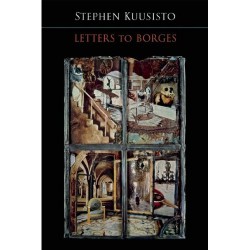
Jim Ferris, Laurie Clements Lambeth and Stephen Kuusisto will be reading from a selection of their poetry, followed by a reception and book signing, for all members of the S.U. community. While this event is geared specifically to raise and support awareness among undergraduates, everyone is welcomed to participate in this exciting set of opportunities. This event will feature works from Beauty is a Verb: The New Poetry of Disability (Cinco Puntos Press) and launch Letters to Borges (Copper Canyon Press), where “best-selling memoirist Stephen Kuusisto uses the themes of travel, place, religion, music, art, and loneliness to explore the relationship between seeing, blindness, and being. In poems addressed to Jorge Luis Borges—another poet who lived with blindness—Kuusisto leverages seeing as negative capability, creating intimacy with deep imagination and uncommon perceptions” (from http://www.stephenkuusisto.com).
American Sign Language (ASL) interpretation will be provided during both the reading and the reception/book signing. Communication Access Realtime Translation (CART) will be provided during the reading.
If you require accommodations or need information on parking for this event, please contact Radell Roberts at 443-4424 or rrober02@syr.edu.
This event is made possible through the Co-Curricular Departmental Initiatives program within the Division of Student Affairs, and cosponsorship by the Disability Cultural Center, the Renée Crown University Honors Program, the Center on Human Policy, Disability Studies, the Burton Blatt Institute, the Dept. of Women’s and Gender Studies, the Lesbian, Gay, Bisexual, Transgender Resource Center, the Office of Multicultural Affairs, the Slutzker Center for International Services, the Creative Writing Program, the Disability Law and Policy Program, the Disability Student Union, the Beyond Compliance Coordinating Committee, and the Disability Law Society.
As aspects of variance and diversity, disability cultures and identities enrich the tapestry of life on and off the SU campus.
Stephen Kuusisto Reads from Letters to Borges, His New Book of Poems
JUST RELEASED! Best-selling memoirist Stephen Kuusisto uses the themes of travel, place, religion, music, art, and loneliness to explore the relationship between seeing, blindness, and being. In poems addressed to Jorge Luis Borges—another poet who lived with blindness—Kuusisto leverages seeing as negative capability, creating intimacy with deep imagination and uncommon perceptions.
If you enjoyed this reading and would like to listen to several more poems from Letters to Borges, it’s easy enough to arrange. This FREE recording is yours to enjoy at your leisure, preferably from your favorite cozy chair with a cup of coffee or a nice glass of wine in hand. Simply fill in the “Join me for a cozy ‘fireside’ poetry reading…” form found to the right of this blog post or make your request below.
REVIEWS:
Seth Abramson, Poet
Kuusisto’s is a life one wants to know, detailed sparingly by a man one wants to know, inscribed in a generic form one finds oneself not merely compelled but honored to read. Letters to Borges is highly recommended for those who still find honor and beauty in both simplicity and–can it be?–actually having something to say. Read more of Seth Abramson’s reviewfrom the Huffington Post, Huff Post Books, November 2012
~~~~~~~~~~~~~~~~~~~~~~~~~~~
If we account for Kuusisto’s restricted sight, the brilliance of his verse acquires deeper resonance, for his work imagines a realm between sight and sound composed of the sensory stimuli we all know and recognize, but split, fractured, and juxtaposed to inhabit the mind’s ear of his readers, a feat unique to this truly gifted poet. — Diego Báez, Booklist Advanced Review
Congratulations – and thank you – to Cindy Leland!
Cindy purchased a copy of Stephen Kuusisto’s new book, , “Letters to Borges“, and saved $ by taking
advantage of the pre-order price. In so doing, she also entered a random drawing and is the winner this week of an autographed copy of “Only Bread, OnlyLight”, Steve’s first book of poetry (Copper Canyon Press).
Will you be next week’s winner?
***************************************
Professor Stephen Kuusisto is the author of “Eavesdropping: A Memoir of Blindness and Listening” and the acclaimed memoir “Planet of the Blind”, a New York Times “Notable Book of the Year”. His second collection of poems from Copper Canyon Press, “Letters to Borges“,
is scheduled for release in October 2012. In addition to giving
literary readings, Steve speaks widely on diversity, disability,
education, and public policy. www.stephenkuusisto.com
Cindy purchased a copy of Stephen Kuusisto’s new book, , “Letters to Borges“, and saved $ by taking
advantage of the pre-order price. In so doing, she also entered a random drawing
and is the winner this week of an autographed copy of “Only Bread, Only
Light”, Steve’s first book of poetry (Copper Canyon Press).
Will you be next week’s winner?
***************************************
Professor Stephen Kuusisto is the author of “Eavesdropping: A Memoir of Blindness and Listening” and the acclaimed memoir “Planet of the Blind”, a New York Times “Notable Book of the Year”. His second collection of poems from Copper Canyon Press, “Letters to Borges“,
is scheduled for release in October 2012. In addition to giving
literary readings, Steve speaks widely on diversity, disability,
education, and public policy. www.stephenkuusisto.com
Erin purchased Stephen Kuusisto’s new book of poems and saved $ by taking advantage of the pre-order price. In so doing, she also entered a random drawing and is the winner this week of an autographed copy of “Only Bread, Only Light”, Steve’s first book of poetry (Copper Canyon Press).
UPDATE: “Letters to Borges” is now scheduled for a mid-November release.
We are now counting down to the release next month of Steve’s new book! Amazon is offering a special pre-order price (details below!) and Steve would like to sweeten the deal. Take advantage of Amazon’s offer, email a copy of your receipt to authorsvirtualsolutions@gmail.com and you will automatically be entered into a drawing to win an autographed copy of “Only Bread, Only Light”, Steve’s first book of poems (Copper Canyon Press). (If you already have a copy, it would make a great gift for another poetry lover!)
Unless notified otherwise, the scheduled publication date of “Letters to Borges” is October 15th. Steve will hold one random drawing a week between now and then, and the final drawing will be held on the actual date his new book is released. That means you will have a minimum of 5 chances to win if you order now. Winners names will be posted.
1st random drawing: Sept. 19 – Congrats and thank you to Erin Coughlin Hollowell!
2nd random drawing: Sept. 26 – Congrats and thank you to Cindy Leland!
3rd random drawing: Oct. 3 – Congrats and thank you to Shirley Merrill!
4th random drawing: Oct. 10 – Congrats and thank you Karen Rudloff!
Final drawing: actual release date of “Letters to Borges” (scheduled for Oct. 15)
DETAILS:
Letters to Borges [Paperback]
Stephen Kuusisto (Author)
List Price: $16.00
Price: $10.88 Eligible for free shipping with Amazon Prime.
You Save: $5.12 (32%)
Pre-order Price Guarantee. Learn more.
This title has not yet been released.
You may pre-order it now and we will deliver it to you when it arrives.
Ships from and sold by Amazon.com. Gift-wrap available.
Thank you, Christopher Bowsman, for your kind words ~sk
Steve Kuusisto on Poetry and Disability Studies
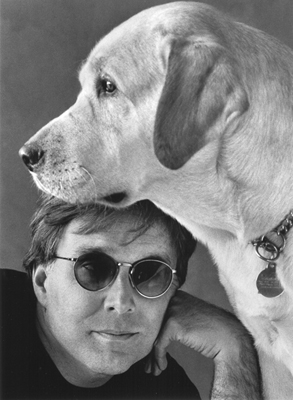
The Blackwell Inn was a big lavishly decorated hotel, and the conference was held in the ball room. I saw Steve Kuusisto moving up to the podium and talking to his dog “Come on, girl.” Moving in unison with the dog up to the podium. He introduced himself, his guide dog Nari, (Who “by the miracle of frozen sperm” is from his last dog), and began to explain disability as a mode of perception. The ability to re-claim “embodiment” (How our bodies are perceived.) is as ancient as language, he argues.
Steve was funny, articulate, and poetic. Frequently, he made allusions to other poems, or modes of perception that “re-claim embodiment.” That is, he examined the inner world of disability, its lived experience, in contrast to being defined as reified (lacking. Blindness being the absence of light. Deafness being the absence of hearing, etc. In his poetry, he describes his dog as being much more than a dog; that sometimes they are one being. This is actually how I feel about my wheelchair too. He tells stories of watching drunken men in wheelchairs eating flowers, and wrote about that poetically. Through poetry, Steve gains insight and a unique epistemology.


 Planet of the Blind


