Reposted
18 Leading Higher Education Research Centers and Institutes Call for Knowledge on Campus Shootings
The deadliest shooting rampage in U.S. history occurred on a university campus. In 2007, a Virginia Tech student killed 32 peers and faculty members before taking his life.
Earlier this month, an assailant walked into a classroom at Umpqua Community College, shot and killed nine students, injured nine others, and ultimately killed himself. This massacre is one of 66 reported incidents involving the discharge of firearms on college and university campuses since 2013.
Despite the alarming numbers of deaths, injuries, and threats, scholars in the field of higher education have received too few resources to rigorously study the undercurrents and effects of gun violence on college campuses. Eighteen leading university-based higher education research centers and institutes call on foundations, federal and state governments, and entities on all sides of gun violence debates to sponsor research projects that expand knowledge in the field about important topics like the following:
Depression, mental health, and suicide among college students.
Effective prevention efforts to identify and preemptively support students, faculty, and staff members who are in psychological distress.
Behavioral responses to fears concerning campus safety among students, faculty, and staff members.
Impact of gun violence on students’ academic performance, persistence and degree completion rates, and post-college outcomes.
The overrepresentation of college men among campus shooters.
Enrollment patterns and college transition experiences of students who witnessed and survived shootings in their K-12 schools and home communities.
Gun ownership policies at public institutions of higher education that are governed by different state laws regarding background checks, gun permit waiting periods, carrying concealed weapons in public, and other regulations.
Evaluations of campus safety protocols and procedures at community colleges and four-year postsecondary institutions.
Immediate and long-term effects of campus shootings on the psychological and physiological wellness of students, faculty, and staff, including longitudinal studies.
Impact of open- and concealed-carry laws on classroom climates and campus cultures.
Influence of television and films, video games, social and digital media, and violence in the larger society on campus shootings.
How cultures and discourses of disrespect, bullying, isolation, inequity, and hate contribute to gun violence on campus.
These are examples of 12 topics on which research is urgently warranted; several other related questions should be rigorously studied. Knowing more could enable postsecondary leaders and faculty to reduce gun violence, more effectively support members of campus communities in the aftermath of shooting tragedies, and use data and technologies to improve campus safety efforts.
Political disagreements have stifled forward movement on issues related to gun violence in U.S. higher education. Meanwhile, shootings continue to occur in college classrooms and other campus spaces. Providing resources to expand what the field knows could yield an evidence-based set of policies and practices that make campuses safer and better positioned to support victims of shooting tragedies.
Alliance for Higher Education and Democracy
University of Pennsylvania
The Bowen Institute for Policy Studies in Higher Education
Claremont Graduate University
Center for Community College Student Engagement
University of Texas at Austin
Center for Higher Education Enterprise
The Ohio State University
Center for Postsecondary Success
Florida State University
Center for Research on Undergraduate Education
University of Iowa
Center for Studies in Higher Education
University of California, Berkeley
Center for the Study of Higher Education
University of Arizona
Center for the Study of Higher Education
The Pennsylvania State University
Center for the Study of Race & Equity in Education
University of Pennsylvania
Center for Urban Education
University of Southern California
Higher Education Research Institute
University of California, Los Angeles
Institute for Research on Higher Education
University of Pennsylvania
Minority Male Community College Collaborative
San Diego State University
Pullias Center for Higher Education
University of Southern California
The Steinhardt Institute for Higher Education Policy
New York University
Wisconsin Center for the Advancement of Postsecondary Education
University of Wisconsin – Madison
Wisconsin’s Equity and Inclusion Laboratory
University of Wisconsin – Madison
For more information:
Penn GSE Center for the Study of Race & Equity in Education | University of Pennsylvania | Graduate School of Education | 3700 Walnut Street | Philadelphia | PA | 19104
– Posted using BlogPress from my iPad
Category: Uncategorized
The Intimate Wilding of William Cranford’s Consort Music for 4,5,and 6 Viols
Writing of the 17th century British composer William Cranford’s work for string ensemble,, Dudley North, his contemporary, observed it possessed: “gravity, majesty, honey-dew spirit and variety.” One may ask how such music was lost—a story of provincial culture and aristocratic friendship—Cranford wrote for his closest musical friends, artists all, who collectively played within the circle of St. Paul’s. (One is reminded of Elizabethan court poets writing behind palace walls, collecting verse in A Mirror for Magistrates.) The difference: Cranford’s music for strings is prescient and wholly original.
Now, for the first time, a recording of his Consort Music for 4, 5, and 6 Viols has been released by LeStrange Viols and the complex, lyric inventions of Cranford can be heard at last.
The CD’s press release points both to the intricacies of Cranford’s music and the vitality and experimentation of string composition in the age of Milton:
Little is known about the life of composer William Cranford (fl. 1630s) beyond his remarkable surviving chamber music for viol consort, a Renaissance string ensemble that attracted the best English composers from William Byrd to Henry Purcell. Cranford’s music—by turns sonorous, expressive, quirky, and forward looking—represents some of the finest surviving writing for the ensemble. LeStrange Viols presents the modern premier recording of nearly all of Cranford’s surviving works for consort, including the complete fantasias for 4, 5, and 6 viols, the substantial and virtuosic 6-part pavans (“Passamezzo” and “Quadran”), and Cranford’s distinctive 5-part setting of the In nomine and playful variations on the well-known tune “Go from my window.”
Playful variations, yes, but something more comes across in the recording—a polyphonic conversance among viols, as if Cranford hoped to gather spirits in a wilding call and response. Each player conveys lyric urgency and amusement, so much so, the result seems contemporary—there’s an evolving unexpectedness from the instruments. Strange indeed.
At times one feels as if both the elder Beethoven and a youthful Shostakovich had somehow flown backwards into Cranford’s circle and one wonders if this neglected figure was a Baroque composer at all.
This is the hook: LeStrange Viols has recovered and recorded an exquisite and odd music, “odd” not in the way of the “oddly shaped pearl” —that old apophthegm for Baroque ornamentation—but work so timeless and original its recovery reminds us how progressive the imagination can be. Additionally one is reminded of the creative ferment surrounding early string ensembles, a time when evolving instruments and intimate exchange made it possible to step out of time.
You can sample and buy William Cranford: Consort Music for 4,5, and 6 Viols at New Focus Recordings or via iTunes, Amazon, or CD Universe.
LeStrange Viols makes its New York City debut in a program featuring works from their new recording of the consort music of William Cranford.
“The mysterious Cranford, a contemporary of the metaphysical and cavalier poets, composed music whose mercurial affects range from deep pathos, through witty, playful moods, to sheer rapture.”
Friday, October 23, 8:00pm
Corpus Christi Church
529 West 121st Street, New York
Tickets available at the door, $20, $10 students & seniors
Or purchase tickets online HERE.
Kullervo, Early…
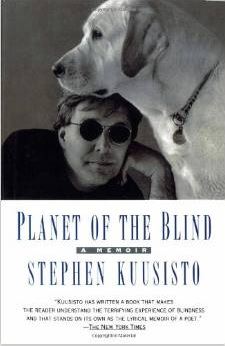
In the mornings I take down my old books, Kalevala, for instance,
and read of Kullervo, sad clown of the north, whose family
was an iron age house of incest and shattered cups
though it sounds better in Finnish—as if pain was inevitable
because they had few pronouns in those days,
there being no distinction between men
and women in Suomi and so, tragedy was pan-gendered
which means they talked of gravity long before Isaac Newton.
On Thor’s Hammer, Rain, and Disability
Always someone in the rain with a hammer. That’s working life. And the wind, which has no politics, adds its blank cruelty. No theory can explain this, though Carl Jung tried. His essay on Job is still the greatest analysis of unjustified suffering and the uncaring cosmos. But a man or woman, even a child, must wave a hammer in rain. And the disabled wave two hammers. In this way, I’ve always thought of the disabled, my friends, as “Thor”—my pal Bill with his wheelchair has at least two hammers. My friend X who is blind and angry has five or six hammers. And they move about in rain. Navigate with insistent and pure energies. Thor’s hammer, which was made by the dwarves, according to Snorri, has the lightning on the inside where it truly counts.
Autobiographia Literaria
Alright. I’m going to die without ever having known what it was all about.
As a boy with poor eyes I put my face in the water,
watched a turtle swim in and out of a long shadow.
– Posted using BlogPress from my iPad
Poetry and Your Money
So you want a description of poetry. I remember a Japanese lyric about a red maple leaf frozen in ice. It's the remembering makes poetry. The poet is simply a mnemonic mailman.
Myself. I am hopeful. Willfully imprecise in my thinking. I've a mind like an unmade bed. A description of the poet but not of poems.
A poem will turn your pockets inside out. Garnish the wages of attention. Drop pennies in a storm drain. Cauterize future wounds.
You must choose your voice and posture with a poem. Here's the Finnish poet Paavo Haaviko:
“This poem wants to be a description,
And I want poems to have
Only the faintest of tastes.
Myself I see as a creature, hopeful
As the grass.
These lines are almost improbable,
This is a journey through familiar speech
Towards the region that is no place,
This poem has to be sung, standing up,
Or read without voice, alone.”
(Translation, Anselm Hollo)
You see, you can take a journey through familiar speech to the region that is no place. I choose to call it the reverential space where future wounds are cauterized. You may call the poem something else. You can sing or keep silent.
The Finnish poet Jarkko Laine said:
“You've reached a far shore, outside of time,
Your money is useless.”
Poems may hint at death, but they're not the THING because, after all, they're attached to human memory.
Sing or keep silent.
Please, whatever you do, be judicious.
 Posted with Blogsy
A Small Morning Opera
Did I tell you the root hairs of the dragonfly crossed my wrist? I knew the insect was my brother, long gone, a lifetime ago, my twin, who died just one day after our births. Silly to say those mating filaments tickling my arm might be anything at all. Foolish to be a poet. Did I tell you I’ve been a fool all my days? That I grew up blind and mostly in the woods? Ergo it’s been a life of phonograph records, Russian opera, madcap forensics of invisible clocks, dark moods, child-like wishes, and clotted phrases drawn from under green ribs. As for my brother, I suppose he’s nothing. And there is no heaven. Boris Godunov where is your time piece just now, as it is midnight though the sun is perfectly up?
Postcard from Allentown, PA
I read poetry and creative non-fiction last night at Muhlenberg College in Allentown, Pennsylvania. The auditorium was packed, students and faculty bought books, and there were plenty of excellent cookies. All I could think about (under my shirt) was the call to gratitude. Thank you faculty of Muhlenberg for inviting me to read my work and visit your students and colleagues. I am a poet, and I live in what Auden called “the cave of making” and it’s a lucky thing to be invited out of the moisty and circumspect darkness of one’s study and into the light of community. I was favored to be here these past two days. Fortunate to have conversations with teachers and students about the social construction of normalcy; the fact that disability is still a pejorative word; that I prefer “citizen” to disability—we are citizens, forget cultural taxonomies; grateful to be reminded while speaking that Garcia Lorca invented an arsenic lobster to explain the horror of modern New York City; that Ariel Dorfman and Stanley Elkin have written vividly about the deleterious soul crushing “thing” we call Disney; that poetry still resides in our wrists and hands as much as our skulls. And I met a vast and beautiful survivor elm tree where hawks live. And I met a legally blind student who is looking for words. Met a young woman with her fist service dog! Received the gift of poems about baseball! I admit it! I am like the child who sings: “If you’re happy and you know it, clap your hands!” Soul clap your hands and sing. And yes, godammit, the world is ugly and the people are sad, and the ghost of Bethlehem Steel clanks up the streets of Allentown at night, moaning at all hours, still not satisfied with the work of human destruction it achieved in life, and yet, there is a delicate pipe stem beauty, a sweet chill of recognition, a student admiring the visiting writer who has cold hands from shyness, and there’s a delicious apple on the desk. And poetry is still a word temple.
No More Billy Joel
Only the young die good—forgive me Billy Joel—but I need to explain you—the good die young, and the old are necessarily not so good—I think I have that right, so what you’re saying Billy is you long for the days before antibiotics and dentistry, when the average lifespan for humans was 30—I think I have that right—you want everyone to die before 30, imagining goodness resides among teenagers—Billy, even the Romans didn’t believe this, in fact they thought the young were generally a waste of time and put them in front of the army so they’d get slaughtered before the smart people, that’s why they called it the infantry—Billy, I know, I know, your song was going nowhere when you sang, “only the dolts die young” and “good” is easy to spoon feed to pop swilling kiddies because its a power word from advertising like “fresh” “organic” and “new” and lord knows once you hit ‘em with “good” they’re not going to think about the proposition which is heinous, that the Dalai Lama can’t be good if he dies old, and I’ve just read that His Holiness is not doing so well and isn’t it interesting he’s in failing health just as President Jimmy Carter is also faring poorly and by jinkies I’d say they are good old men, and so was Nelson Mandela and so was Maya Angelou a good old woman and what about Jane Goodall and don’t forget Dorothy Day, who died old and good and Billy I’m afraid you’re full of it, which shouldn’t be worth a pip of attention but I hate your song and admire people for their decencies no matter their age and Billy, its OK if you have the mind of an 11 year old, it’s really OK, but when I hear your song in the airport, and all the bedraggled unthinking wanderers are soaking it up, I just have to say you’re full of shit.
Austrian Love Songs on the Road
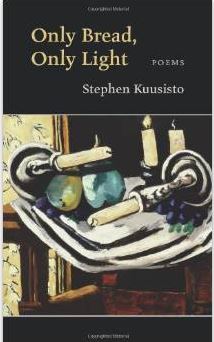
I was flying this morning on US Air from Syracuse to Philadelphia and for diversion I listened via iTunes to one of the all time sappy, cream puff albums in recording history, and no it’s not Bobby Sherman or Air Supply—but Placido Domingo’s “Vienna: City of My Dreams” with the Abrrosian Singers and the English Chamber Orchestra—a mix so vastly, happily mawkish that while listening you want to lie down, cover yourself with leaves, then throw them off in a giddy fit and startle strangers with your joy. Christ! The hyper orchestrations of Austrian wanderlust are utterly ridiculous! And Domingo’s voice, still in its prime, is so clear and ringing, the rising notes of dazzle so uplifting, you can’t help feeling like a dancing bird catcher in spring.
Yes. It’s the audible equivalent of dental gas. But I defy you to listen without breaking into a grin.
And now I’m in Allentown, Pennsylvania where I’ll speak tomorrow at Muhlenberg College and Lord! I want to burst on the scene dressed like Papageno with feathered green tights and a bird net.
I’ll bet that’s never happened at Muhlenberg. But then, you never know. Maybe some other visiting poet once arrived in town so deformed by Austrian piff he or she leapt onto the scene dressed like a bird fetishist. Such precedents are not impossible. Where is Judith Malina when you need her?
Forgive me, Judith, wherever you are. I reckon you’ll get the joke. The seriousness industry might kill us yet. More feathers. More sap!
One day many years ago, when I was still brand new at walking places with a guide dog, I entered Central Park in Manhattan with my dog Corky, a big yellow Labrador. We entered somewhere around 72nd Street at Fifth Avenue and made our way to the boat pond. I was walking with my eyes closed. I’d always suffered from tremendous eye pain, and Corky’s great skill allowed me to rest them, and to largely give up on the desperation of residual sight. It was a late March day and the scent of new grass was in the wind. And from a distance we heard boaters laughing on water.
We sat on a patch of lawn. Sometimes I thought of our respective hearts, man and dog, as being wrapped in delicate cloth—by walking and exploring we were unwrapping them. A boy raced past on a skateboard. I wondered if he was unwrapping his own heart. I felt wonderfully giddy beside the pond, imagining the whole city unwrapping hearts and letting little cloths fly away.
Austrian songs.
 Planet of the Blind