Self Interview, 9 AM


I went to a meeting at 8 which was actually scheduled for tomorrow. Now I’m sitting in the Bruegger’s Bagel shop adjacent to Syracuse University. I have retreated to this place (with its ersatz bagels and third rate coffee) because there’s no “here” here—by which I mean, Syracuse University has no decent local coffee places; no “Indie” bookstore; no worthwhile hangout. Its “life without Mozart” just now.


Which gets me to thinking that even Mozart’s life was life without Mozart—every moment he was composing he was “out of himself” living in the vaporous clouds of illumined mathematics that comprised his private entry way to the universal unconscious. Strictly speaking there was no Mozart. And the music we call “Mozart” isn’t Mozart either—its the numerological impersonation of Mozart. 


Meanwhile, here in the phony bagel joint, no muzak and no Mozart and for that we are grateful. 


Self Interview Before Dawn


NewImage


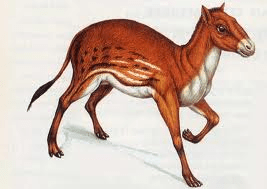
I jump out of bed declaring I will be at peace with myself. Marvelous error! I am so happy! I have been awake two minutes and have already given away the flag of sensible success. I decide over coffee to give away the stars of mythology throughout the day. “Here friend, here is a star called Eohippus—tiny, horse shaped, filled with light… Of course the secret is—you never say so…never tell people the magic you’re giving them. 


**


Over the course of a 22 year career in baseball, Ted Williams struck out only 70 times. He was an example of the maxim: “none of us knows what we know”. All that concentration in the batter’s box while the rest of his life was a mess. Each life must decide itself to what it will be applied. Ted never found a tiny horse filled with light. 


**


Dreamt recently I was in a flood. The architecture was some kind of shopping mall. There was a professor there, a man I haven’t seen in years. He was youthful. He was calm. Outside, with the flood behind us, he asked after my father, calling him by the wrong name, unaware he’s been dead for years, said: “I imagine he’s napping?” 


**


A light of recognition fills the whole great day. The horse says so. 


The Dog Among Strangers


A guide dog provides a series of “firsts”: the first time in a public restroom, the dog sitting obediently while you pee; two airline pilots seeing this and whispering about it. One of them laughs. The sight is also a first for them. They have no words for it. They like seeing the dog. They’re unsure what to say. The dog just sits and smiles.


The presence of working dogs in businesses is a catalysis—every moment is odd. In cosmopolitan work places people are not accompanied by animals. The arid environs don’t require them. A dog in a grocery store is strange, like seeing a horse in a saloon.


First time in a barber shop, Ithaca, New York. A Wednesday, early April, snow. I’d decided on impulse to get a haircut. Corky and I descended steps—the shop was below the sidewalk in a downtown building. A bell on the door tinkled when we went in. Men were talking as we entered but they turned silent upon seeing us. I wondered what the term was for a group of men gone quiet. The ancient soul surely knows what this is—five or six men staring and no one bothers to speak. The sight of a man and dog had violated the house geography. I shut the door. The bell wasn’t cheerful. “Christ,” I thought, “even the bell is against us.” Still no one said a thing. Disability scares some people. They have no words for it. On a primitive level they probably think disability is contagious like influenza, or worse, its the evil eye.


I had to be the one to break the ice. I went for a dog joke. “Hey, my dog needs a trim,” I said. That was all it took for the boys to snap back to life. It was like saying “abracadabra”. There was old guy laughter. “Great,” said the barber, “take a seat.” I took a seat. Corky lay down.


Though I was in the shop, happily awaiting a haircut, a tangible change had come over the men, who were not in fact getting trims or shaves. The old barber’s place was their social club and my presence had dampened things. Even the radio high on a corner shelf wasn’t helping as it was tuned to static. No one seemed to notice. The silence of the men continued for two full minutes. Corky rattled her dog tags. The silence was exceedingly strange.


Rather than throw out another joke I stayed quiet wanting to see what would happen. I thought the barber would toss out a cliche—something like: “We don’t get many dogs in here,” to which I’d reply, “at prices like these its no wonder.” But it wasn’t the barber who broke the silence. One of the old men said: “My friend, who I served with in Korea, he went blind—got a seeing-eye dog back around ’55.”


Then I understood their silence. It wasn’t the oddness of a blind man and his dog, or disability as a portent that had kept them quiet. It was memory. We talked a long time after the ice broke. But I felt faintly silly for my failure of human imagination.


Insomnia and the Hats of Sleep

Grand vizier copy

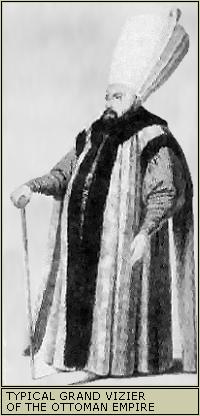
For my blind friends, photo is entitled “Typical Grand Vizier of the Ottoman Empire” and depicts a somber, bearded, richly robed Ottoman judge wearing an immense hat which resembles a dirigible.

 So I have a friend who lives in Port Townsend, Washington. I sent him some news. He wrote me back at 4:45 AM his time. “insomnia,” he wrote. I sent him a picture of the “Grand Vizier” and told him he needs one of these magical hats for sleeping. 

Then it dawned on me: everyone in America needs a hat like this. Let’s be clear. Nothing says big ideas, vast dreams, happiness, and “look at me” quite like an airship atop your head. And look at that hat! Doesn’t it just bespeak dreams? Why if you’re wearing a hat like that to bed, you’re going to dream of the 2,000,000 year old man inside you, or woman inside you, and just as Carl Jung said, you will have some fun with your instincts. 

BTW: what good are instincts if you can’t have some fun with them? 

You wear a hat like this and dream of Zosimos the Greek and your hair turns into feathers. 

I for one would like to see the President of the United States wear a hat like this when he speaks before Congress. 

I’d like to see my faculty colleagues at Syracuse University dress like this as they cross the quadrangle. 

I most certainly want the students to adopt this hat. They need to dream bigger. 

I want people on the IRT in New York to war this head dress. I want to see them getting on and off the trains at rush hour like senescent angels. 

I want to see executives making their ways through revolving doors with their Hindenburg Hats. 

One especially appealing thing about the Grand Vizier’s hat is that it seems to have a condom like receptacle at the top. Who can say what’s contained therein? 

Disability News from the US Department of State

Special Advisor Heumann and Senior Advisor Kwan To Participate in a Google+ Hangout on “Going For Gold: Advancing International Disability Rights”


Special Advisor for International Rights of Persons with Disabilities Judith Heumann and Senior Advisor and former Olympic athlete Michelle Kwan will participate in a Google+ Hangout on “Going For Gold: Advancing International Disability Rights” at the Department of State at 1:00 p.m. (EST) on Thursday, December 5.


The Hangout will feature several U.S. Paralympic athletes, who will speak about the opportunities offered by international training and competition for Paralympians, as well as some of the challenges they face.


The Hangout can be viewed live on the U.S. Department of State’s Google+ page and YouTube channel. More information about the work of the Department of State’s ongoing efforts to advance the rights of persons with disabilities can be found here.


During the Hangout, live-captioning will be available at: http://www.streamtext.net/player?event=StateDeptGooglePlusHangout.


Thinking of Joe Blair and the Physics of Hatred

My friend Joe Blair has written a superb post entitled “The Physics of Hatred” and he’s got me thinking about the warrens and barrel vaulting of human misery. (This is not to say I don’t customarily think of these things, but Joe has me stretching, laying out the chalk lines for a new room in my head.) Backstory: Joe is the father of a son who has autism. He and his wife Deb have lived the cold hydropathy of parents of disabled children—a tribe that’s larger than any other, and one that is customarily used to disappointments, cruelties, toxic hierarchies, and outright hostility. In this way, Joe is an expert when it comes to what we call social psychology in academic circles, and what’s called street smarts everywhere else. His post lays out, expertly, the horrid social dynamics that accompany alienation, by which I mean alienation, for the tale has much to do with late stage, post-industrial capitalism which is vicious and only teaches viciousness. You must read his post to see the emotional intelligence of a terrific writer in action. Back to my chalk lines. 

What we like to call “diversity” in the US, especially in the academy is essentially a larger and more communitarian idea, incorporating class struggle, relief for urban and rural poverty, all the global struggles for human rights. This work is the core, the foundation of what it is to be human—one may think of it as a meal for the soul. We nourish one another by our work. Its really important for North Americans to understand the complexity of nourishment as action. I love what Paolo Freire says in his famous book The Pedagogy of the Oppressed: “True generosity consists precisely in fighting to destroy the causes which nourish false charity. False charity constrains the fearful and subdued, the “rejects of life,” to extend their trembling hands. True generosity lies in striving so that these hands–whether of individuals or entire peoples–need be extended less and less in supplication, so that more and more they become human hands which work and, working, transform the world.”  So we’re talking about true nourishment. Some days you find this in poems, other days it resides in standing up for inclusive education—for classrooms where students with disabilities are educated alongside their peers. Sometimes nourishment comes from meeting blind and deaf people in Central Asia and sharing stories of struggle and hope. Lyric writing is the best place I’ve found for combining multiple strains of thought into a moving unit of political consciousness. I wrote a prose poem for my friend Bill Peace who is a disability rights advocate and a wheelchair user. The lyric brings forward several feelings and ideas at once:


Prose Poem for Bill Peace


Most days, as disabled people, we’re screwed…” (author)


Dear Bill—I’m green in my knees, green ribbed. I spent today alone with a dictionary. Sometimes I find words from the age before newsprint. Catabasis, a trip to the underworld…The Greeks understood: anger increases after death. Odysseus’ mother was the first zombie in literature, hungering for a bowl of blood in the twilight of Hades. I fear the dead are full of sorrows. Meanwhile half the houses hereabouts are crammed with sadness and the strictures of fear. To forgive is not so simple. Dictionary: discourse, utopia, harmonia…Some days words are immanent, warmer than the streets.     


So another way to look at nourishment is that it is the source of imaginative thinking as well as progressive political thought. Thank you Joe Blair. Thank you!


USICD Celebrates the International Day of Persons with Disabilities!

pastedGraphic.png


pastedGraphic_1.png

 USICD Celebrates the International Day of Persons with Disabilities!


Today, the global community celebrates the International Day of Persons with Disabilities. In the spirit of this year's theme, "Break Barriers, Open Doors: for an inclusive society and development for all", the U.S. International Council on Disabilities calls on the United States Senate to support the Convention on the Rights of Persons with Disabilities.  This international disability treaty is designed to promote dignity, human rights, and inclusion for people with disabilities worldwide.


Inspired by U.S. leadership in recognizing the rights of people with disabilities, the treaty serves as a vital framework for creating legislation and policies around the world that embrace the rights and dignity of all people with disabilities. By joining over 130 countries and ratifying this treaty, the United States has an opportunity to have a seat at the table in developing these policies, and to share our model in disability rights, the Americans with Disabilities Act, with other countries creating legislation with regard to people with disabilities.


Marca Bristo, President of the U.S. International Council on Disabilities:  "The International Day of Persons with Disabilities serves as a reminder to all of us that, though there has been much progress, we still have a long way to go towards achieving inclusion for all. Today, the American disability community stands in solidarity with the global community and the millions of people both at home and abroad who need and want the Disability Treaty to be ratified. The strength, diversity, and commitment of the community working in support of this treaty is a testament to the treaty's significance and the broad global reach it could have in breaking barriers and opening doors for people living with disabilities worldwide." 


Jill Houghton, a USICD board member and the executive director of the US Business Leadership Network (USBLN): "The International Day of Persons with Disabilities is a day for celebration not only by people with disabilities, but for everyone who supports opportunity and equality.  That is why we support U.S. ratification of the Disability Treaty.  More than 50 US member corporations have signed on to the USBLN's letter supporting ratification.  Great American companies like Coke, IBM, AT&T, Sprint and Adobe share the vision of a world where there is no discrimination against people with disabilities.  We can be sure it's a day to celebrate."


In spite of widespread support from veterans service organizations, faith, human and civil rights organizations, business, and the disability community, as well as politicians on both sides of the aisle, the treaty fell just five votes short of ratification in a controversial Senate vote last December. Now, as the Senate Foreign Relations Committee engages in renewed discussions of the treaty, the Senate has a rare second chance to do the right thing and vote YES to ratify the Disability Treaty. 


TAKE ACTION on this International Day of Persons with Disabilities! 

CLICK HERE to call your Senators


Learn more at www.disabilitytreaty.org


pastedGraphic_2.png


December 3rd is both #GivingTuesday and the International Day of Persons with Disabilities


Our community is powerful and #GivingTuesday, the national day of philanthropy, is a great time to show it through raising money and our voices. The U.S. International Council on Disabilities invites you to support our work as a leading convener and advocate for global disability issues, ideas and people.  Please support our work by making a year-end contribution.  Together with your support we come closer to realizing our vision!  Please also encourage your friends to make a donation to USICD

Thank you.


Poem for the Great Magicians, or, Marxist Mysticism Revisited

Poem for the Great Magicians


Refused entry at the bourse you turned money into birds and the birds flew to the high branches in Schlossberg and whistled and children were happy. We all come from the stingy soil. But you dear ones, helped us pace our manias under the sheltering, singing trees.