
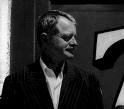
For my money the most important poet in the San Francisco Literary Renaissance was Kenneth Rexroth, the so-called “Father of the Beats”.
Kenneth Rexroth was born in 1905 in South Bend, Indiana, although Chicago was the most important city in his youth. After his mother’s early death the poet quite literally grew up on the streets of Chicago where he developed what would become a life-long attraction to the labor movements of the American left. Self-educated in an impressive array of literatures and languages, Rexroth is best known for his translations of classical Chinese poetry, although he also translated poetry from the Japanese, French, Greek, Latin, Italian, and Spanish. He published 54 books of poetry and prose including collections of essays on topics ranging from jazz to literary modernism, as well as Gnosticism and medieval Christianity. Rexroth’s autobiography, which the poet called an “autobiographical novel,” offers an incisive portrait of the American left during the twenties and thirties. Kenneth Rexroth died in 1982. The Collected Poems of Kenneth Rexroth, edited by Sam Hamill and Bradford Morrow was published in 2002.
Rexroth’s work anticipates post-modernism with its spiritual and philosophical attraction to personal experience. By championing the individual in search of sacred life Rexroth’s poetry owes more to Walt Whitman and D.H. Lawrence than to mid-twentieth century American modernism. Rexroth’s poetry is marked by vivid imagery and an appeal to mystical engagement with the natural world. Even so, his poems are erudite and informed by multiple literary and philosophical traditions. Describing Rexroth’s method of composition, Sam Hamill notes that the poet had found his voice by the 1940’s:
“He adopted something similar to what has since been labeled the”ideogrammic method” advocated by Pound. All being becomes contemporary in his hands. He borrows, he layers …Echoes and paraphrases and translations of ancient classics of the East and West become an integral part of the poem in progress, rewarding the reader with evocative and associative resonances.” (Rexroth xix)
Rexroth saw no break between the unfolding energy of nature and the movement of human thought. In turn, the natural world and the mind are organic in Rexroth’s poems:
Waterfalls drop
Long musical ribbons from
The high rocks where temples perch.
(Rexroth 666)
While Rexroth can be understood as a student of Pound’s later ideogrammic method, he broke with Pound whose political views contradicted his own spiritual and political idealism. Rexroth became a conscientious objector during World War II. Sam Hamill observes that during the war years: “Rexroth worked in a hospital and personally provided sanctuary for Japanese Americans.” (Rexroth xxii) Rexroth’s leftist activism and his understanding of the poet’s role as a witness in the face of injustice lead him to declare his disaffiliation from the American capitalist state. His political opposition to what has come to be called “the military-industrial complex” and his early embrace of nature as the material place of spiritual life made him a natural teacher for the poets and writers who became associated with the “San Francisco literary renaissance” of the late 1950’s and the Viet Nam anti-war movement of the 1960’s. During those years Rexroth’s San Francisco apartment was a gathering place for young writers, including Gary Snyder, Allan Ginsburg, William Everson, and Lawrence Ferlenghetti among others.
The ardor of Rexroth’s poetry stands in stark contrast to the lack of feeling displayed by much of the academic verse of the period. Rexroth’s poetry is both erotic and nuanced, and his later poems demonstrate how emotional candor and lyric precision can be combined to produce poems of singular clarity. Rexroth’s development as a poet owes much to his translation work, principally his translations of the classical Chinese poet Tu Fu. Rexroth’s versions of Tu Fu, first published by New Directions, brought to readers an immediacy previously unseen in American poetry:
Field mice scurry,
Preparing their holes for winter.
Midnight, we cross an old battlefield.
The moonlight shines cold on white bones.
(Rexroth, Chinese 10)
In his translations of Tu fu the mind and the natural world reflect a unified cosmology, both with good and bad results:
Birds cry over the water.
War breeds its consequences.
It is useless to worry,
Wakeful while the long night goes.
(Rexroth, Chinese 23)
Rexroth’s versions of Tu Fu brought the sober clarity of Chinese philosophical tradition to American poetry. In that tradition nature mirrors the inner lives of humankind:
The processes of nature resemble the affairs of men.
I stand alone with ten thousand sorrows.
(Rexroth, Chinese 16)
Kenneth Rexroth’s mature poetry reflects the precision and openness of Tu Fu:
It is spring once more in the coast range
Warm, perfumed, under the Easter moon.
(Rexroth 655)
The influence of Chinese lyric poetry can be seen in Rexroth’s observations on the workings of nature:
The dawn of ten thousand
Dawns is afire in the sky.
The water flows in the earth.
(Rexroth 529)
In addition to lyric clarity, the poetry of Kenneth Rexroth is often keenly political. The poet’s anti-war views appear in much of his work:
On a Military Graveyard
Stranger, when you come to Washington
Tell them that we lie here
Obedient to their orders.
–after Simonides
(Rexroth 591)
I move the dial, I have heard it all,
Day after day—the terrible waiting,
The air raids, the military communiqués,
The between the lines whispering
Of quarreling politicians…
(Rexroth 224)
In addition to lyric poems Rexroth wrote narrative poetry, most notably, “The Dragon and the Unicorn” (1952) and “The Heart’s Garden, The Garden’s Heart” (1967). In the longer, narrative poems Rexroth demonstrates his wide reading both in western and eastern philosophy and science. Despite Rexroth’s imaginative and intellectual originality his work has been often overlooked in the years following his death in 1982. Sam Hamill writes that Rexroth’s passing “went almost unnoticed by the literary establishment.” (Rexroth xxxv) It is possible that Kenneth Rexroth’s long antipathy to academic verse and his vocal disdain for the commercial media and publishing houses may have contributed to this unfortunate critical neglect. The publication of The Collected Poems of Kenneth Rexroth in 2002 was widely heralded as an important literary occasion. Rexroth’s internationalism, originality, and his pacifism continue to mark his work as relevant in the literary world of the 21st century.
Works Cited
Rexroth, Kenneth. The Collected Poems of Kenneth Rexroth. Port Townsend, Washington : Copper Canyon Press, 2002.
Rexroth, Kenneth. One Hundred Poems From the Chinese. New York: New Directions, 1974
Selected Bibliography of works by Kenneth Rexroth:
Poetry
Rexroth, Kenneth. In Defense of the Earth. New York: New Directions, 1956.
Rexroth, Kenneth. Selected Poems. Ed. Bradford Morrow. New York: New Directions, 1984.
Rexroth, Kenneth. Sacramental Acts: The Love Poems of Kenneth Rexroth. Ed. Sam Hamill and
Laura Kleiner. Port Townsend: Copper Canyon Press, 1997.
Rexroth, Kenneth. The Complete Poems of Kenneth Rexroth. Ed. Sam Hamill and
Bradford Morrow. Port Townsend: Copper Canyon Press, 2003
.
Translations
Rexroth, Kenneth. One Hundred Poems from the Japanese. New York: New Directions, 1964.
Rexroth, Kenneth. One Hundred Poems from the Chinese. New York: New Directions, 1971.
Rexroth, Kenneth. One Hundred More Poems from the Japanese. New York: New Directions,
1976.
Prose
Rexroth, Kenneth. Bird in the Bush: Obvious Essays. New York: New Directions, 1959.
Rexroth, Kenneth. Classics Revisited. Chicago: Quadrangle Books, 1968.
Rexroth, Kenneth. Communalism: from its Origins to the Twentieth Century. London: Owen, 1975.
Rexroth, Kenneth. An Autobiographical Novel. Weybridge: Whittet Books, 1977.
Rexroth, Kenneth. Kenneth Rexroth and James Laughlin: Selected Letters. Ed. Lee Bartlett. New York: W.W. Norton, 1991.
.




 Planet of the Blind