Dear America


Andrea Scarpino

Los Angeles


As the New Year approaches I thought we should reflect on what went well this past year and what we could work on improving. As my yoga teacher would say, we need to set our intentions.

Michael Moore says that he’s an activist because of how much he loves you, America. I’ve always said I’m an activist because I’m so terrified of what you’ve done to the rest of the world. That I feel an obligation to change you because I’m so scared for everyone else. But for a moment or two on Inauguration Day when we swore into office the first President of Color our country has seen, I have to admit, I loved you, America. I felt almost—yes—proud—to be your citizen.

And then the momentary togetherness disintegrated into backlash and back talking and America, you showed your ugly side again. This summer’s “tea parties,” the lies you told about so-called death panels, more immigration crackdowns, more troops, more troops, Joe Wilson’s “you lie,” the shooting at Fort Hood, the failures at Copenhagen, and now the targeting of Yemen. I feel overwhelmed, America, with our lengthy list of failures this year, the enormity of our possibilities, the enormity of our defeats.

I know it’s not just up to me to decide our resolutions, but here are a couple I think we could all get behind:

1. Breathe more, America. My yoga teacher says breath will carry the body through anything. Let’s see if it can carry us away from hysteria, toward groundedness, toward balance and sanity. Just five minutes every day, I want us to really breathe.

2. Think more. With more clarity. When we hit a dead-end, think harder. Try again.

3. Try being a little bit communist. Try for a little socialism. Just for a few minutes, maybe every Thursday, try some Islam. Try some Buddhism. This may be scary, but remember, we have our breath. Read about other forms of resource access, other forms of health care, schooling, transportation. Talk to people who know things we don’t know. Then try on each new idea, just a little bit. Keep thinking. Go back to our breath.

4. Remember that old Apollo 8 photograph of the Earth called “Earthrise”? It was published 40 years ago this year and showed us for the first time the Earth’s fragile edges. Nazim Hikmet describes Earth as “ a star among stars/ and one of the smallest—/ a gilded mote on the blue velvet.” In 2010, think of this every day. Every day, look at that old photograph. “A star among stars/ and one of the smallest.”

For a moment this year, I loved you, America. I thought we had promise. I felt hope. In 2010, let’s try for two moments and see how that goes.


Andrea Scarpino is the west coast Bureau Chief of POTB. You can visit her at:

www.andreascarpino.com

Holy Days


By Andrea Scarpino


Los Angeles


I wasn’t raised with very much religion even though my father was a devout Catholic. I lived with my mother growing up and she was mostly Quaker, although we sometimes went to an Episcopal church. I remember going to midnight Mass on Christmas Eve just once as a child, and I participated in church youth groups only sporadically. One summer, I went to Vacation Bible School with a friend whose father was a minister. What I remember most about Bible School was our challenge to memorize all Ten Commandments; kids who could recite them all word for word won tickets to a baseball game. I really wanted those tickets but I just couldn’t bother to commit the Commandments to memory.

To this day, I couldn’t recite all Ten Commandments if my life depended on it, and even though I was given a copy of the Koran, I’ve never gotten past reading the back cover. I just don’t seem to be religiously inclined, which makes this time of year especially tricky. I’ve had Jewish and Pagan and Buddhist friends who celebrate Christmas because they like the presents, and presents are a definite plus, but the crazy consumerist bent associated with Christmas makes me uncomfortable. All the products I’m told I should buy to look “right” for the holidays, all the made-in-sweatshops-in-China gifts I’m told will show people how much I love them. The wastefulness of wrapping paper and plastic packaging and disposable trees, of one more electronic gift to replace last year’s perfectly usable electronic gift.

This year, I only bought gifts for a small handful of relatives and I asked for time instead of presents. A dinner together, maybe, or an afternoon chatting. My brother and his family visited several weeks ago, and we shared some lovely meals together, went ice skating, walked around Santa Monica. Last week, I went to Jennifer and Colleen’s apartment to make cookies. We ate dinner and baked and watched TV and their dog was super cute and I ate so much chocolate I had trouble sleeping. This week, I’m hoping to drive around the city with Zac to look at garish light displays, to catch up with friends over coffee and drinks, to eat Christmas dinner with Jennifer and Colleen. To share time, in other words.

And this is the first Christmas season in many years that I haven’t felt the stress of pleasing everyone, of buying just the perfect gift. Instead, I’ve been relishing the joy of friendships, of cooking, of conversation, of sunshine in December, of living in Southern California a little longer. Maybe this just demonstrates my selfishness—maybe my friends would prefer a gift over spending time with me. But this is one of the best holiday seasons I’ve had in a long while. The word “holiday” derives form the words “holy days” after all. And spending time with the people I love feels as holy as my non-religious self can feel.


Andrea Scarpino is the west coast Bureau Chief of POTB. You can visit her at:

www.andreascarpino.com

A Tenor's Dreams, Sotto Voce

Cartoon Self Portrait by Enrico Caruso


There are five kinds of singing he thinks. A lonely person sings like the surface of a lake, maybe winter is coming, there’s a sense of impending ice. This is altogether proper. Bones and loneliness and ice are all apiece, little brothers and sisters.

Then the singer in a crowd of singers–this is surprisingly difficult. You have to be in love with everyone. In love with a vast roomful of odd souls. In La Traviata the tenor must raise a glass to a happiness, a delirium really, that no one has every experienced at a real human gathering. So the singer in a crowd must be a sweet and foolish visionary like that Frenchman who wrote the marriage manual–he can’t remember the name right now. One night he tells Puccini that to sing in a crowd the tenor must imagine that his pants are down but simultaneously his heart is pure.

Pretending to love someone, singing into her open eyes. And singing so the rich and the deaf can hear…

Of course singing the same aria night after night; dropping your tears; Canio the cuckold; night after night after night…

Facing your death with joy. Making the loss of oxygen look like love.

Caruso lights a cigarette and draws a clown in his notebook. Singing, he thinks, is the most important thing in the world.


–from Caruso: A Novel of Arias pending by Stephen Kuusisto


S.K.  

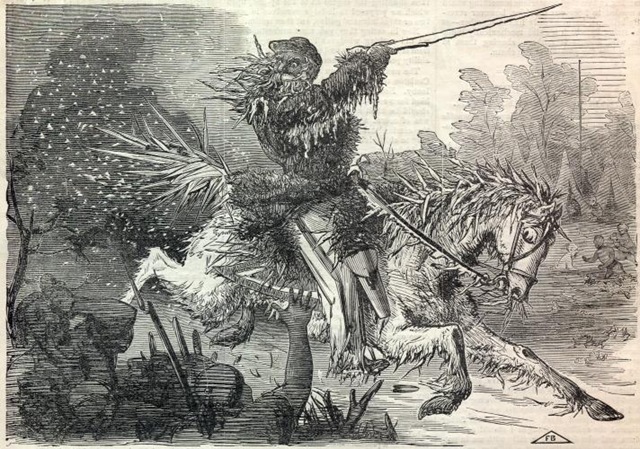
Freezing Drizzle


19th-century-jack-frost-cartoon


That’s what the weather man calls it. Personally I like my drizzle lukewarm but there doesn’t seem to be a menu option for that. The drizzle is a fact the way a marching band is a fact. There’s not much you can do about it. You just have to absorb it.

What is freezing drizzle? It’s “sleet light”. It’s failed snow. It’s the weather of homesickness and furtive glances and abandoned machines.

I want to walk outside and shout: “Screw You Freezing Drizzle!” How hopeless the enterprise! The marching band is playing Broadway favorites. Its halftime in a very boring football game. The Marching Drizzlers can’t hear a thing I say.

The Drizzle is a darkling phenomenologist. It says there is no “I” contingent with the self; it says that reality is naked and shapeless. Face it, its a boring professor.

It’s a pain in the ass.

**

I appear to be decidedly “not” in a holiday mood. Capitalism has killed my seasonal sentiments. I’m despising Xmas music. I’m feeling like Sid Vicious. All I want to do is play a Sex Pistols record backwards and snarl in the crown of a freezing tree.

**

What’s wrong with me? Why did I laugh yesterday when I heard that Macy’s escalator caught fire in New York?

**

Drizzle laughs at our dreams of salvation.

Drizzle waves the blown trees in the gypsy’s faces.

Drizzle gets inside us, like a dark membrane.

Sound of grind stones, sound of broken windows.

**

O the alter procession of the drizzle. Its sad boats filled with dried flowers…

**

Save your chestnuts on the open fire and Jack Frost nipping at your noses. I’ve got the king of drizzle here. He sings of the abyss and of people lost. He doesn’t have a recording contract…

He is real and he says that he’d cold cock Santa Claus if he gets in the way…


S.K. 

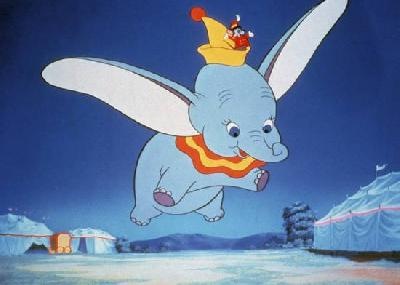
Of Dumbo and Ganesh

Dumbo the Flying Elephant ganesh


A Swedish poet I know once said that dogs know more about darkness than we do and I thought that was true for I was twenty something when I heard the remark and when you’re young and you hear something symbolic you tend to think you’ve heard truth. Dogs of course don’t care at all about darkness–they’re not delicate creatures, which is why their noses are machines of insubordinate, cognitive persistence. Dogs don’t give a rat’s ass about darkness and they don’t care about manners. This is why I like them.

I blame urban life for making people sentimental about animals and that’s a big story and there’s not time today to delve into the matter but I’ll argue that only city dwellers will go to a movie about anthropomorphized talking deer and only city dwellers will think that a flying elephant with ears for wings is worth paying to watch.

A friend in California called me the other night while he was out for a walk. He reported a Disney Dumbo was all lit up in someone’s yard. I was immediately irascible. “If only it was Ganesh” I said, and then I went into a riff about why India is beating the snot out of America in economic terms–“they have Ganesh, we have Dumbo,” I snarled.

This lead to a debate of sorts. Ganesh is both nurturing and tricky, has pockets of deception. Dumbo is just nice. People in India don’t have to pretend they’re nice all the time. Americans are stuck with this hopeless imperial sentimentality about themselves. The rest of the world thinks we’re stupid.

Then my friend said: “But Dumbo has a soul, man. He has a soul.”

That stopped my pepper pot tirade. I had to admit that my pal had me there. Dumbo is all loyalty, decency, steadfastness, and compensatory heart, for indeed all the other creatures make fun of his ears. I realized then that Dumbo is a “super crip”–a disabled person who overachieves. He’s a sort of beneficent victim.

And so of course Dumbo is a perfect holiday ornament. Why the hell not?     

Let us proclaim the mystery of faith.


S.K. 

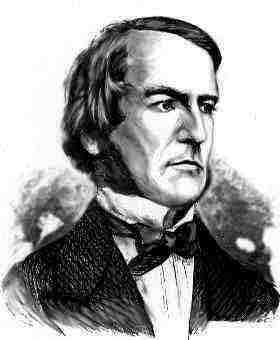
The Laws of Thought

Image of George Boole


George Boole’s book concerning the laws of thought was published in 1844 and many have observed that the first inklings of the computer are to be found within its pages. In essence Boole observed that in algebraic terms every set has something in common with “the empty set”–a neat, paratactic formalism that later became known as “Boolean Algebra”.

I remember taking a course on Boolean Algebra as a college sophomore and in that same semester I read and re-read James Joyce’s novel Finnegans Wake and somewhere in the midst of that concantenation of steam and mechanics I rose up and stopped being an indifferent youth. I saw that James Joyce was the counter-punch to Boole’s idea and I sensed that Boole’s thinking, if reduced to a social value, represented a narrowing of symbolic values–what I would later understand as the birth of statistics and the associated insurance industries and government sanctioned intelligence tests and so forth.

When you’re 19 years old and wildly myopic and you’ve discovered that the ticking relays of Big Brother are traceable to the prior century you look for people with whom you can talk about the matter. I found a guy I’ll call “Lars” because he looked like a Swede, tall, pale, vaguely blond, always wearing a shabby, wool overcoat. Lars liked to talk about ideas so we’d drink coffee and carry on until the small hours of the morning discussing the 19 century intersections of industrial and social institutions and the emergence of writers like Baudelaire and Whitman. I loved talking about ideas so much that I didn’t notice that Lars was a malcontent. He was actually a kind of Nazi. He had German war trinkets in his dorm room and he even had a Luger in his desk. This was sufficiently disturbing to me that I began to avoid old Lars outside of the classes we took together. I saw that disliking the associated modern industrial applications of statistics in the development of a social order was not the same thing as a fidelity to reactionary nihilism. George Boole indeed! George Boole with his empty set balancing a proposition–dogs and men both experience fear. Dogs and men know no fear at all. And all those ticking relays.

1844 was the year in which Samuel Morse sent the first electrical telegram from the U.S. Capitol to a district railway office in Baltimore, Maryland saying “What Hath God Wrought?” Tick tick tick with the relays.

1844 was the year in which Friedrich Engels and Karl Marx met for the first time in Paris.

In 1844 Gustav Erik Pasch invents the safety match. Charles Goodyear vulcanized rubber. Britain produces three million tons of iron.

All the seeds of world war one are planted.

And Friedrich Nietzsche was born that year.

Tick tick tick go the relays.

And so reading George Boole was a bit like sitting on the dark side of a railroad car. I decided to change my seat. Avoid Lars. Read books. Read books.


S.K.

The Racing of Infidelity

By Andrea Scarpino

Los Angeles


I want to start with a disclaimer: I don’t know anything about Tiger Woods. I don’t own a television and am pretty sure I’ve never watched a golf game in my life. I barely understand the rules of miniature golf. Before the events of the past couple weeks, I’m not sure I would have recognized Tiger Woods if he were standing next to me at the grocery store. But when a series of white women start appearing on the news saying they’ve had an affair with a man of Color, I start to get suspicious.

Woods has, of course, admitted to infidelity, and for that fact, I feel very bad for his wife.

But I also wonder why woman after woman has come forward in this public way, at this moment in time. Since some of the alleged liaisons go back years, clearly at least some of the women with whom Woods had affairs could have said something publicly much earlier than the previous three weeks. So why now, all of a sudden, hire an attorney and start making public statements to gossip magazines? Why now, disclose text messages and other sordid details of your affair? There’s something in this public outing for each woman, or they wouldn’t be coming forward in this way. Is it just the prospect of fame or financial gain, a book deal down the road or television appearances?

That may be part of it, but I wonder if it also doesn’t have something to do with Woods’ race. White America likes to see a Black man falter, after all, and the fact that his alleged mistresses to date have all been white weighs heavily on the complex and conflicted history white women and Black men have shared in the United States for hundreds of years. Black men have been lynched, remember, for even being suspected of wanting a relationship with a white woman. White women have felt betrayed as Black men were granted access to the patriarchy. I can’t help but wonder how this long and fraught history is playing out in the public’s fascination of Wood’s downfall, or how it may be weighing somewhere deep in the minds of the women who are coming forward.

Are these women excited by the possibility of being involved in this taking-down of a successful and wealthy man of Color? Americans like to watch a Black man “put in his place.” Especially by a white woman. Especially through sex. Are his former mistresses playing into that? Do they see this moment as their opportunity to wield one of the only powers they have, the power of their sexuality?

Again, I don’t know anything at all about Tiger Woods or his wife or what may or have happened in their relationship. But I hope that we’re interested because of something far less sinister than our historically fraught race relations—love of gossip, maybe, love of seeing our heroes fail, demonstrate their weaknesses. And I would like to believe the women coming forward now are only doing so out of a desire for fame or financial gain. But in the United States, doesn’t race inform everything? Even the moments we choose to remain silent and the moments we choose publicity? Even infidelity?


Andrea Scarpino is the west coast Bureau Chief for POTB. You can visit her at:

www.andreascarpino.com

News Flash: New Study Finds that Humankind Still in Middle Ages

Image of astrolabe


I have a neighbor who believes in eternal damnation. He thinks about 14th century cosmology while running his snow blower. He’d beat his wife and children but he doesn’t want any trouble. He seldom speaks. He wears a New York Yankees cap though he lives in Iowa. Sometimes when its very cold he wears an Elmer Fud cap with the ear flaps.

One of my students collects serial killer trading cards. He is, of course, Lutheran. He doesn’t need to go to church. He has the cards. They work for him. Inevitably he shuffles the deck when he can’t sleep. I made that up. He probably keeps them in a little homemade box.

The children of the new Middle Ages fret and cry until they are put to work.

The hopeful continue to get up early.

Unlike the original dark ages there’s not enough silence to go around. People wear head phones, ear buds, skull candy, or talk obsessively into portable phones.

Nature continues to loosen everything: door frames, rubber belts, strings of instruments…

Some people remain Gnostics and keep about them a vague sense of Paradise.

When the air rests the snow rests.

Words are disappearing all over the world.

You can see landscapes in the faces of strangers.

This would be a good moment for humor.

The Grim Reaper slips on a frozen turd and almost drops his scythe. (That was a howler in the old Middle Ages.)

Today it is very cold. I think I will go down to the library and warm my hands on the afterglow of histories.


S.K.

American Love


Increase Mather


The photo above is of a painting of Increase Mather whose Puritan ghost still haunts the American psyche as surely as bubble gum sticks to your sister’s hair–or your brother’s hair–or the noggin of your best friend if, just perhaps, you were an only child. Increase Mather would have frowned at bubble gum and he would have frowned at your sister’s hair. It is entirely possible that the only happy moment of Increase Mather’s life was when he died of bladder failure. (That he died of bladder failure is true but we can’t prove “the smile”.)   

A Puritan ghost haunts every American relationship. It doesn’t matter if you’re straight or gay; single; married; divorced; or still in your latency. (Wasn’t it Woody Allen who said he never had a latency period?)

Poor Tiger Woods. Driven by vanity and lust he was. A fallen man he is. And now, Lo and Behold, here comes the ghost of Increase to tell him that he’ll never get to heaven because his very lust is the proof in the pudding that he’s not among the elect. Tiger is going to hell. And he was always going to go there. There wasn’t anything he could have done about the matter. Don’t you dare smile.

Once when I was vacationing at a resort in Jamaica I told a friendly groundskeeper that there was no such thing as the devil. (The man had just climbed a palm tree for me, and procured a coconut, had opened it so I could drink the milk. He’d seen my blind man’s white cane. He had wanted to help me somehow. He’d said that drinking from a coconut keeps away the devil.)  “There’s no such thing as the devil,” I’d said, taking the coconut. “Oh, oh, don’t say that Mon!” he’d said, backing away and waving his machete at the clouds. “The devil, he everywhere.”

The Puritan ghost believes that the devil is part of the “elect or non-elect” spiritual delivery system. And if you think you can’t argue with that, you’re right. In fact the only way you can win an argument with Puritans is by kicking them out of your country as the British did. And how thankful the Brits continue to feel about their ancestor’s wisdom each and every day.

Young America didn’t of course kick the Puritans out. We tried our best to ignore them but they got the upper hand with the school systems and the water supply and that’s that.

Of course hell doesn’t exist except in the public squares where Puritan ghosts carry on–talkative, hypocritical, afflicting projective evaluations of Mr. Woods’ downfall.

Why didn’t Thomas Jefferson kick the Puritans out?


S.K.