The Taxonomy of Human Dignity

An old post at the Center for Bio-Ethics and Human Dignity puts me in mind of how perilous the past decade has proven for the disabled when it comes to birth–for eugenics has dominated the provision of medical services in ways that are both startling and alarming. Consider the following:

From Editorial: Human Dignity and Bio-medicine:

Arguably, one of the best extended contemporary discussions of human dignity and its implications for biomedicine was commissioned under President George W. Bush and convened by his President’s Council on Bioethics. The council’s two reports, Being Human (2003) and Human Dignity and Bioethics (2008), are the results of more than a few public meetings, thousands of pages of expert testimony, and the work of two physician-scholar-chairmen, Leon Kass, MD, and Edmund Pellegrino, MD. The work of the council provoked bioethicist Ruth Macklin to brand human dignity a ‘useless concept.’ Cognitive scientist Steven Pinker even assailed the notion of dignity as ‘stupidity.’ 

Nevertheless, both the term and the idea for which it stands continue to possess significant currency not only in the popular imagination but especially in medicine and law. In fact, Roberto Andorno, Senior Research Fellow and Lecturer at the Institute of Biomedical Ethics of the University of Zurich, maintains that the notion of human dignity is so ubiquitous in intergovernmental documents in biomedicine that ‘It is therefore not exaggerated to characterize it as the “overarching principle” of international biolaw’ (‘Human dignity and human rights as a common ground for a global bioethics’, Journal of Medicine and Philosophy 34 (2009): 223-240).

How does one account for this discrepancy? Can human dignity be at once both profound and indecipherable? Can it be both ubiquitous and useless? What happens if we expunge human dignity to the dustbin of incoherence, as Macklin and Pinker would have it? The implications of these questions for biomedicine, human rights, and public policy are difficult to overestimate.

Will our posthuman progeny one day see human dignity as a quaint historical artifact of our speciesist predilections? Perhaps. But removing human dignity from the table only seems to move the question of human rights to the foreground. Whence come human rights if not from human dignity? The United Nations’ Universal Declaration of Human Rights of 1948 affirms that ‘recognition of the inherent dignity and of the equal and inalienable rights of all members of the human family is the foundation of freedom, justice and peace in the world . . . .’ If human rights are merely a result of a social contract, humanity as we know it will survive only so long as the contract remains unaltered. In light of the history that gave new birth to this tradition—namely, the Nazi eugenics movement and the violations of human dignity that resulted from it—forfeiting the idea of inherent human dignity would seem potentially disastrous. 

When bioethicists like Ruth Macklin brand human dignity as useless they do not of course mean their dignity but rather the dignity of others. That much of contemporary bioethical reasoning descends directly from Victorian utilitarian philosophy is, perhaps, not as broadly understood as it should be–but the taxonomy of utility aside, the founding principle holds that what is good for the majority of the population should be the only yard stick by which ethical decisions are measured. This isn’t news for scholars of disability studies or for historians but it remains news–relevant news–in a time of extraordinary genetic advancements and managed health care. Most Americans do not realize that their right to give birth is not guaranteed in hospitals across the US and this is a co-determination of bio-ethics and the agents of medical insurance. If you’re told your prospective baby will have Down Syndrome you’re just as likely to be prescribed drugs for abortion, or, worse, denied pre-natal care should you insist on having that child. This is chilling news but do not worry: Peter Singer can explain it to you.

As the Institute on Human Dignity and Bioethics puts it:

Human dignity, once a cornerstone for bioethics, is increasingly obscured by a contemporary culture of commodification. Myopic fixation on sexuality, fertility, and reproduction reduces the female body to a resource for medical exploitation and reproductive tourism. Procreation is being engulfed by the reproductive imperative and the child of choice. Without neglecting the ongoing emphases on beginning- and end-of-life issues, our task must include attention to prenatal discrimination, the neglect of the girl child, worldwide disparities in women’s healthcare and maternal mortality, and the objectification and exploitation of the female body. 

For commodification we may read utility–there’s money to be protected by eliminating children whose disabilities may conceivably tax the state or, yes, the insurance industry; money to be made promulgating designer babies; and yes, money to be made in medical exploitation. Against this contemporary horror show it is not reassuring to know that bio-ethicists are all too often the children of Bentham and Frances Galton. As my friend Douglas Biklen, now retired from Syracuse University likes to say when discussing our fellow citizens who can’t speak: “presume competence”–what could possible get in the way of this? Can it be that ethical presumption costs too much?
 

Consider the Trojan Horse

Whose eyes were burls of cypress taken from the bows of ships;

Who was blind and leaning, upright, stiff;

Who was assembled between midnight and dawn;

Whose portions came from boats;

Whose manufacture was hidden in the tents;

Who smelled of branch and grass and wonders;

Who rose from equations;

Who at last, had partly just arrived, and was partly immortal.

The Purity Index in Contemporary Politics, or, Fundamentalism by Another Name

“I used to be Snow White, but I drifted.”

—Mae West

There’s a hoary axiom that fascism lives in America. Accordingly you can point to your fascist of choice—Nixon, J. Edgar, or Cheney. They’re all weak options as fascism requires socialized corporatism which differs from the balder forms of hatred practiced by the above. Against this I’ve always preferred the poet Kenneth Rexroth’s rationale for poetry, for the very act of writing it—he said he wrote against “the Social Lie, the Economics of Mass Murder, the Sexual Hoax, and the Domestication of Conspicuous Consumption.”

I woke today and found I was still imperfect. But I know I’m suspicious of the very things Rexroth placed in opposition to poetry. I’m still incomplete as a man. I wave my broken umbrella and feel too often I’m in a covert like Ralph Ellison’s invisible man. That’s generally how it is when you’re imperfect but striving for purity of heart, which means poetry.

The Social Lie is a pact if you will. Rexroth:

“Since all society is organized in the interest of exploiting classes and since if men knew this they would cease to work and society would fall apart, it has always been necessary, at least since the urban revolutions, for societies to be governed ideologically by a system of fraud.”

I. F. Stone put it this way: “Every government is run by liars. Nothing they say should be believed.”

Stone’s employment of “every” is excellent as the United States government is no exception. Indeed, one may argue democracies are especially susceptible to grand lies. So what does a contrarian do?

Stone again, declaring his ars poetica:

“To write the truth as I see it; to defend the weak against the strong; to fight for justice; and to seek, as best I can to bring healing perspectives to bear on their terrible hates and fears of mankind, in the hope of someday bringing about one world, in which men[and women] will enjoy the differences of the human garden instead of killing each other over them.”

Jesus. I woke today and found I was still imperfect.

I try to write the truth as I see it.

I believe American society is often organized in the interest of deriving unfair benefits from its under classes. I think much of our political rhetoric is fraudulent. With rare exceptions our leaders have sought to engineer for their cronies the removal of wealth and resources from the general body.

I love Stone:

“All governments lie, but disaster lies in wait for countries whose officials smoke the same hashish they give out.”

We are not a free country. We have more political prisoners than any other nation on earth. We have more mentally ill people in jail than any other country on earth. We have more children of poverty in jail than any other nation on earth. We have more upward tilt of our national resources than any other advanced nation. We allow national standards for clean water and air to be dismantled. We watch as our roads and bridges become unusable. Such things do not happen in a free nation. Some of these things “do” happen under fascism, but not all.

America is (as many Sanders supporters justly point out, an oligarchy.) I.F. Stone would argue it always has been. What’s great about Sanders is he refuses to smoke the same hashish most of Washington partakes of.

Yet there’s a problem with Sanders and it’s essentially the same problem with Trump—both employ (though quite differently) an outsized rhetoric of purity. Both say “we won’t smoke the same hashish they smoke in DC” and both say the government is corrupt, stocked with liars, liars who in turn screw the general body.

Purity knows nothing of realpolitik.

Stone wrote of Goldwater:

“It was hard to listen to Goldwater and realize that a man could be half Jewish and yet sometimes appear twice as dense as the normal Gentile.”

Goldwater was a purist. So are Sanders and Trump.

Such a position makes it highly unlikely either can govern the nation.

The nation is of course structured according to Federalist principles which require what’s often called “give and take” and which Rexroth would call “the social lie” and both terms are correct insofar as many middle class and poor citizens no longer believe in governance—cannot believe in it—for the politics of material extraction and perpetual war has left them poorer and with zero faith.

Which is of course the antithesis of realpolitik. Faith in government as a means to further articulate and provide solutions to problems is utterly necessary for negotiation and agreement to occur.

Neither Trump or Sanders cares much about this, and in turn they’re both perfect representatives for their respective voting blocs, each of which believes that realpolitik is just more government hashish, or, worse, that any nuanced position (whether it’s about foreign policy or the minimum wage) is a cop out.

Hillary, according to this script, is a war monger; cares not a whit about the poor; once voted to increase border security in Texas and is therefore in league with Trump on the proposal to build a vast wall; she served on the board of Wal Mart and must be attached at the hip to Sam Walton; gave speeches for Goldman Sachs and must be as corrupt as Bernie Madoff.

Trump’s followers believe everyone in America who isn’t Trump is stealing their cheese. The difference with Sanders voters is minimal, though not as kind. Sanders after all wants to defend the weak against the strong; to fight for justice…to borrow from Stone.

Always ask who can govern. Neither Trump or Sanders will likely be able to guide the nation.

Never confuse your understanding of the Social Lie—which for Rexroth meant the endlessly repeated but largely untrue narrative that all men are created equal; that Americans are a peace loving people; that private satisfactions like sex or the ownership of property will sustain you…no, it’s far better to understand the nature of the nation’s illnesses, to demand more of government; to insist that those who govern make the system work.

I do not believe Hillary Clinton is perfect. This is what the Bernie supporters I know both in public and on the internet don’t understand, for their version of politics is about purity, which among other things means free of adulteration or contaminants. To the best of my knowledge such a view, or demand of a political figure is akin to most forms of fundamentalism.

Bernie voters have accused me of being for the war in Iraq. Not true. Read my blog. They’ve accused me of being for the endless expansion of the military industrial complex. Not true. They’ve accused me of being for torture. Again not true. My limited life as a modest public intellectual proves it.

Still purity is what the Sanders and Trump believers have. My argument is it’s all they have.

Voting for Hillary does not mean I don’t agree with I.F. Stone or Kenneth Rexroth.

It does mean I believe a woman president who might actually be able to work with the government we have will be a step in the right direction.


The Upside Ambassador Guide Dog Club

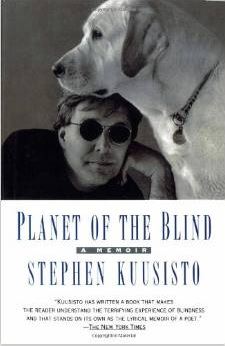
When a stranger loves your dog and in turn appreciates you—the “you” being a compound figure—well, that affection comes with a price. Henceforth wherever you are, whether the somnolent lobby of a hotel or a glittering appliance store, you’re called upon to accept unsolicited conversational laurels from those you don’t know, or you know only marginally. The role entails a daily commitment to cheerfulness.

I was cheerful when a woman wearing what appeared to be a raccoon coat approached in the cereal aisle of the supermarket and said: “Oh I just love guide dogs!”

“Me too,” I said.

“I mean,” she said, “I really love them!”

“Remember you’re an ambassador,” I told myself.

“Remember you’re not in a terrible hurry,” I thought.

“Surely,” I thought, “people must advance toward strangers in parking lots and say Oh I love Volvos! That has to be the case.” I had to think this. Needed to remind myself how chance conversations inevitably reflect shy fascinations. I love the New York Mets. 

But then beside a mountain of corn flakes I was alone with the raccoon woman.

She told me about her cousin who raised guide dog puppies. Told me about her husband who had a blind room mate in college who had a dog. Told me about her own dog, a German Short Haired Pointer.


Upside. I was in the world. Upside. I was able to look pleased though I was in a honking hurry and all I wanted was a box of shredded wheat.

“Be friendly if it kills you,” I thought. “This is not a serious problem. You’re part of something much larger than your meager life.”

The proscenium arch, favorable version: association with dogs makes blindness approachable. One is in the community, whatever that might mean. (Even Margaret Mead couldn’t say what this means.) Right there in a row of corn flakes I sensed approachable blindness meant “easy to talk to” blindness. And a dog is a talisman, the charm that opens the door. “And yes,” I thought, “what else is disability after all but a temple; a forbidding ziggurat.”

Over time I’d learn the upside game was complicated.

The expectations of strangers have many incitements. Under the proscenium the blind are handed diverse scripts.

Some of them have nothing to do with blindness at all.

In LaGuardia Airport, waiting for a flight, a woman suddenly appeared before me to say: “I had a dog like that once.”

“Oh yes,” I said.

“Yeah, someone poisoned it,” she said.

“Oh dear,” I said.

She stood and regarded us for a few silent seconds and then turned away.

You bet the upside game is complicated. You’re under pressure to be a good citizen. You represent the tiny world of guide dog users. There aren’t many of us. Blindness is a low incidence disability. According to estimates there are only ten thousand guide dog teams in the United States. All guide dog users together equal the population of Sleepy Hollow, New York.

In turn the sight of a guide dog team is exceptional. I perceived quickly that Corky and I were as odd and yet simultaneously familiar as Ichabod Crane and his horse.

Boy Oh Boy, What a Stage Presence You Have

Civic life with a disability is like standing under a proscenium arch. It’s a theatrical affair. Some places accept you and some do not. Being admired as a blind traveler or customer is gratifying. Facing opposition and even some occasional contempt is terrible. In general daily life is an upside-downside game.

Upside-downside is the true “national pastime” of the blind. When I got my first guide dog “Corky” I found I had to play it whether I liked it or not. At first I thought “upside” was easy. The doorman at the Algonquin Hotel on 44th St. in New York loved the very sight of us as we uncoiled from a taxi, man and dog in a tangle of leash and luggage, Corky wagging, ears up, actually appearing to smile, so happy to arrive. “We’ve here big dog,” I said. And the doorman was equally pleased because he and Corky had locked eyes and were experiencing a companionable felicity. “Now that’s a great dog!” he said, “she’s a champ!” We stood together on the sidewalk and Corky looked more observant than any ten dogs and the doorman said again, “that’s a great dog!” Then he remembered where we where and said, “Welcome to the Algonquin!” This was our first hotel as a guide dog team. It was going very nicely. The doorman was named Charlie. He wore a top hat and a black coat with gold braid. He appeared pleased both with his job and our sudden appearance. Upside: welcoming man. Upside: this reception was real and at the front desk Charlie introduced us as Stephen and Corky the Champ.

He insisted on showing us the hotel. We saw the Rose Room and the famous Round Table where in the 1920’s writers Dorothy Parker, Robert Benchley, George S. Kaufman and others assembled daily for lunch and savage gossip. In the dark Edwardian lobby Charlie introduced Corky Champion to Mary Bodne, widow of the hotel’s former owner Ben Bodne. Mary in turn introduced us to Matilda the hotel cat. Corky was suitably unimpressed.

This was the upside, a sweet and wholly legitimate familiarity between a guide dog team and others. Only a cynic would find something wrong with it. Strangers were glad to see us. They were especially pleased to see a dog in a place where dogs might not ordinarily be seen. Any working dog is a wonder. All working creatures prove what people who love animals already suspect—that the animal kingdom is smarter than we’ve previously imagined.

Proscenium arch. The upside role of a dog handler is to acknowledge the affection and admiration of friends and strangers alike.

I took a walk. I decided to visit a computer store.

As we pushed through the door a security guard put his hand on my chest. “You no come in, no dog,” he said. I didn’t know it then but this moment would become a regular part of my life—as routine as breaking a shoelace.

I pressed forward and the guard let go. We were in a dance of folly. He shouted in broken English, “no no no!” Customers stared. There was a fractional instant of silence. Then the rush of ordinary noise returned. The nominal buzz. Ambient and reassuring. “No no no no!” He really was shouting.

Over time I’d come to call such moments “culture shadows” and recognize these social obstacles demanded that I learn to understand civic life—life under the proscenium arch would require a confirmatory, forgiving toughness. My civil rights and the security guard’s lack of education were equally delicate and equally the products of culture. I didn’t know where the guard hailed from, but his accent sounded East African. How could he possibly know about guide dogs? He couldn’t. And the store’s managers hadn’t given him information. All he knew was “no dogs allowed” and there I was, with a big assed dog. As we stood in the doorway I saw it would be my job to foster dignity for both of us. They hadn’t taught me this at guide dog school; they’d given me a booklet with the access laws—a useful thing. I had the right to go anywhere the public went—but no one had mentioned emotional intelligence or how to engage in mediation.

I made Corky sit. “Listen,” I said, softly, “get the manager. This will be okay.” “This is a special dog for the blind.” As the poet William Carlos Williams said, “no defeat is entirely made up of defeat”. I wanted to turn our misunderstanding into something dignified. “Let’s have a productive defeat,” I thought.

The manager was one of those men you see all the time in New York stores: sadder than his customers, red faced and put upon. He had a scoured toughness about him. He approached and began shouting at the guard. “Its a seeing-eye dog for god’s sake!” “Let him in!” “Sorry, sorry!”

My fight or flee rush was subsiding—I wanted all three of us to experience kindness.

I was in the proscenium of a dingy computer store and dignity was in peril. It would have been easy to say “fuck it” and look out for myself alone. I got into the store. But I didn’t feel that way. The guard’s name was Ekwueme. My name was Kuusisto. The manager’s name was Phil. “Listen,” I said, “dogs for the blind are not common, you don’t see them every day. This is Corky. She’s very smart.” I decided Corky could be the ambassador. I let my voice be kind. Ekwueme and Phil both pet Corky. A customer approached, said: “I’ve raised puppies for the guide dog school! Best dogs in the world!” Phil seemed suddenly pleased, as if he too was philanthropic, or could be. Ekwueme admitted he loved dogs. I’d been slow to feel good about my disability but I was going to make up for lost time.

Outside with a Toshiba laptop under my arm I reckoned my life with Corky was more complex than a simple story of accessibility. Corky and I walked slowly south on Sixth Avenue and I felt radiant love. Ekwueme and Phil would become legion in my travels but I didn’t know it yet. What I did know was reflected in a quote I’d always liked from Martin Luther King: “An individual has not started living until he can rise above the narrow confines of his individualistic concerns to the broader concerns of all humanity.”

Being in the world as a service dog user meant something more than merely honoring my own rights. I could sense that.

Dr King, again: “Take the first step in faith. You don’t have to see the whole staircase, just take the first step.”

I didn’t have to see the whole staircase. It was enough to know others like Ekwueme were also climbing it.

Upside-downside is a complicated game.

Salad Oil of the Academy

In the good old days when Greeks were busy ostracizing the club footed and blind, a strapping philosopher could finish off the biz of booting the less fortunate into the woods by dousing himself in salad oil and having a grand old time in the Agora. This of course required other strapping philosophers. Thus, the begining of all academmic conferences.

Nowadays when disabled academics wonder why university sponsored conferences are so uninviting they imagine it has something to do with a failure of administrators or professors to understand the implications of the Americans with Disabilities Act. But really its all about the salad oil.

Generally I think the disabled scholar is like Djuna Barnes’ depiction of the servant girl:

We are beginning to wonder whether a servant girl hasn’t the best of it after all. She knows how the salad tastes without the dressing, and she knows how life’s lived before it gets to the parlor door.

One way to think about academic conclaves, whether it’s the Associated Writing Programs gala or the Notarized Academy of Philosophes is that there’s an overwhelming tendency among the organizers and participants to imagine the mind as being sweetly disengaged from embodiment, hence de-politicized even as words like race or gender or sexual orientation are employed as markers of subjectivity. This is what the philosopher Bryce Huebner calls a “de-worlded” approach to conceiving of mindfulness. And so we’re not far from the old agora. Another way to think of this is that in Western intellectual tradition disengagement from embodied mind (which is always assumed to be an advantage because, after all, the gods live above us) can only be accomplished through the agency of a healthy and desireable body.

Back to Bryce Huebner:

…research on disability often reveals patterns of entrenched bias in the formation of hypotheses and in decisions about what counts as a signal and what counts as noise. For example, the tacit assumption that cognitive disabilities are deficits makes it easier to treat these disabilities as defects and to design experiments that target the existence and stability of such defects. This perspective obscures the fact that neural differences are the result of biological variation in the human species. This perspective also makes it difficult to consider the ways in which social and material structures contribute to the emergence and stability of observed deficits. Consequently, it’s harder to entertain hypotheses about the full suite of capacities that arise as a result of different forms of embodiment. I think philosophers and cognitive scientists could benefit from thinking about (for example) the impact of things like early intervention and education on Down syndrome and about the results of research on autism carried out by teams with autistic members. These cases promise to open up new hypotheses; and that strikes me as a good thing!

(See more at: http://philosophycommons.typepad.com/disability_and_disadvanta/2015/04/dialogues-on-disability-shelley-tremain-interviews-bryce-huebner.html#sthash.JhKNQet7.dpuf)

Academic conferences are not generally aware of their role in the enforcement of social and material structures that codify and delimit physical differences.

And the happy conferees go back to their home institutions oblivious, uplifted by encodements of normalcy, and teach deficit embodiment though the poor dears scarcely know it.


One Night in Helsinki

At the bus stop they’ve a poster of a spiral galaxy spilling light and I think that’s where I’m going.

I sit in the front where the disabled people like me are meant to sit, my dog tucked under my feet, and I dream a bit. Going back to the stars…

I remember a prescription by Marcus Aurelius: “Dwell on the beauty of life. Watch the stars, and see yourself running with them.”

I picture a boy made of light who runs beside the bus, his body immaterial and bright so that he passes through buildings. I watch as he sprints through hotels and tenements right on time, always keeping up. He is, of course, my twin brother who died at birth. It’s an excellent fancy.

“We are a way for the universe to know itself.” (Carl Sagan)

My brother doesn’t speak. Doesn’t judge anyone. Fears no obstacles. He’s fast love.


Disability, Dispossession, and my Brother Trayvon

I have the happenstance blues. They’re both accidental (aleatoric) and whatever is the opposite of accident, which, depending on your point of view might have something to do with the means of production, racial determinism from same, or all the other annotated bigotries of the culture club.  As a disabled writer I know a good deal about the culture club. Now back to my happenstance blues…

I’m right here. I’m terribly inconvenient. Blind man at conference. Blind man in the lingerie shop. All built environments are structured and designed strategically to keep my kind out. My kind includes those people who direct their wheelchairs with breathing tubes, amble with crutches, speak with signs, type to speak, roll oxygen tanks, ask for large print menus or descriptive assistance. I’m here standing against the built geographical concentrations of capital development. I’m here. I’m the penny no one wants anymore. My placement is insufficiently circulatory in the public spaces of capital. Which came first, the blues or the architectural determinism that keeps me always an inconvenience?

Capital creates landscapes and determines how the gates will function. Of course there was a time before capital accumulation. It’s no coincidence the disabled were useful before capitalism. The blind were vessels of memory. The blind recited books. Disability is a strategic decision. Every disabled person either knows this or comes a cropper against the gates when they least expect it.

What interests me is how my happenstance-disability-blues are exacerbated by neoliberal capital accumulation. For accumulation one must thing of withholding money from the public good or dispossession, which is of course how neoliberal capital works.  Here is geographer David Harvey in an interview, talking about just this:

Accumulation by dispossession is about dispossessing somebody of their assets or their rights. Traditionally there have been rights which have common property, and one of the ways in which you take these away is by privatizing them. We’ve seen moves in recent years to privatize water. Traditionally, everybody had had access to water, and [when] it gets privatized, you have to pay for it. We’ve seen the privatization of a lot of education by the defunding of the public sector, and so more and more people have to turn to the private sector. We’ve seen the same thing in health care.

What we’re talking about here is the taking away of universal rights, and the privatization of them, so it [becomes] your particular responsibility, rather than the responsibility of the state. One of the proposals which we now have is the privatization of Social Security. Social Security may not be that generous, but it’s universal and everybody has part of it. What we are now saying is, “That shouldn’t be; it should be privatized,” which, of course, means that people will then have to invest in their own pension funds, which means more money goes to Wall Street. So this is what I call privatization by dispossession in our particular circumstance.


At the neoliberal university and all its concomitant conferences, workshops, and “terms abroad” (just to name some features of higher ed where my own disability has been problematized) the provision of what we call “reasonable accommodations” under the Americans with Disabilities Act is often considered to be in opposition to accumulation. For instance: I was asked to teach a term abroad in Istanbul. When I pointed out that Istanbul isn’t a guide dog friendly city and that I’d have trouble with the traffic and requested a sighted guide accompany me there, I was told this was too expensive. Think about it! One additional human being to keep me from getting run over was too expensive! The “term abroad” was actually designed to accumulate capital, right down to the lint in each student’s and instructor’s pockets. I decided to avoid getting run over and didn’t go.

Privatized culture means everything, including your safety is your own responsibility. I’m in mind of this. I’m not fooled.

When Trayvon Martin was murdered I wrote about gated communities and the intersection between a black teen’s death and disability exclusion. I opened my piece this way:

I know something about being “marked” as disability is always a performance. I am on the street in a conditional way: allowed or not allowed, accepted or not accepted according to the prejudices and educational attainments of others. And because I’ve been disabled since childhood I’ve lived with this dance of provisional life ever since I was small. In effect, if you have a disability, every neighborhood is a gated community.  


I also wrote:

…as a person who travels everywhere accompanied by a guide dog I know something about the architectures and the cultural languages of “the gate” –doormen, security officers, functionaries of all kinds have sized me up in the new “quasi public” spaces that constitute our contemporary town square. I too have been observed, followed, pointed at, and ultimately told I don’t belong by people who are ill informed and marginally empowered. Like Trayvon I am seldom in the right place. Where precisely would that place be? Would it be back in the institution for the blind, circa 1900? Would it be staying at home always?

I concluded:

There’s a war against black men and boys in this country. There’s also a backlash against women and people with disabilities and the elderly. The forces in all these outrages are the same. The aim is to make all of the United States into a gated community. On the one side are the prisons and warehousing institutions; on the other side, the sanitized neighborhood resorts. I hear the voice: “Sorry, Sir, you can’t come in here.” In my case it’s always a security guard who doesn’t know a guide dog from an elephant. In Trayvon’s case it was a souped up self important member of a neighborhood watch who had no idea what a neighborhood really means. I think all people with disabilites know a great deal about this. I grieve for Trayvon’s family. I haven’t been able to stop thinking about him and will never forget.

I have the happenstance blues and they’re a function of design. Differences, and the welcoming of differences require architectures and expenditures of inclusion. It costs money to include the outsiders. You might have to train security guards, authentic ones to protect Trayvon and Stephen. Imagine if they were able to live in peace, share their stories, and spend their money in your neighborhood. (One can’t forget Trayvon was found dead with skittles and a can of soda, the smallest reckonings of teenage happiness…)

Just as accumulation by dispossession involves the creation of cheap labor territories, local dispossession requires the devaluation of the individual. As a disabled man I am Trayvon and he is me.

Disability and Your Neighbors

I walk in my local neighborhood where my neighbors know I’m blind. They like me. They know all about my dog. In a perfectly decent way they think I’m kind of cool. Not in a pitying way, or a telethon way—“he’s so inspiring”—but because I’m another person they know who’s taking on the world.

This is what connects us. It’s solid. Meaningful. I like to call it “the good glue of existence”– a phrase from the Finnish-American poet Anselm Hollo. Glue. Neighborliness. Shared ambition. Curiosity about others. Appreciation.

When I contend with academic conferences that don’t like disability, or don’t admit they’ve a problem with it, I’m mindful that these are the missing ingredients: Neighborliness. Shared ambition. Curiosity about others. Appreciation.

I’d rather walk my own neighborhood than attend your average university conference.

Why the diff?

Because neighbors see in one another the local, the real, the collective.

Academic conferences, all of them, see the future perfect.

No one lives in the FP.

Self Reliance

Two large deer in the snowy yard this morning. Two big worries on my shoulders. Two birds calling. Two hearts in my chest—one for the living, the other…And two by two the animals. Two names for a man or woman. Two ownerships of the soul. Two containments of virtue. Two windows streaked with rain. I remember when I was very small I had two toys, a cloth monkey and a wooden top. That top whistled and I made the monkey dance. I had two joys. Always the foolish wish for self-reliance.